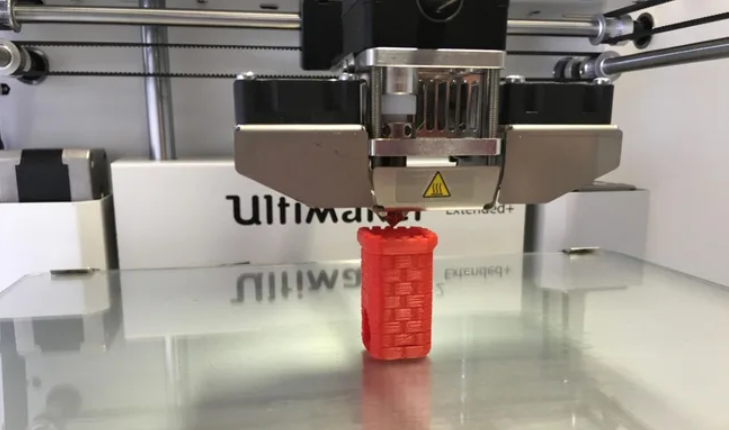
Google has given its Deep Think mode a serious upgrade inside Gemini 3, and it could change how people approach 3D printing altogether. The update pushes the model beyond theory and into hands-on engineering workflows, especially for researchers, designers, and makers who want to turn ideas into physical objects faster. At its core, this new version of Deep Think strengthens multimodal reasoning, meaning it can interpret images, sketches, and real world visuals, then transform them into usable 3D models.
For anyone who has ever tried to move from a rough concept to a printable 3D file, you already know how complicated that journey can be. Traditional computer aided design tools demand experience, powerful hardware, and a good understanding of geometry, materials, and simulation. With Gemini 3 Deep Think, Google is attempting to remove much of that friction.
Instead of manually building everything inside a CAD program, users can provide a drawing, a photo, or even a description of an object. The system then generates a structured 3D blueprint and exports a file that can be sent directly to a 3D printer. It is essentially a bridge between imagination and fabrication.
From sketch to printable model
The biggest breakthrough here is accessibility. In the past, transforming a napkin sketch into an STL file required familiarity with advanced design platforms and detailed modeling techniques. Now, Gemini 3 Deep Think can analyze a 2D image and reconstruct it into a three dimensional design. It does not stop at static generation either. Users can continue refining the model using natural language instructions.
For example, if a prototype needs to be lighter, thicker, or reinforced at certain stress points, those changes can be described conversationally. The model updates accordingly. This iterative loop removes many of the repetitive steps typically associated with CAD editing.
The implications stretch beyond hobbyists. Engineers working on rapid prototyping, material scientists developing experimental structures, and product teams testing new hardware concepts could dramatically reduce turnaround time. The platform’s ability to blend scientific reasoning with design execution makes it particularly valuable in research driven environments.
Why this matters for 3D printing
3D printing has grown rapidly across industries, from education and healthcare to aerospace and architecture. Yet the bottleneck often lies in design preparation rather than the printing process itself. Learning advanced modeling tools is not trivial, and physics based simulations can demand both time and computational power.
Deep Think aims to streamline that pipeline. By automating parts of the modeling and validation process, it lowers the barrier to entry. The model is designed to understand structural logic and practical constraints, helping ensure that what it produces is not just visually accurate but physically viable.
According to updates shared by Google AI, the focus of this enhancement is moving beyond abstract reasoning into tangible, real world applications.
This practical orientation is what sets the upgrade apart. It is not just about generating images or answering questions. It is about producing fabrication ready designs that can be tested, refined, and printed.
Real world experimentation
Researchers have already begun experimenting with the system in ambitious ways. In one example shared publicly, a complex spider web structure was analyzed and converted into an interactive design environment capable of exporting STL files. The design was then used to engineer new metamaterials and even inspire a bridge concept. Structural testing followed using high performance hardware.
This kind of workflow highlights the hybrid power of generative AI and computational engineering. By combining deep scientific datasets with conversational editing tools, Gemini 3 Deep Think transforms static inspiration into functional prototypes.
It is worth noting that this capability does not exist in isolation. The wider conversation around generative design and AI assisted modeling has been gaining momentum for years. Tools like Autodesk Fusion and other generative platforms have introduced algorithmic design principles, but Gemini’s approach focuses heavily on multimodal reasoning and natural interaction.
Conversational design becomes mainstream
One of the most compelling aspects of this update is the shift toward conversational engineering. Rather than navigating menus and parameter fields, users describe their intent. The system interprets context, structural relationships, and potential weaknesses.
If a component needs improved load distribution or different material density, those changes can be expressed in plain language. This reduces reliance on deep technical fluency and makes experimentation far more approachable.
For startups and product developers, this could mean faster iteration cycles. For academic labs, it may enable more exploratory research without extensive modeling overhead. For educators, it opens the door to introducing 3D design concepts without overwhelming students with complex software from day one.
Availability and broader access
Currently, Gemini 3 Deep Think is available to subscribers of Google AI Ultra within the Gemini app. Google has also confirmed that API access will be introduced for companies and research teams interested in integrating these capabilities into their own platforms and workflows.
This API expansion is significant. It suggests that enterprises could embed Deep Think directly into internal engineering systems, design pipelines, or collaborative research environments. That integration potential positions Gemini not just as a consumer tool, but as an enterprise level innovation engine.
As artificial intelligence continues to evolve, practical applications like this show how the technology is moving beyond chat interfaces and into real production environments. From material science to architectural design, the line between digital concept and physical object is becoming thinner.
Gemini 3 Deep Think represents a clear step in that direction. By transforming sketches into structured models, enabling conversational refinements, and producing printer ready files in minutes, it redefines what rapid prototyping can look like in the age of advanced AI.
Sell Locally and Now Into Regional Markets: Temu’s Local Seller Program Explained