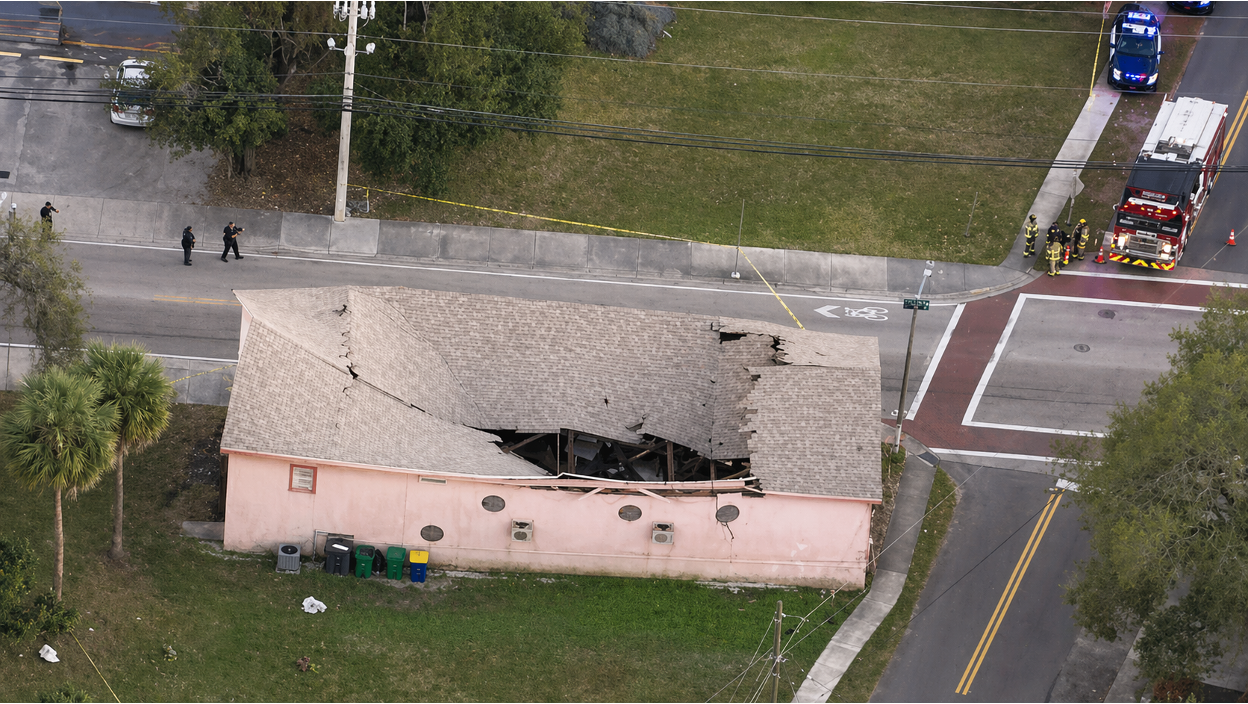
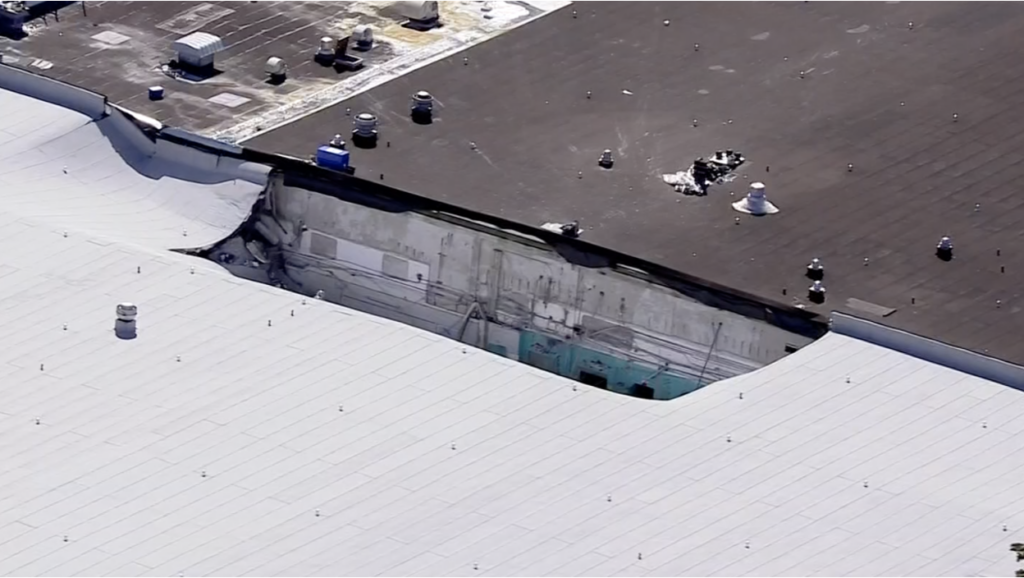
In February 2026, the roof of a vacant church in Dania Beach, Broward County, caved in without warning. Witnesses heard a loud boom before the structure collapsed inward, leaving a massive hole where the ceiling had been. No one was inside at the time.
Investigators have not determined a cause, though property records show a notice of commencement for a roof replacement had been filed just months earlier, suggesting the need for intervention had already been identified.
Although it was a local incident, roofing professionals say what happened in Dania Beach reflects a pattern seen in far more consequential structural failures, including the 2021 partial collapse of Champlain Towers South in Surfside, which killed 98 people and prompted a review of older high-rises across South Florida. In each case, the structural deterioration advanced covertly, beneath an ordinary exterior, until it could not be ignored.
What Causes a Roof to Fail
“Most homeowners assume that if their roof isn’t leaking, it must be fine,” said a senior inspector at Coastal Roofing, a South Florida–based contractor. “But the most serious structural problems rarely announce themselves with a drip. By the time water is coming through the ceiling, the damage is already extensive.”
Most structural failures share a common thread. The conditions that caused them were present long before anyone noticed. Understanding what those conditions look like is the first step toward preventing them.
Moisture and Deferred Maintenance
Structural roof failure is rarely the result of a single event. Engineers examining collapsed roofs consistently identify a combination of factors that develop over months or years.
Moisture intrusion is among the most destructive forces a roof can encounter. When water penetrates the roof deck, it begins to degrade the wood or substrate that holds everything together.
In South Florida’s subtropical climate, where humidity is high year-round and rain events can be intense, this process accelerates. Salt air from Miami-Dade to Broward County corrodes metal fasteners and flashing, gradually loosening the connections that keep a roof anchored below. Deferred maintenance only serves to compound these risks.
Unauthorized Modifications
Unauthorized modifications present a separate category of risk. Contractors adding HVAC units, solar panels, or satellite equipment to rooftops sometimes drill into structural members or add unplanned weight loads. When those modifications are not reviewed by a structural engineer, they can reduce a roof’s load-bearing capacity in ways not visible from street level.
The Warning Signs Most Homeowners Overlook
Roofing professionals identify several indicators that homeowners frequently overlook. Many of these signs appear long before a roof reaches the point of structural compromise.
Structural and Surface Signals
A sagging or uneven roofline is one of the most serious signals. Viewed from the street, a sound roof should appear level and consistent along its ridge and eaves. Dips, soft spots, or areas that bow inward suggest that the structural members beneath have been weakened, often by moisture damage or overloading that has been developing for an extended period.
Interior signs are frequently the first to appear and the first to be dismissed. Water stains on ceilings are often attributed to a past repair that seems resolved, even when the underlying cause has not been corrected.
In attic spaces, streaks along rafters, damp insulation, or visible daylight through the roof deck indicate the outer protective system has been compromised.
Granule Loss and Flashing Failures
Granule accumulation in gutters is a subtle indicator that homeowners often attribute to normal aging. Asphalt shingles shed granules over time, but significant accumulation after wind events signals the protective surface layer is degrading faster than expected. Without those granules, shingles lose their resistance to UV radiation, becoming brittle and permeable; a particular vulnerability in a region where hurricane-force wind drives rain sideways.
Flashing failures around chimneys, skylights, and roof penetrations are another concern. Flashing is the metal material that seals joints between the roof surface and vertical structures. In coastal communities, salt spray corrodes flashing over time. When it lifts, cracks, or separates, water enters the structure at precisely the points where it is most difficult to detect from outside.
Understanding the South Florida Context
South Florida’s climate accelerates roof deterioration faster than most parts of the country. The combination of UV exposure, high humidity, frequent heavy rainfall, and hurricane risk places roofs under year-round stress. The Florida Building Code reflects this reality through some of the most stringent wind resistance standards in the United States.
However, building code compliance at installation does not guarantee ongoing structural integrity. A roof installed to code in 2005 may no longer meet current wind-load standards, and without regular inspection and maintenance since then, it may not perform as expected during a major storm.
Hurricane season, which runs from June through November, places additional urgency on pre-storm inspections. According to NOAA, wind speeds of just 74 to 95 miles per hour, which is classified as a Category 1 hurricane, are sufficient to remove shingles, tear flashing, and expose roof decking.
At Category 3 and above, partial or complete roof failure becomes a realistic outcome for structures with pre-existing vulnerabilities. Coastal Roofing’s inspection team notes that the homes most severely damaged in storm events are frequently those where deferred maintenance had already reduced structural capacity before a storm arrived.
The Value of a Professional Roof Inspection
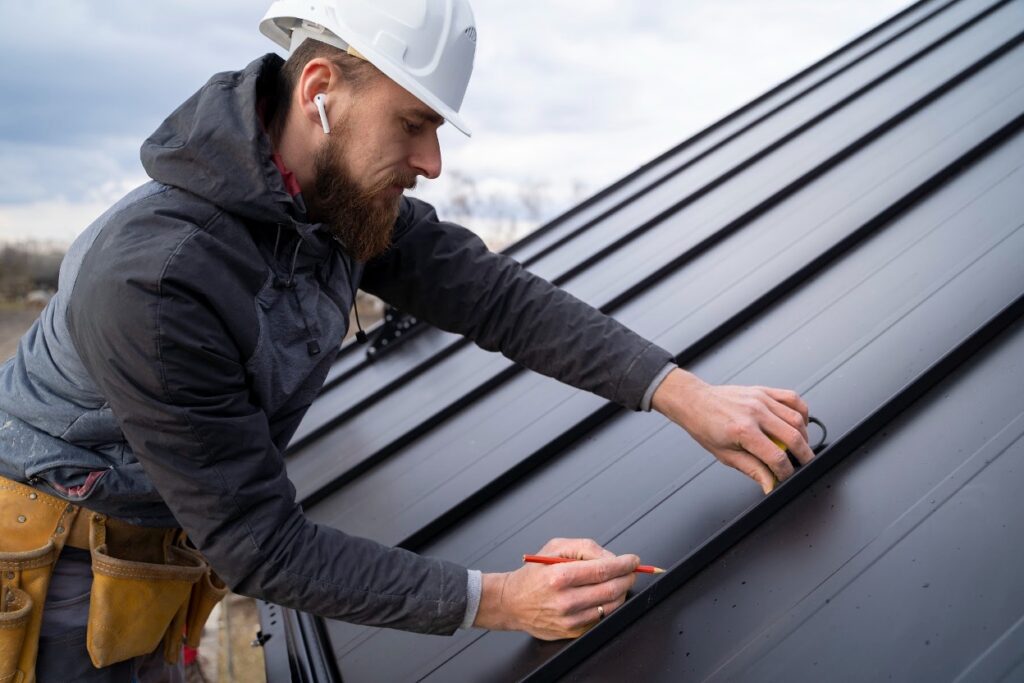
A professional roof inspection is a thorough visual check that goes deeper than what a homeowner typically manages. Roofing industry safety standards recommend Florida homeowners schedule inspections at two key intervals, which are once before hurricane season begins and once after any storm bringing sustained winds above 50 miles per hour. Homes within a mile of salt water should be inspected annually regardless of storm activity, given the accelerated corrosion risk in coastal environments.
Roof failures rarely happen without warning. They happen when warnings go unaddressed. In Florida, where storm seasons are unforgiving and the window for preparation is short, a professional inspection is less a precaution than a baseline.