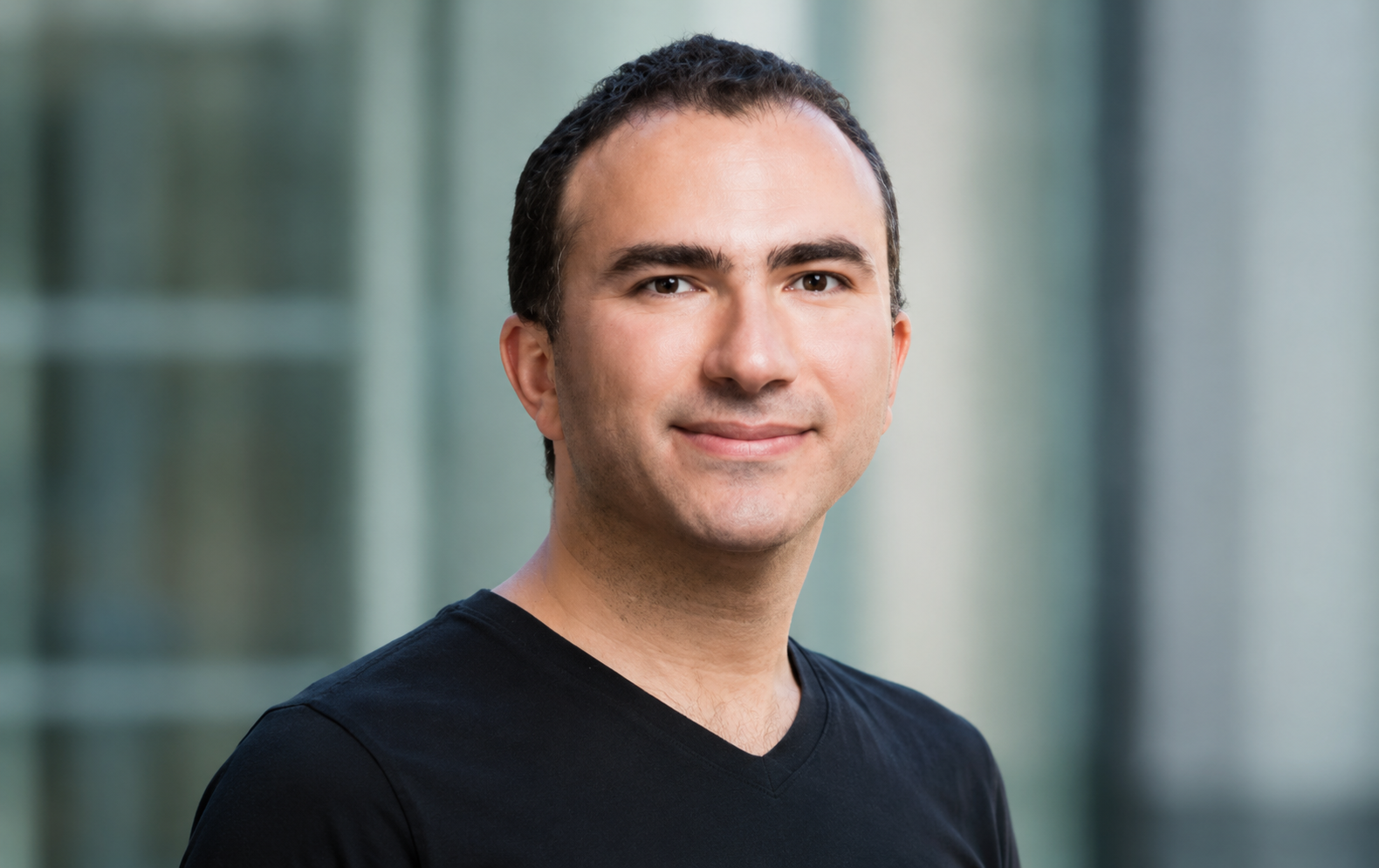
Alex Schmelkin is building Sixfold AI around a clear problem inside the insurance industry. Underwriters are expected to review complex submissions, understand risk, follow internal guidelines, respond to brokers, and make decisions quickly. Yet much of their day can still be swallowed by manual review, scattered documents, repetitive research, and slow handoffs.
That is the gap Sixfold is trying to close.
As the Founder and CEO of Sixfold, Schmelkin is focused on using artificial intelligence to make underwriting faster, more consistent, and more useful for the people doing the work. The company is not positioning AI as a replacement for experienced underwriters. Its bigger idea is to give underwriters a smarter system that can handle the heavy lifting in submissions, surface the right risk details, and help teams move from raw information to better decisions.
In an industry where trust, accuracy, and judgment matter, that approach is important. Insurance companies are not looking for flashy AI tools that create more uncertainty. They need technology that fits into real underwriting workflows and supports better risk selection. That is where Alex Schmelkin and Sixfold AI have found their opportunity.
Who is Alex Schmelkin
Alex Schmelkin is an entrepreneur with a background that connects technology, insurance, customer experience, and enterprise software. Before building Sixfold, he was part of the founding team at Unqork, a major enterprise no-code software company. He also founded Cake & Arrow, a customer experience agency that worked closely with companies in insurance and financial services.
That background matters because Sixfold AI is not being built for a simple consumer use case. It is being built for a complex business environment where every decision can affect risk, pricing, portfolio quality, and customer relationships. Insurance underwriting is full of detail. It involves documents, rules, guidelines, historical judgment, broker relationships, and company appetite.
Schmelkin’s earlier work gave him exposure to how large organizations adopt technology. He saw that insurance teams often have deep expertise, but they do not always have modern tools that match the complexity of their work. With Sixfold, he is applying that experience to one of the most important parts of insurance operations.
Why underwriting needed a smarter way to work
Insurance underwriting has always required a careful balance between speed and judgment. If an underwriter moves too slowly, the insurer may lose good business to competitors. If the decision is rushed or poorly informed, the company may take on risks that hurt profitability later.
The problem is that many underwriting teams still deal with large volumes of information in formats that are not easy to process. A single submission can include emails, PDFs, applications, loss runs, schedules, broker notes, financial details, and policy history. The underwriter then has to compare that information against internal guidelines and decide whether the risk fits the company’s appetite.
That work takes time. It also becomes harder when submissions arrive in high volume or when experienced underwriters are expected to manage more accounts with the same resources.
This is the environment Alex Schmelkin is addressing with Sixfold AI. The goal is not just to make underwriting “digital.” Many insurers have already invested in digital systems. The bigger challenge is helping underwriters understand submissions faster, apply risk appetite more consistently, and spend less time searching for the information they need.
How Sixfold AI helps underwriters move faster
Sixfold AI is designed to support the underwriting process by reading and analyzing submission materials, identifying important risk details, and helping underwriters evaluate whether a submission fits the insurer’s appetite.
Instead of forcing an underwriter to manually dig through every document from the beginning, Sixfold can help organize the information and surface what matters. It can highlight risk signals, summarize key details, and support the decision-making process. This gives underwriters a clearer view of the submission before they decide what to quote, refer, decline, or investigate further.
For insurance teams, that can make a major difference. Faster underwriting does not simply mean moving quickly for the sake of speed. It means reducing the time wasted on repetitive review so underwriters can focus on higher-value work. That includes understanding complex risks, building broker relationships, improving portfolio decisions, and applying their own experience to the cases that need human judgment.
In this sense, Sixfold acts less like a basic automation tool and more like an underwriting intelligence layer. It helps make the workflow smoother while keeping the underwriter in control of the final direction.
The vision behind the AI Underwriting Brain
One of the key ideas behind Sixfold AI is the concept of an AI Underwriting Brain. That phrase captures what Schmelkin is trying to build. Sixfold is not only summarizing documents or speeding up admin tasks. It is aiming to become a system that understands underwriting context, learns risk appetite, and helps insurers make better decisions across their book of business.
That is a different level of ambition from simple workflow automation.
Underwriting is not just about checking boxes. It involves reading between the lines, understanding patterns, spotting unusual risk details, and knowing when a submission fits the company’s strategy. A useful AI system must respect that complexity. It must be able to support decisions without flattening underwriting into a one-size-fits-all process.
Schmelkin’s vision for Sixfold appears to be built around that balance. AI can help with the heavy operational work, but people still guide strategy. AI can surface patterns, but underwriters still bring experience. AI can speed up review, but insurers still need governance, accountability, and judgment.
That is why Sixfold’s positioning is powerful for the insurance market. It speaks to a real need without pretending that underwriting is simple.
Why human judgment still matters in AI underwriting
A major reason Alex Schmelkin’s work stands out is that Sixfold AI is built around the underwriter rather than around the idea of removing the underwriter.
In insurance, human judgment is not a nice extra. It is central to the job. Underwriters make decisions in uncertain environments. They evaluate incomplete information, weigh tradeoffs, consider broker context, and think about how one risk fits into a larger portfolio.
AI can support that process, but it should not blindly take over every decision. A good underwriting platform needs to help people see more clearly, not push them out of the loop.
Sixfold’s value is strongest when it helps underwriters do what they already do well, only with better speed and better information. It can help reduce repetitive research, bring important risk signals forward, and make it easier to compare a submission against appetite. But the underwriter still decides how to apply that information in the real world.
This matters because insurers operate in a high-trust industry. They need tools that are transparent, explainable, secure, and practical. Schmelkin’s approach understands that adoption in insurance depends on confidence. Underwriting teams need to trust the system before they let it become part of their daily workflow.
How Sixfold is gaining trust across the insurance industry
Sixfold AI has gained attention because it is built for a specific insurance problem rather than a broad and generic AI use case. The company focuses on insurers, MGAs, and reinsurers, which gives it a sharper understanding of underwriting pain points.
Sixfold’s growth also shows that the market is taking the problem seriously. The company announced a $30 million Series B round in early 2026 to support the next stage of its AI underwriting platform. The round included backing from insurance and enterprise technology investors, including Brewer Lane, Guidewire, Bessemer Venture Partners, and Salesforce Ventures.
That kind of backing is meaningful because insurance technology is not easy to sell. Large carriers and reinsurers have strict requirements around security, reliability, compliance, and integration. A startup in this space has to prove that its product can handle the seriousness of underwriting work.
Sixfold has also been connected with major insurance names, including Zurich North America, Skyward Specialty, Guardian, Generali GC&C, AXIS, and Mosaic Insurance. For a company working in AI underwriting, that kind of industry traction helps strengthen its credibility.
Why insurers, MGAs, and reinsurers are paying attention
The value of Sixfold AI is not limited to one type of insurance company. Different parts of the insurance market can use AI underwriting support in different ways.
For insurers, Sixfold can help improve quote turnaround time and reduce the burden of manual submission review. This can make it easier to respond to brokers faster while maintaining better control over risk quality.
For MGAs, the platform can support scale. MGAs often need to move quickly, manage submission volume, and prove underwriting discipline to their carrier partners. A tool that improves consistency and visibility can help them grow without losing control of risk selection.
For reinsurers, underwriting intelligence can support more consistent evaluation of complex risks. Reinsurance involves large exposures, layered information, and portfolio-level thinking. AI can help teams organize information and identify patterns that may be difficult to see through manual review alone.
Across all of these groups, the common theme is capacity. Underwriters are skilled professionals, but their time is limited. Sixfold gives teams a way to expand what underwriters can handle without treating them like data-entry workers.
How Sixfold fits into existing insurance workflows
One of the hardest parts of selling technology into insurance is workflow fit. Insurers often have existing systems for policy administration, document storage, customer relationship management, analytics, and underwriting workbenches. A new tool has to fit into that environment rather than force the entire organization to rebuild how it works.
That is why Sixfold AI’s role as an underwriting intelligence layer is important. The platform can support the underwriting process while connecting with existing operations. This makes it easier for insurance teams to adopt AI in a practical way.
The partnership between Sixfold and Munich Re’s Realytix Zero is a good example of this direction. It shows how Sixfold’s risk analysis can be brought into automated underwriting workflows, helping insurers combine AI-driven insight with the systems they already use.
For underwriters, this kind of integration matters because technology should reduce friction, not create more work. A useful AI platform should help underwriters move through submissions faster, make decisions with more confidence, and avoid jumping between too many disconnected tools.
What Institutional Intelligence means for underwriting teams
One of the most interesting parts of Sixfold AI’s recent direction is its focus on Institutional Intelligence. The idea is simple but important. Insurance companies have years of underwriting knowledge inside their teams, systems, decisions, and outcomes. But much of that knowledge is hard to capture.
Experienced underwriters build judgment over time. They learn which risks are worth taking, which warning signs matter, and how certain decisions play out after a policy is written. The problem is that this knowledge often stays inside individual people, scattered files, old notes, or disconnected systems.
Institutional Intelligence aims to make that knowledge more usable. By connecting underwriting decisions with outcomes, an insurer can create a system that learns from the organization’s own experience. That can help teams apply appetite more consistently, understand what drives profitable growth, and support newer underwriters with the knowledge of the wider organization.
For Alex Schmelkin, this is a natural extension of Sixfold’s larger vision. If the first step is helping underwriters move faster through submissions, the next step is helping insurance organizations become smarter from every decision they make.
What makes Alex Schmelkin’s approach different
The strength of Alex Schmelkin’s approach is that he is not treating insurance underwriting as a generic AI problem. He is building around the reality of the job.
Underwriters do not need another dashboard filled with noise. They need help finding the right information, understanding risk faster, applying appetite accurately, and making decisions that support the company’s broader portfolio goals.
Schmelkin’s background in insurance customer experience, enterprise software, and no-code technology gives him a useful perspective. He understands that the best technology is not always the flashiest product. In insurance, the best technology is often the one that quietly removes friction from a difficult workflow.
That is what Sixfold AI is trying to do. It gives underwriters a way to work through complex submissions faster while preserving the judgment and responsibility that make underwriting valuable.
How Alex Schmelkin is shaping the future of insurance underwriting
Alex Schmelkin is part of a broader shift in insurance technology. The industry is moving away from simple digitization and toward smarter decision support. It is no longer enough to turn paper forms into digital forms. Insurers want systems that can understand information, support judgment, and improve how risk is selected over time.
Sixfold AI fits directly into that shift. Its work shows how generative AI and AI agents can be applied to a real business problem where speed and accuracy both matter. Underwriters need to respond faster, but they also need to make better decisions. Brokers want quicker answers, but insurers still need discipline. Leadership teams want growth, but not at the cost of portfolio quality.
Schmelkin’s work sits at the center of those pressures. By building Sixfold for underwriting teams, he is helping define what practical AI adoption can look like inside insurance. It is not about replacing expertise. It is about giving expertise better tools.
If Sixfold continues to grow, its biggest impact may be cultural as much as technical. It could help shift underwriting from a process weighed down by manual review to a more intelligent workflow where underwriters spend more time on risk strategy, relationship building, and profitable decision-making.