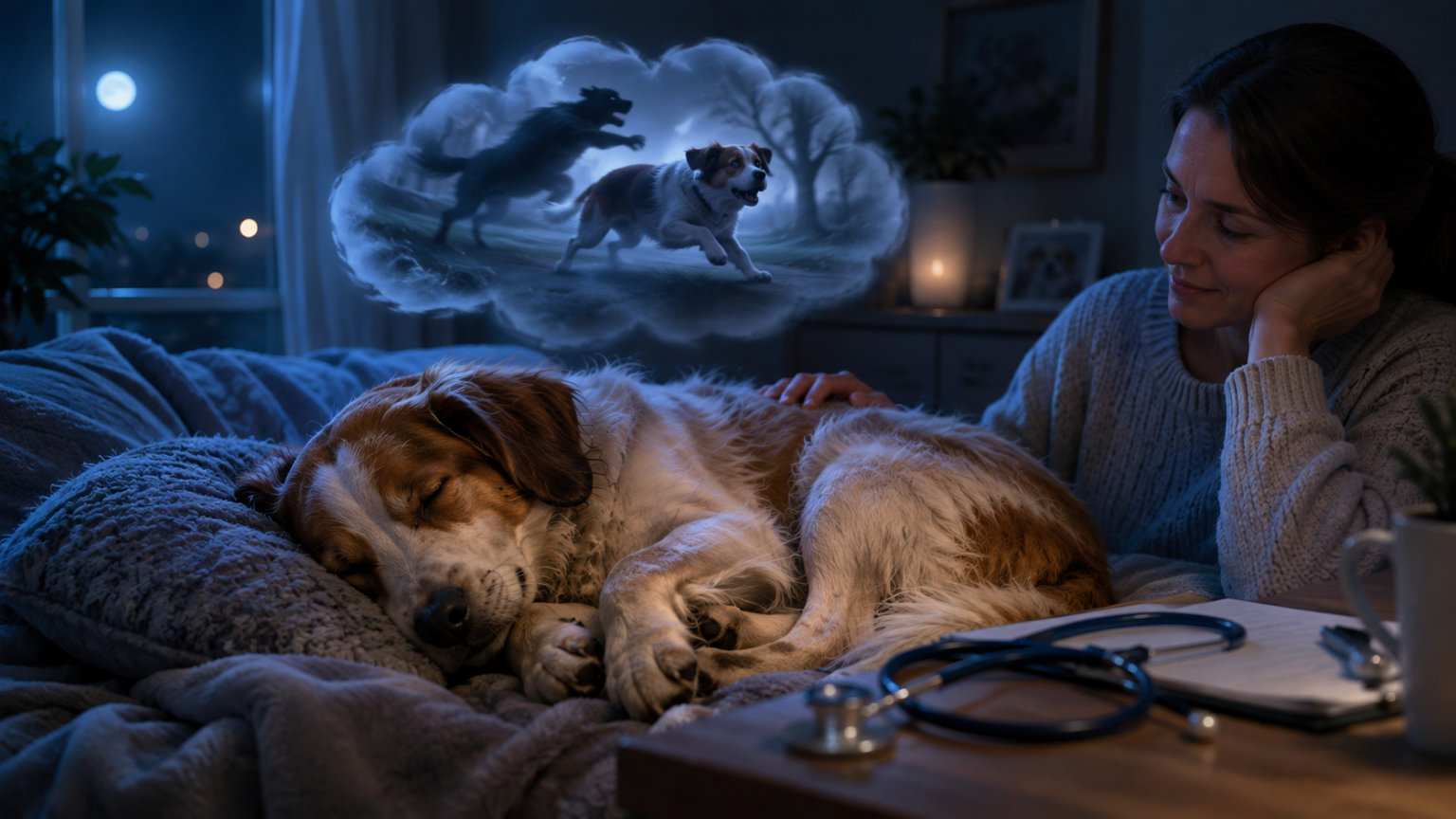
Yes. Dogs very likely have nightmares. During REM sleep — the same dreaming stage humans cycle through — a dog’s brain shows electrical activity almost identical to ours, and behavior researchers agree that means dogs can dream, and that some of those dreams turn unpleasant. If you’ve watched your dog whimper, twitch, and paddle its paws while sound asleep, you were probably watching a bad dream in real time.
A quick caveat before we go deeper: a true nightmare is not the same thing as a night terror or a REM sleep behavior disorder. They look similar from across the room but mean very different things, and we break down the difference below — because knowing which one you’re seeing tells you whether to relax or call your vet.
What It Means When a Dog Has a Nightmare
A nightmare is simply negative dream content that plays out during REM sleep. The dog is fully in a dream state, its body is largely paralyzed (that’s normal REM muscle atonia), and the twitching you see is the small amount of movement that leaks through.
How do we even know dogs dream? Sleep-lab EEG studies going back decades show dogs enter REM and produce the same brainwave signatures — including sleep spindles, short bursts of activity tied to memory processing — that humans do while dreaming. Harvard-affiliated researchers have pointed out that when you disable the part of the brainstem (the pons) that normally suppresses movement during REM, animals physically act out their dreams: a pointer points, a retriever runs. That’s about as close to direct evidence of canine dreaming as science gets.
Psychologist Stanley Coren, one of the most-cited voices on dog cognition, argues dogs most likely dream about ordinary dog things — the people they love, the walk they took, the squirrel that got away. So when a dream sours, the content is probably drawn from the same everyday life: a stressful vet visit, a thunderclap, a moment of being separated from you.
Key Facts and Context: The Science Behind Dog Nightmares
A few numbers help set expectations for what’s normal:
- Timing: Dogs typically hit REM roughly 10 to 20 minutes after drifting off, then cycle through sleep stages about every 15 to 20 minutes — far faster than the ~90-minute human cycle.
- Size matters: Small breeds tend to dream more frequently but in shorter bursts (roughly a dream every 10 minutes, lasting seconds), while large breeds dream less often but for longer stretches (closer to every 45 minutes, lasting minutes). So a twitchy Chihuahua and a still Great Dane can both be perfectly normal.
- Age matters: Puppies and senior dogs twitch, paddle, and vocalize more in their sleep. The pons — the brainstem region that keeps the body still during REM — is underdeveloped in puppies and less efficient in older dogs, so more movement escapes.
As for what triggers the bad ones: stress is the big driver. Vet appointments, a recent move, loud noises, boarding, or a rescue dog’s difficult past can all seed unpleasant dream content. Physical discomfort matters too — a dog managing arthritis or an injury may sleep more restlessly.
Nightmare vs. Night Terror vs. REM Sleep Behavior Disorder
This is the comparison almost no competing article lays out cleanly. Use it to place what you’re seeing:
| Type | What it looks like | Is it normal? |
|---|---|---|
| Nightmare | Whimpering, whining, soft growling, twitching, paw-paddling, rapid breathing. Dog wakes and quickly seems fine. | Yes — occasional bad dreams are normal. |
| Night terror | Sudden, intense episode — loud vocalizing, appears panicked or disoriented on waking, harder to rouse. | Usually okay if rare; frequent episodes warrant a vet chat. |
| REM sleep behavior disorder | Violent limb movement, running, biting or chewing motions — the dog physically “acts out” the dream because normal REM paralysis has failed. | No — get a veterinary evaluation, especially if it’s new or worsening. |
The practical takeaway: gentle twitching and soft noises are a nightmare and nothing to fear. Full-body thrashing where your dog seems to be fighting an invisible enemy is worth a professional look.
What Do Dogs Actually Have Nightmares About?
We can’t interview them, but the pattern from Coren’s work plus what owners consistently report points to familiar, emotionally charged material: a trip to the groomer or vet, a loud storm, being left alone, or — for rescues — echoes of past trauma. Owner forums are full of the same anecdotes: a shelter dog who whines through its first few weeks of sleep, a storm-phobic Lab who paddles harder on stormy nights. Those reports aren’t science, but they line up neatly with the vet-backed triggers above.
One pattern deserves special attention: nightmares that start all of a sudden in a dog that used to sleep peacefully. A new run of bad dreams can be nothing — or it can be a quiet flag for pain, illness, or rising anxiety. If restless sleep appears out of nowhere and sticks around for more than a week or two, mention it to your vet. It’s the kind of subtle change that’s easy to dismiss and occasionally important.
How to Safely Comfort a Dog Having a Nightmare
The old advice “let sleeping dogs lie” exists for a reason. A dog jolted awake mid-nightmare can snap defensively before it recognizes you — even a gentle, well-trained dog. Here’s the safe sequence:
- Don’t touch a startled or thrashing dog. Physical contact during a bad dream is the most common way owners get an accidental nip.
- Call their name softly from a short distance. A calm, low voice gives the dog a familiar anchor without startling it.
- Let them surface gradually. Give it a few seconds. Most dogs settle on their own once the REM cycle ends.
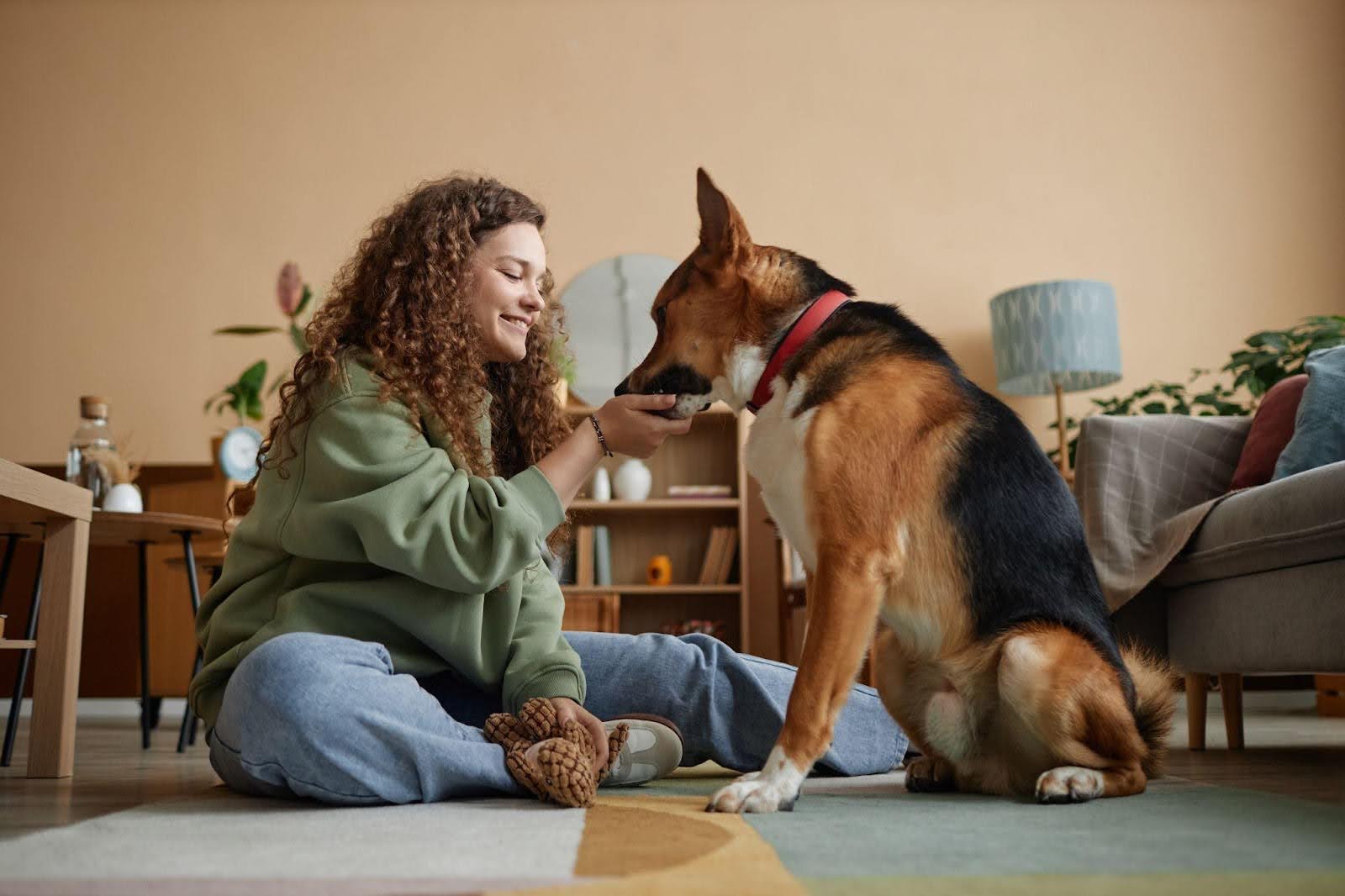
- Comfort after they’re fully awake. Once your dog is oriented and looking at you, then offer a reassuring pet or a few soft words.
Prevention lives in the daytime. A consistent routine, real physical exercise, and a quiet, comfortable sleep space all lower baseline stress — and a less-stressed dog tends to sleep more peacefully. For anxious or newly adopted dogs, a covered crate or a familiar-smelling blanket can turn a jumpy sleeper into a calm one.
Restless sleep is one of many small dog behaviors worth reading rather than ignoring — the same instinct that has owners asking why one thing grows or changes faster than expected. When a pattern shifts, it’s usually telling you something. For more explainers like this, browse our News & Lifestyle coverage, including our guides to Tampa’s beach resorts and everyday food and calorie questions.
Florida Note: Storms, Fireworks, and Anxious Sleep
If you’re in Florida, this one’s genuinely useful. Our near-daily summer thunderstorms and heavy firework seasons are two of the most common noise-anxiety triggers there are, and that daytime stress doesn’t just vanish at bedtime — it can carry into sleep and fuel more nightmare-like episodes. During storm season, a white-noise machine, a covered crate in an interior room, and drawn blinds can meaningfully soften the noise and help a storm-phobic dog rest easier.
FAQs
Can dogs get bad dreams?
Yes. Dogs experience REM sleep with brain activity nearly identical to humans, and behavior researchers agree that means dogs can dream — and that some of those dreams are unpleasant. Whimpering, twitching, and paw-paddling during sleep are the classic signs of a bad dream.
Does a dog having bad dreams mean something is wrong?
Usually not. Occasional nightmares are a normal part of canine sleep. It’s worth a vet conversation only if the episodes are frequent, violent, seem to physically act out the dream, or start suddenly in a dog that previously slept calmly — which can hint at pain or anxiety.
How often do dogs have nightmares?
It varies by size and age. Small breeds dream more frequently but briefly, large breeds less often but longer, and puppies and seniors twitch and vocalize more in their sleep. Most dogs have unpleasant dreams only occasionally rather than every night.
Do dogs have nightmares about their owners?
Quite possibly. Stanley Coren’s research suggests dogs dream about familiar, meaningful experiences — including the people they’re bonded to. So a dream involving you, a walk, or a stressful event like a vet visit is entirely plausible dream content for a dog.
Is it safe to wake a dog having a nightmare?
Not by touching them. A dog startled awake mid-dream can snap defensively before recognizing you. Instead, call their name softly from a short distance and let them wake gradually, then offer comfort once they’re fully alert and oriented.
What’s the difference between a dog nightmare and a night terror?
A nightmare happens during REM sleep and looks like gentle twitching, whimpering, and soft growling, with a quick recovery on waking. A night terror or REM sleep behavior disorder involves intense, sometimes violent movement and disorientation — and if it’s frequent or new, it warrants a vet evaluation.