The Charlotte Douglas International Airport review of the April 15, 2026, near-miss involving American Airlines Flight 1197 has not produced a public result. We also found no public FAA or NTSB finding, enforcement action or investigation report. The last on-the-record statements are the ones American, the airport and the FAA gave when the story broke on April 16.
The basic facts haven’t changed. Nobody was hurt and nothing was damaged. The flight continued to Ronald Reagan Washington National Airport (DCA), and the airport reported no impact on operations.
This matters because the incident wasn’t caused by pilot error or a mechanical problem. American’s position is that airport-affiliated vehicles failed to yield to a taxiing jet. That makes it a ground-safety and driver-discipline issue, and that’s the airport’s responsibility.
What happened at Charlotte Douglas
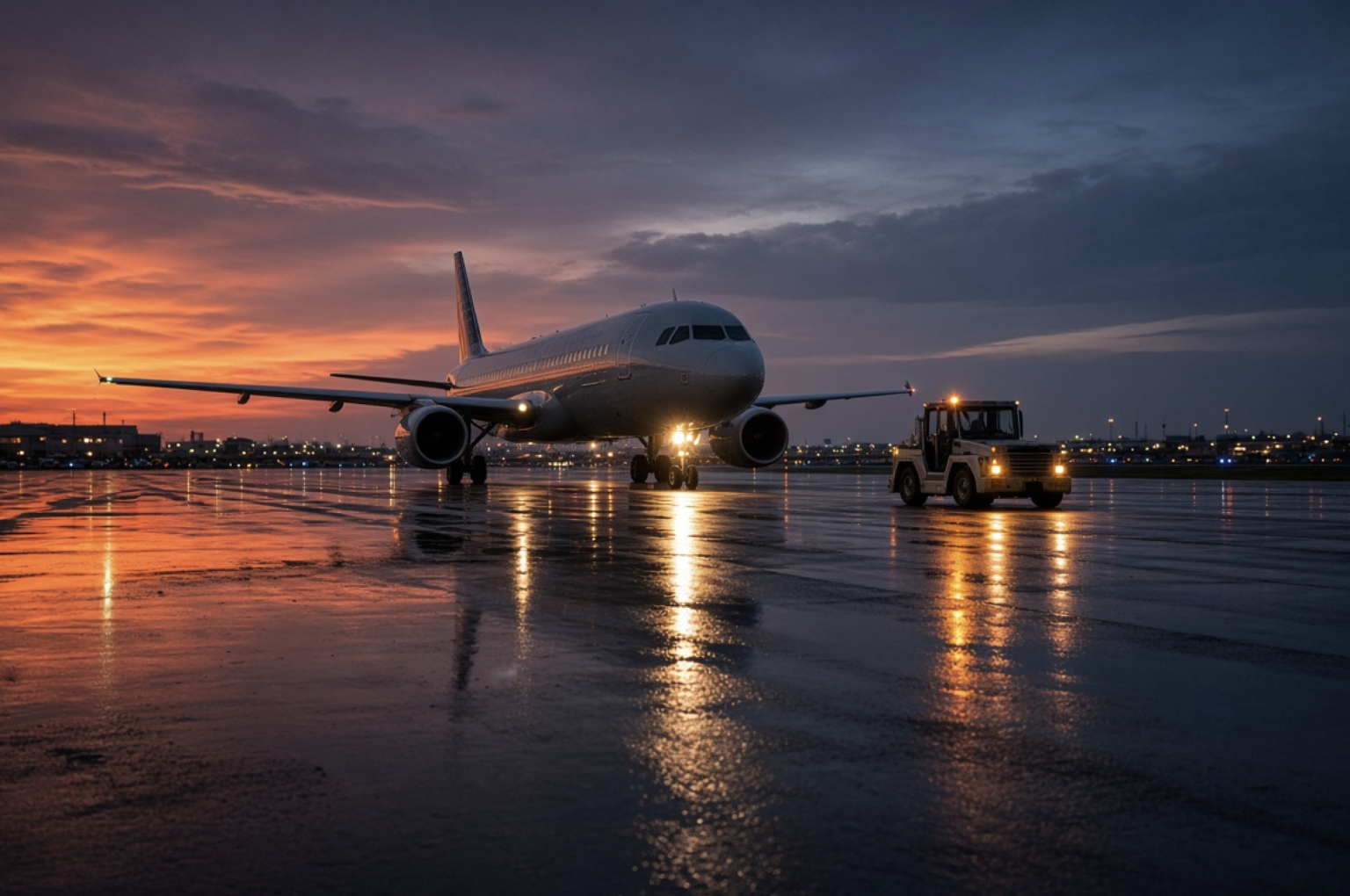
On Wednesday, April 15, 2026, American Flight 1197 pushed back from its gate at Charlotte Douglas (CLT), one of American’s largest hubs. The aircraft was an Airbus A319 bound for Washington National. As it taxied out of an alleyway between concourses, vehicles drove across its path.
Airport security video shows the jet stopping abruptly while the vehicles passed just feet from its nose. On air traffic control audio, the pilot reports that a truck crossed in front of the aircraft and asks that someone be notified. The crew’s quick stop is the reason this was a near-miss and not a collision.
One truck or two?
The reports don’t agree on this. CNN’s widely syndicated story, and American’s own statement, describe two airport-affiliated vehicles. TravelPulse describes a single airport operations pickup. The likeliest explanation is that the security video and the pilot’s radio call focus on the lead vehicle, a pickup, while American’s statement counts every vehicle that failed to yield. The airline’s statement is the most authoritative account available, and it says two. Neither the airport nor the FAA has publicly settled the question.
Timeline
| Date | Development |
|---|---|
| Apr 15, 2026 | Flight 1197 (A319, CLT–DCA) stops hard while taxiing out of an alleyway as airport vehicles cross in front of it. No injuries or damage. The flight continues to DCA. |
| Apr 16, 2026 | CNN publishes the security video and ATC audio, with statements from American, Charlotte Douglas and the FAA. Local TV, CTV/CP24 and NewsNation syndicate the story. |
| Apr 17, 2026 onward | Follow-up coverage from USA Today, TravelPulse and others repeats the original facts. No new findings. |
| Since then | No public result from the airport review, and no FAA or NTSB finding located. |
Who is affected
- Passengers and crew of Flight 1197. They were not hurt and reached Washington as planned. A sudden stop at taxi speed is jarring, but it’s a different kind of event from a high-speed rejected takeoff.
- The airport operations staff and drivers involved. The airport’s internal review is where any consequences would land: retraining, loss of driving privileges, or changes to procedure.
- Everyone who flies through busy hubs. Thousands of vehicles operate on airport ramps every day, including fuelers, catering trucks, baggage tugs and operations pickups. The rules that keep them clear of aircraft apply at every major U.S. airport, including Florida’s.
Official response
American Airlines said two airport-affiliated vehicles did not yield to the aircraft as it taxied out of an alleyway. It noted that ground safety rules require vehicle crews to yield to aircraft at all times.
Charlotte Douglas International Airport said it is reviewing the incident under its established safety standards. It has not published the results.
The FAA said the incident occurred in an area handled by air traffic control. That detail matters, as we explain below. The agency has not announced a formal investigation.
Do airport vehicles have to yield to aircraft?
Yes. This is the most basic rule of airside driving. At FAA-certificated airports, vehicle operators must complete airport-run driver training before they get airfield driving privileges, and that training teaches the same core rule everywhere: aircraft have the right-of-way. A driver who has to cross behind or in front of a moving jet waits.
The reason is simple. A pilot sits high above the ground in a heavy aircraft that can’t swerve, and the area just ahead of the nose is hard to see from the cockpit. A pickup truck can stop in a few feet. An A319 carrying passengers and fuel needs far more room.
Who’s in control?
This is the part the original coverage skipped. An airport’s airside surface is split into zones:
- Ramps and gate areas are usually managed by the airport or the airline’s ramp control. Ground vehicles operate there constantly under the airport’s rules.
- Taxiways and runways make up the movement area, which air traffic control manages. Vehicles generally need ATC clearance to enter it.
Alleyways between concourses can fall on either side of that line, depending on the airport. The FAA’s comment that the incident happened in an ATC-handled area suggests the vehicles may have been somewhere they needed clearance to be. If so, the event could count as a vehicle/pedestrian deviation, which is one of the three categories the FAA uses to classify runway and surface incursions. The other two are pilot deviations and operational incidents. No official classification of the Charlotte event has been made public, so treat this as an open question, not a conclusion.
Not the same as other American Airlines brake stories
Search results for this incident often mix in unrelated events. The 2024 Dallas-Fort Worth overrun was linked to a maintenance error on the aircraft’s brakes. The JFK incident was a runway near-miss involving another aircraft. The Charlotte event was different from both: a jet taxiing at low speed and stopping hard because ground vehicles failed to yield.
What happens next
These are the realistic outcomes to watch for:
- Airport review results. Charlotte Douglas may never publish details. Internal driver-discipline matters often stay internal. A public summary or a procedural change for the alleyway, such as signage, hold lines or escort rules, would be the clearest signal.
- Driver retraining or revoked privileges. This is the standard corrective action after a failure to yield.
- FAA follow-up. If the agency classifies the event as a vehicle deviation in a movement area, it could show up in FAA incursion data or in a letter of correction to the airport. Neither has been reported.
- NTSB involvement. This is unlikely. The NTSB usually investigates accidents and serious incidents, and a near-miss with no contact, no injuries and no damage typically doesn’t meet that bar.
What remains unknown: how many vehicles were involved, whether the drivers had clearance, and what the airport changed afterward. We’ll update this page if any of those questions get an official answer.
South Florida flyers: what this means at MIA, FLL and PBI
Local availability: Miami International (MIA) is one of American’s major hubs and its main gateway to Latin America and the Caribbean. American also flies from Fort Lauderdale-Hollywood (FLL) and Palm Beach International (PBI).
Rules: Airport-issued driving credentials and right-of-way rules apply to the ramps at all three airports. Aircraft always have priority over ground vehicles. The Charlotte incident doesn’t change any rule. It shows what happens when someone breaks one.
Risk: We found no public data suggesting elevated ground-vehicle risk at MIA, FLL or PBI. A hard stop during taxi is rare and almost always happens at low speed.
If your plane stops suddenly while taxiing:
- Keep your seat belt fastened whenever you’re seated, from pushback until the seat belt sign goes off at the gate.
- Keep loose items like phones, drinks and laptops stowed or secured during taxi.
- Follow crew instructions, and don’t stand up to check overhead bins.
- If you were hurt, tell a flight attendant before you leave the aircraft, then follow up in writing with American Airlines customer relations.
- To raise a safety concern, contact the FAA. For service complaints, file with the U.S. DOT Aviation Consumer Protection office.
Cost: Filing a complaint with the FAA or DOT is free.
Related reading
- More airline and airport coverage in our Travel section.
- Connecting through another hub? See The Titans Press Box: A Florida Flyer’s Guide to BNA’s Best Sit-Down Meal.
- Weather delays out of South Florida: Why Is It Raining So Much? The 2026 Rain Surge, Explained.
FAQs
Where did the American Airlines pilot slam the brakes to avoid a truck?
It happened at Charlotte Douglas International Airport in North Carolina on April 15, 2026, as the plane taxied out of an alleyway after leaving its gate.
What American Airlines flight was involved in the Charlotte near-miss?
American Airlines Flight 1197, an Airbus A319 flying from Charlotte to Ronald Reagan Washington National Airport.
Was anyone hurt when the plane stopped for the airport truck?
No. American and the airport reported no injuries and no damage, and the flight continued to Washington National.
Do airport vehicles have to yield to aircraft?
Yes. Airport driver training teaches that aircraft always have the right-of-way. American said the vehicles involved at Charlotte broke that rule by failing to yield.
Is the FAA or NTSB investigating the Charlotte airport truck incident?
We have not found any public FAA or NTSB investigation or finding. The FAA said the incident happened in an area handled by air traffic control, and Charlotte Douglas said it is reviewing the incident under its safety standards.
Who is at fault when an airport vehicle cuts in front of a taxiing plane?
Usually the vehicle operator, since vehicles must yield to aircraft. Responsibility for driver training and enforcement generally falls to the airport. No official fault determination for the Charlotte incident has been made public.