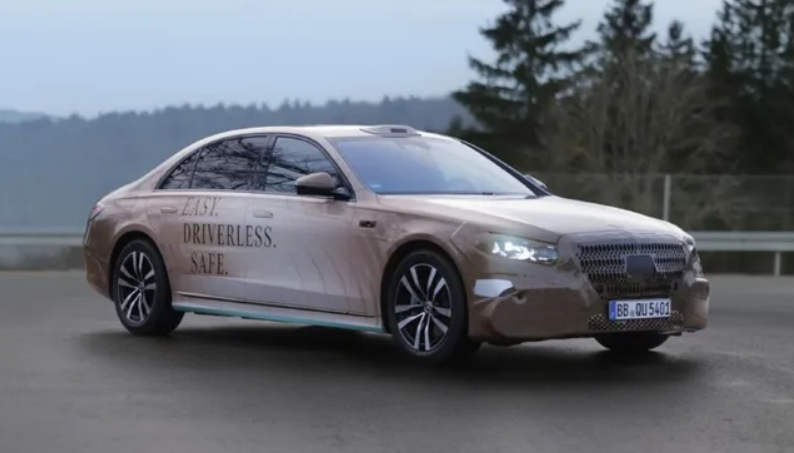
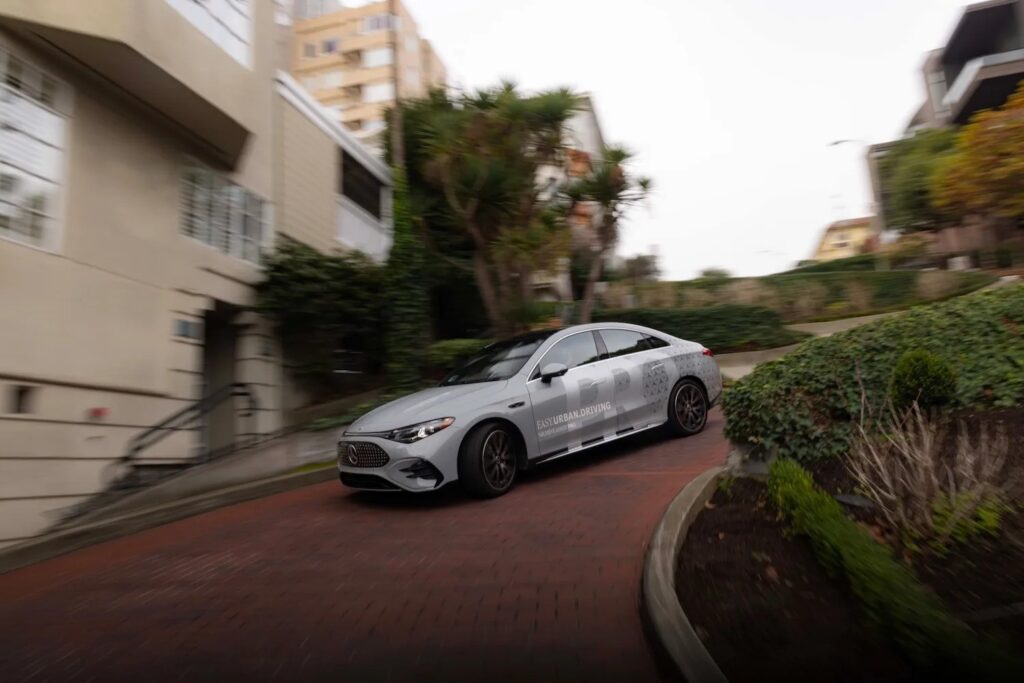
San Francisco has a way of surprising you. One moment it is wrapped in its usual blanket of fog, and the next the sky opens up to reveal postcard views of the Golden Gate Bridge. On this particular day, I was soaking in those views from the passenger seat of a 2026 Mercedes-Benz CLA-Class, when the car did something that still feels slightly unreal. It slowed to a stop sign, checked the intersection, and made a clean left turn without any help from the driver.
That moment was my first real taste of Mercedes’ newest driver-assist system, MB.Drive Assist Pro. The technology is set to arrive in the United States later this year as part of the redesigned CLA-Class lineup. According to Mercedes, it meets Level 2 standards on the Society of Automotive Engineers autonomy scale, which means the driver must remain alert and ready to take control at all times. Even so, during this drive, the car often felt more confident than many humans navigating city streets.
Driver-assist systems are nothing new. Technologies like General Motors’ Super Cruise have already proven how effective hands-free assistance can be on highways. Mercedes itself has gone further with its Level 3 Drive Pilot system, which allows drivers to disengage entirely in limited conditions. What makes Drive Assist Pro different is its focus on practicality rather than pushing automation for the sake of headlines.
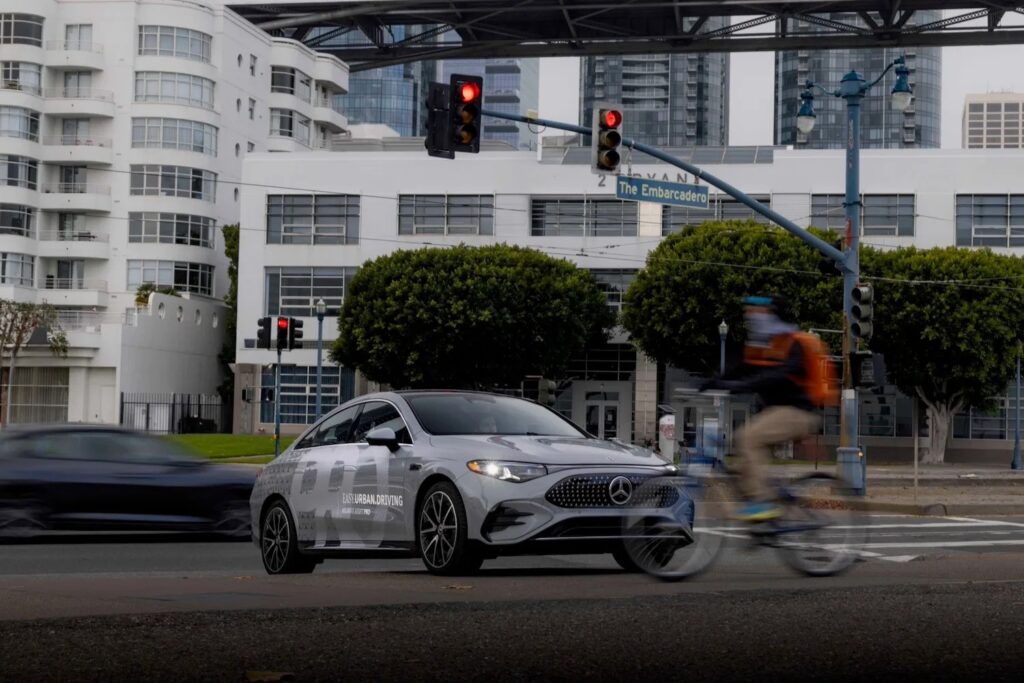
Instead of chasing full autonomy, Mercedes refined what Level 2 systems can realistically do today. Drive Assist Pro works on highways and city streets alike, provided the driver follows a preset route from the navigation system. That detail matters more than it sounds. It means the technology can stay active across an entire journey rather than switching off the moment you leave the freeway.
Another notable choice is where Mercedes decided to launch it. Drive Assist Pro makes its U.S. debut in the CLA, an entry-level model by luxury standards. While pricing for the system has not yet been finalized, the CLA itself starts around $48,500, making advanced driver assistance more accessible than similar offerings tied to high-end vehicles.
This accessibility comes from a hardware setup that is thorough without being excessive. The system relies on 10 cameras, five radar units, and 12 ultrasonic sensors. Unlike Mercedes’ Level 3 system, it does not use lidar, keeping costs under control while still delivering impressive situational awareness.
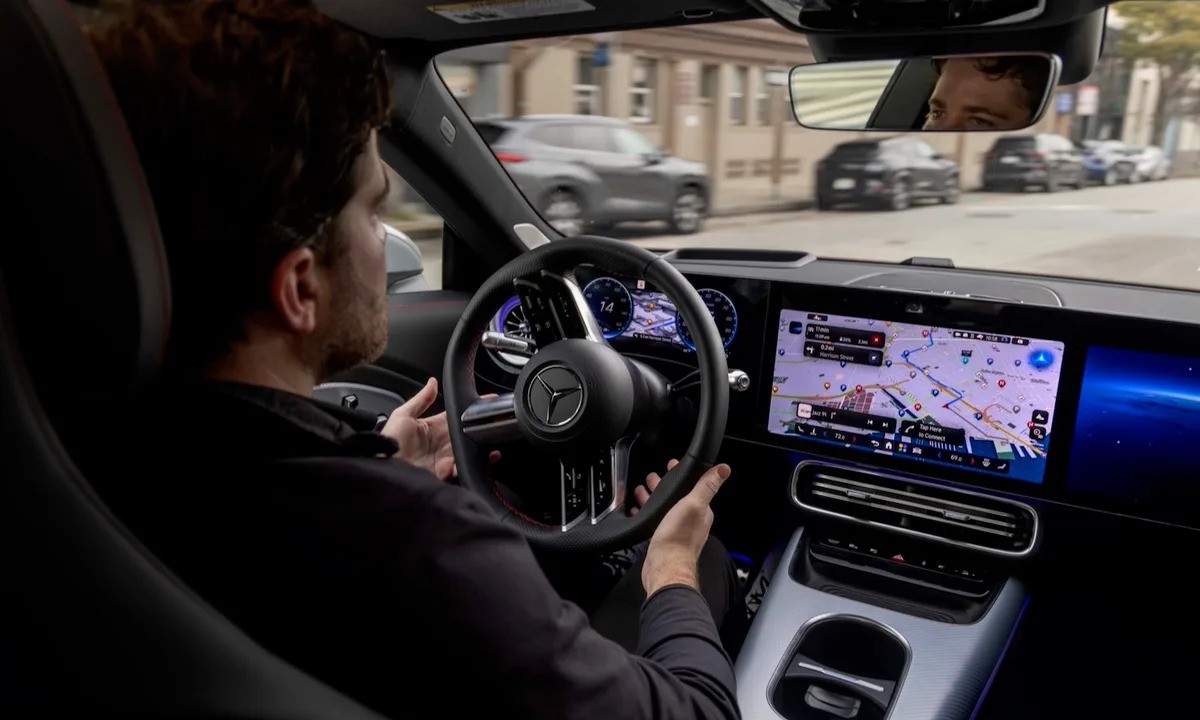
Because it remains a Level 2 system, the driver is always part of the equation. A driver-monitoring camera mounted above the infotainment screen ensures eyes stay on the road. What makes Mercedes’ approach feel more natural is something the company calls collaborative steering. Drivers can let the system handle steering entirely or place their hands on the wheel to guide it through situations they are not comfortable with. Either way, the system stays engaged, eliminating confusion about who is in control.
Deactivating Drive Assist Pro feels familiar too. A tap of the brake or pressing the cruise control cancel button shuts it down, just like Mercedes’ existing adaptive cruise systems. That consistency lowers the learning curve and encourages drivers to actually use the technology rather than ignore it.
City driving is where many driver-assist systems struggle, especially in places as unpredictable as San Francisco. To handle that complexity, Mercedes partnered with Nvidia to develop a flexible decision-making system. According to Nvidia’s automotive leadership, the AI works similarly to a large language model, but it is designed specifically for visual understanding. It processes camera and sensor data in real time while a traditional safety layer ensures the car always follows traffic laws.
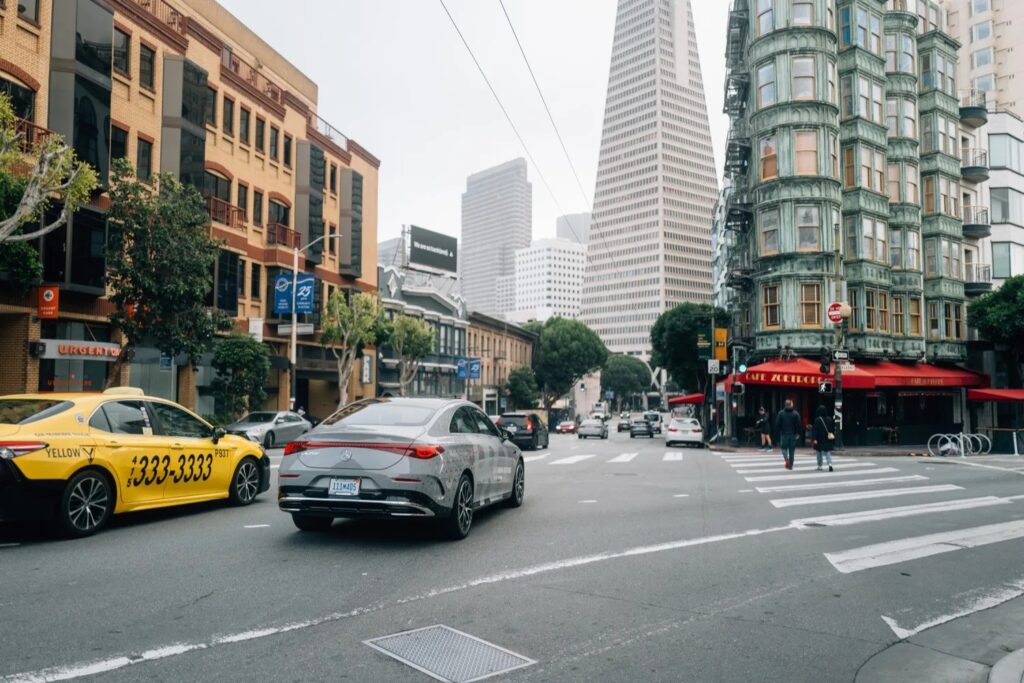
In real-world use, the results are surprisingly human-like. The CLA accelerated smoothly, braked naturally, and correctly interpreted traffic lights and road signs. It knew when right turns on red were not allowed and obeyed region-specific rules without hesitation. When the system encountered a double-parked car next to a solid yellow line, it refused to cross, even though a human driver might have been tempted. In those moments, the driver could simply steer around the obstacle and let the system continue working once clear.
There were also times when the technology attempted maneuvers that felt technically correct but slightly uncomfortable. On a street with broken yellow lines, Drive Assist Pro tried to pass two double-parked vehicles in one motion. The driver, uneasy about oncoming traffic, gently guided the car back into its lane. The system accepted that input instantly, no alerts, no disengagement, no drama.
That seamless collaboration is what turns Level 2 automation into something genuinely useful. There is no awkward handoff between human and machine. The driver simply intervenes when intuition suggests caution, and the system continues supporting the drive.
One of the more telling moments came during a complex left turn involving pedestrians, a crossing guard, and another vehicle attempting to merge into the same lane. The car hesitated, correctly recognizing the situation’s complexity. Instead of forcing a decision, it allowed the driver to step in naturally. That kind of behavior builds trust rather than undermining it.
Driving through San Francisco also meant sharing the road with autonomous vehicles from companies like Waymo and Zoox. Their sensor-laden Jaguar I-Pace SUVs served as a reminder of how difficult it is to scale fully driverless technology. Despite years of development, robotaxi services remain limited, and real-world challenges like unexpected vehicle shutdowns during power outages continue to surface, as highlighted in recent coverage of Waymo’s reliability issues.
Mercedes’ approach feels grounded by comparison. Rather than promising a future where drivers become passengers, Drive Assist Pro focuses on making everyday driving safer and less stressful right now. Other Level 2 systems exist, including Tesla’s so-called Full Self-Driving and newer iterations of Super Cruise, but Mercedes places more emphasis on interface design and driver engagement, especially outside the controlled environment of highways.
By keeping the driver involved while handling the most demanding parts of the task, MB.Drive Assist Pro feels like a logical step forward. It takes advantage of modern sensors and computing power without overpromising autonomy. What Mercedes delivers here is not a vision of tomorrow, but a refined tool designed for how people actually drive today.