For many companies, financial risk is not an abstract market problem. It shows up in the price of raw materials, the cost of shipping goods, the strength of a currency, and the sudden pressure on profit margins when markets move faster than expected. Big banks and major trading firms have long had the tools to understand and manage that kind of risk. Many ordinary businesses have not.
That gap is the problem Harsha Ramesh is trying to solve with Pillar.
As the CEO and co-founder of Pillar, Harsha Ramesh is building an AI-powered risk management platform for companies exposed to commodities, foreign exchange, and freight costs. The idea is simple but powerful. Businesses that operate in the physical world should not have to depend on scattered spreadsheets, broker calls, manual workflows, and expensive specialist teams just to protect themselves from market swings.
Pillar wants to bring institutional-grade hedging tools to the companies that need them most: manufacturers, importers, food businesses, metals traders, recyclers, logistics-heavy companies, and other businesses whose margins can be shaped by global volatility.
Who is Harsha Ramesh
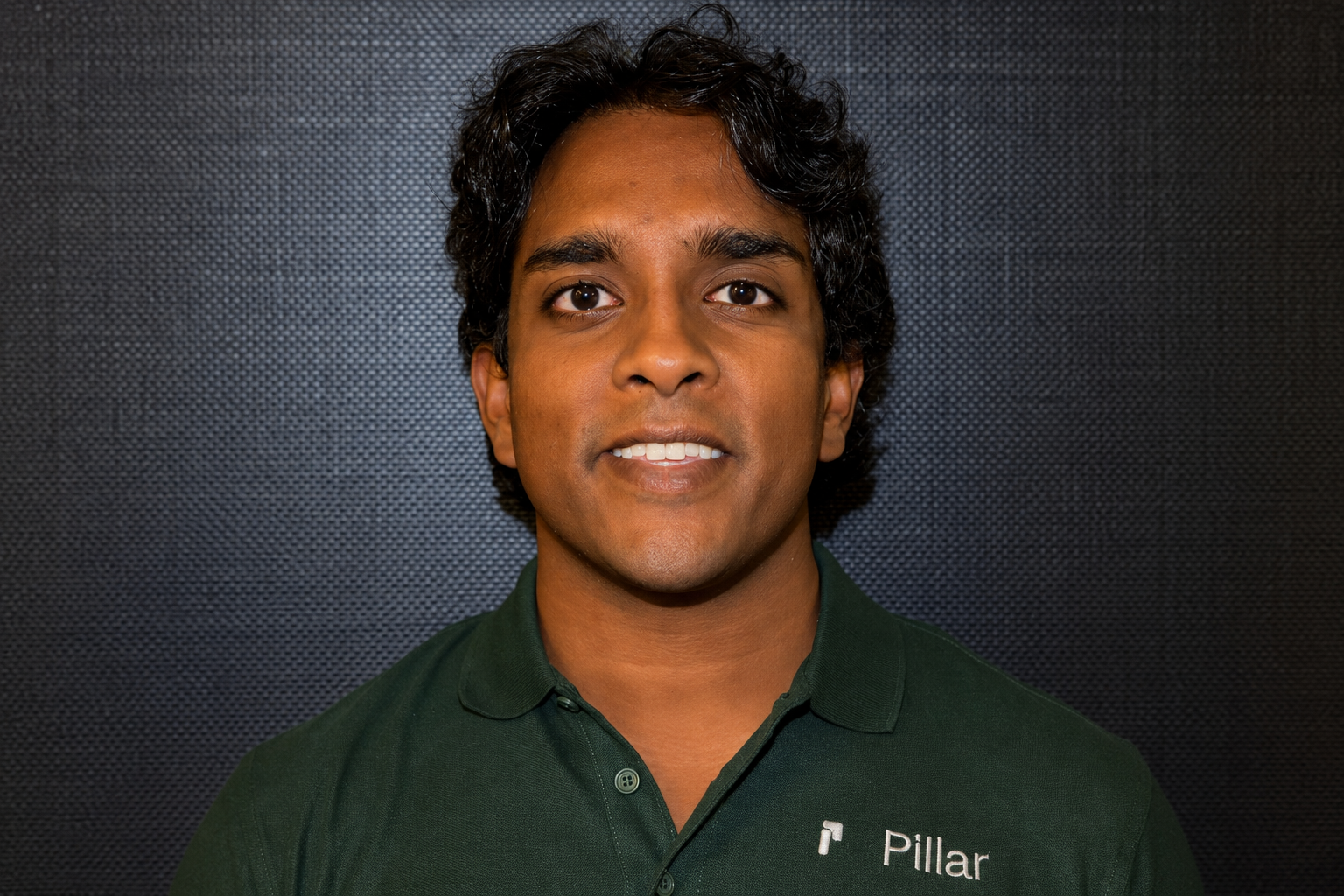
Harsha Ramesh is best known as the CEO and co-founder of Pillar, a fintech startup focused on modern financial risk management. His work sits at the intersection of trading, AI, commodities, and business operations.
What makes his founder story interesting is that Pillar is not built around a vague technology trend. It is built around a real business pain point. Companies that buy, sell, ship, or produce physical goods are constantly exposed to changes in commodity prices, currency rates, and freight costs. These exposures can move quickly, and when they do, the impact can be direct.
A company importing materials may suddenly face higher costs because of currency movement. A food business may struggle with unpredictable commodity pricing. A manufacturer may sign contracts based on one cost structure and then watch market prices shift before the work is complete. For large institutions, these risks are often tracked with advanced systems. For smaller and mid-sized businesses, the same risks may be handled through manual processes.
That is where Harsha Ramesh saw an opening. Pillar is designed to give these businesses a clearer way to identify, monitor, and manage market exposure before it becomes a serious margin problem.
The business problem Harsha Ramesh is trying to solve
The traditional world of hedging was not designed for everyday companies. It was built around banks, trading desks, institutional investors, and large corporations with specialized finance teams.
That leaves many physical-world businesses in a difficult position. They may understand their industry very well, but they may not have the tools to translate operational activity into a clean view of financial risk. Their exposure might be hidden across contracts, purchase orders, cash flows, inventory data, ERP systems, spreadsheets, and messages between teams.
Even when these companies know they are exposed, the process of managing that exposure can be slow. They may need to talk to brokers, compare prices, update spreadsheets, check internal approvals, and manually track positions over time. By the time the business has a full picture, the market may have already moved.
Pillar is built around the belief that hedging should not feel like a luxury. For businesses working with commodities, currencies, and freight, risk management can be as important as accounting, payments, payroll, or inventory planning.
Why hedging has been hard for everyday businesses
Hedging is meant to help companies protect themselves from unwanted market movement. In simple terms, it gives a business a way to reduce the damage caused by sudden changes in prices, exchange rates, or shipping costs.
But in practice, hedging can feel complicated.
Many companies do not have in-house trading experts. Others have finance teams that are already busy with reporting, budgeting, treasury work, and day-to-day operations. Some businesses depend on outside brokers or bank relationships, which can make the process feel less transparent. Others rely on spreadsheets that are hard to keep updated as market conditions change.
This creates a major problem. The companies most exposed to price swings are not always the ones with the best tools to manage them.
A metals recycler, for example, may deal with changing metal prices every week. A food company may face unpredictable input costs. An importer may be exposed to currency movement between purchase and delivery. A manufacturer may need to quote customers before knowing what future material prices will look like.
These are not minor details. They can affect pricing, cash flow, margins, and long-term planning.
How Pillar is bringing Wall Street level tools to more companies
Pillar is designed as a unified risk management platform for the physical economy. Instead of forcing companies to stitch together multiple tools and manual processes, the platform aims to bring risk analysis, portfolio construction, execution, monitoring, and accounting into one workflow.
That matters because risk management is not just one task. It is a chain of decisions.
A company first needs to understand where it is exposed. Then it needs to decide how much risk it wants to reduce. After that, it needs to structure a hedge, execute it, monitor it, update it when conditions change, and account for it properly. If every step lives in a different system, the process becomes slow and error-prone.
Pillar wants to collapse that fragmented stack into one platform.
This is where the Wall Street comparison becomes useful. Large financial institutions have long used sophisticated tools to monitor exposure and manage market risk. Harsha Ramesh is trying to bring a version of that capability to businesses that work in the real economy, not just finance.
The goal is not to turn every company into a trading desk. The goal is to make risk management easier to understand, easier to act on, and easier to keep updated.
Turning scattered business data into useful risk insight
One of the biggest challenges in commodity and currency risk is that the data is rarely neat.
A company’s risk exposure may be buried in contracts, invoices, supplier agreements, shipment schedules, purchase orders, inventory records, spreadsheets, and internal messages. These details may sit across different departments, from finance and procurement to operations and logistics.
For a human team, pulling all of that together can take time. It may also create room for missed details.
Pillar uses AI to help ingest and analyze business data so companies can get a clearer view of their exposure. That can make the risk management process more continuous, instead of something that only happens during occasional reviews.
This is an important shift. In volatile markets, a monthly or quarterly risk check may not be enough. Prices can move quickly. Freight rates can change. Currency swings can affect imported goods. If a company is only looking at its risk after the fact, it may already be too late to protect its margins.
By helping businesses monitor exposure more continuously, Pillar is trying to make hedging feel less reactive and more embedded in normal operations.
Why AI matters in Pillar’s approach
The use of AI in Pillar is not just about making the company sound modern. The practical value is in helping businesses deal with messy, fast-moving information.
AI can support the process of reading documents, connecting data points, detecting exposure, and helping teams understand where financial risk is building. It can also help automate repetitive parts of the hedging workflow, especially when a company is dealing with many contracts, currencies, commodities, or shipment timelines at once.
For businesses, this can create a better bridge between operations and financial markets.
A procurement team may see supplier costs. A logistics team may see freight movement. A finance team may see cash flow pressure. A leadership team may see shrinking margins. Pillar aims to connect those signals into a more complete risk picture.
That kind of visibility can help companies make faster and more confident decisions. It can also reduce the burden on teams that do not have the time or expertise to manually track every market movement.
Making hedging more continuous instead of occasional
Traditional hedging often happens in cycles. A company reviews exposure, talks through possible strategies, places trades, and then checks back later. That process can work, but it can also become outdated quickly.
Markets do not wait for internal meetings. Commodity prices can move daily. Currency rates can shift because of interest rates, political events, economic data, or global demand changes. Freight costs can rise when supply chains tighten or shipping routes face disruption.
Pillar is built around a more continuous model. The platform is designed to monitor exposure, help build hedge portfolios, and support adjustments as conditions change.
This does not mean humans disappear from the process. For important decisions, approvals, oversight, and strategy still matter. But the heavy manual work can be reduced. Instead of spending time gathering information and updating spreadsheets, teams can focus more on judgment, planning, and business decisions.
That balance is important. In financial risk management, automation is most useful when it improves speed and clarity without removing accountability.
Pillar’s funding and investor confidence
Pillar has attracted attention because it is solving a practical problem in a large and often overlooked part of the economy. The company raised a $20 million seed round led by Andreessen Horowitz, bringing its reported total funding to $23 million.
For a young fintech company, that backing matters. It shows investor confidence in the idea that commodity-driven businesses need better financial infrastructure.
The opportunity is easy to understand. Many businesses still manage serious market exposure through outdated systems. At the same time, the world has become more volatile. Supply chains are more complex. Currency movements can affect international trade. Commodity prices can shift quickly. Freight costs can change with global disruptions.
In that environment, risk tools that once felt optional may become essential.
Harsha Ramesh and Pillar are building for that shift.
Why investors may see opportunity in commodity risk management
Commodity risk management is not a small niche when viewed through the lens of the physical economy. Food, metals, energy, logistics, manufacturing, recycling, transportation, and global trade all involve some level of market exposure.
A business may not describe itself as a financial company, but it can still carry financial risk every day.
A manufacturer may depend on stable input costs. A food distributor may need to protect against price swings. A metals company may face constant movement in market pricing. An importer may be exposed to FX changes. A logistics-heavy company may be affected by freight volatility.
The common thread is that these businesses need better ways to protect margins and plan ahead.
That is why Pillar fits into a broader trend in fintech. The next wave of financial software is not only about consumers, payments, or banking apps. It is also about giving businesses deeper infrastructure for the financial problems they face behind the scenes.
What makes Harsha Ramesh’s founder story interesting
The strongest part of Harsha Ramesh’s story is the clarity of the problem he is working on. Pillar is not trying to create demand for a tool companies do not need. It is trying to modernize a process many businesses already struggle with.
That gives the company a grounded founder narrative.
Many founders talk about making complex systems easier. In Harsha Ramesh’s case, the complexity is very real. Hedging involves market data, financial instruments, exposure analysis, execution, accounting, compliance, and business judgment. For companies without large treasury or trading teams, that can be overwhelming.
By building Pillar, he is trying to make that complexity more manageable.
The founder story also works because it connects financial expertise with real business use cases. The target customer is not just a trader sitting in front of a market screen. It is a company trying to protect its operations from cost swings that can affect the entire business.
That makes the story more relatable. A business owner may not care about advanced financial language, but they do care about margins, cash flow, pricing, supplier costs, and planning.
Building for companies that cannot afford to get risk wrong
For many businesses, a sudden market move can create real pressure.
If a company signs a customer contract and then raw material prices jump, margins can shrink. If freight costs rise unexpectedly, delivery economics can change. If a currency weakens at the wrong time, imported goods can become more expensive. If a company is not monitoring exposure closely, it may only understand the damage after it has already happened.
That is why risk management matters beyond Wall Street.
Everyday businesses may not speak in the language of hedge portfolios and derivatives, but they live with the results of volatility. They need tools that translate market risk into business terms.
This is where Pillar can stand out. The company is not only building a financial product. It is building a business protection layer for companies that operate with real goods, real costs, and real supply chains.
How Pillar could change the future of hedging
If Pillar succeeds, hedging could become less intimidating and more integrated into normal business software.
That would be a meaningful change. Today, many companies may treat hedging as something separate from daily operations. It might sit with a finance leader, a broker, a consultant, or an outside bank. The process may feel disconnected from the actual movement of goods and costs inside the company.
A more modern system could make hedging part of the operating rhythm of a business.
That means exposure could be tracked as contracts change. Risk could be reviewed as inventory moves. Hedge strategies could adjust as markets shift. Accounting and reporting could become easier to manage. Leadership teams could see risk in clearer terms before it turns into a margin problem.
This is the kind of future Harsha Ramesh appears to be building toward with Pillar.
A simpler risk stack for commodity-driven companies
One of the clearest benefits of a platform like Pillar is simplicity.
Instead of using one system for contracts, another for spreadsheets, another for broker communication, another for market data, and another for accounting, companies could manage more of the process in one place.
That does not only save time. It can also improve accuracy.
When risk workflows are fragmented, details can get lost between teams and systems. A contract update may not reach finance quickly. A spreadsheet may not reflect the latest inventory number. A hedge position may not match the company’s current exposure. These gaps can create costly mistakes.
A unified risk platform can help reduce those gaps by keeping the workflow connected.
For companies working in volatile markets, that connection can be valuable. It gives teams a better chance to respond before market movement turns into business damage.
Why Harsha Ramesh and Pillar are worth watching
Harsha Ramesh and Pillar are worth watching because they are building in a space where the need is practical, the market is large, and the old way of doing things is still too manual for many businesses.
The story is not just about AI. It is about access.
For years, sophisticated risk management tools were mostly available to institutions with the money, people, and infrastructure to use them. Pillar is trying to bring that kind of capability to companies that operate in the physical world and face market volatility every day.
That makes Harsha Ramesh’s work meaningful beyond fintech headlines. If Pillar can make hedging more accessible, more continuous, and easier to understand, it could help businesses protect margins, plan with more confidence, and manage uncertainty without needing to operate like a Wall Street trading desk.
In a world where volatility has become part of doing business, that is a problem worth solving.