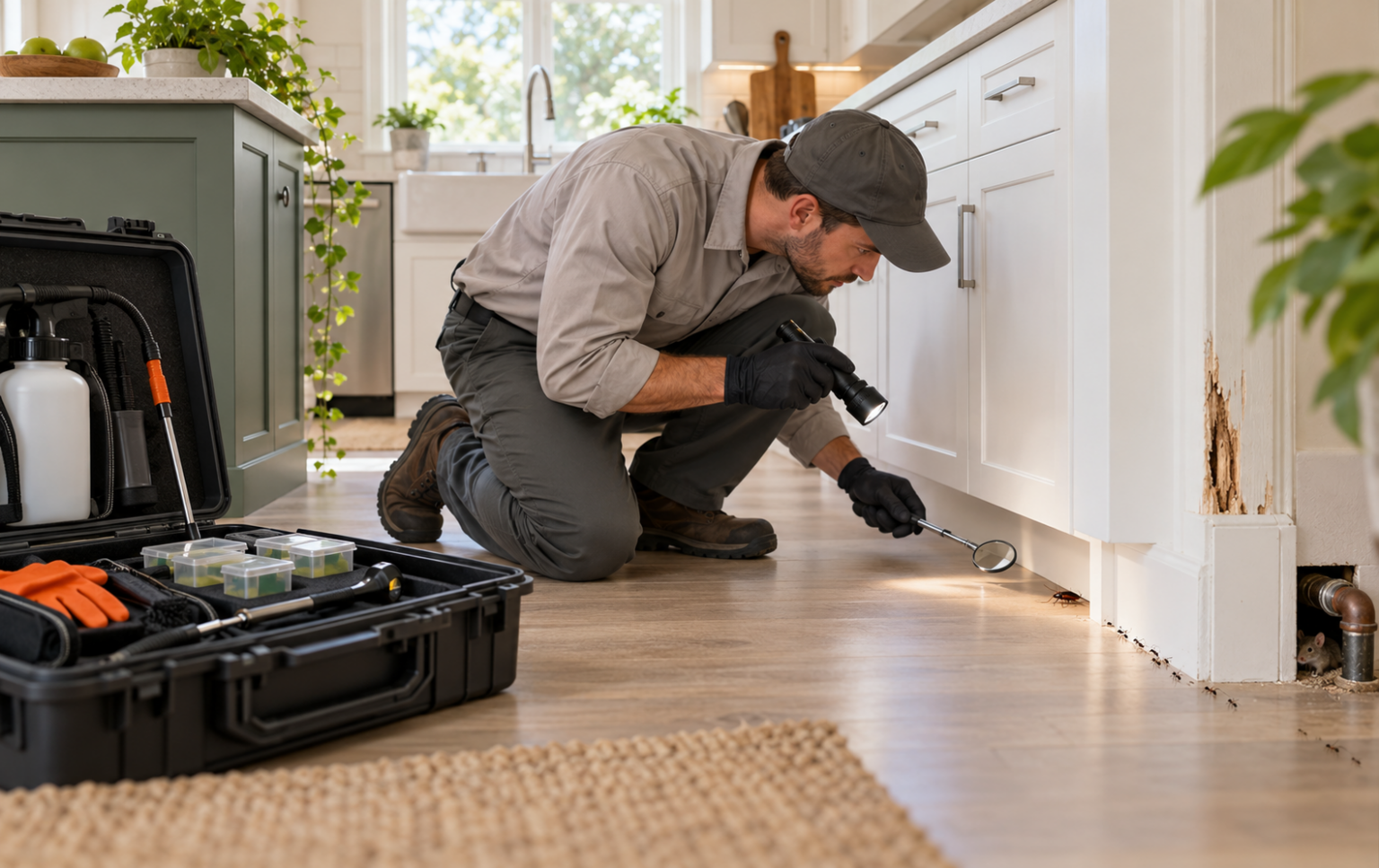
A one-time exterminator visit usually costs $100 to $600, with most homeowners paying a national average of $150 to $300. If you sign up for a recurring plan instead, you’ll pay less per stop — about $40 to $75 per visit, or roughly $300 to $900 a year for quarterly service.
The number swings hard based on two things: the pest and the severity. A single ant treatment can cost under $150. A whole-home bed bug or termite job can run into the thousands. Everything below breaks that down so you can price your specific problem before anyone steps on your property.
Florida note: Pest control here typically runs 10–25% above the national average. The subtropical climate keeps pests active all 12 months, and Florida is one of the few states dealing with two destructive termite types at once — subterranean and drywood — which pushes termite quotes higher than they’d be up north.
What you need before you book
You don’t need much, but having these ready gets you a faster, more accurate quote:
- Your home’s square footage. Most companies price partly by size. A 1,200 sq ft condo and a 3,500 sq ft house are not the same job.
- A rough pest ID. Even “small brown ants in the kitchen” or “I’ve seen two roaches at night” helps. If you’re not sure, most reputable companies offer a free inspection — take it.
- Access to the problem areas. Attic, crawl space, under sinks, garage. Blocked access means a vaguer quote and sometimes a return trip.
- Proof they’re licensed and insured. In Florida, pest control operators are licensed through the Department of Agriculture and Consumer Services (FDACS). Ask for the license number and confirm they carry liability insurance. A company that hesitates here is a company to skip.
Step-by-step: how to hire an exterminator
- Identify the pest — or schedule a free inspection. The treatment for German cockroaches is nothing like the treatment for rodents. A proper inspection also finds the source, not just the symptom.
- Get 2–3 quotes. Prices for the same job vary widely between companies. Comparing three keeps one outlier from setting your expectations.
- Ask about one-time vs. recurring plans. A single visit is cheaper today; a plan is cheaper per visit and usually includes free re-treatments between scheduled stops.
- Confirm exactly what’s included. Follow-up visits? A guarantee? Prep instructions you have to do first? Interior and exterior, or just one? Get it in writing.
- Schedule and prep the home. Bed bug and roach jobs in particular require real prep — laundry, decluttering, moving furniture. Skipping prep is the #1 reason a treatment underperforms.
- Follow up. Serious infestations need a second or third visit. Confirm those are covered before the first truck rolls, not after.
Exterminator cost by pest
Here’s what different pests actually cost to treat. Ranges reflect one-time professional service; the low end is a light, single-room issue and the high end is a heavy, whole-home infestation.
| Pest | Typical cost (one-time) | Notes |
|---|---|---|
| Ants | $60–$300 | Carpenter ants cost more than common sugar ants. |
| Cockroaches | $100–$600 | German roaches often need 2–3 visits. |
| Mice | $150–$300 | Includes trapping and sealing entry points. |
| Rats | $200–$2,500 | High end covers exclusion and cleanup. |
| Spiders | $100–$300 | Usually bundled into general pest service. |
| Fleas | $100–$400 | Often needs a follow-up 10–14 days later. |
| Wasps / bees | $100–$500 | Hard-to-reach nests cost more; bees may need relocation. |
| Bed bugs | $300–$500 per room; $2,500–$5,000 whole home | Heat treatment is priciest but fastest. |
| Termites | $500–$4,500 | Higher in Florida due to dual termite species. |
One-time vs. recurring plans
A one-time treatment makes sense for a specific, contained problem — a wasp nest, a one-off ant trail. A recurring plan (monthly, bi-monthly, or quarterly) makes sense if you live somewhere pests never take the winter off — which describes most of Florida. Quarterly service usually lands around $40–$75 per visit and includes free callbacks if something shows up between stops. Over a year, that’s often cheaper than two emergency one-time visits.
How long it takes to work
A standard treatment visit takes 30 minutes to 2 hours. You’ll often see a temporary uptick in activity for a few days as pests move around, then a steady drop over 1–2 weeks. Bed bugs and heavy roach jobs are the slow ones — budget for multiple visits over several weeks.
Common mistakes that cost you money
- Choosing the cheapest bid blind. The lowest quote sometimes skips the inspection, the guarantee, or the follow-ups. Cheap-then-repeat costs more than right-the-first-time.
- Not asking about the guarantee. A good plan re-treats free if pests return within a set window. If nobody mentions a guarantee, ask — its absence tells you something.
- Skipping prevention. Sealing entry points and fixing moisture is what stops the next infestation. Treatment without exclusion is a rental, not a fix.
- DIY-ing the wrong pest. Ants and the occasional spider? DIY is fine. Bed bugs, termites, or an established rat colony? These almost always need a pro, and waiting makes the eventual bill bigger.
- Getting a quote without an inspection. A price given sight-unseen is a guess. Insist on someone actually looking first.
Is it worth paying a pro?
For minor issues, DIY sprays and traps handle it for $20–$50. But when you’re weighing a real infestation, the math usually favors a pro: you’re paying for correct pest ID, professional-grade products, and a guarantee that DIY can’t offer. Termites alone cause billions in U.S. property damage a year — the treatment is cheap next to the repair.
Pest control is one of those recurring household costs worth budgeting for deliberately, alongside the other money decisions we cover in our Business & Money section. If you’re comparing service-industry pricing and pay in general, our breakdowns of In-N-Out manager salaries and recent consumer settlements like the Dollar General claims deadline take the same no-fluff approach to the numbers.
Bottom line: get three quotes, verify the license, confirm what’s included, and match the plan to your pest. Do that and you’ll pay a fair price the first time — no repeat visits, no surprises.
FAQs
How much is pest control per month?
On a recurring plan, expect roughly $40–$75 per visit. Quarterly service works out to about $30–$50 per month, or $300–$900 a year. Monthly service for a persistent problem runs higher. One-time visits are $100–$600.
How much does an exterminator cost for mice or rats?
Mice typically cost $150–$300 for trapping and sealing entry points. Rats run wider — $200 to $2,500 — because heavy infestations require exclusion work and cleanup on top of removal.
How much does an exterminator cost for bed bugs?
Bed bugs are among the priciest pests: about $300–$500 per room, or $2,500–$5,000 for a whole home. Heat treatment costs the most but usually clears the problem in a single session versus multiple chemical visits.
Does homeowners insurance cover exterminator costs?
Usually not. Standard homeowners policies treat pest infestations as preventable maintenance, so extermination and any pest damage are typically excluded. Always read your specific policy, but plan to pay out of pocket.
How often should you get pest control treatment?
Quarterly is the standard for most homes. In warm, humid states like Florida, bi-monthly or even monthly service is common because pests stay active year-round rather than dying back over winter.
Why is pest control more expensive in Florida?
Two reasons: the subtropical climate keeps pests breeding all 12 months, so treatments are more frequent, and Florida battles both subterranean and drywood termites, which makes termite work more involved and costly than in most states.