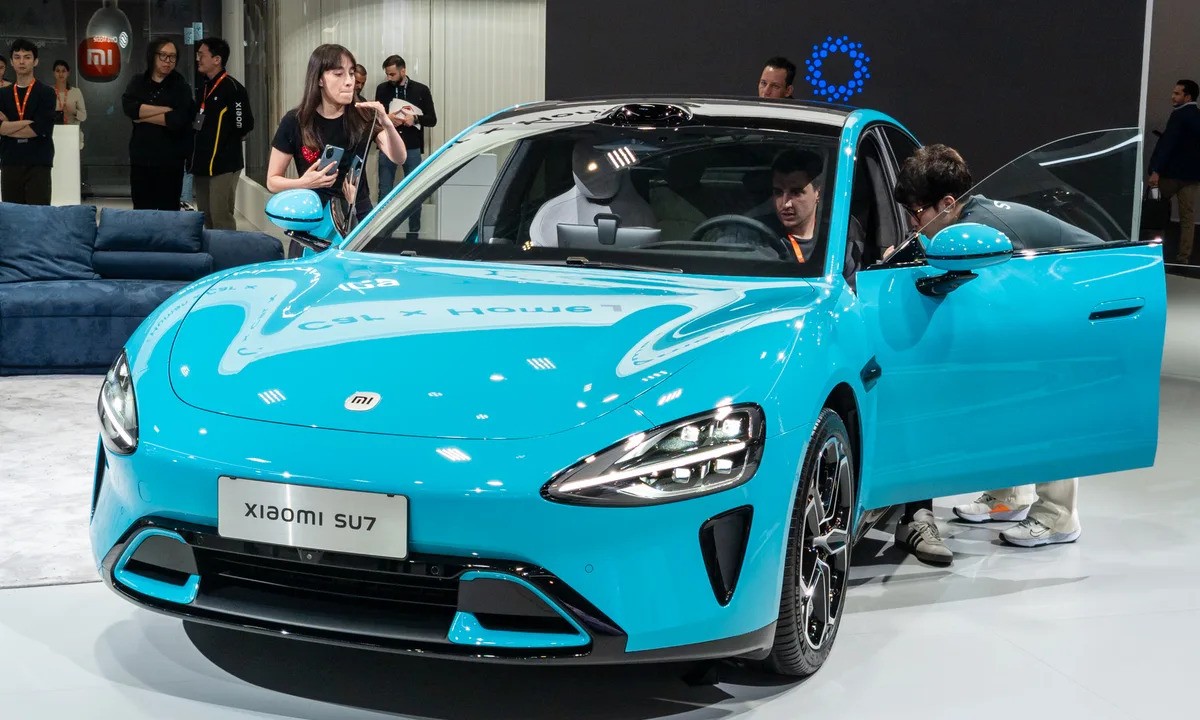
In one of the most closely watched shifts in China’s electric vehicle market, Xiaomi has managed to do what many established automakers failed to achieve. Its first electric sedan, the SU7, has officially outsold Tesla’s Model 3 in 2025, marking a major turning point in the world’s largest EV market.
Data from the China Passenger Car Association, cited by the South China Morning Post, shows that Xiaomi delivered 258,164 units of the SU7 during the year. In comparison, Tesla recorded 200,361 sales of the Model 3 over the same period. This is the first time since Tesla entered China that another brand has surpassed it in annual Model 3 sales, underscoring how quickly local competitors are gaining traction.
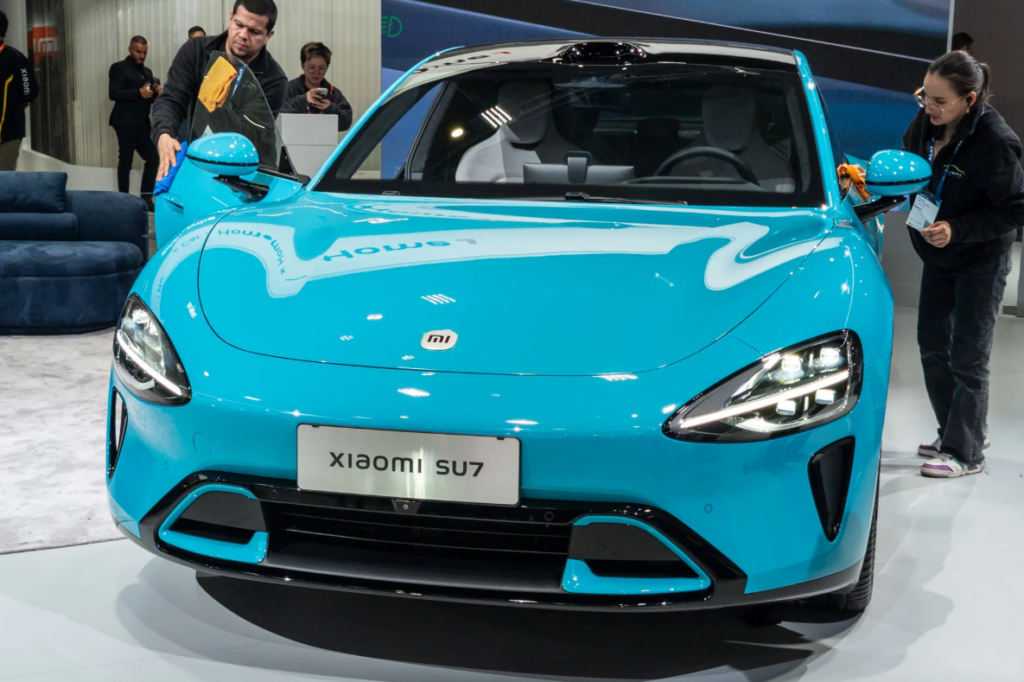
Xiaomi’s rapid rise is particularly notable given its background. The company built its reputation on smartphones, smart home devices, and consumer electronics, not automobiles. Yet its transition into EV manufacturing appears far more calculated than experimental. The SU7 entered the market with aggressive pricing, undercutting the base Model 3 by roughly 9 percent. While Tesla’s entry-level Model 3 is priced around CNY 235,500, Xiaomi’s baseline SU7 starts closer to CNY 215,900, immediately appealing to cost-conscious buyers.
Range has also played a significant role in the shift. The base SU7 offers a claimed 700 kilometers of range under China’s CLTC testing standard, noticeably higher than the Model 3’s 606 kilometers. For Chinese consumers, who closely compare specifications before purchasing, that difference carries weight.
Beyond numbers on a spec sheet, Xiaomi leaned heavily into its software and ecosystem strengths. The SU7 runs on HyperOS, deeply integrated with Xiaomi’s existing lineup of phones, tablets, and smart devices. Features such as free driver-assistance systems, seamless smartphone connectivity, and a familiar user interface helped make the vehicle feel like an extension of Xiaomi’s broader tech ecosystem rather than a standalone car.
Production speed has been another advantage. Xiaomi scaled manufacturing quickly to meet demand, avoiding the long waiting periods that have frustrated buyers of other EV brands in the past. As demand surged, the company was able to keep deliveries moving, reinforcing consumer confidence and accelerating adoption.
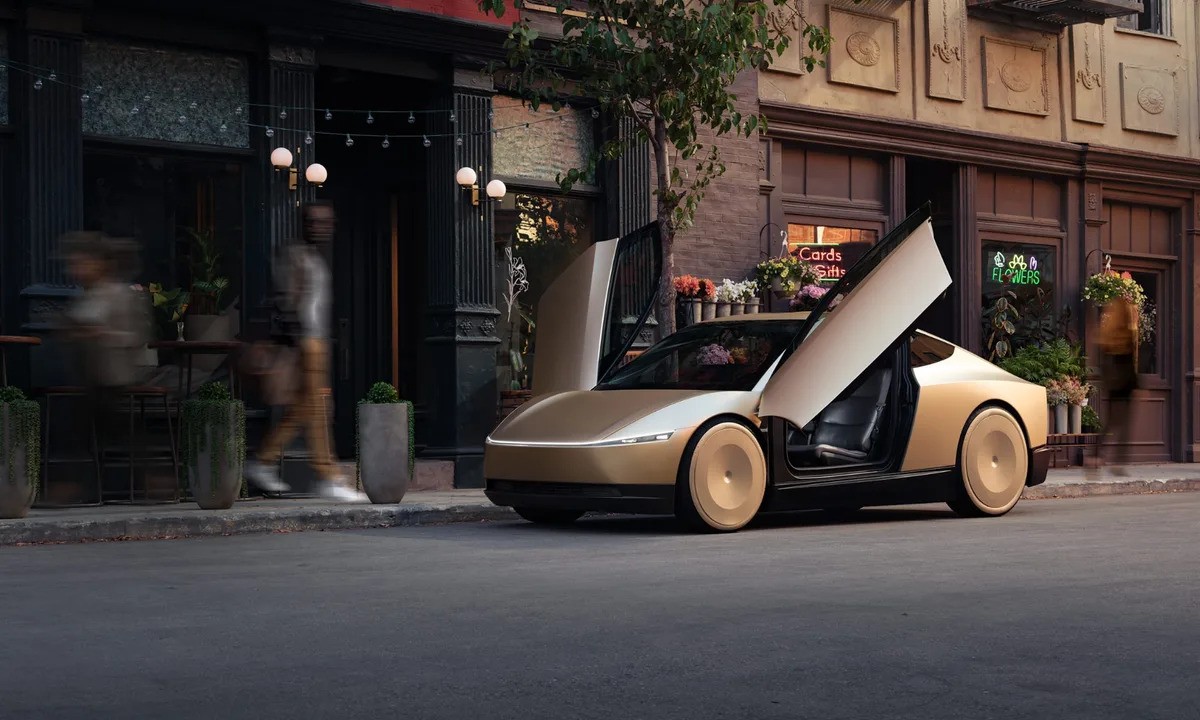
For context, Tesla’s Model 3 remains one of the most influential electric vehicles ever produced. It helped normalize EV ownership globally and became a benchmark against which competing sedans are measured. Since its arrival in China in 2019, the Model 3 held onto the premium electric sedan title despite waves of competition from domestic startups offering bold designs and feature-heavy alternatives.
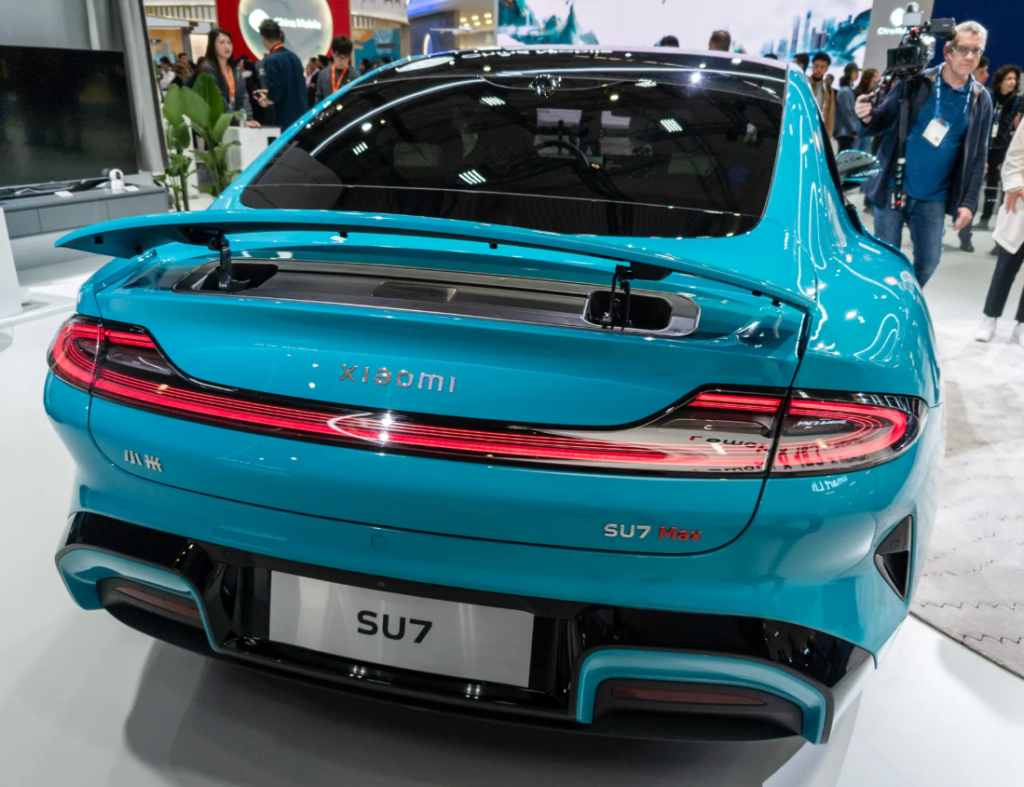
What sets Xiaomi apart is how decisively it has connected with local buyers. A brand long associated with affordable smartphones and Android flagships has delivered a vehicle that resonates on both value and quality. This momentum has built rapidly since the SU7’s Chinese debut in April 2024, transforming Xiaomi from a newcomer into a serious force almost overnight.
The broader implications extend beyond a single model. Xiaomi’s success reinforces the growing strength of Chinese automakers, demonstrating that local brands can compete head-to-head with global leaders on scale, technology, and execution rather than price alone. For Tesla, the numbers serve as a clear signal that competition in China is intensifying and that maintaining dominance will require faster adaptation to local preferences.
As Xiaomi continues expanding its automotive ambitions, additional models are expected to follow, potentially placing even more pressure on Tesla’s lineup. The SU7’s performance shows how quickly market dynamics can change when consumer expectations, technology integration, and pricing align in the right way.