Let’s clear up an important reality before anything else. The RTX 5090 you see inside a laptop is not the same monster GPU that sits inside a full desktop tower. Physics still sets the rules. You cannot push hundreds of watts through a slim chassis without serious compromises. But the latest benchmark data shows that focusing only on that gap completely misses the real story unfolding with Nvidia’s newest mobile hardware.
What is happening with Nvidia’s Blackwell-based RTX 50 series laptops is less about brute force and more about intelligent efficiency. Instead of chasing unrealistic 8K ambitions, these mobile GPUs are designed to deliver fast, consistent performance at 1440p and 4K while staying within thermal limits that actually make sense for portable machines. For the first time in years, high refresh rate gaming with ray tracing is possible on a laptop without constant fan noise or aggressive throttling.
For people who travel frequently, work remotely, or simply do not want a large desktop setup, this shift changes the buying equation. The performance trade-off between desktop and laptop is shrinking in ways that finally feel practical rather than aspirational.
One of the most surprising developments this cycle is pricing. Early adopters are usually punished with inflated costs, yet competition among retailers is doing the opposite. Deals on RTX 50 series laptops are appearing far sooner than expected, making this generation far more accessible than previous launches.
Take the Acer Predator Helios Neo 16 AI as an example. Seeing an RTX 5070 Ti paired with a high refresh WQXGA display at this price point feels almost unreal. The panel actually allows you to take advantage of the frames being pushed, and the Core Ultra 9 processor keeps the GPU consistently fed. When you factor in current discounts, it delivers one of the strongest frame-per-dollar ratios available right now. Listings like this on platforms such as Amazon are reshaping what buyers should expect from a mid-range gaming laptop.
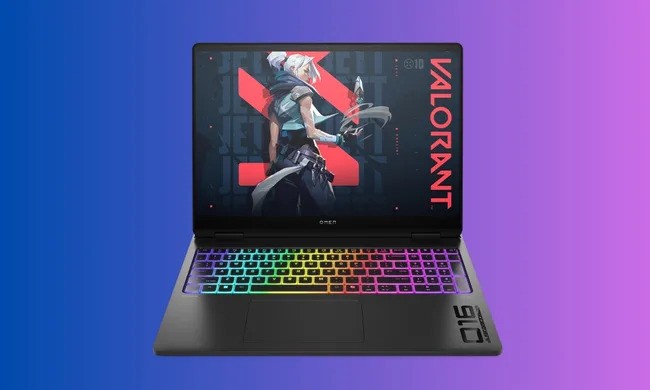
Moving up the stack, the HP OMEN MAX 16 approaches the market from a different angle. While many gaming laptops cut corners on memory and storage, this model leans heavily into creator-focused performance. With 64GB of DDR5 RAM and a large SSD out of the box, it handles demanding workflows like video editing, 3D rendering, and code compilation without hesitation. Pairing the Ryzen AI 9 HX processor with an RTX 5080 creates a system that feels equally at home in creative software and modern AAA games. For users juggling professional workloads alongside gaming, the premium begins to justify itself quickly.
At the top end sits the Lenovo Legion Pro 7i Gen 10, which represents the absolute ceiling of what is currently possible in a portable form factor. The mobile RTX 5090 is the fastest GPU you can realistically carry onto a flight, and Lenovo complements it with an OLED display that makes standard IPS panels look flat by comparison. Deep blacks, strong contrast, and smooth motion elevate both gaming and content consumption. It is expensive, without question, but for enthusiasts who demand maximum ray tracing performance on the go, it sets a clear benchmark.
What ties all of these machines together is efficiency. Blackwell mobile architecture focuses heavily on performance per watt, allowing laptops to deliver sustained output without excessive heat buildup. This approach benefits not just gamers, but creators and professionals who rely on consistent performance over long sessions. Nvidia’s push toward smarter power management aligns closely with the broader industry trend toward portable yet powerful computing, as highlighted in ongoing coverage from outlets like Digital Trends and broader discussions around GPU evolution on Nvidia’s official platform.
For anyone still holding onto a 30 series laptop and waiting for a meaningful upgrade moment, this generation finally delivers a compelling reason to move. The gains are not just visible in benchmark charts, but in day-to-day usability. Quieter operation, smoother frame pacing, and better thermals change how these machines feel to use, not just how they score in tests.
The current market window is unusual. Discounts are offsetting what would normally be early-cycle pricing, while availability remains strong across multiple brands. Whether you are looking for value-focused performance, creator-oriented power, or absolute top-tier mobile hardware, the RTX 50 series laptop lineup covers more ground than expected this early in its lifecycle.
Instead of waiting indefinitely for desktop GPUs to normalize, many buyers may find that mobile Blackwell already offers the balance they were hoping for. Portability no longer feels like a compromise. In many cases, it feels like the smarter decision.