A fresh wave of laptops is expected to arrive in 2026, powered by next-generation chips from Intel, AMD, and Qualcomm, promising noticeable gains in speed, efficiency, and AI performance.
CES has long been the stage where laptop makers set the tone for the year ahead, and CES 2026 looks ready to continue that tradition. Beyond flashy demos, the show often signals deeper shifts in how notebooks are designed, priced, and positioned. Early signs suggest performance improvements will be widespread across different platforms, form factors, and price segments, but there is a growing constraint quietly shaping everything behind the scenes: memory costs.
At the center of next year’s laptop lineup are new mobile processors. Intel is preparing its Core Ultra Series 3 platform, internally known as Panther Lake. AMD is lining up its Gorgon Point refresh, which includes the Ryzen AI 400 family. Qualcomm is pushing forward with its second-generation Snapdragon X2 chips. Together, these platforms are expected to define what laptops look like and how they perform throughout 2026.
Intel Panther Lake and a much-needed reset
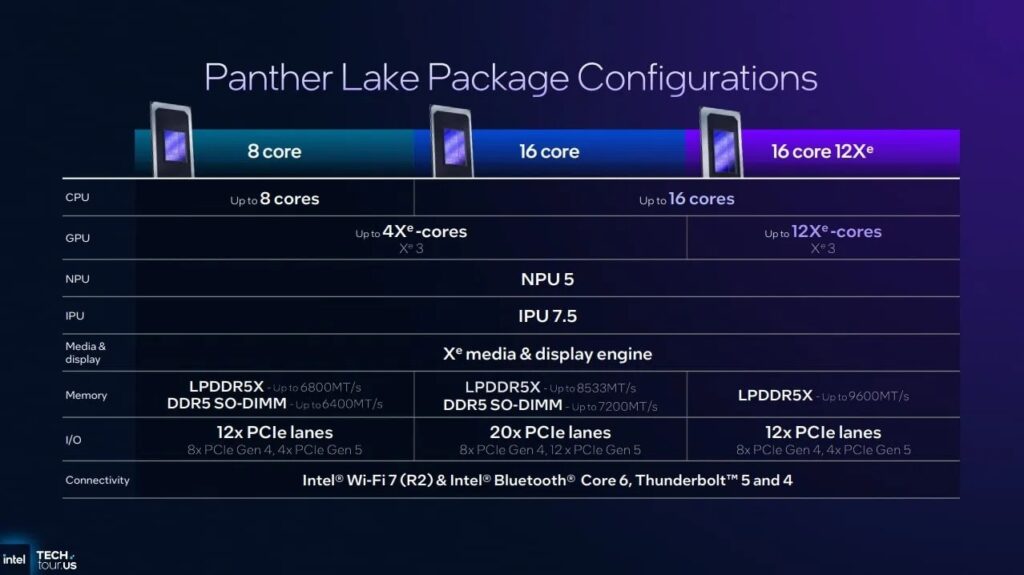
After several uneven mobile CPU generations, Panther Lake represents a critical moment for Intel. Built on the company’s advanced 18A manufacturing process, the platform is designed to combine the efficiency gains introduced with Lunar Lake and the raw performance improvements seen in Arrow Lake.
One of the headline upgrades is graphics. Panther Lake will feature Intel Arc Xe3 graphics, also referred to as Celestial, with Intel claiming up to 50 percent higher performance compared to earlier Arc generations. Power efficiency is also a major focus, with Intel suggesting more than 30 percent lower power consumption at similar performance levels versus Arrow Lake.
AI capabilities continue to expand as well. Panther Lake integrates Intel’s NPU 5, rated at up to 50 TOPS. While that represents a modest jump over Lunar Lake, it keeps Intel competitive as local AI processing becomes more central to Windows laptops.
Several manufacturers are already rumored to be preparing Panther Lake systems. Lenovo is expected to introduce new ThinkPad models built around the platform, including refreshed versions of the ThinkPad X1 Carbon and ThinkPad X9, alongside more unconventional designs such as compact desktop-class systems. MSI has also confirmed that its upcoming Prestige laptops will feature Intel’s new chips.
There are signs that Panther Lake could enable thinner gaming laptops without the usual trade-offs. Thunderobot, a Chinese brand known for compact gaming PCs, is reportedly launching the Zero Air gaming laptop, pairing Panther Lake with Nvidia’s upcoming RTX 50-series mobile GPUs in a lightweight 16-inch chassis. If accurate, it suggests Intel’s new platform could improve efficiency enough to support powerful hardware in slimmer designs without sacrificing thermals or battery life.
That balance has been Intel’s biggest challenge in recent years. Raw performance has rarely been the issue. Consistent efficiency under real-world workloads has. If Panther Lake delivers on its promises, it could help restore confidence among laptop makers that have increasingly leaned on AMD and Qualcomm for thinner and quieter machines.
AMD Gorgon Point focuses on refinement
AMD appears set to continue its recent mobile strategy of steady refinement rather than dramatic reinvention. Known internally as Gorgon Point, the Ryzen AI 400 series is expected to debut at CES 2026 as an evolution of Strix Point and Krackan Point rather than a clean-slate architecture.
The new chips are expected to retain Zen 5 and Zen 5c CPU cores, combined with RDNA 3.5 integrated graphics. Clock speeds are expected to rise, and AI performance should see a modest boost thanks to the updated XDNA 2 NPU, which is rumored to deliver up to 55 TOPS. That places AMD slightly ahead of its current Ryzen AI 300 lineup and keeps it competitive as AI acceleration becomes a more visible selling point.
For many buyers, these incremental gains may matter more than headline-grabbing benchmarks. Ryzen-based laptops have built a strong reputation for balanced performance, capable integrated graphics, and solid efficiency, especially in systems without dedicated GPUs. Gorgon Point looks positioned to extend that formula, appealing to creators, developers, and power users who want capable performance in thinner, quieter designs.
Several laptops featuring Gorgon Point are expected to appear at the show, including updates to Lenovo’s Legion lineup and refreshed Asus Vivobook models. If AMD chips begin showing up more frequently in premium ultrabooks, it would signal growing confidence from OEMs and further blur the lines between performance and thin-and-light categories.
Qualcomm Snapdragon X2 and the Arm momentum
Qualcomm made its ambitions clear well ahead of CES 2026 by announcing the Snapdragon X2 Elite and X2 Elite Extreme. CES will be the moment where those chips are tested in real laptops rather than slides and spec sheets.
The first generation of Snapdragon X laptops demonstrated what Arm-based Windows systems could do well. Battery life was strong, systems were quiet, and everyday performance felt smooth for typical productivity tasks. At the same time, those machines often felt like early-adopter products. App compatibility issues, inconsistent gaming performance, and premium pricing kept them from becoming mainstream alternatives to x86 laptops.

The Snapdragon X2 generation is Qualcomm’s attempt to move past those limitations. Built on a 3nm process and powered by third-generation Oryon CPU cores, the lineup scales from 8-core and 12-core Elite models to the 18-core X2 Elite Extreme. Boost clocks are rumored to reach as high as 5GHz on the top-tier variant, pushing Qualcomm firmly into high-end territory.
AI performance is a major part of the pitch. The X2 series integrates an upgraded Hexagon NPU capable of delivering up to 80 TOPS, comfortably exceeding current Copilot Plus requirements. Qualcomm is positioning these chips not just for benchmarks, but for always-on AI tasks, background inference, and local tools that do not drain battery life.
Graphics performance is also receiving more attention. Qualcomm has promised notable GPU improvements aimed at better gaming and smoother creative workloads in thin designs. While these systems are unlikely to compete with laptops using discrete GPUs, the goal appears to be eliminating the idea that Arm laptops are only suitable for office work and web browsing.
CES 2026 is expected to showcase more ambitious Snapdragon-based designs as a result. Thinner laptops, near-silent cooling, and battery life claims stretching beyond a single workday are all likely. Support for modern standards such as PCIe 5, UFS 4, and optional 5G connectivity further reinforces Qualcomm’s vision of always-connected, always-ready PCs.
Laptop designs are becoming more experimental
Beyond silicon, CES 2026 is expected to highlight a growing range of laptop form factors. While many products will remain evolutionary, early teasers suggest manufacturers are also preparing more experimental designs that move beyond traditional clamshells.
Asus has already hinted at a new ProArt laptop inspired by action cameras, leaning into rugged aesthetics and functional design. Early details suggest a focus on creators working in unpredictable environments, with reinforced construction, physical controls, and design choices that prioritize usability over extreme thinness. A built-in dial for creative tools and a more durable chassis point toward a laptop built for field work rather than studio desks.
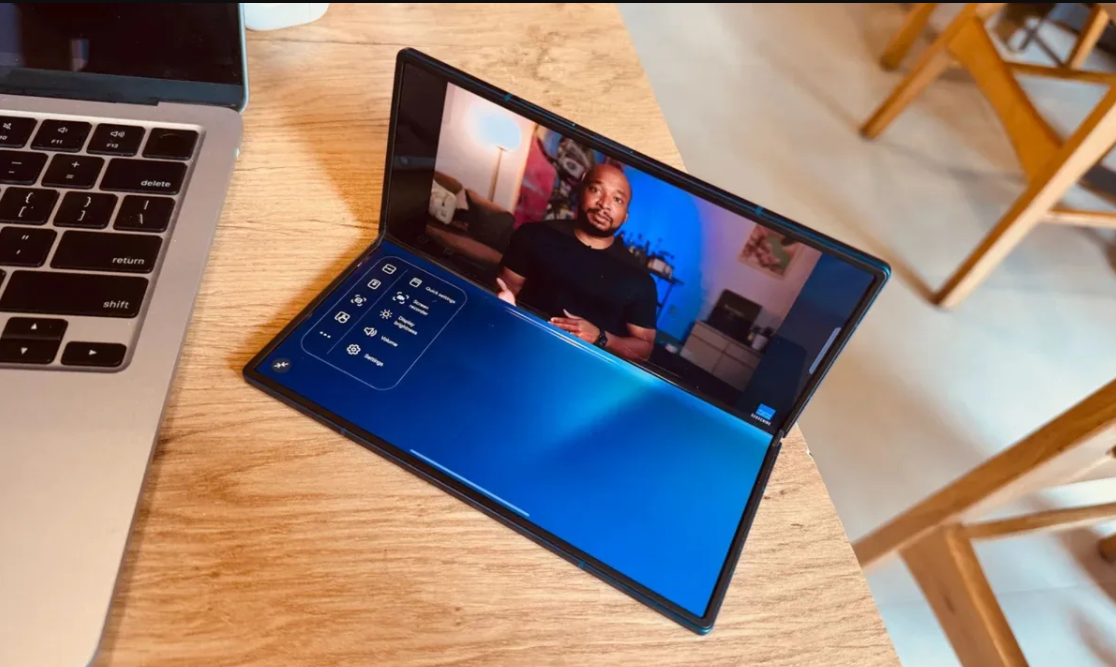
At the opposite end of the spectrum, Asus has also teased a new ROG dual-screen gaming laptop. Dual-display designs have existed for years, but improvements in efficiency could finally make them feel practical rather than compromised. With more efficient CPUs and GPUs reducing thermal constraints, systems can afford additional displays without severe penalties to performance or battery life. For streamers and multitaskers, this approach aligns closely with modern workflows.
Lenovo may also be preparing a bold form factor. Leaks suggest a Legion Pro laptop featuring a rollable OLED display that expands from 16 inches to 24 inches. If it reaches production, it would represent a significant rethink of portable gaming laptops, offering a compact footprint for travel and a much larger display when docked at a desk.
These designs share a common theme. Efficiency gains from upcoming processors give manufacturers more freedom to rethink layouts, cooling, and interaction without pushing systems beyond acceptable power and thermal limits.
The growing pressure of rising memory prices
All of these advances come with an uncomfortable trade-off. Memory prices are climbing rapidly, and that pressure is expected to hit laptops hard in 2026, regardless of how compelling new CPUs may be.
According to a recent report from TrendForce, PC makers have already begun reacting. Dell has reportedly raised laptop prices by 15 to 20 percent starting in mid-December 2025, with Lenovo expected to follow similar increases in early 2026. These hikes are largely driven by surging DRAM and NAND costs, which manufacturers have limited ability to absorb.
To keep entry-level prices from climbing even higher, some OEMs may reduce base configurations instead. There is a real possibility that 8GB of RAM becomes standard again for mid-range laptops, pushing 16GB and 32GB options into significantly higher price tiers. This comes at a time when modern operating systems, web browsers, and AI-driven features are increasingly memory-hungry.
Industry reports also suggest that some manufacturers may delay launches until supply and pricing stabilize, while others could ship barebones systems that place the burden of memory and storage upgrades on consumers.
For buyers, this creates a disconnect. A laptop powered by a brand-new processor may look impressive on a CES stage, but feel constrained once it reaches store shelves due to limited RAM or inflated upgrade costs. While CES announcements will focus on performance gains and AI features, memory pricing may quietly become the factor that most strongly shapes how attractive next-generation laptops feel throughout 2026.