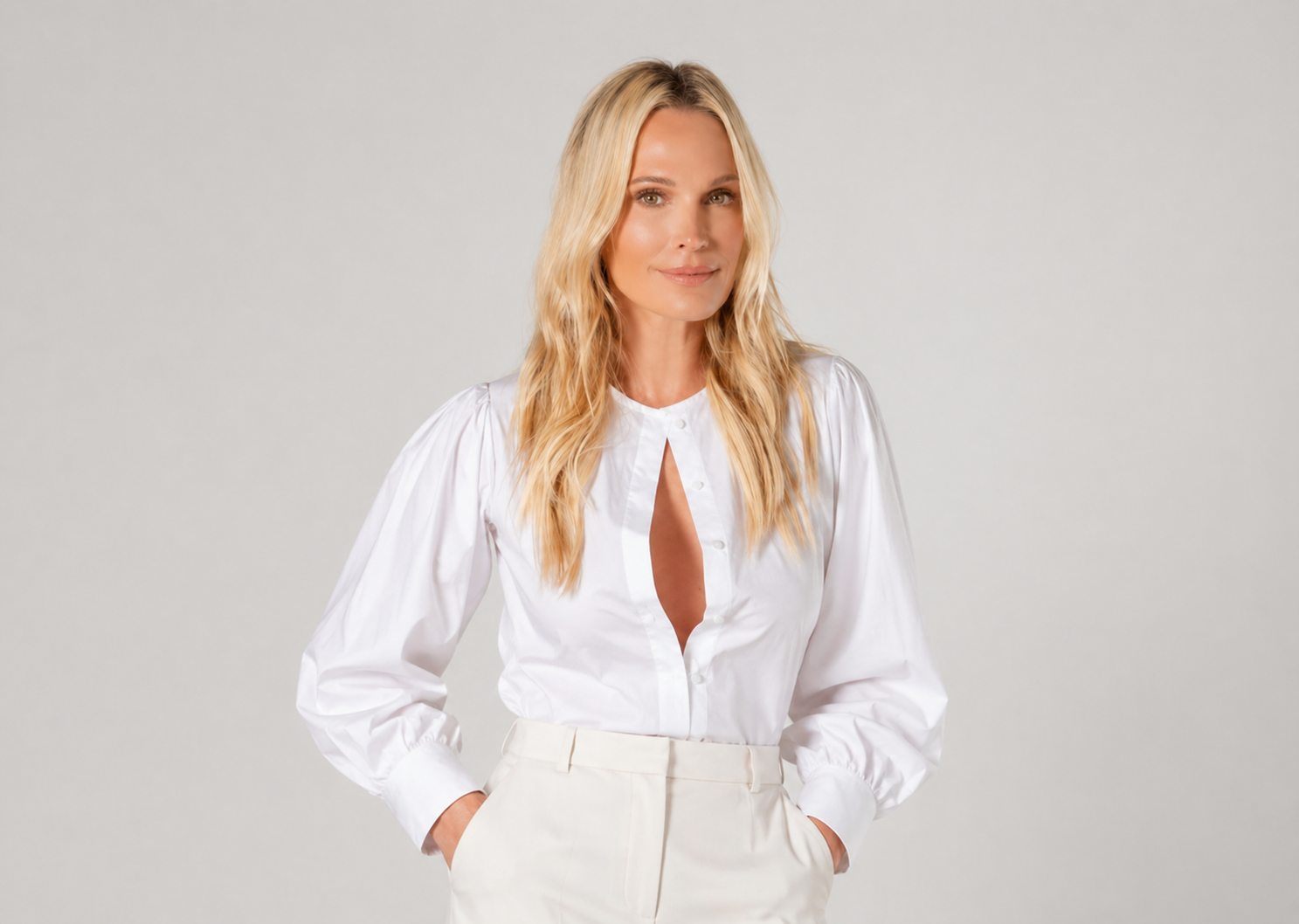
Molly Sims did not enter beauty as an outsider trying to borrow credibility from a trend. She had spent years around makeup artists, skincare experts, product launches, photo shoots, and endless beauty conversations. She knew how the industry talked, what it sold, and what it often ignored. That background gave her a front-row seat to beauty at its most polished, but it also made her more aware of the gap between marketing and real life.
That gap became impossible to ignore when her own skin changed.
As she got older, Sims dealt with issues many women know well but do not always see reflected in glossy campaigns. Hyperpigmentation, discoloration, uneven tone, adult skin concerns, and the frustration of trying products that either felt too harsh or too complicated became part of her personal experience. Instead of brushing past those struggles, she used them as the starting point for something bigger.
That is where YSE Beauty came from.
The brand was not built around celebrity appeal alone. It was built around a specific customer, a specific problem, and a specific promise. YSE Beauty spoke to women who wanted better skin, easier routines, and products that felt effective without turning skincare into a full-time job. That clarity helped the brand stand out in a crowded market and turned a personal frustration into a real business success.
Who Molly Sims Is and Why Her Beauty Story Connected
Molly Sims already had visibility long before YSE Beauty launched. She was known as a model, actress, host, and media personality, and over the years she built a public image that felt polished but approachable. That matters in beauty, because audiences can usually tell when a founder is stepping into the space with genuine interest and when they are simply chasing a market opportunity.
In Sims’ case, beauty was not a random business move. It matched the way she had lived publicly for years. She had spoken openly about wellness, aging, skincare, beauty habits, and the reality of trying to look and feel good while balancing work, family, and everyday responsibilities. That gave her a foundation many celebrity brands lack. People could see the connection between her life, her interests, and the brand she created.
Just as important, she did not present herself as someone with perfect skin who had finally decided to bottle her glow. She came forward as someone who had tried a lot, learned a lot, and still struggled with issues that many women face in silence. That honesty gave YSE Beauty a more believable starting point.
The Personal Skin Struggles That Sparked YSE Beauty
The strongest beauty brands usually begin with a real need, and that was true here. Sims has spoken about dealing with hyperpigmentation and skin discoloration, especially as her skin changed over time. Those concerns pushed her into the familiar cycle of testing product after product, hoping to find formulas that worked without making things worse.
That search revealed a problem that went beyond ingredients. Many routines were too aggressive, too long, or too disconnected from real life. Some products promised dramatic transformation but ignored skin barrier health. Others felt overly clinical or intimidating. And many brands still marketed skincare in a way that did not fully speak to women who were older, busier, and looking for practical results instead of impossible perfection.
That is what made the brand idea stronger than a simple founder story. Sims was not only trying to solve her own skin concerns. She was recognizing a wider market gap. There were plenty of brands selling aspiration, but fewer offering a thoughtful, edited skincare approach for women who wanted skin support, not skin stress.
When a founder can turn a personal problem into a broader customer insight, the business starts to matter more. YSE Beauty grew from exactly that kind of insight.
Why YSE Beauty Entered the Market at the Right Time
Beauty is crowded, but crowded markets do not scare strong brands. In fact, they often make clarity even more valuable.
When YSE Beauty launched, skincare consumers already had endless options. There were celebrity brands, clean beauty lines, dermatologist-backed brands, minimalist brands, luxury brands, and social media driven skincare trends. On paper, it may have looked like the worst possible moment to introduce another name into the category.
But the market still had a blind spot.
A lot of beauty marketing continued to focus heavily on youth, trend cycles, or complicated routines. Women in their late 30s, 40s, 50s, and beyond were shopping for skincare, spending on skincare, and talking about skincare, yet many still felt underserved. They wanted products that respected their time, supported their skin barrier, addressed concerns like dullness, uneven tone, fine lines, and dark spots, and did not require ten complicated steps.
YSE Beauty stepped into that space with a more focused message. It was not trying to be everything for everyone. It was saying something much simpler: busy women deserve products that are easy to use, clinically effective, and relevant to the skin concerns they actually have.
That positioning gave the brand an edge. Instead of competing on noise, it competed on relevance.
What Made YSE Beauty Different From Other Celebrity Beauty Brands
One reason YSE Beauty gained attention is because it did not lean too heavily on the usual celebrity brand playbook. It was not built around glamour first and product second. The language around the brand centered on solutions, routines, and skin concerns that felt familiar to real customers.
The difference showed up in a few important ways.
First, the brand felt edited. Rather than flooding the market with a huge assortment, YSE Beauty focused on a more curated lineup. That made the brand easier to understand and easier to shop.
Second, the formulas were positioned as barrier-friendly and clinically effective. That combination matters because today’s skincare shopper is more informed than ever. People want active ingredients and visible results, but they are also more aware of irritation, over-exfoliation, and long-term skin health. YSE Beauty fit that shift by offering products that aimed to do the work without overwhelming the skin.
Third, the brand was designed around real routines. This was not skincare for people who enjoy a 14-step ritual every night. It was skincare for women who want products that can fit into busy mornings, tired evenings, travel, work schedules, and family life.
That practical angle gave YSE Beauty something powerful: usefulness. In beauty, usefulness builds loyalty faster than hype.
A Brand Built Around Routine Instead of Hype
A lot of brands know how to create attention. Far fewer know how to become part of a customer’s everyday life.
YSE Beauty leaned into the second path.
Instead of pushing a fantasy version of skincare, the brand was built around the idea that women want products they will actually use. That sounds simple, but it is a major business advantage. When products feel intuitive, routines feel manageable, and results feel realistic, customers are more likely to stick around.
This is also where Sims’ founder perspective helped. She understood the emotional side of beauty, but she also understood the practical side. Women do not just buy skincare because they want flawless skin. They buy it because they want to feel more confident, more put together, more supported, and less frustrated by products that overpromise.
By building around that emotional and practical overlap, YSE Beauty made itself more relatable. It offered an easier entry point into good skincare, and that helped the brand feel modern without feeling trendy in a disposable way.
The Role of Brand Positioning in YSE Beauty’s Growth
Brand positioning is often what separates a brand that gets noticed from one that gets remembered.
YSE Beauty’s positioning was strong because it answered three questions clearly.
Who is this for?
Busy women, especially those who felt overlooked by beauty marketing and wanted smarter skincare that fit real life.
What problem does it solve?
It addresses concerns like hyperpigmentation, uneven tone, dullness, and visible signs of aging while keeping routines simple and supportive.
Why should people trust it?
Because the founder story made sense, the messaging felt specific, and the product philosophy sounded grounded in experience instead of marketing fluff.
That level of clarity matters. In a saturated beauty category, vague brands fade fast. YSE Beauty did not try to appeal to every possible skincare shopper. It carved out a more defined identity, and that made it easier for customers, editors, retailers, and the market itself to understand what the brand stood for.
How Molly Sims Used Trust and Transparency to Build the Brand
Trust is a major part of beauty now. Shoppers have seen too many miracle claims, too many trend-driven launches, and too many celebrity brands with weak product stories. To break through, a founder has to offer more than visibility.
Sims helped build trust by being open about why the brand existed. She did not frame YSE Beauty as a vanity project. She framed it as a response to real skin concerns and a genuine frustration with what was missing in the market.
That kind of transparency matters because it changes the relationship between founder and customer. Instead of speaking down to the audience, the founder is speaking from a shared experience. That makes the brand feel less like a campaign and more like a conversation.
Founder visibility also helped. Sims did not disappear behind the logo. She stayed connected to the brand story, the products, and the customer perspective. In an era where founder-led brands often grow through trust and relatability, that visibility became part of YSE Beauty’s strength.
From Direct to Consumer Launch to Bigger Retail Momentum
One of the clearest signs that YSE Beauty moved beyond launch buzz was its retail expansion.
The brand began by selling directly to consumers, which gave it room to shape its message, build community, and prove demand on its own terms. That stage matters for young beauty brands because it creates direct feedback loops. A brand can learn quickly, understand what customers love, and refine how it talks about itself.
As YSE Beauty gained traction, the next chapter became even more important. The brand expanded into Sephora, a milestone that signaled far more than added shelf space. Retail entry at that level is a form of validation. It suggests that buyers see long-term potential, that the assortment is strong enough to compete, and that the brand has earned a place in a much bigger conversation.
For a brand that began with one founder’s skin struggle, that kind of growth says a lot. It shows that the story translated into products people wanted, a message people understood, and a brand platform that could scale.
The Business Lessons Behind Molly Sims’ YSE Beauty Success
There are several useful lessons in the YSE Beauty story, especially for founders building in crowded categories.
The first is that a real problem is still the best place to start. Sims did not invent a brand around abstract trend forecasting. She built around a need she personally understood.
The second is that specificity wins. YSE Beauty was clearer than many beauty launches because it knew who it was talking to and why that audience mattered.
The third is that simplicity can be a growth strategy. Consumers do not always want more steps, more products, or more confusion. Sometimes the strongest move is to make beauty feel easier.
The fourth is that credibility is built, not borrowed. Even with a well-known founder, the brand still needed strong positioning, product relevance, and trust.
The fifth is that retail momentum usually follows brand clarity. YSE Beauty did not become interesting because it reached bigger shelves. It reached bigger shelves because the brand story, customer fit, and product promise were strong enough to travel.
What Other Beauty Founders Can Learn From YSE Beauty
The rise of YSE Beauty is a reminder that consumers are not only buying formulas. They are buying fit. They want brands that understand where they are in life, what their skin is dealing with, and how much time and energy they realistically have.
That is why the brand’s success feels bigger than one founder or one product line. It reflects a shift in what beauty customers value. They want honesty. They want thoughtful product development. They want clinical performance without unnecessary complication. And they want brands that make them feel seen.
Molly Sims tapped into that with YSE Beauty by staying close to the actual problem. She did not try to outshout the market. She built something more useful.
That is often what lasting beauty success looks like. Not louder branding. Not a bigger celebrity. Just a sharper understanding of what people need and a better way to serve them.
Why Molly Sims and YSE Beauty Continue to Stand Out
What makes the story of Molly Sims and YSE Beauty worth paying attention to is that it combines personal truth with smart brand building. The brand was born from real skin frustration, shaped by clear customer insight, and strengthened by practical positioning in a crowded market.
It also benefited from timing, patience, and founder credibility, but those things alone would not have been enough. What gave the brand momentum was the fact that it solved a real problem for a customer who was ready to buy.
That is the difference between a beauty brand that gets attention for a moment and a beauty brand that starts building real staying power. Molly Sims did not just put her name on a product line. She used her experience, her audience understanding, and her own skin journey to create a brand that made sense.
And in beauty, brands that make sense tend to last.