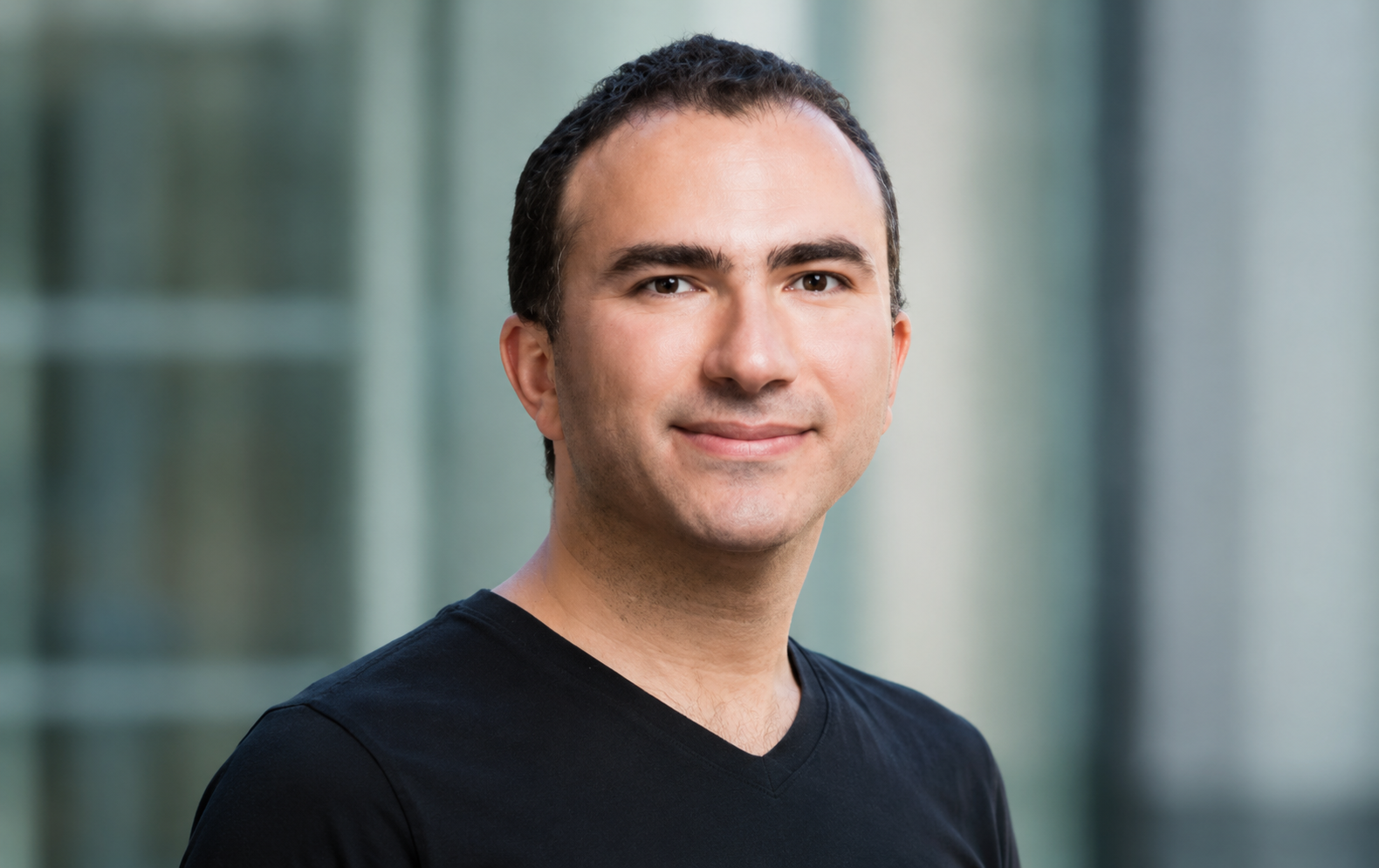
The rise of AI agents has created a strange problem for software companies. The technology can now complete real work, but many businesses still price it like traditional software. That mismatch is exactly where Manny Medina sees an opportunity.
After building Outreach into one of the best-known sales software companies, Medina has turned his attention to a new challenge in the AI economy. His company Paid is focused on helping AI agent companies charge for the value their products actually create. Instead of forcing AI startups to rely only on seats, subscriptions, or token-based pricing, Paid gives them tools to price, bill, track costs, manage margins, and connect revenue to outcomes.
That matters because AI agents are not just another software feature. A strong agent can handle support tickets, qualify leads, process invoices, review claims, book meetings, or complete parts of a workflow that once required a person or a team. When software starts doing the work, pricing has to change too.
This is the bigger story behind Manny Medina and Paid. It is not only about a founder launching another startup. It is about how the business model for AI companies may need to evolve if agents are going to become a lasting part of enterprise software.
Who is Manny Medina
Manny Medina is best known as the founder and former CEO of Outreach, a sales engagement and revenue workflow platform that became a major name in enterprise software. Outreach helped sales teams manage prospecting, follow-ups, customer conversations, and revenue activities more efficiently.
That experience gives Medina a strong point of view on how software companies grow. He has seen how sales teams buy tools, how companies justify software spend, and how pricing models can either support or slow down adoption. He also understands the pressure founders face when they have to prove value to customers while keeping their own margins healthy.
With Paid, Medina is applying those lessons to a very different market. AI agent companies are not just selling dashboards or workflow tools. Many of them are selling digital workers that perform tasks, reduce manual effort, or improve business results. That creates a new commercial question. How should a company charge when its product is doing measurable work for the customer?
That question sits at the center of Paid’s mission.
Why AI agent companies need a new billing model
Traditional SaaS pricing was built around access. A company bought a software seat for each user, paid a monthly or annual subscription, and expected employees to use the tool. That model made sense when software mainly helped people work faster.
AI agents change that pattern. An agent may complete a workflow without a human spending much time inside the product. It may replace manual steps, reduce labor costs, improve speed, or create a direct business outcome. In that world, charging only by seat can feel outdated.
Usage-based pricing also has limits. Many AI companies charge based on tokens, API calls, credits, or actions. That can work in some cases, but it often pushes the customer to think about cost instead of value. A buyer may not care how many tokens an AI agent used to resolve a support issue. They care whether the issue was solved, whether the customer was satisfied, and whether the company saved time or money.
This is why AI agent pricing is becoming one of the most important topics in software. Companies need a model that reflects real outcomes while still protecting their own economics. Without that, an AI startup may deliver huge value but capture only a small part of it. Or it may price too aggressively and lose money every time its agent runs.
Paid is designed to help companies avoid both problems.
What Paid is building
Paid is building a revenue engine for AI agent companies. Its platform helps AI businesses manage pricing, subscriptions, usage, billing, renewals, margins, and cost tracking from one place.
That may sound like back-office infrastructure, but for AI companies it can become a core part of the product itself. If an AI agent company wants to charge by completed task, successful outcome, usage level, customer savings, or workflow volume, it needs a system that can measure those events and turn them into clean billing.
Paid aims to make that easier. It helps AI companies understand how much each customer costs to serve, what margin they are making on every deal, and how different pricing models affect growth. That is especially important because AI costs can vary quickly. Model usage, compute, data pipelines, integrations, human review, and customer-specific workflows can all affect profitability.
For a founder, this creates a simple but serious question. Are we making money every time our AI agent does the work we promised?
Paid wants to give companies a clearer answer.
How Paid helps AI companies charge for real outcomes
The most interesting part of Paid’s model is its focus on outcomes. Outcome-based billing means a company charges based on results rather than simple access or raw usage. In practical terms, this means an AI company can connect pricing to the work its agent completes or the value it creates.
For example, an AI support agent could charge based on tickets resolved. A sales agent could charge based on qualified leads or booked meetings. A finance agent could charge based on invoices processed. An insurance agent could charge based on claims reviewed. A recruiting agent could charge based on screened candidates or completed hiring workflows.
This kind of pricing feels more natural for AI agents because the product is not just being opened or clicked. It is performing a job.
The benefit for customers is clear. They can connect spending to results. Instead of paying for a tool and hoping people use it well, they pay for completed work or measurable business impact. That can make AI adoption easier to justify, especially for companies that are tired of vague promises around automation.
The benefit for AI startups is also important. If their agent creates serious value, they can capture more revenue than they would with a basic seat-based model. A company that saves a customer hundreds of hours a month should not always be limited to a small subscription fee. Paid gives these companies the infrastructure to build pricing around the value they actually deliver.
Charging for completed work
One of the simplest ways AI agent companies can move toward outcome-based billing is by charging for completed work. This is easier to understand than abstract AI usage and easier for customers to evaluate.
A customer does not need to know the exact model calls behind a completed workflow. They can look at the output. Was the support ticket resolved? Was the invoice processed? Was the lead qualified? Was the renewal workflow completed? Was the report prepared?
This creates a cleaner relationship between buyer and vendor. The AI company is rewarded when its agent performs useful work. The customer is billed for something they can recognize.
For many AI startups, this could become a bridge between usage-based pricing and full outcome-based pricing. It gives them more flexibility than seats while avoiding the complexity of measuring deeper business impact too early.
Charging for value created
The next step is pricing around value. This is where the AI agent’s impact becomes more strategic.
An agent may reduce costs, increase conversion rates, speed up operations, improve customer satisfaction, or prevent revenue leakage. In those cases, the most important question is not how often the product was used. It is how much value the customer gained.
This is also where pricing becomes more difficult. Both sides need to agree on what counts as value. If an AI agent helps a business save labor hours, the company needs a fair way to measure those savings. If it helps increase revenue, there must be a clear method for connecting the agent’s work to that result.
Paid’s role is to help AI companies build the financial and billing structure around that kind of value. The more measurable the outcome, the easier it becomes to price confidently.
Why Manny Medina’s Outreach experience matters
Manny Medina’s experience with Outreach matters because Paid is not only a technical product. It is a go-to-market product. It sits close to pricing, sales, renewals, customer value, and revenue operations.
At Outreach, Medina helped build software for sales teams, which gave him a close view of how companies buy, sell, expand, and renew software. Those lessons are useful in the AI agent market because pricing is not just a finance decision. It affects the sales conversation, the customer’s trust, the renewal path, and the company’s ability to scale.
If a pricing model is too simple, the AI company may leave money on the table. If it is too complicated, customers may hesitate. If it does not track costs properly, growth can hide weak margins. If it does not connect to outcomes, buyers may not see enough proof of value.
Paid is trying to solve those problems before they become growth blockers for AI companies.
The move from seat-based SaaS to value-based AI pricing
For years, SaaS companies grew by selling seats. More users meant more revenue. That model worked because software was usually tied to individual employees.
AI agents break that logic. One agent may perform work that used to involve several employees. In some cases, a company may need fewer human users inside the software because the agent is doing more of the work directly. That makes per-seat pricing less connected to value.
This is why value-based AI pricing is becoming more important. Instead of asking how many people are logging in, AI companies are asking what work is being completed and what business result is being created.
Paid is building around that shift. It gives AI agent companies a way to test pricing models that match the new shape of software. That may include usage-based plans, workflow-based pricing, outcome-based billing, subscriptions, renewals, and hybrid models that combine several approaches.
The key idea is flexibility. AI companies need the freedom to price in a way that matches their customer’s reality.
The pricing maturity curve for AI companies
A useful way to understand Paid’s market is to think about pricing maturity. Many AI companies start with basic activity-based pricing. They charge for things like credits, tokens, API calls, or number of actions. This is easy to launch, but it does not always reflect customer value.
The next stage is workflow-based pricing. Here, companies charge for a completed business process. This might include handling a customer support case, processing a claim, or completing an onboarding workflow.
After that comes outcome-based pricing. This connects revenue to the result the customer actually cares about, such as cost savings, revenue growth, faster resolution, higher conversion, or better productivity.
Some companies may eventually move toward agent-based pricing, where the AI agent is treated almost like a digital worker. In that model, pricing may reflect the role the agent plays inside the business and the value of the work it performs.
Paid is positioned across this maturity curve. It can help early AI startups experiment with simple pricing, then move toward more advanced models as their product and customer base mature.
Why investors are paying attention to Paid
Paid has attracted attention because AI monetization is still a large unsolved problem. Many startups are building impressive agents, but the market is still learning how to price them. Investors understand that the companies solving infrastructure problems around AI could become important layers of the ecosystem.
This is why Paid’s funding story matters. Backing from well-known investors signals that the market sees billing and pricing as more than administrative work. It sees them as a key part of how AI companies will survive and scale.
AI startups are under pressure to show more than product demos. They need strong unit economics, clear pricing, reliable margins, and a story customers can trust. Paid sits directly in that pressure point.
The bigger opportunity behind Paid
The opportunity behind Paid is bigger than billing software. It is about helping AI companies turn technical performance into commercial value.
The AI market is full of excitement, but excitement does not automatically create durable businesses. Customers need proof that AI tools are worth the spend. Founders need pricing models that support growth. Sales teams need simple ways to explain value. Finance teams need clean billing and margin visibility.
Paid brings these pieces together for AI agent companies. If agents become a normal part of business operations, the companies building them will need stronger revenue systems than basic subscriptions or manual invoices.
That is where Paid could become valuable. It is not trying to replace AI agents. It is trying to help the builders of those agents get paid in a way that matches the results they create.
Challenges Paid will need to solve
Outcome-based billing sounds powerful, but it is not always easy. Paid will need to help companies handle the messy parts of measuring value.
Some outcomes are simple. A ticket was resolved or it was not. An invoice was processed or it was not. A meeting was booked or it was not.
Other outcomes are harder. Did the AI agent directly increase revenue? Did it improve customer satisfaction? Did it save enough time to justify a higher fee? Did it reduce costs in a way both sides can agree on?
These questions matter because pricing depends on trust. Customers need to believe the measurement is fair. Vendors need to know they are being paid for the value they create. If the model feels confusing or one-sided, it may slow adoption.
Paid also needs to help companies keep pricing simple enough for buyers. Enterprise customers may like the idea of paying for results, but they still need predictable budgets, clear contracts, and easy-to-understand invoices.
This balance between flexibility and simplicity will be one of the biggest tests for Paid.
Why Manny Medina’s work with Paid could shape the AI agent economy
Manny Medina is entering the AI market through a practical problem. Instead of focusing only on model performance or agent capabilities, Paid focuses on the business layer that sits behind adoption.
That makes the company interesting. AI agents may become more capable every year, but capability alone is not enough. They also need a business model that works for the vendor and makes sense to the buyer.
Paid is built around that gap. It helps AI companies move from vague value claims to measurable pricing, from raw usage to real outcomes, and from uncertain margins to clearer revenue visibility.
For AI agent companies, this could be the difference between having a useful product and building a sustainable business. For customers, it could make AI buying feel more accountable because payment is tied more closely to results.
That is why Manny Medina’s work with Paid feels timely. The AI agent economy needs more than clever automation. It needs infrastructure that helps companies charge fairly, prove value, and grow without losing sight of profitability.