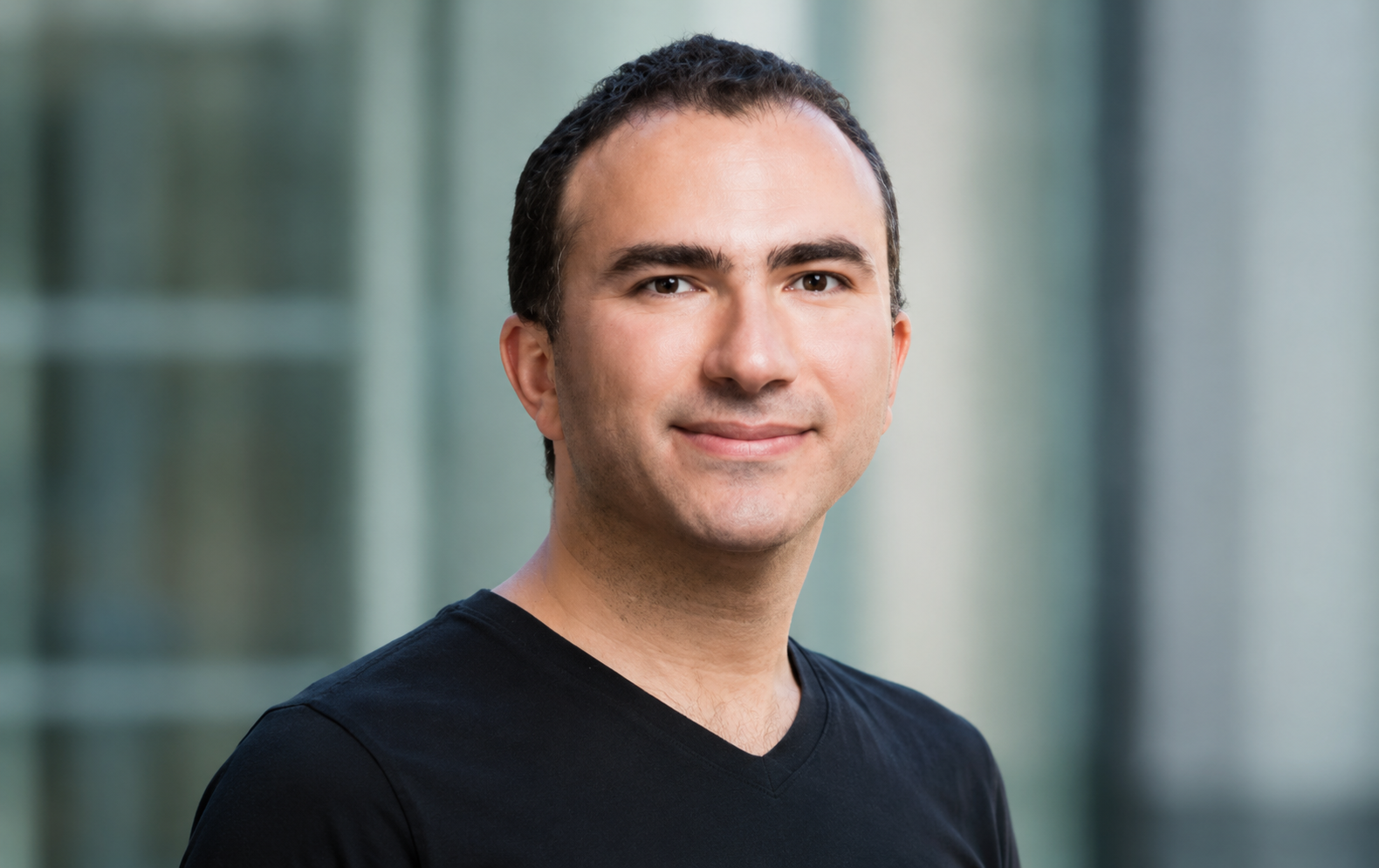
Commercial buildings have a quiet energy problem hiding in plain sight. It is not always the lights, the elevators, or the equipment running inside the building. In many cases, one of the biggest energy demands comes from the system that keeps people comfortable every day: HVAC.
That is where Rawand Rasheed and Helix Earth enter the picture.
Rasheed, the co-founder and CEO of Helix Earth, is building a company around a practical but often overlooked challenge in commercial air conditioning. Most HVAC systems do more than cool the air. They also have to fight humidity. In hot and humid climates, that extra job can force systems to work harder, use more energy, and raise operating costs for building owners.
Helix Earth is working on a smarter way to handle that problem. Instead of asking companies to rip out their existing HVAC systems and start from scratch, the Houston-based startup is developing retrofit technology that can separate humidity control from cooling. The goal is simple to understand, even if the science behind it is advanced: remove moisture first, then let the air conditioner focus on cooling.
That approach has helped make Rawand Rasheed a rising name in clean technology, commercial HVAC innovation, and energy-efficient building systems. His story is not just about launching a startup. It is about turning deep engineering research into a real-world product for one of the most energy-hungry parts of modern buildings.
Who is Rawand Rasheed
Rawand Rasheed is an engineer, founder, and climate-tech entrepreneur known for his work as co-founder and CEO of Helix Earth Technologies. His background is closely tied to Rice University, where he developed technical expertise that would later support the foundation of Helix Earth.
Rasheed’s path stands out because it connects several worlds that do not always move at the same speed. Academic research can be slow and technical. NASA-related engineering is built for extreme reliability. Commercial building technology has to be practical, affordable, and easy to adopt. Helix Earth sits at the center of those worlds.
His recognition on the Forbes 30 Under 30 Energy and Green Tech list for 2025 added more visibility to his work. But the more important part of the story is what he is building. Rasheed is not simply attaching his name to a broad sustainability idea. He is focused on a very specific problem inside commercial buildings and building a hardware company around it.
That makes his founder story more grounded. Many climate-tech startups talk about changing the future. Helix Earth is trying to improve equipment that already exists on rooftops, in mechanical rooms, and across commercial properties.
What Helix Earth is trying to solve
Helix Earth is focused on energy efficiency and humidity management in commercial HVAC systems. The company’s work is based on a clear problem: traditional air conditioning systems often have to cool air and remove moisture at the same time.
For building owners, that can create real costs. When humid air enters a commercial cooling system, the equipment may need to overcool the air just to remove enough moisture. After that, the system may even need to reheat the air to reach a comfortable indoor temperature. This process can waste energy and put extra strain on equipment.
In simple terms, the system is doing two jobs at once:
- Lowering the temperature
- Pulling moisture out of the air
That may sound normal, but it is not always efficient. In humid regions, moisture removal can become one of the hardest parts of indoor climate control.
Helix Earth’s idea is to handle humidity before the air reaches the main cooling system. By removing moisture earlier, the air conditioner can focus more directly on cooling. That can help reduce wasted energy, support better indoor comfort, and make existing HVAC systems work more efficiently.
This matters because commercial HVAC is not a small market. Offices, hotels, hospitals, schools, retail centers, industrial buildings, and other large facilities all depend on cooling systems. Even small gains in efficiency can become meaningful when applied across thousands of buildings.
Why humidity is such a big deal in commercial HVAC
Humidity is easy to ignore until it becomes a problem. A building can have a comfortable temperature on the thermostat but still feel sticky, heavy, or uncomfortable if the indoor air holds too much moisture.
For commercial properties, humidity affects more than comfort. It can influence indoor air quality, equipment performance, building materials, and overall energy use. Facility managers often have to balance comfort, ventilation, air quality, and utility costs at the same time.
Traditional HVAC systems were not always designed for today’s energy demands. Many systems are still built around a basic cooling model, even though modern buildings need better humidity management, cleaner airflow, and lower emissions.
This is one reason Helix Earth’s approach feels timely. The company is not trying to make air conditioning disappear. It is trying to make the systems already used in commercial buildings work better.
That practical angle is important. Building owners are usually cautious about major infrastructure changes. A full HVAC replacement can be expensive, disruptive, and difficult to justify unless the existing equipment is already near the end of its life. Retrofit technology has a clearer path because it can improve performance without requiring a complete rebuild.
How Helix Earth’s technology works in simple terms
Helix Earth is developing a commercial HVAC add-on that separates humidity management from temperature control. Instead of forcing the air conditioner to remove moisture and cool air at the same time, the system is designed to remove humidity first.
Once the air is drier, the cooling system can do its job more efficiently.
The company’s technology has roots in advanced aerospace and research environments. Helix Earth has described its work as connected to technology originally developed around NASA-related needs, where air management and filtration are critical. That background gives the company a strong technical foundation, but the real achievement is translating that science into something useful for Earth-based buildings.
For everyday readers, the easiest way to understand the value is this: Helix Earth is trying to take some of the hardest work away from the air conditioner.
When an HVAC system does not have to fight as much moisture, it may use less energy, experience less strain, and provide more consistent comfort. That is the kind of improvement building owners can understand because it connects directly to energy bills, maintenance planning, and occupant experience.
From Rice University research to a commercial startup
One of the most important parts of Rawand Rasheed’s story is the move from research to commercialization. Helix Earth is a Rice University spinoff connected to the lab of mechanical engineer Daniel J. Preston. The company was founded by Rice alumni Rawand Rasheed and Brad Husick.
That background matters because HVAC hardware is not easy to build. Unlike a software product, a hardware climate-tech company has to prove that its technology works in physical environments. It has to deal with installation, manufacturing, durability, maintenance, safety, and customer trust.
Rasheed’s challenge is not only to show that the science is promising. He has to help turn that science into a product that commercial property owners, facility managers, and operators can actually use.
This is where many research-driven startups struggle. A technology may look impressive in a lab, but the market asks different questions.
Building owners want to know:
- Will it reduce energy costs?
- Can it work with existing systems?
- Is the installation practical?
- Will it create more maintenance work?
- How quickly can the investment make sense?
Helix Earth’s retrofit approach is designed around those kinds of questions. It gives the company a more practical story because it does not depend on every customer replacing an entire HVAC system.
How Rawand Rasheed is positioning Helix Earth for the market
Rawand Rasheed’s leadership role at Helix Earth is focused on taking a complex technical idea and shaping it into a business-ready solution. That requires more than engineering skill. It requires timing, customer understanding, investor confidence, and a clear view of how commercial buildings actually make buying decisions.
The company is operating in a market where energy efficiency is no longer just a nice extra. Commercial building owners are under pressure to reduce operating costs and make properties more sustainable. Tenants care more about comfort and indoor air quality. Cities and companies are also paying closer attention to building emissions.
That gives Helix Earth a strong market opening. Its technology speaks to several priorities at once:
- Lower HVAC energy use
- Better humidity control
- Improved indoor comfort
- Less strain on existing equipment
- A more practical route to building decarbonization
For Rasheed, the opportunity is not only in selling a device. It is in helping commercial buildings rethink how cooling and humidity management should work.
Why Helix Earth’s funding matters
Helix Earth’s recent funding has made the company more visible in the climate-tech and commercial building sectors. The startup announced a $12 million oversubscribed Seed 2 funding round, with Veriten leading the round and participation from investors including Rua Ventures, Carnrite Ventures, Skywriter LLC, and Textbook Ventures.
Funding does not guarantee success, but it does show that investors see potential in the problem Helix Earth is solving. It also gives the company more room to scale manufacturing, support deployments, grow its team, and continue developing its commercial HVAC technology.
For a hardware startup, this kind of capital is especially important. Hardware companies usually need more upfront investment than software startups because they have to build, test, refine, and manufacture physical products. They also need to prove performance in real environments, not just in demos.
That is why the funding is a meaningful milestone in Rawand Rasheed’s founder journey. It suggests that Helix Earth is moving beyond the early research story and into a more serious phase of market development.
Why commercial HVAC efficiency is a major opportunity
Commercial HVAC is one of those industries that touches almost everyone but rarely gets much public attention. People notice air conditioning when it stops working. They do not always think about how much energy it takes to keep large buildings cool every day.
For businesses, HVAC energy use can become a major operating cost. For climate goals, cooling is also becoming more important as global temperatures rise and more buildings rely on air conditioning. The demand for cooling is not going away. That means the world needs better ways to manage it.
Helix Earth’s work fits into a larger movement toward smarter building systems. Instead of only producing more energy, companies are also looking for ways to waste less energy. That includes better insulation, smarter controls, improved ventilation, efficient lighting, and more advanced HVAC solutions.
Humidity management is a valuable part of that picture because it attacks a hidden source of energy waste. If Helix Earth can help commercial buildings remove moisture more efficiently, it can make cooling systems more effective without asking owners to abandon their existing infrastructure.
Rawand Rasheed and the rise of Helix Earth in commercial HVAC innovation
Rawand Rasheed’s success story is compelling because it is built around a real technical challenge, not just a broad startup trend. He is working in a field where results matter. A commercial HVAC solution has to perform under real conditions, fit into existing systems, and make financial sense for customers.
That makes the Helix Earth story more concrete than many clean-tech narratives. The company is not only talking about sustainability. It is working on a product that could help commercial buildings lower energy waste in a measurable way.
Rasheed’s background also gives the story a strong sense of continuity. His work connects Rice University, NASA-inspired technology, Houston’s climate-tech ecosystem, and the commercial building market. Each part of that path adds credibility to the company’s direction.
The startup’s connection to Greentown Labs in Houston also places it within a larger network of energy and climate innovation. Houston has long been known as an energy city, and companies like Helix Earth show how that identity is expanding into cleaner technology and building efficiency.
Why Rawand Rasheed’s achievement stands out
Rawand Rasheed’s achievement is not only that he co-founded Helix Earth. It is that he is working on one of the harder parts of climate-tech commercialization: turning advanced physical technology into a product that can be adopted by traditional industries.
Commercial HVAC is not a flashy consumer market. It is technical, infrastructure-heavy, and slow to change. But that is also what makes it important. When innovation reaches this kind of market, the impact can be large because the systems are everywhere.
Rasheed’s work stands out for several reasons:
- He is building around a clear and expensive problem
- Helix Earth is focused on existing commercial HVAC systems
- The company’s technology has roots in serious research and NASA-related engineering
- The business case connects energy savings with building comfort
- The company has raised capital to support its next stage of growth
- Rasheed has earned outside recognition in energy and green technology
This combination gives his story a strong success angle. It shows the path of a founder who is not only chasing a market trend, but building a company around a problem he understands deeply.
The bigger impact Helix Earth could have
If Helix Earth succeeds, its impact could reach far beyond one product category. More efficient humidity control could help offices, schools, hospitals, hotels, retail spaces, and industrial buildings reduce energy waste while improving indoor comfort.
That matters because the future of building technology will likely depend on practical upgrades. Not every property owner can afford a full redesign. Not every building can wait for a long renovation cycle. Retrofit solutions can help bridge the gap between old infrastructure and modern efficiency goals.
This is where Rawand Rasheed’s work with Helix Earth feels especially relevant. The company is aiming at a problem that is technical, costly, and widespread. It is using research-backed technology, but the market value is easy to understand: make commercial HVAC systems use less energy while helping buildings feel better inside.
For building owners, that can mean lower utility costs and better system performance. For the climate-tech sector, it shows how deep engineering can move into practical commercial use. For Rasheed, it marks the rise of a founder turning university research and aerospace-inspired technology into a company with real-world momentum.