Financial research has always been one of the most demanding parts of banking and investing. Before a banker walks into a client meeting or an investor decides whether a company is worth a closer look, someone has to gather filings, read market reports, compare competitors, update numbers, build slides, and turn scattered information into a clear point of view.
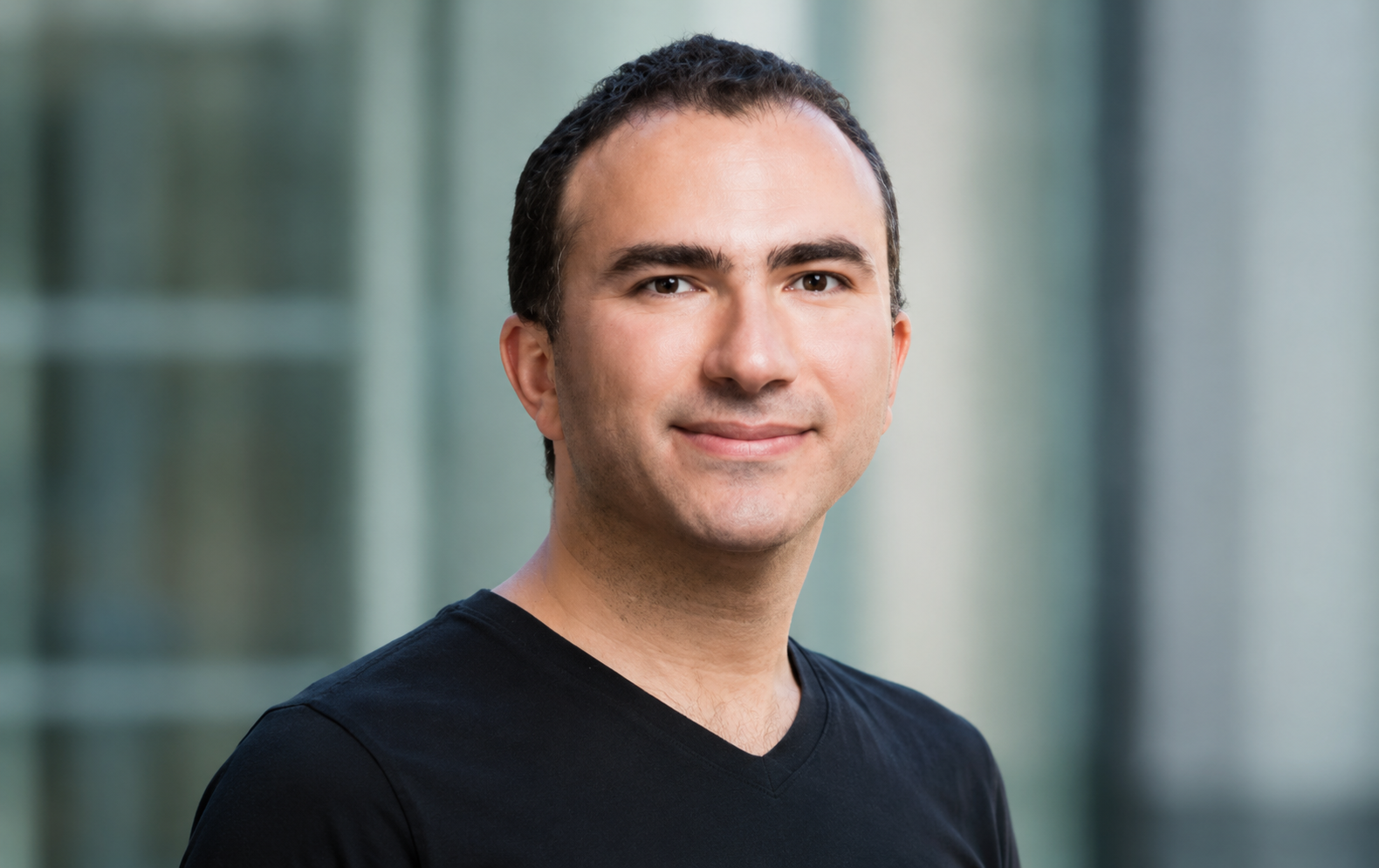
That work is valuable, but it is also slow. A lot of it still depends on long hours, repeated manual steps, and analysts jumping between dozens of tools. Gabriel Stengel saw that problem from close range. As the CEO and co-founder of Rogo, he is building a finance focused AI platform designed to make research and analysis faster, more connected, and easier to trust.
Rogo is not trying to be a general chatbot for casual questions. It is built for high finance teams that deal with sensitive data, complex documents, strict workflows, and decisions where accuracy matters. Its rise shows how quickly AI is moving from a broad productivity trend into specialized tools made for serious professional work.
Who is Gabriel Stengel
Gabriel Stengel is best known as the CEO and co-founder of Rogo, an AI company built for financial services. His story is closely tied to the world he is trying to improve. Before building Rogo, Stengel worked around finance and saw how much time investment professionals spent on repetitive research and document-heavy tasks.
That background matters because finance is not an easy market for software. Investment banks, private equity firms, asset managers, and financial institutions do not adopt tools just because they look impressive. They need software that fits into the way teams already work. They need security, reliable sources, traceable answers, and outputs that can be checked before they are used in real business decisions.
This is where Gabriel Stengel’s approach stands out. Instead of building an AI product and then trying to find a finance use case, Rogo is shaped around the daily pain points of bankers and investors. The company is focused on the research, analysis, and presentation work that sits at the center of high finance.
What Rogo does
Rogo is a purpose built AI platform for finance professionals. It helps teams automate parts of their research and analysis process by bringing together internal documents, external data sources, filings, news, market data, and financial information inside one secure platform.
For a banker or investor, that can mean faster company profiles, cleaner competitive benchmarking, quicker investment memo drafts, stronger meeting preparation, and more efficient slide creation. These are not side tasks in finance. They are the everyday building blocks of deal work, portfolio analysis, client coverage, and investment decision making.
Rogo is designed for users who need more than a quick summary. A finance team may need to understand a company’s business model, compare it with peers, review recent deal activity, analyze filings, study market trends, and turn all of that into a memo or presentation. Rogo’s value comes from helping that work move faster while keeping the output grounded in sources that professionals can review.
The problem Gabriel Stengel saw in financial research
Financial professionals are often hired for judgment, strategy, and relationship building, but a large part of their day can still be consumed by manual research. Analysts spend hours pulling information from filings, updating data in spreadsheets, building market maps, summarizing reports, and preparing slides for senior teams.
This creates a frustrating gap. The most talented people in finance often spend too much time assembling information and not enough time interpreting it. The work has to be done, but the process is rarely as smooth as it should be.
Traditional financial research is also difficult to scale. A firm may have valuable internal memos, past deal materials, client notes, research documents, CRM records, third party data, and public filings. The problem is that much of this information sits in separate systems. When teams need a quick answer, they may still have to search manually across different files, databases, and platforms.
Generic AI tools can help with simple writing or summarization, but finance needs something more specific. The language is specialized. The data is sensitive. The workflow is demanding. A wrong number, weak source, or made-up answer can create real risk. Gabriel Stengel’s work with Rogo is built around that reality.
How Rogo modernizes financial research and analysis
Rogo modernizes financial research by turning scattered, time-heavy workflows into faster AI assisted processes. Instead of asking analysts to manually pull every detail from scratch, the platform helps them find, compare, summarize, and organize information more efficiently.
One of the clearest use cases is company research. A finance team can use Rogo to build a company profile, understand a business model, review industry context, and gather relevant source material. This can make early research faster, especially when teams are looking at multiple companies across a sector.
Competitive benchmarking is another important area. Bankers and investors often need to compare companies by growth, market position, products, customer base, valuation, and recent activity. Rogo can help organize that information and make it easier to see patterns that would otherwise take hours to piece together.
The platform is also useful for investment memos and pitch decks. In finance, a strong memo or presentation is not just about writing well. It needs accurate facts, clear reasoning, organized structure, and supporting evidence. Rogo helps teams move from raw information to usable materials more quickly, while still allowing professionals to review and refine the work.
This is the real shift. Rogo is not replacing the need for financial judgment. It is reducing the amount of time spent on the repetitive steps that come before judgment can happen.
Why Rogo is built for high finance workflows
Finance has its own rhythm. A junior banker may need to prepare a client meeting deck overnight. A private equity team may need to evaluate a target company quickly before a process moves ahead. An asset manager may need to understand a market change before competitors react.
In each case, speed matters, but speed alone is not enough. The answer has to be reliable. The source has to be clear. The data has to be handled securely. That is why Rogo’s focus on finance specific workflows is important.
The platform is built around tasks that finance teams already know well, including company profiles, market research, internal document search, benchmarking, investment memos, and presentation work. These are not random AI features. They map directly to the way bankers and investors already spend their time.
That practical fit is one reason Rogo has gained attention. AI becomes more useful when it is not just impressive in a demo, but helpful during real work under real deadlines.
Trust and accuracy are central to the product
For Rogo, trust is not a nice extra. It is part of the product itself. Finance teams cannot afford to depend on AI that gives confident but unreliable answers. A banker using AI for client work needs to know where the information came from. An investor reviewing a memo needs to check the logic and sources behind the analysis.
This is why Rogo emphasizes source grounded answers, auditable outputs, and secure workflows. The company’s platform is built to help professionals work with internal and external data while keeping the process reviewable.
Hallucination is one of the biggest concerns in generative AI, especially in finance. If an AI system invents a statistic, misreads a filing, or confuses two companies, the damage can be serious. Rogo’s work with cloud and AI infrastructure partners shows how much the company is investing in reliability, scalability, and better performance for financial tasks.
Security is just as important. Financial firms work with confidential client data, internal analysis, deal materials, proprietary research, and sensitive documents. Any AI platform serving this market has to earn trust from technology teams, compliance teams, and senior decision makers. Rogo’s finance first positioning reflects that need.
Rogo’s growth under Gabriel Stengel
Under Gabriel Stengel’s leadership, Rogo has moved from a startup idea into one of the more closely watched AI companies in financial services. The company was founded in New York and has positioned itself as an AI platform for Wall Street, serving investment banks, asset managers, private equity firms, and other financial institutions.
A major signal of that momentum came in April 2026, when Rogo announced $160 million in Series D financing led by Kleiner Perkins. The round also included participation from investors such as Sequoia, Thrive Capital, Khosla Ventures, J.P. Morgan Growth Equity Partners, BoxGroup, Mantis VC, Jack Altman, Evantic, and Positive Sum.
That kind of funding does not guarantee long term success, but it does show strong investor belief in the market Rogo is targeting. Financial services is one of the largest and most document-heavy industries in the world. If AI can meaningfully reduce manual research, speed up analysis, and improve workflow efficiency, the opportunity is huge.
Rogo has also pointed to expansion across regions such as EMEA and Asia, along with deeper integrations and more embedded support for financial firms. That matters because enterprise finance is not a simple software market. Large firms often need careful onboarding, custom workflows, security reviews, and deep integration with existing systems.
Why Rogo stands out in the AI finance market
The AI market is crowded, but Rogo stands out because it is focused on a specific industry problem. Many companies talk about productivity. Rogo is focused on a narrower and more valuable question: how can AI help finance professionals move from information overload to better decision support?
This focus gives the company a clearer identity. It is not trying to serve every industry with the same generic tool. It is building around the needs of investment banking, private equity, asset management, and institutional finance.
Rogo also stands out because its product is designed for actual work products. Finance teams do not only need answers in a chat window. They need memos, slides, models, comparisons, research packs, and meeting materials. A platform that can support those outputs has a better chance of becoming part of the daily workflow.
Another advantage is the company’s mix of finance and technical talent. Building for Wall Street requires understanding both AI systems and the expectations of financial professionals. A product may be technically powerful, but if it does not match how bankers and investors work, adoption will be difficult.
What Gabriel Stengel’s success says about the future of finance
Gabriel Stengel’s work with Rogo points to a larger change in financial services. AI is no longer only a tool for simple summaries or generic productivity. It is starting to enter the core workflows of research, analysis, client preparation, and investment decision support.
This does not mean human judgment becomes less important. In many ways, it makes judgment more visible. When AI handles more of the repetitive research and document preparation, finance professionals can spend more time asking better questions, testing assumptions, speaking with clients, and thinking through strategy.
The role of the analyst may also change. Instead of spending most of the day gathering information manually, analysts may become more like reviewers, editors, and strategic thinkers who know how to guide AI tools, verify outputs, and turn research into insight.
That shift could make finance faster and more connected. It could also raise expectations. If one team can produce a high quality market overview, company profile, or investment memo in a fraction of the time, other teams will need to adapt. In that sense, companies like Rogo are not only changing software. They are changing the pace of work.
Lessons from Gabriel Stengel and Rogo’s rise
One of the strongest lessons from Gabriel Stengel and Rogo is the value of building for a real workflow. The company is not chasing AI hype in a broad way. It is focused on a known pain point in a high value industry.
Another lesson is that specialization matters. Finance teams need AI that understands their language, documents, data sources, and review process. A general tool may be useful for a quick draft, but it is often not enough for institutional work.
Rogo’s rise also shows that trust can be a competitive advantage. In financial AI, the best product is not simply the one that sounds the smartest. It is the one that professionals can use, check, secure, and bring into real decision making.
For founders, Gabriel Stengel’s path offers a clear example of how industry knowledge can shape a stronger product. The closer a company gets to the user’s daily pain, the easier it becomes to build something that feels practical instead of theoretical.