If you search “richest neighborhoods in America” and get three different #1 answers, you’re not confused — the lists are. There is no official ranking. What people share are three separate 2026 studies that measure three different things, so they name three different winners. Here’s the freshest confirmed data on each, why they disagree, and where Florida quietly dominates.
Who tops the 2026 rankings
As of this writing, the two most current, properly dated datasets are:
- By household income: GOBankingRates’ March 2026 study (built on 2024 Census ACS income plus Zillow home values) ranks Scarsdale, New York the wealthiest suburb, with average household income near $612,000.
- By home value: Zillow’s January 2026 home-value index puts Florida enclaves on top — Gables Estates and Indian Creek lead the priciest neighborhoods in the country.
Both are real. Both are current. They just answer different questions. A place can be full of high earners without having the priciest houses, and vice versa. So before anyone tells you the single “richest” spot, ask: richest by what?
What happened: why the wealthiest neighborhoods in America don’t match
Three methodologies drive nearly every list you’ll find, and they rarely agree:
- Household income (Census/ACS, suburb-level). This is the GOBankingRates approach. It measures what residents earn, averaged across a whole suburb or town. It favors dense clusters of high-salary professionals — think Westchester County, Silicon Valley, and Dallas’s Park Cities.
- Home value (Zillow, neighborhood/ZIP-level). This measures what homes cost, block by block. It favors ultra-exclusive waterfront and gated micro-neighborhoods, which is why tiny Florida islands beat much larger high-income suburbs here.
- IRS adjusted gross income (the Higley 1000, ZIP-level). This ranks ZIP codes by tax-return AGI. It’s the oldest of the three approaches and skews heavily toward the New York City metro. It hasn’t had a clean 2026 refresh, so treat it as context, not breaking news.
That’s the gap almost no page explains: the most affluent neighborhoods in America look completely different depending on whether you count paychecks, property, or tax filings. Average income and median income also differ — a single hedge-fund household can drag an average up while the median stays lower — which is why even careful roundups end up with mismatched figures.
Timeline: how the list has shifted
The ranking isn’t static, and the movement is the story:
- 2016: Connecticut old-money towns like Darien and Westport sat comfortably in the top tier of wealthiest suburbs by income.
- 2026: Several of those Connecticut towns have slipped out of the top 50 on income. Meanwhile California suburbs — Los Altos, Alamo, Orinda — and Paradise Valley, Arizona climbed sharply, tracking the tech and Sun Belt wealth boom.
- Coming up (expected December 2026): The Census Bureau’s 2025 ZCTA income data will refresh every ZIP-code-level list. That’s the next moment any of these rankings can officially move.
So when a listicle names “the” richest town with no date, that’s a red flag — the answer measurably changed in the last decade.
Who is affected: the top 10 wealthiest suburbs and towns
Here is the current income-based top 10, the cleanest answer to “top 10 wealthiest cities in America” and “richest suburbs in the US.” Figures are approximate and drawn from the March 2026 study.
| Rank | Suburb / Town | State | Avg. household income |
|---|---|---|---|
| 1 | Scarsdale | NY | ~$612,000 |
| 2 | West University Place | TX | ~$525,000 |
| 3 | Rye | NY | ~$470,000 |
| 4 | Los Altos | CA | ~$460,000 |
| 5 | Paradise Valley | AZ | ~$450,000 |
| 6 | University Park | TX | ~$440,000 |
| 7 | Alamo | CA | ~$430,000 |
| 8 | Southlake | TX | ~$410,000 |
| 9 | McLean | VA | ~$400,000 |
| 10 | Orinda | CA | ~$390,000 |
A few things worth flagging on the distinctions people search for separately:
- Wealthiest town in America: On income, Scarsdale is the standard answer, and yes — it’s still on top in 2026.
- Top 10 wealthiest cities vs. suburbs: Almost none of these are big “cities.” They’re incorporated suburbs and towns near major metros. Actual large cities never top these lists, because averaging in tens of thousands of ordinary households pulls the number down. That’s why “cities,” “suburbs,” and “towns” return different results even for the same underlying data.
- Which state has the most? Texas and California each place three suburbs in this top 10 — a clear Sun Belt and West Coast tilt.
Florida’s place in the richest neighborhoods in America
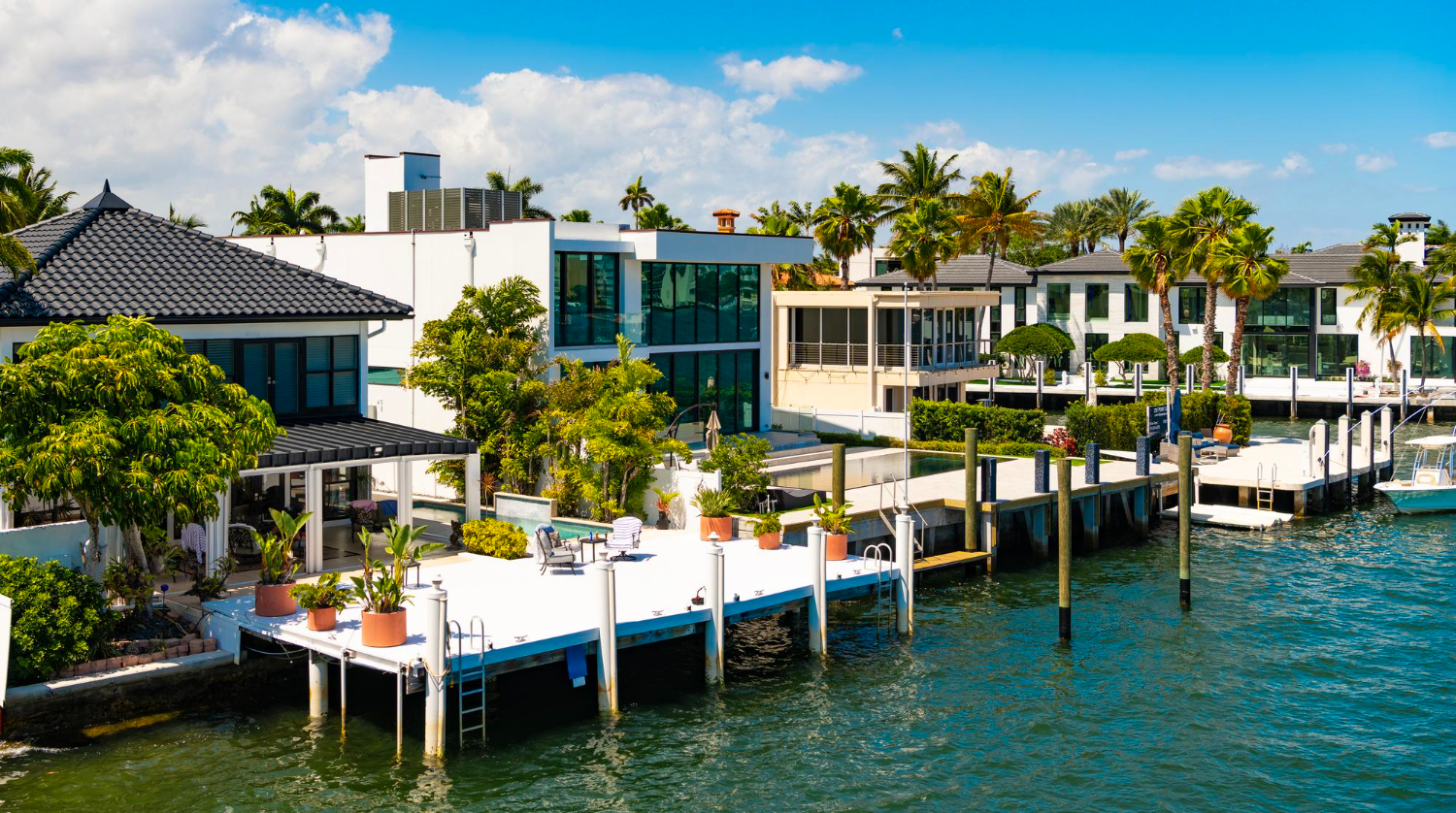
Here’s the local angle the national outlets keep missing. On income, no Florida suburb cracks the top 10. But flip to home value — Zillow’s January 2026 index — and Florida takes over: the state holds roughly 7 of the 10 most expensive neighborhoods in the country.
The names are familiar to anyone who follows South Florida real estate:
- Gables Estates (Coral Gables)
- Indian Creek — the “Billionaire Bunker” island village near Miami Beach
- Fisher Island
- Star Island
Why the split? These are tiny, gated, waterfront micro-neighborhoods — sometimes a few dozen homes — where scarcity and location push property values into eight figures, even if the resident population is too small to top an income study. It’s the clearest real-world example of why home-value rankings and income rankings disagree. If you want the fuller picture of how Florida property behaves differently from the rest of the country, our look at what a purple fence means (and why Florida is different) is a good companion read.
What happens next
Two dates to watch:
- December 2026: The Census Bureau’s 2025 ZCTA income release will refresh ZIP-code-level income rankings — the next chance for the income list to shift.
- Monthly: Zillow updates its home value index continuously, so the Florida-led home-value list can move at any time.
The trend lines are clear: continued West Coast and Sun Belt gains on income, Northeast old-money towns holding steady on income but losing ground on home value, and Florida’s waterfront enclaves staying at the very top of the price rankings. When you see the next viral “richest neighborhoods” post, check the date and the metric first — that’s the difference between a real ranking and recycled filler.
For more data-driven money and real-estate coverage, see our ranking of the biggest malls in the United States and our breakdown of the $10.5M Kaiser Permanente settlement.
FAQs
What is the richest neighborhood in America right now?
It depends on the metric. By 2024 Census household income (GOBankingRates, March 2026), Scarsdale, NY is the richest suburb at about $612,000 average income. By home value (Zillow, January 2026), Florida’s Gables Estates and Indian Creek are the priciest neighborhoods. Both are current — they just measure different things.
Is Scarsdale still the richest town in America in 2026?
Yes, on a household-income basis. Scarsdale, NY tops the March 2026 income-based ranking of wealthiest suburbs. It is not the most expensive by home value, however — that title goes to ultra-exclusive Florida island enclaves like Indian Creek and Gables Estates.
What’s the difference between the richest neighborhood and the richest suburb?
“Suburb” rankings use Census household income averaged across a whole town, so they reward clusters of high earners (Scarsdale, the Park Cities in Texas). “Neighborhood” rankings usually use Zillow home value at the ZIP or micro-neighborhood level, so they reward tiny, expensive gated enclaves. That’s why the two lists rarely match.
What is the most expensive neighborhood in Florida?
By 2026 Zillow home values, Gables Estates in Coral Gables and Indian Creek near Miami Beach are the most expensive Florida neighborhoods — and among the most expensive in the entire country. Fisher Island and Star Island also rank near the top.
Which state has the most wealthy neighborhoods?
It splits by metric. On income, Texas and California each place three suburbs in the 2026 top 10. On home value, Florida dominates, holding roughly 7 of the 10 most expensive neighborhoods in the U.S.
How is ‘richest neighborhood’ actually measured — income or home value?
There’s no single standard, which is the whole problem. Three methods compete: Census/ACS household income (suburb-level), Zillow home value (neighborhood/ZIP-level), and IRS adjusted gross income by ZIP (the Higley 1000). Each produces a different top 10, so always check which one a ranking is using.