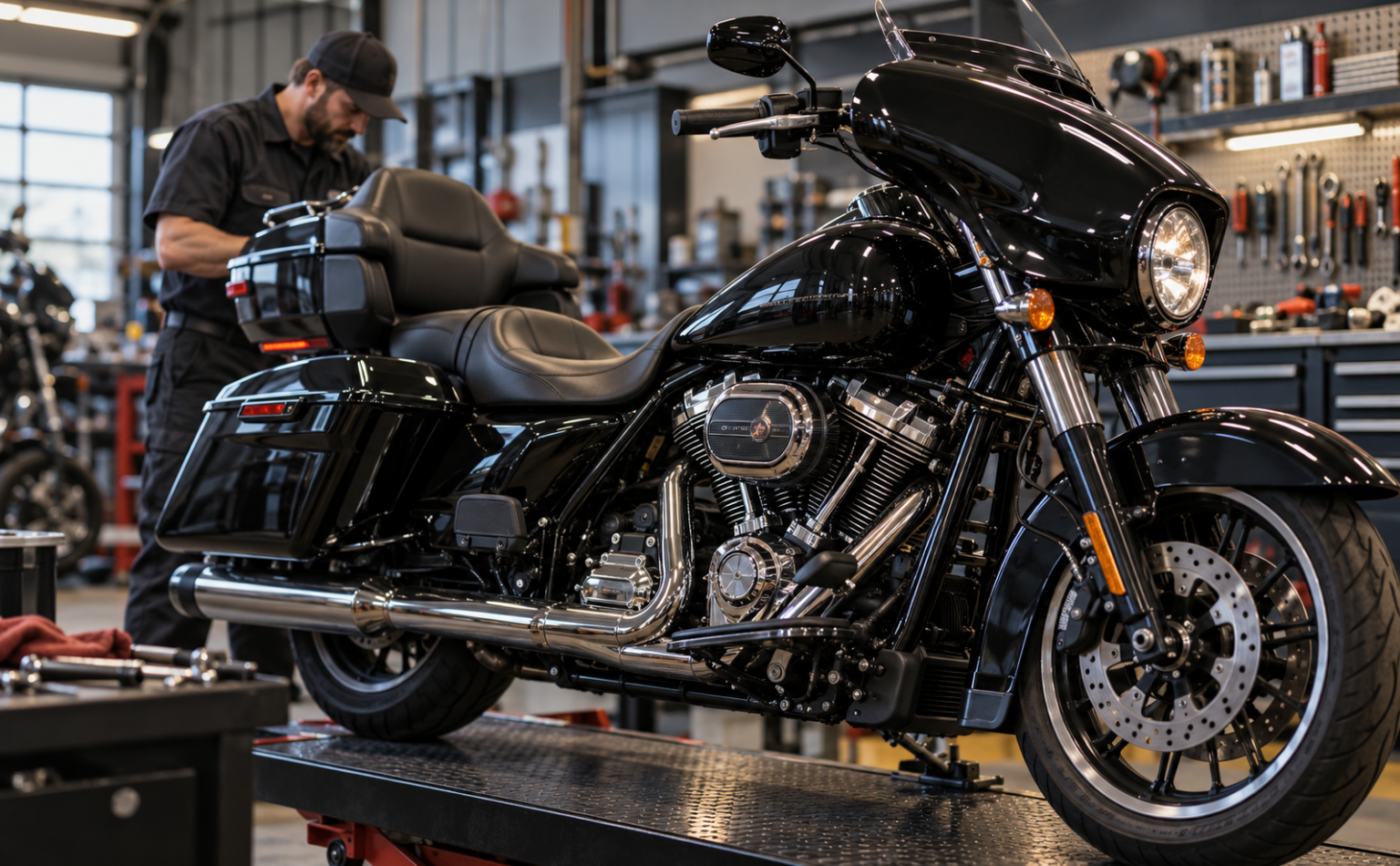
Harley-Davidson has recalled 88,039 motorcycles because a supplier defect can block a breather port in the airbox baseplate. When that port is blocked, pressure builds inside the crankcase. If you pull the dipstick while the crankcase is pressurized, hot oil can spray out of the fill spout and burn you.
The recall is NHTSA campaign 26V270000 (Harley-Davidson campaign 0193). The repair is free. Only a small share of the recalled bikes are expected to have the blocked port, but there is no way to tell which ones by looking at the bike. Every owner of a covered model should run a VIN check. Below we cover how to do that, what the dealer fix involves, and how to check your oil safely until your bike has been seen.
Why Harley-Davidson Recalled Over 88,000 Bikes
Harley-Davidson filed the safety recall with the National Highway Traffic Safety Administration in late April 2026, and news coverage followed in early May. According to the filing, a manufacturing problem at a parts supplier could leave the crankcase breather port in the airbox baseplate partly or fully blocked.
The breather port is how the engine vents pressure. When it can’t vent, pressure builds in the crankcase. The bike may run normally with no warning sign at all. The danger comes when someone opens the oil system. Remove the dipstick on a pressurized engine and oil can shoot out of the fill spout.
A note on conflicting numbers: Coverage of this recall doesn’t agree on every detail. Some outlets reported one injured dealer technician. Others cited about 192 reports of blocked ports, roughly a dozen of which involved oil being discharged. Reported dates for the owner letters also differ, with May 11 and May 14, 2026 both appearing. When sources disagree, the NHTSA record for 26V270000 is the one to trust, and it is updated as Harley files new information.
Who Is Affected by the Harley-Davidson Engine Pressure Recall
The recall mainly covers 2024–2026 model-year Touring, Softail and Trike motorcycles built in specific production windows. Not every bike in those families is included, and neither the model name nor the year settles it. Your 17-character VIN is the only reliable way to know.
The 88,039 vs. 0.4% distinction
This is the most useful number in the recall, and most coverage leaves it out. Harley estimates that only about 0.4% of the recalled bikes actually have the defect. That works out to roughly 350 motorcycles out of 88,039.
A manufacturer recalls the whole population because the suspect parts can’t be traced to individual bikes. For you, that means the odds are very much in your favor. They are not zero, though, and an oil burn to the face or hands is a serious injury. Get the inspection done.
Second owners and used-bike buyers
Recall letters go to the address on file with your state’s vehicle registration records. If you bought the bike used, bought it recently, moved, or let the registration lapse, you may never have received a letter. The recall still applies to your bike. Open recalls follow the VIN, not the owner, and they don’t expire.
If you’re shopping for a used 2024–2026 Harley, ask the seller for proof that campaign 0193 was completed, or run the VIN yourself before you pay. An open recall isn’t a deal-breaker because the fix is free, but it’s worth knowing before you ride the bike home.
The Breather Port and Crankcase Pressure, Explained
An engine’s crankcase is never perfectly sealed. Pistons moving up and down push air in and out, and a small amount of combustion gas slips past the piston rings. That is called blow-by. The breather system routes this air and vapor out of the crankcase, usually back into the intake so it gets burned instead of vented to the atmosphere. On these Harleys, part of that path runs through a port in the airbox baseplate.
When the port is blocked:
- Pressure builds. The air and vapor have nowhere to go, so the crankcase becomes pressurized while the engine runs and stays that way as it cools.
- The oil fill becomes the weak point. On these bikes the dipstick seals the fill spout. Pull it out and you’ve opened a release valve.
- Hot oil comes out with force. Engine oil at operating temperature is well above 200°F. Even a short spray can burn your skin or injure your eyes.
A blocked breather can also show up as oil weeping from seals or gaskets, or oil residue around the air cleaner. Those signs aren’t proof of the defect, but if you see them, mention them when you book the repair.
What Consumers Should Do Right Now
Here’s the checklist we’d give any owner of a 2024–2026 Touring, Softail or Trike.
- Check your VIN. Enter it at nhtsa.gov/recalls, or use the recall lookup on Harley-Davidson’s website. The VIN is stamped on the steering head and printed on your registration and insurance card. A result of “0 unrepaired recalls” means you’re clear. If 26V270000 shows up, keep going.
- Call your dealer to book the repair. Give them the campaign number (0193) and your VIN when you call. You can also reach Harley-Davidson customer service at 1-800-258-2464.
- Change how you check your oil until the bike is fixed. This is the step that matters most for your safety. See the next section.
- Keep the paperwork. Ask the dealer for a repair order that shows campaign 0193 was completed. It helps you at resale and shows the work was done if anyone asks later.
- Update your address. If you’ve moved, update it with your state DMV and with Harley so future recall notices reach you.
How to check oil safely before your recall repair
Here’s the catch. The owner’s manuals for many of these bikes, especially Milwaukee-Eight Touring models, call for checking the oil level when the engine is warm. That is exactly when a pressurized crankcase is most dangerous. Until the dealer has inspected your bike:
- Never pull the dipstick while the engine is running.
- After a ride, let the bike sit before you open the fill. Give pressure and heat time to drop.
- Wear gloves and eye protection, and keep your face out of line with the fill spout.
- Turn the dipstick slowly and stop if you hear hissing or see oil push up around the cap. Let it sit longer.
- If you’d rather not risk it, have the dealer check the level when you bring the bike in for the recall.
A Florida note for riders
Florida riders put more miles on their bikes in more months than most of the country, and summer heat keeps engines and oil hotter after a ride. Riders also check oil more often before long trips, including the Daytona rallies. Both habits make the precautions above more important here than in, say, Minnesota in February.
Dealers in rally areas also get busy around events. If the nearest dealer has a long wait, call one or two others. Any authorized Harley-Davidson dealer can do the recall work, not just the one that sold you the bike. If your recall letter never arrived, check that your address with the Florida Department of Highway Safety and Motor Vehicles (FLHSMV) is current. Wet-season riding raises its own maintenance questions, which we cover in why it’s raining so much in 2026.
Refund, Remedy, and Contact Options
The free fix
Dealers will inspect the airbox baseplate breather port. If it’s blocked or out of spec, they’ll clear it or replace the part. There is no charge for parts or labor. The inspection itself is usually quick, but ask how long the dealer expects to keep your bike when you book. Shop backlogs vary much more than the repair time does.
Notification timeline
Harley planned to mail owner letters in mid-May 2026. Reports give May 11 or May 14. It’s now months later, so if you own a covered model and haven’t heard anything, don’t wait for a letter. Run the VIN check today.
Reimbursement
If you already paid out of pocket for a repair that addressed this same condition before the recall was announced, you may be able to get your money back. Contact Harley-Davidson customer service with your receipt and the repair order, and ask specifically about reimbursement under campaign 0193.
Key contacts
| Who | How to reach them | Use it for |
|---|---|---|
| Harley-Davidson Customer Service | 1-800-258-2464 | Booking help, reimbursement, dealer issues |
| NHTSA Vehicle Safety Hotline | 1-888-327-4236 | Recall status questions |
| NHTSA online | nhtsa.gov/recalls | VIN lookup, filing a safety complaint |
If the dealer can’t fit you in, or oil already sprayed
If no dealer can schedule you in a reasonable time, write down who you called and when, then escalate to Harley customer service. If you or someone else was hurt by spraying oil, get medical care first. Then photograph the bike and the fill area, keep any damaged gear, and file a vehicle safety complaint with NHTSA. Complaints are how regulators track whether a recall’s scope and remedy are enough.
Recalls follow the same pattern across makes: check the VIN, book the free fix, and keep the paperwork. Our guide to the Nissan recall of over 26,000 vehicles for door issues walks through the same steps for car owners.
FAQs
Which Harley-Davidson models are included in the 88,000-bike recall?
The recall mainly covers 2024–2026 Touring, Softail and Trike models built in specific production windows. Not every bike in those families is included, so enter your VIN at nhtsa.gov/recalls or on Harley-Davidson’s recall lookup to confirm.
Is it safe to ride my Harley before the recall repair?
The defect affects the oil fill, not how the bike rides, so riding itself isn’t the main risk. The danger is pulling the dipstick on a pressurized engine. Until a dealer has inspected the bike, never open the oil fill while the engine is running, let it cool after a ride, and wear gloves and eye protection when you check oil.
Is the Harley-Davidson crankcase pressure recall repair free?
Yes. Authorized Harley-Davidson dealers will inspect the airbox baseplate breather port and clear or replace it at no charge for parts or labor. If you paid for a related repair before the recall, ask Harley customer service at 1-800-258-2464 about reimbursement.
How many of the recalled Harleys actually have the defect?
Harley estimates about 0.4% of the 88,039 recalled motorcycles, roughly 350 bikes, actually have a blocked breather port. The whole group was recalled because the affected parts can’t be traced to individual bikes.
What is the recall number for the Harley engine pressure defect?
The NHTSA recall number is 26V270000, and Harley-Davidson’s internal campaign number is 0193. Give your dealer both numbers when you book the repair.
What if I never received a recall letter?
Letters went to the addresses on file in state registration records, so used-bike buyers, recent movers and owners with lapsed registrations may have missed one. The recall still applies to your bike. Run your VIN at nhtsa.gov/recalls and update your address with your state DMV, which in Florida is FLHSMV.