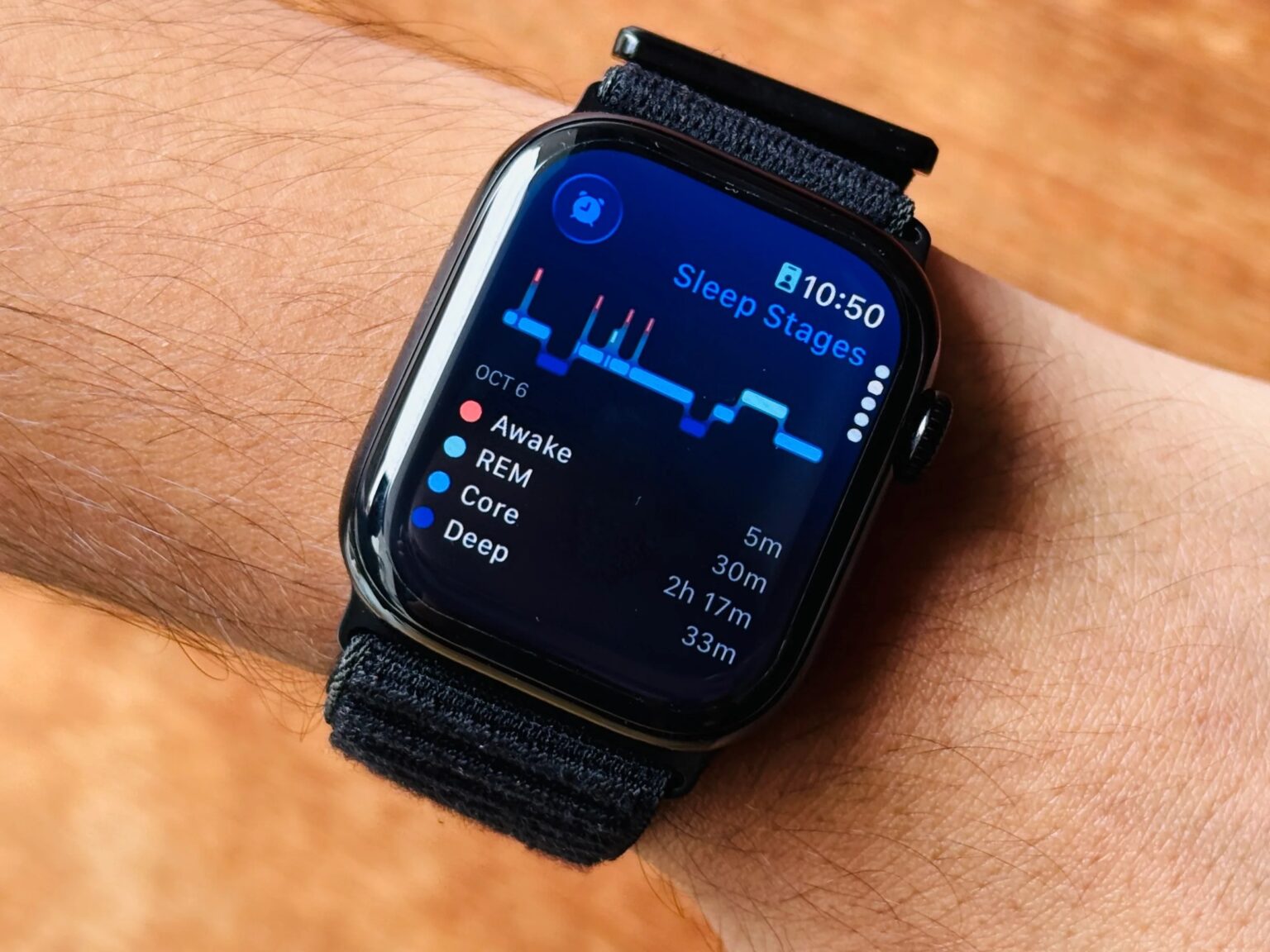
I never enjoyed sleeping with my Apple Watch. Turning off notifications helped, but the idea of having a device strapped to my wrist all night never sat well with me. I woke up just fine with a phone alarm and originally bought the smartwatch for workouts, not bedtime. Comfort was always the deal breaker. Over time, though, my resistance softened, not because Apple convinced me, but because science did.
Lately, my doctor has been strict about sleep. Getting seven to eight hours consistently is non negotiable for managing my neurological health, and that meant documenting sleep patterns. Reluctantly, the Apple Watch came to bed with me. What I did not expect was how much insight it had already been gathering, quietly building a health profile that extends far beyond basic sleep tracking.
Recent scientific research is shedding light on why bedtime consistency matters more than most people realize. A new study from researchers at Scripps Research examined how irregular sleep schedules influence long term health risks. The findings suggest that even small shifts in bedtime can significantly raise the likelihood of conditions such as sleep apnea and high blood pressure. The surprising part is that wearables like the Apple Watch already track the exact behaviors linked to those risks.
The research was part of the Research Framework for Exploring Sleep Health project, often referred to as REFRESH. Scientists analyzed sleep data collected from over a thousand adults across the United States, with participants contributing nearly two years of information from devices such as the Apple Watch, Fitbit, and Oura Ring. The goal was to understand how sleep timing affects health outcomes, particularly among people who naturally lean toward late nights or early mornings.
What they found was striking. Delaying bedtime by just one hour on a regular basis more than doubled the risk of developing sleep apnea and increased the chances of hypertension by over seventy percent. The results, published in the Journal of Medical Internet Research, highlighted a strong link between sleep variability and chronic health conditions that often go undetected for years.
According to researchers, this is not about total sleep duration alone. It is about rhythm. Consistency plays a critical role in how the body regulates blood pressure, breathing patterns, and cardiovascular stress. Wearable devices, once viewed mainly as fitness accessories, are now proving useful as early warning systems for much deeper health issues.
This is where the Apple Watch quietly earns its place. Apple has been tracking bedtime regularity for months through its Sleep Score system. The feature evaluates sleep using three core factors: total duration, nighttime interruptions, and adherence to a consistent bedtime schedule. Each category contributes to an overall score that reflects sleep quality in a way that is easy to understand but backed by real data.
The Scripps study focused heavily on bedtime regularity, which accounts for a significant portion of Apple’s sleep scoring model. While Apple has marketed this feature as a wellness tool, the research suggests it may have far greater clinical relevance, especially when paired with other health indicators already monitored by the device.
Sleep apnea, for example, affects nearly one billion people worldwide, according to data published in The Lancet Respiratory Medicine. In the United States alone, estimates range from thirty to sixty million adults, with numbers expected to rise sharply over the next two decades. Many people live with the condition without knowing it, despite its strong association with heart rhythm disorders, cognitive decline, and metabolic disease.
Medical experts at Johns Hopkins Medicine warn that sleep apnea often goes unnoticed because symptoms are subtle or absent during waking hours. Apple Watch models now use motion tracking and breathing pattern analysis to flag signs of moderate to severe sleep apnea, offering users an early signal to seek professional evaluation.
The implications do not stop there. Blood pressure is another silent risk factor closely tied to sleep habits. Hypertension affects more than one billion people globally and significantly increases the risk of heart attack, stroke, and kidney disease. Apple’s Hypertension Notifications feature uses optical sensors to analyze subtle changes in blood vessel movement during heartbeats, alerting users when patterns suggest elevated blood pressure.
The connection between sleep timing and blood pressure is becoming clearer. If an Apple Watch flags abnormal blood pressure trends, users can cross reference those alerts with their sleep history. Irregular bedtimes often appear alongside these warnings, providing valuable context for doctors and patients alike.
The watch also feeds data into Apple’s Vitals app, which tracks overnight heart rate, respiratory rate, blood oxygen levels, wrist temperature, and total sleep duration. When viewed together, these metrics offer a more complete picture of physical health, one that can support earlier diagnosis and more informed medical conversations.
Researchers at Scripps emphasize that further study is needed to fully understand how bedtime consistency influences hypertension and respiratory health. Still, the association is strong enough to change how many people think about wearable technology. What once felt like an inconvenience has become a tool for monitoring patterns that genuinely matter.
For me, that shift was enough. Wearing the Apple Watch to bed is still not my favorite habit, but the data it collects provides insights I would not otherwise have. If maintaining a consistent bedtime can reduce long term risks to my heart and neurological health, the tradeoff feels worthwhile.
The science has spoken, and it turns out my smartwatch was paying attention long before I was.