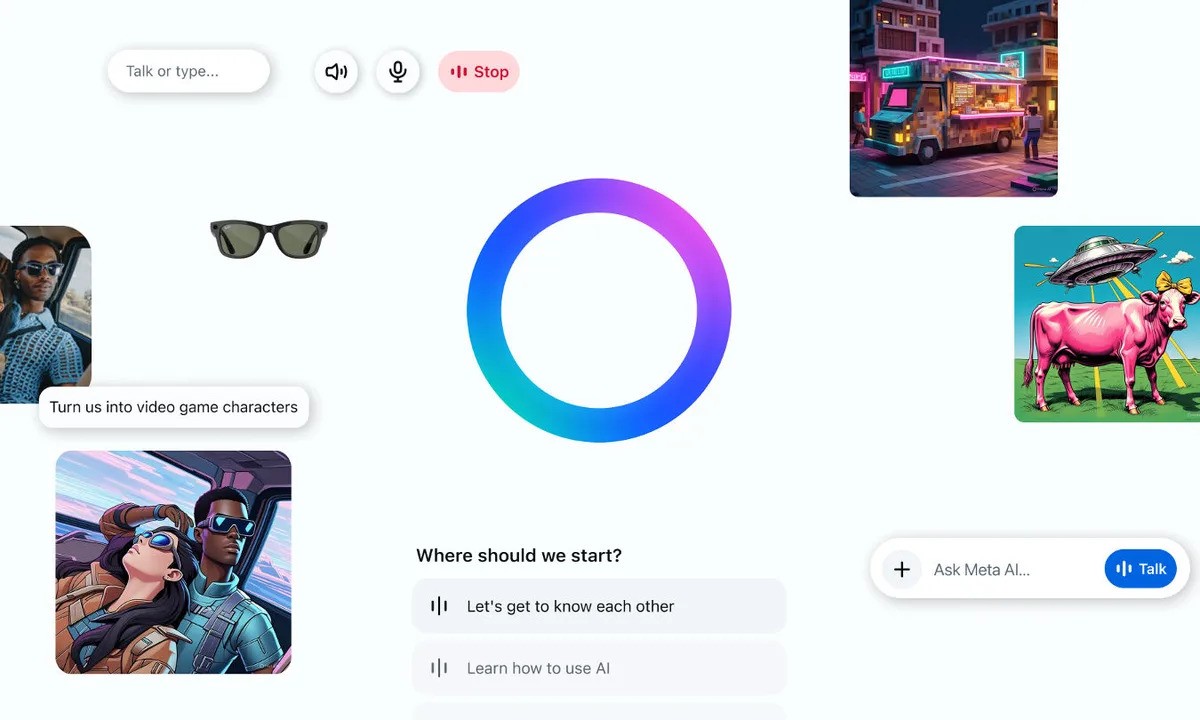
Meta is pushing hard to make AI agents a regular part of everyday work, and its latest move shows how serious it is about that vision. The company has acquired Manus, a Singapore-based startup known for building a general-purpose autonomous AI agent, with plans to integrate the technology across its consumer and business platforms, including Meta AI.
According to Meta, the goal is to move beyond simple chat-based tools and toward software that can actually complete tasks from start to finish. Instead of bouncing ideas back and forth with an assistant, users would be able to hand off real work and let the agent handle execution in the background.
Manus has positioned its product as an AI system that can independently take on complex jobs such as market research, coding, and data analysis. The idea is that people continue working inside the tools they already use, while the agent quietly manages repetitive or time-consuming tasks that normally slow teams down.
For existing Manus users, Meta says continuity is a priority. The service will continue to operate through the current Manus app and website, and the company will keep its base of operations in Singapore. Subscribers are not being forced into an immediate transition, even as Meta starts planning deeper integrations.
At its core, Manus is built as what the company describes as an execution layer. Rather than stopping at suggestions or drafts, the agent is designed to understand a goal, break it into steps, and deliver a finished output with minimal supervision. That focus on follow-through is what Meta believes separates agents from traditional AI assistants.
To support those claims, Manus has shared some eye-catching scale numbers. The company says its systems have processed more than 147 trillion tokens and powered the creation of over 80 million virtual computers in just a few months. Meta has confirmed it will continue operating the Manus service independently while it works on embedding the agent into a wider range of products, including Meta AI, which already spans platforms like WhatsApp and Instagram.
From Meta’s perspective, the acquisition is about speed. By bringing Manus in-house, the company can accelerate its push into business automation and expand AI capabilities across products people already rely on. Instead of asking users to adopt a standalone agent tool, Meta wants automation to feel native across its ecosystem.
Financial details around the deal have not been fully disclosed, but reporting from CNBC suggests the acquisition was valued at more than $2 billion. The outlet also reports that Manus claimed annualized revenue exceeding $100 million within eight months of launch, with a run rate above $125 million. Those figures help explain why Meta chose to buy the company outright rather than pursue a partnership.
For businesses watching this space, the short-term strategy appears to be a dual track. Manus continues operating as a subscription service, while Meta experiments with how and where agents surface inside its platforms. The more important questions revolve around access and control, including what tools the agent can use, how data is handled, and what kind of oversight administrators will have.
Teams interested in adopting AI agents may want to start by identifying workflows they would actually trust an autonomous system to handle end to end. Recurring research tasks, initial data analysis, and internal development work are often the first candidates. As Meta rolls out updates, companies will be paying close attention to pricing structures, permission settings, and how these agents fit into existing processes.