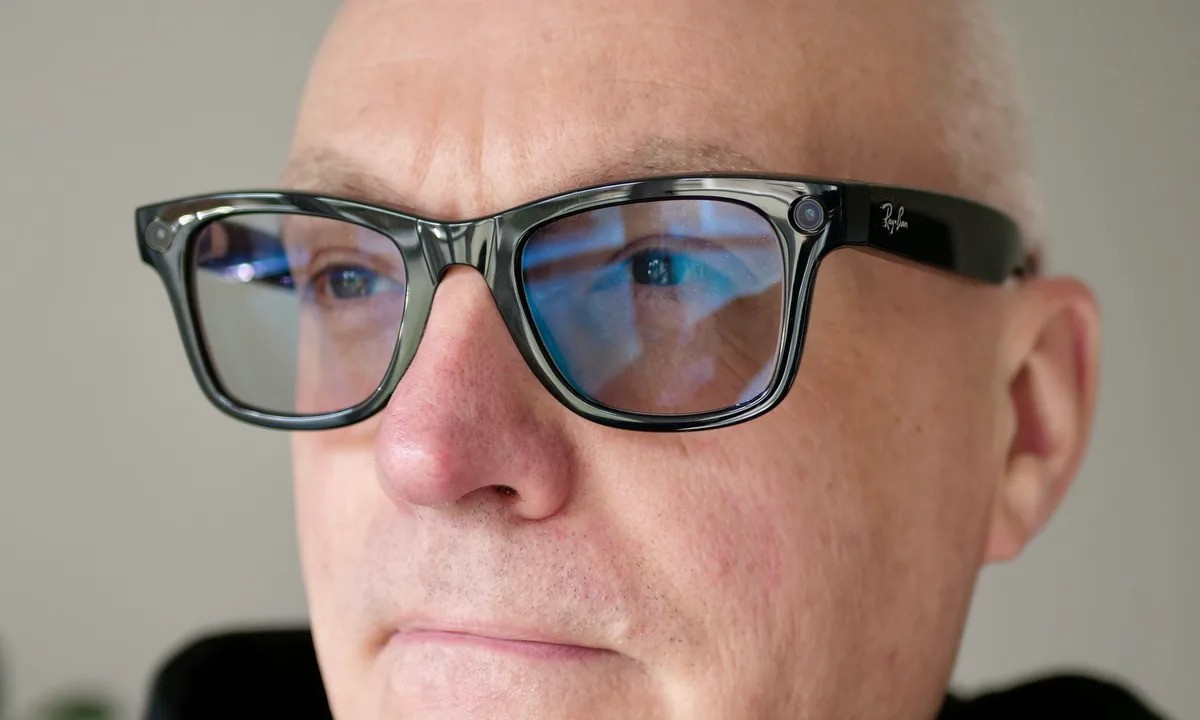
Smart glasses have always struggled in loud public places, and that problem has been especially noticeable with models that rely on open microphones and small speakers. Meta is now rolling out a new software feature that aims to fix that exact issue. The company has introduced a voice filtering tool for its smart glasses that helps conversations sound clearer, even in chaotic surroundings.
The update is designed for Meta’s Ray-Ban smart glasses lineup, which has gained popularity for hands-free calls, music playback, and voice assistant features. While these glasses offer convenience, they have never matched the audio clarity of dedicated earbuds. That gap is what Meta is now trying to close with a feature it calls Conversation Focus.
What the new feature does
Conversation Focus is part of Meta’s experimental feature set and is currently being made available to users enrolled in the Early Access program. Once enabled, the system prioritizes the voice of the person you are facing while reducing background noise from the surrounding environment.

Instead of amplifying everything around you, the glasses focus on a specific audio source. In practical terms, that means the person standing in front of you comes through louder and clearer, while chatter, traffic noise, and other distractions fade into the background.
According to Meta’s explanation on its official support page, Conversation Focus works by amplifying the voices of people directly in your line of sight. Activating it is simple. Users can trigger the feature with a voice command such as “Hey Meta, start conversation focus,” after which the audio filtering kicks in automatically.
Designed for real-world conversations
Meta says the feature performs best when you are standing relatively close to the person you are speaking with. The ideal distance is under 1.8 meters, which aligns with normal face-to-face conversation. Within that range, the system can better isolate speech and reduce competing sounds.

Conversation Focus offers two modes: standard and boosted. The standard mode is meant for mildly noisy places like cafes or busy sidewalks. Boosted mode pushes voice amplification further and is intended for environments where background noise is more aggressive.
Users can fine-tune the level of amplification using the touch-sensitive controls built into the arms of the glasses. Sliding a finger along the side adjusts how strong the voice enhancement feels, allowing for quick changes without pulling out a phone.
There are limits to keep in mind
While the feature is useful, Meta is clear about its boundaries. Conversation Focus is not built for extremely loud environments, such as concerts or construction zones. In those cases, the system may struggle to isolate speech effectively.
Another limitation is multitasking. If you activate another feature that requires microphone access, like speaking to the built-in assistant, Conversation Focus automatically pauses. Once the other task is finished, users can restart the feature with a voice command.
At launch, Conversation Focus is available for Ray-Ban Meta smart glasses as well as the Oakley Meta HSTN models. The rollout currently covers users in the United States and Canada, and access is limited to those participating in Meta’s Early Access program.
The feature was first spotted by UploadVR, which reported on the early availability before Meta officially highlighted the update.
A familiar idea with a smart glasses twist
If Conversation Focus sounds familiar, that is because similar technology already exists in other audio products. Apple’s AirPods, for example, offer a feature called Conversation Awareness, which lowers music volume and enhances nearby voices when someone starts talking to you.
Meta’s approach adapts that concept for smart glasses, where microphones and speakers are positioned differently and environmental noise is harder to control. While it may not fully replace earbuds in every situation, the update makes smart glasses far more practical for everyday conversations in busy places.