There is a growing imbalance in the global computing market this year, and it centers on one critical component: memory. From smartphones and laptops to massive AI servers, nearly every digital device depends on RAM for short-term data storage. The problem is that demand has surged far beyond what suppliers can deliver, leaving the industry facing a historic shortage.
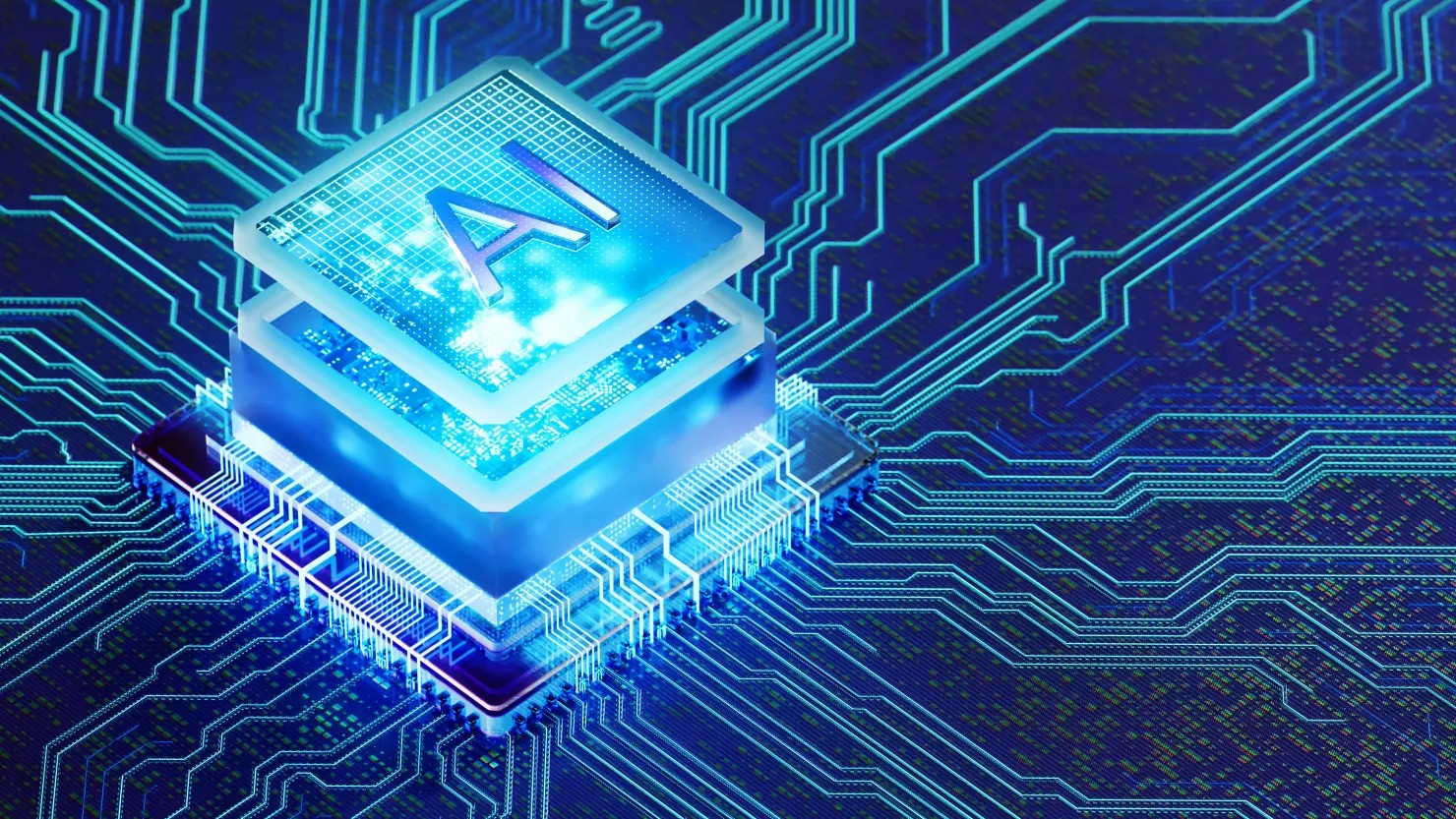
The biggest reason for the squeeze comes from artificial intelligence. Advanced AI processors produced by companies such as Nvidia, Advanced Micro Devices, and Google require enormous amounts of memory to function at full capacity. These firms sit at the front of the supply line, consuming vast quantities of RAM to power data centers and cloud infrastructure.
According to market analysts, memory prices are expected to jump more than 50% during the current quarter compared with the final months of 2025. That scale of increase is rare in the semiconductor world and has started to raise serious questions on Wall Street, especially among consumer electronics manufacturers. Companies like Apple and Dell Technologies are now being asked how they plan to absorb rising memory costs without hurting margins or raising prices for customers.
The global memory market is dominated by just three suppliers: Micron Technology, SK Hynix, and Samsung Electronics. Together, they account for nearly all of the world’s RAM production, and each is benefiting from the explosion in AI-driven demand.
At the CES trade show in Las Vegas, Micron executive Sumit Sadana said the industry has seen demand rise at a pace that memory manufacturers simply cannot match. He explained that supply limitations are not limited to Micron alone, but reflect a broader challenge across the entire memory ecosystem.
Micron’s financial results underline the impact of the shortage. The company’s stock has climbed dramatically over the past year, and its most recent earnings report showed net income nearly tripling. Samsung has also reported a sharp rise in operating profit, while SK Hynix has seen its valuation soar as demand for its AI-focused memory products intensifies. In fact, SK Hynix has already said it has effectively secured orders covering all of its memory output for 2026.
As a result, prices are moving quickly. Research firm TrendForce recently forecasted that average DRAM prices could rise between 50% and 55% in the current quarter alone. Analysts at the firm described the increase as unprecedented, even by the standards of past semiconductor cycles.
One reason memory is becoming so scarce lies in how modern AI chips are built. Graphics processors used for AI workloads rely heavily on high-bandwidth memory, commonly known as HBM. This specialized memory is placed directly around the processing unit to deliver the extreme data throughput required for training and running large AI models.
Micron supplies HBM to leading GPU designers, including Nvidia and AMD. Nvidia’s latest Rubin GPU, which has now entered production, includes as much as 288 gigabytes of next-generation HBM4 memory on a single chip. These processors are deployed in dense server systems that combine dozens of GPUs into one rack, creating enormous memory requirements that dwarf those of consumer devices.
To put that into perspective, most smartphones ship with 8 or 12 gigabytes of standard memory, and even high-end laptops rarely exceed 64 gigabytes. AI servers, by contrast, can demand hundreds of gigabytes per processor.
Producing HBM is also far more complex than making conventional memory. The process involves stacking between 12 and 16 layers of memory into a single unit, forming what engineers often call a memory cube. That complexity comes at a cost. For every bit of HBM produced, manufacturers must sacrifice the ability to produce several bits of traditional DRAM that would otherwise go into PCs, phones, and gaming hardware.
This trade-off has ripple effects across the market. As memory suppliers shift production toward HBM for AI servers, less supply is available for consumer products. TrendForce analysts note that manufacturers are prioritizing data center customers because they are less sensitive to price increases and offer stronger long-term growth potential.
Micron made this shift explicit late last year when it announced it would exit certain consumer-focused memory segments to preserve supply for AI and server customers. That decision has further tightened availability for PC builders and enthusiasts.
Inside the tech industry, the speed of the price surge has surprised many. Some professionals have pointed out that memory configurations that cost a few hundred dollars just months ago are now worth several thousand dollars, highlighting how rapidly conditions have changed.
The issue is not new for AI researchers. Even before tools like ChatGPT entered the mainstream, engineers were warning that memory bandwidth and capacity were becoming bottlenecks for advanced machine learning systems. Earlier AI models relied on architectures that required far less memory, but modern large language models are far more demanding.
While processors have continued to improve at a rapid pace, memory technology has not advanced at the same speed. This mismatch has led to what many in the industry refer to as the memory wall, where powerful GPUs spend valuable time waiting for data rather than performing calculations.
More memory, and faster access to it, allows AI systems to handle larger models, support more users at once, and extend context windows that help chatbots maintain longer conversations. Some startups are now experimenting with alternative architectures that rely on massive pools of conventional memory rather than expensive HBM in an effort to balance performance and cost.
The shortage is already affecting consumer electronics. Memory now accounts for roughly one-fifth of the total hardware cost of a laptop, up from as little as 10% earlier in 2025. Dell has warned that rising memory prices are likely to flow through to retail pricing, even as the company looks for ways to adjust configurations to soften the impact.
Apple executives have acknowledged the upward pressure on memory costs, though they have so far described the effect as manageable. Still, analysts remain skeptical that manufacturers can shield customers indefinitely.
Even Nvidia, the largest buyer of high-bandwidth memory, is not immune to concerns. At CES, CEO Jensen Huang was asked whether gamers might resent AI for driving up graphics card and console prices. Huang responded by noting that memory suppliers are rapidly expanding capacity, but he also acknowledged that AI demand is pushing the entire industry to its limits.
Despite aggressive expansion plans, relief will not come quickly. Micron is building major new fabrication facilities in Idaho that are scheduled to begin production in 2027 and 2028. Another large facility planned for New York is not expected to come online until the end of the decade.
Until then, supply remains tight. According to Micron, the company can currently meet only about two-thirds of some customers’ medium-term memory needs. For the rest of the market, the message is clear: memory for AI systems is fully booked, and availability for 2026 is already gone.