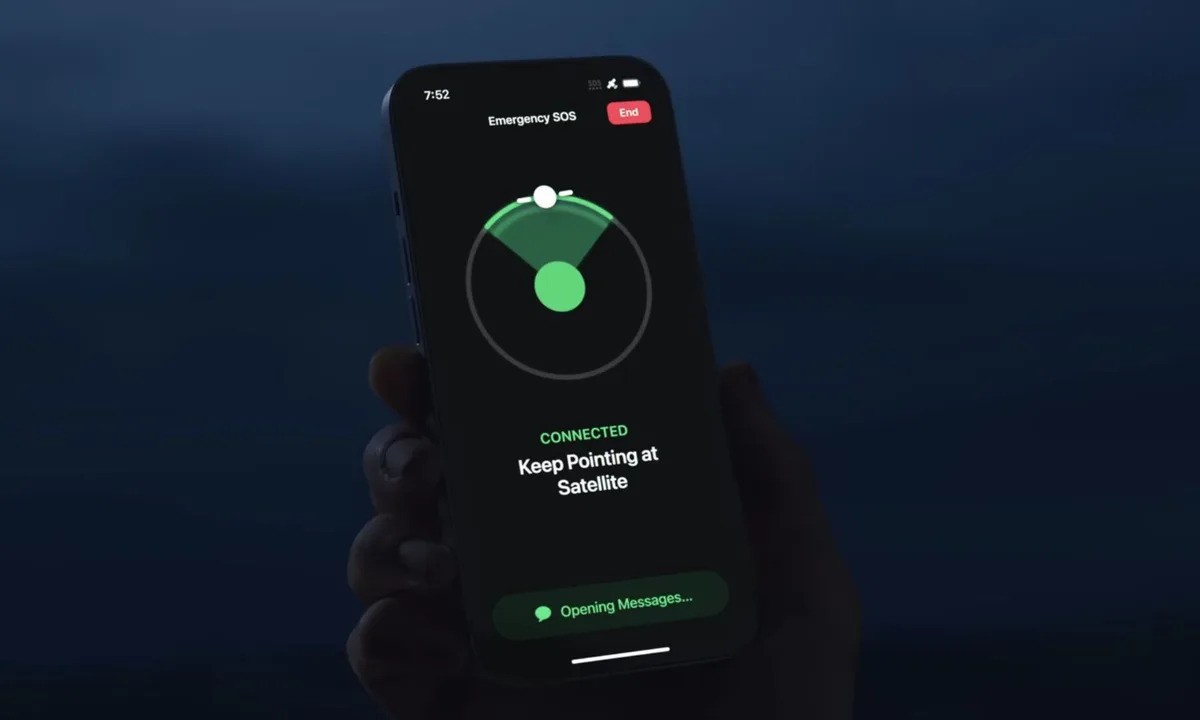
Satellite connectivity on the iPhone has quietly evolved over the last few years, starting with limited emergency tools and slowly expanding into something more practical. Until now, Apple’s satellite features have focused on basic communication, mainly designed for moments when cellular networks completely disappear. With the upcoming iPhone 18 Pro models, that approach may be changing in a much bigger way.
Early satellite tools like Emergency SOS via Satellite, introduced with the iPhone 14, were never meant to replace mobile data. They were built for short text based communication in critical situations, operating at extremely low bandwidth levels. Messages via Satellite later added the ability to send simple texts outside emergency scenarios, but the experience still felt like a fallback rather than true connectivity.
According to recent reports and industry leaks, Apple is now preparing to take satellite communication far beyond basic messaging. The iPhone 18 Pro and iPhone 18 Pro Max are expected to support what is being described as 5G via Satellite, a move that could redefine how smartphones stay connected in remote areas.
This shift would allow iPhones to connect directly to low Earth orbit satellites using 5G Non Terrestrial Networks, often referred to as NTN. Instead of relying solely on ground based cell towers, the phone would communicate with satellites orbiting the planet, enabling broader coverage in areas where traditional networks simply do not exist.
Much of this capability is expected to be powered by Apple’s upcoming C2 modem. Unlike previous modems, this new chip is rumored to handle both standard terrestrial 5G networks and satellite based connections. If accurate, this would mark a major hardware upgrade that positions Apple ahead of many competitors in satellite enabled mobile technology.
The idea of 5G via Satellite does not mean identical performance to city based 5G networks. However, it represents a massive leap from kilobits per second satellite texting. Reports suggest the bandwidth could support voice calls, image sharing in high resolution, and potentially even video streaming under the right conditions.
Industry observers point out that this type of connectivity could be especially valuable for travelers, outdoor workers, and users in rural regions. Areas with limited or unreliable cellular coverage could suddenly gain access to usable internet without relying on specialized satellite phones or external equipment.
Leaks supporting these claims have come from multiple sources. The YouTube channel Front Page Tech recently discussed upcoming design changes for the iPhone 18 Pro, including a revised front camera layout and under display Face ID components. Alongside those hardware changes, the channel mentioned satellite based 5G as one of the standout features planned for the Pro lineup.
Shortly after, a well known Korean tipster shared similar information on a post published on Naver, stating that the iPhone 18 Pro could become the first smartphone capable of true 5G satellite communication. The consistency between these independent sources has added credibility to the reports.
Apple already has experience working with satellite partners, as seen with its collaboration on Emergency SOS. Expanding that infrastructure to support higher bandwidth services would require significant coordination with satellite providers and potentially mobile carriers as well. While details remain limited, the foundation appears to already be in place.
One major unanswered question is how Apple plans to price this feature. Emergency satellite services were initially offered free for a limited period, but long term satellite connectivity is costly to operate. It is widely expected that 5G via Satellite will involve a subscription model or carrier based add on, rather than remaining a free service.
Compatibility with existing carriers is another unknown. Whether satellite 5G will function independently of traditional carriers or integrate with them remains unclear. Apple may choose to partner with select networks, similar to how it manages certain regional features today.
What is clear is that this development would give Apple a meaningful advantage in the premium smartphone market. While Android manufacturers have explored satellite messaging, none have yet delivered high speed satellite internet directly to consumer devices at scale. If Apple succeeds, it could set a new benchmark for connectivity.
As competition intensifies among flagship devices, features that extend beyond camera upgrades and display refinements are becoming increasingly important. Satellite based 5G fits that pattern by addressing a real world problem rather than incremental performance gains.
For users interested in how satellite networks work more broadly, resources explaining 5G Non Terrestrial Networks provide useful background on how space based connectivity integrates with existing mobile standards. Similarly, Apple’s own history with satellite features shows how cautiously but steadily the company expands new technologies.
With the expected September 2026 launch window for the iPhone 18 Pro models, more concrete information is likely to surface in the coming months. Carrier partnerships, pricing details, and real world performance data will ultimately determine how transformative this feature becomes.
If the reports hold true, the move from emergency satellite texting to functional satellite internet would represent one of the most significant changes in smartphone connectivity in over a decade, placing Apple at the center of a shift that blends terrestrial and space based networks into a single user experience.