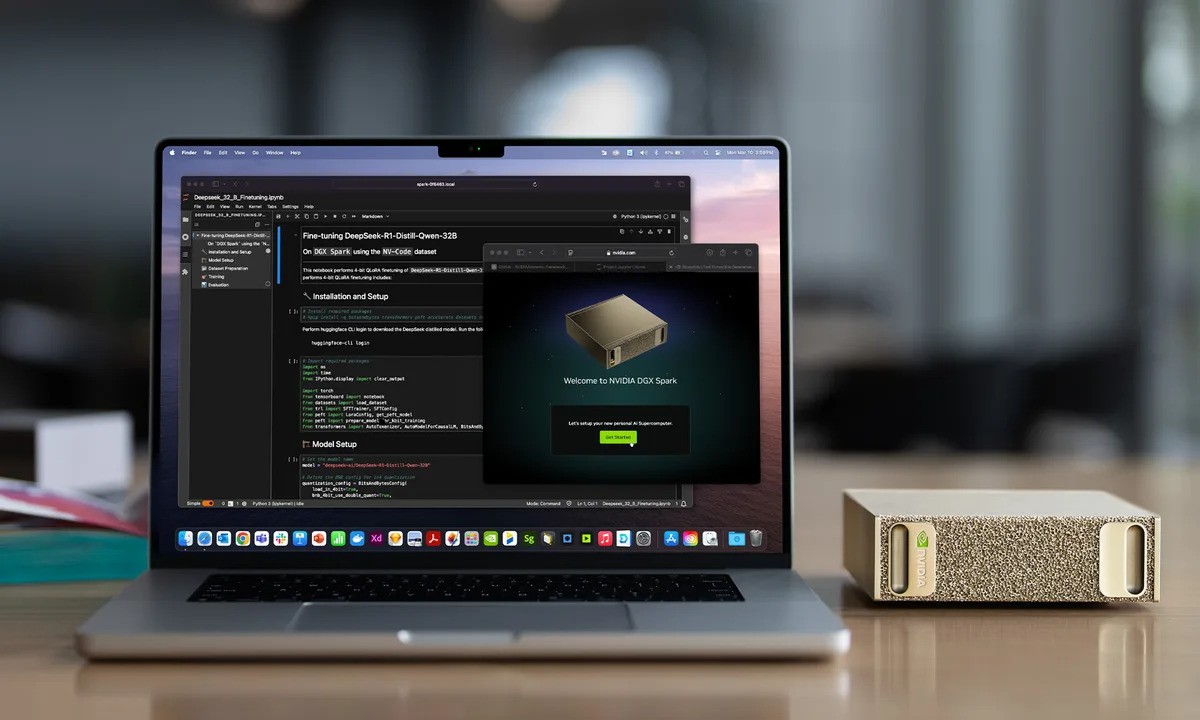
Speculation around laptops powered by Nvidia’s ARM-based processors has been building for well over a year, with multiple reports hinting that the company is preparing to make a serious move into the consumer notebook space. Early leaks suggested Lenovo might be the first brand to introduce these machines, but newer information indicates that Dell could reach store shelves ahead of the competition. A recent report now adds more clarity to the expected launch window for Nvidia-powered laptops.
Industry sources cited by DigiTimes claim that Nvidia’s first ARM-based laptops aimed at retail customers could arrive in the first quarter of 2026. These systems are expected to be powered by the N1X chip, which is designed for high-end computing tasks. According to the same report, Nvidia plans to follow up with three additional laptop models later in the year, likely launching during the second quarter. Looking further ahead, notebooks equipped with the next-generation N2 chips are reportedly scheduled for release in the third quarter of 2027.
The timeline represents a shift from Nvidia’s earlier plans. The company had initially intended to showcase its N1 and N1X laptops at Computex 2025 in Taipei, with commercial availability expected around September of that year. However, those plans were delayed due to a combination of factors. These reportedly included adjustments to Microsoft’s operating system roadmap, internal chip redesigns at Nvidia, and a broader reassessment of notebook market demand influenced by global economic and political conditions.
Despite these delays, Nvidia appears committed to pushing forward with its laptop strategy. The company is said to be moving ahead with its 2026 launch targets even as the industry continues to face challenges such as memory supply constraints and rising component costs. The N1 and N1X processors are expected to focus on premium laptops, with Nvidia positioning them as powerful platforms built for advanced computing and AI-driven workloads.
Nvidia’s entry into the ARM-based laptop market is notable, especially as Windows on ARM gains traction. Much of this momentum has been driven by Qualcomm’s Snapdragon X series, along with Microsoft’s ongoing efforts to improve native application support within Windows. As more developers optimize their software for ARM architecture, the platform has become increasingly viable for everyday users as well as professionals.
This is where Nvidia could differentiate itself. With its deep background in GPU acceleration, AI processing, and high-performance computing, Nvidia has the potential to deliver ARM-based laptops that go beyond basic efficiency gains. If successful, these systems could appeal to users who need strong AI capabilities, creative performance, and advanced graphics in a mobile form factor. More information about Nvidia’s broader hardware strategy can be found on the official Nvidia website.
While Nvidia has not yet made any formal announcements regarding these laptops, the reported development schedule suggests that official details may surface sooner rather than later. If the first N1X-powered models do launch in early 2026 as expected, they would arrive at a time when the Windows ARM ecosystem is far more mature than it was just a few years ago.
For Microsoft, this could be a timely boost. Continued investment in Windows on ARM has already improved compatibility and performance, and the arrival of another major chip partner could further strengthen the platform. More details about Microsoft’s approach to ARM-based computing can be explored on Microsoft’s Windows page.
As competition intensifies in the laptop processor market, Nvidia’s move signals that ARM-based computing is no longer limited to niche devices or experimental designs. Instead, it is becoming a serious contender in the premium notebook segment. Whether Nvidia can successfully translate its dominance in GPUs and AI into the laptop space remains to be seen, but the reported roadmap suggests that the company is positioning itself for a long-term presence rather than a short-term experiment.