Virtual reality still struggles with one stubborn limitation. Touch often feels flat, even when visuals are convincing. A new experimental device aims to close that gap by letting your finger actually feel resistance, texture, and movement inside digital environments.
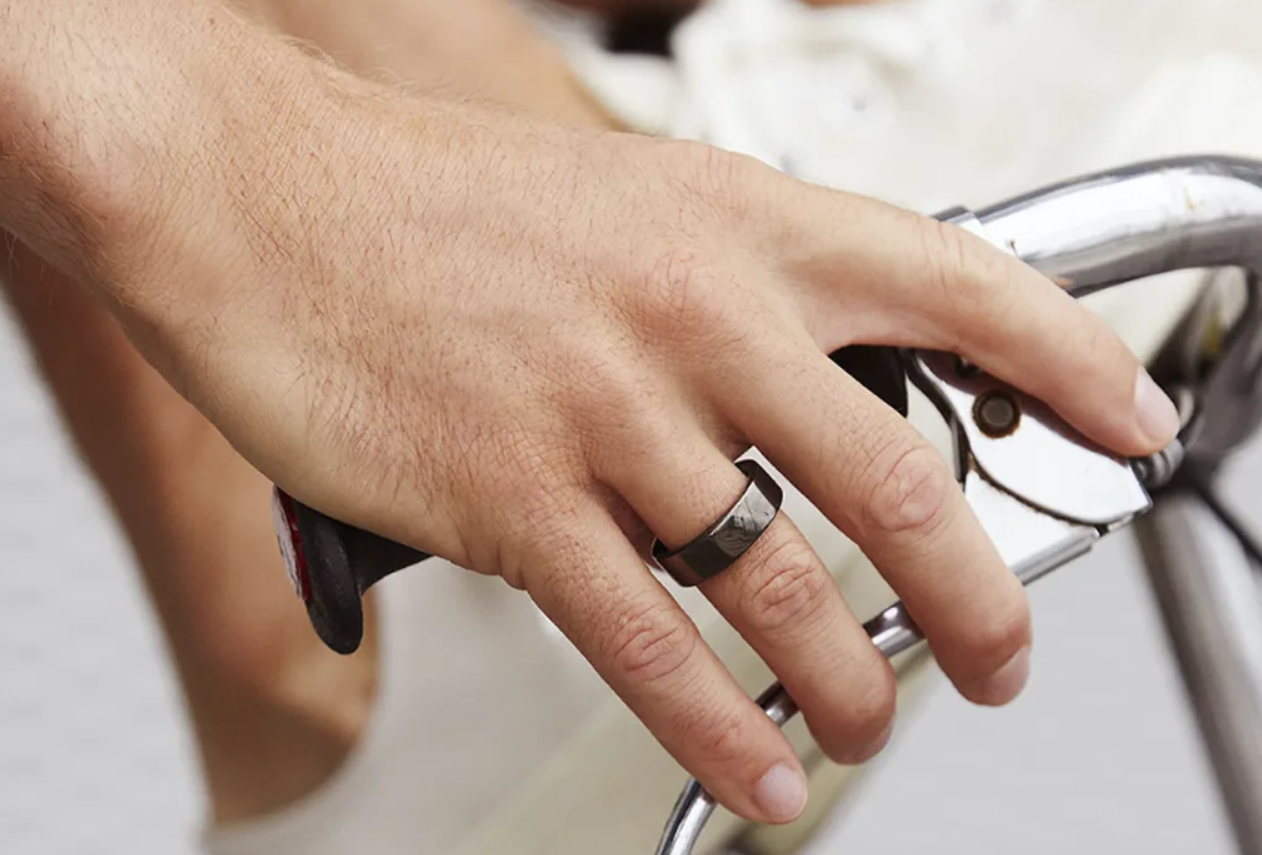
A lightweight haptic ring called OriRing has been developed by researchers from Sungkyunkwan University, EPFL, and Istanbul Technical University. Weighing just 18 grams, the ring is designed to sit comfortably on a single finger while delivering physical force feedback of up to 6.5 newtons. That level of pushback is enough to simulate pressing against solid objects, sliding across surfaces, or interacting with materials that change stiffness in real time.
Unlike many existing VR wearables that rely mainly on vibration, this approach focuses on force feedback. OriRing tracks how your finger presses and moves in three directions, then responds by applying resistance that mirrors what is happening in the virtual scene. The goal is to make interactions feel less like tapping buttons in midair and more like touching something with shape and weight.
The system is built to work across both virtual reality and augmented reality applications. By measuring pressing force and lateral motion at the same time, the ring can sense subtle movements such as dragging along an edge or adjusting grip pressure. That data is then used to generate realistic feedback, allowing digital objects to feel larger, softer, or stiffer depending on how they are programmed.
At the core of the design is an origami inspired structure that allows the hardware to stay compact while still delivering meaningful force. Kinesthetic haptics usually become bulky because they need room to push back against the user. Folding mechanisms help distribute that force efficiently, keeping the device small enough to wear without feeling intrusive.
Lab testing showed that the ring could deliver three degree force feedback while maintaining accurate three axis sensing. This includes sideways motion, which is critical for recognizing texture and resistance when a finger slides across a surface. Those cues play a major role in how the brain interprets touch, especially when trying to distinguish edges, corners, or changes in material.
Most consumer VR systems today focus on signaling events rather than simulating physical properties. Vibrations can tell you that something happened, but they struggle to convey shape, firmness, or resistance. Force feedback fills that gap by introducing pushback, helping interactions feel closer to real contact instead of notifications.
One of the more promising aspects of the design is its bidirectional capability. The ring does not just output force, it also captures detailed input from the finger at the same time. This makes it possible for developers to scale feedback dynamically. Press harder and the object pushes back more. Slide along a surface and resistance changes based on direction and speed. Squeeze and the system can interpret intent while responding with realistic force.
The researchers frame the technology as useful for both VR and AR, where tactile realism can matter even more because visuals are anchored in the real world. However, the published research does not yet address practical factors like latency, battery performance, or comfort during long sessions. Those details will matter once the device moves beyond controlled demos.
So far, OriRing remains a prototype. There is no pricing information, no announced release window, and no confirmed partnerships with consumer headset makers. The full technical paper is available through academic channels such as ResearchGate, but it stops short of outlining a clear path to commercialization.
The next major test will be how well the system performs outside ideal lab conditions. Fast hand movements, repeated interactions, and long term wear will reveal whether multi directional sensing remains stable under real world use. Reliability will likely determine where this type of haptic ring fits first.
Early applications may appear in structured environments such as training simulations, guided AR workflows, or rehabilitation programs where consistent tactile cues support precise movement. Gaming could follow later, once durability and integration with existing VR platforms are proven.
For now, the concept highlights how force based haptics could reshape digital interaction if the remaining technical challenges are solved. Whether OriRing becomes a consumer product or stays a research platform will depend on how it scales beyond the lab and into everyday virtual experiences.