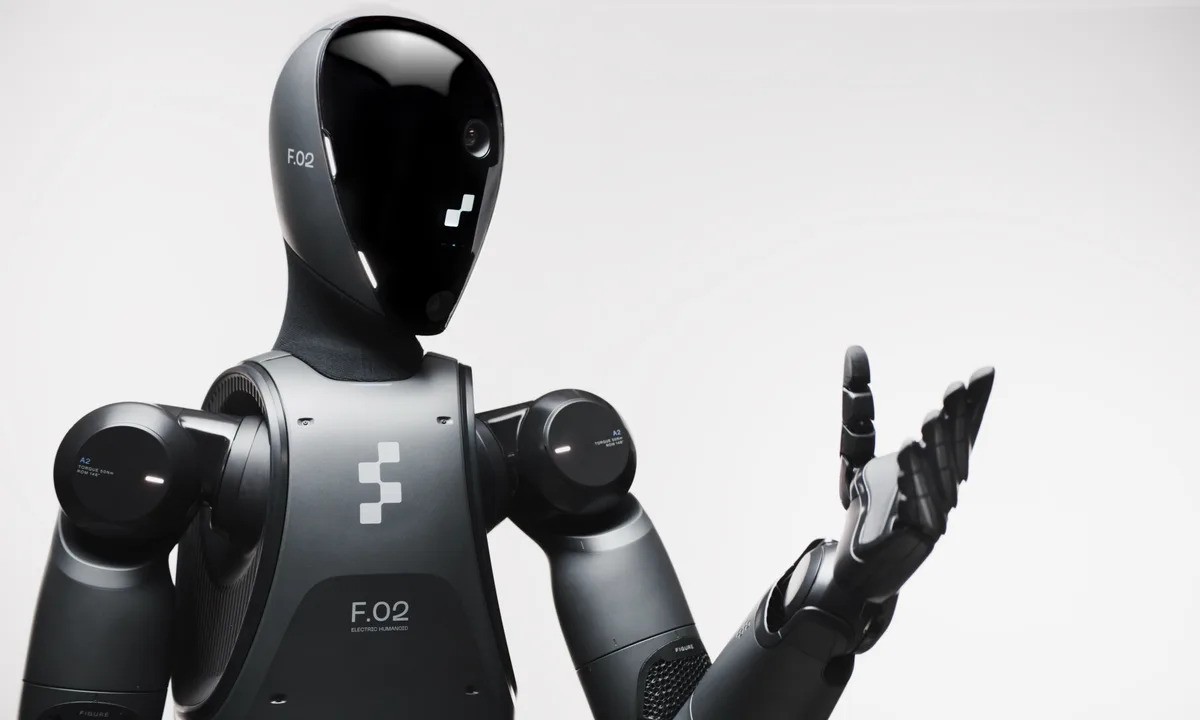
A newly released video from California-based robotics company Figure AI is getting plenty of attention after showing its humanoid robot heading out for a run alongside members of the development team.
In the short clip, the robot jogs across the company’s campus with a calm, controlled stride that looks surprisingly natural. It keeps pace with the runners next to it, moving smoothly rather than with the stiff, mechanical motion many people still associate with humanoid machines. The footage immediately raises an interesting question. Could robots like this eventually become personal fitness companions?
The idea might sound futuristic, but watching the robot maintain a steady rhythm makes it easier to imagine real-world uses. In a training scenario, a humanoid robot could set a consistent pace for runners preparing for long-distance events such as marathons. Instead of relying on a smartwatch or phone app, a physical running partner could offer visual and physical motivation during workouts.
Of course, not everyone is ready for that future just yet. During the campus run, one bystander can be heard shouting a warning about robots taking over, a reminder that public reactions to humanoid machines remain mixed. While some people are fascinated, others are clearly uneasy seeing robots move so comfortably in human spaces.
The video was shared by Figure AI founder Brett Adcock on social media, but it does not clarify whether the robot was running fully on its own or being remotely controlled during the jog. That detail matters, as autonomous outdoor movement is a significant technical challenge for humanoid robots. Uneven ground, unpredictable obstacles, and changing environments all require advanced perception and balance systems.
Figure AI has been steadily pushing its humanoid platform beyond simple demonstrations. The company unveiled the latest version of its robot in October 2025, positioning it as a machine designed to assist with everyday household tasks. Demonstrations have shown the robot loading dishwashers, folding laundry, and serving food and drinks, all aimed at making life easier inside the home. A closer look at those capabilities can be found in this earlier overview of Figure’s home-focused robot.
While a running partner may not be at the top of most people’s wish lists, it highlights how quickly humanoid robotics is evolving. What starts as a novelty feature often becomes a stepping stone toward more practical applications. Mobility, balance, and endurance are critical foundations for robots intended to operate in homes, factories, or public spaces.
Other companies are making similar progress. A recent example involves a Chinese startup that programmed Unitree’s G1 robot to perform household chores with minimal human involvement. A video of the robot handling tasks independently suggests that humanoid machines are beginning to move beyond tightly controlled lab environments and into more realistic settings. You can see that demonstration through this report on robots tackling housework without teleoperation.
Whether these machines end up assisting with fitness, household chores, or industrial work, one thing is clear. Humanoid robots are advancing at a pace that few would have predicted a decade ago. From jogging alongside humans to helping out around the house, the line between science fiction and everyday technology continues to blur.