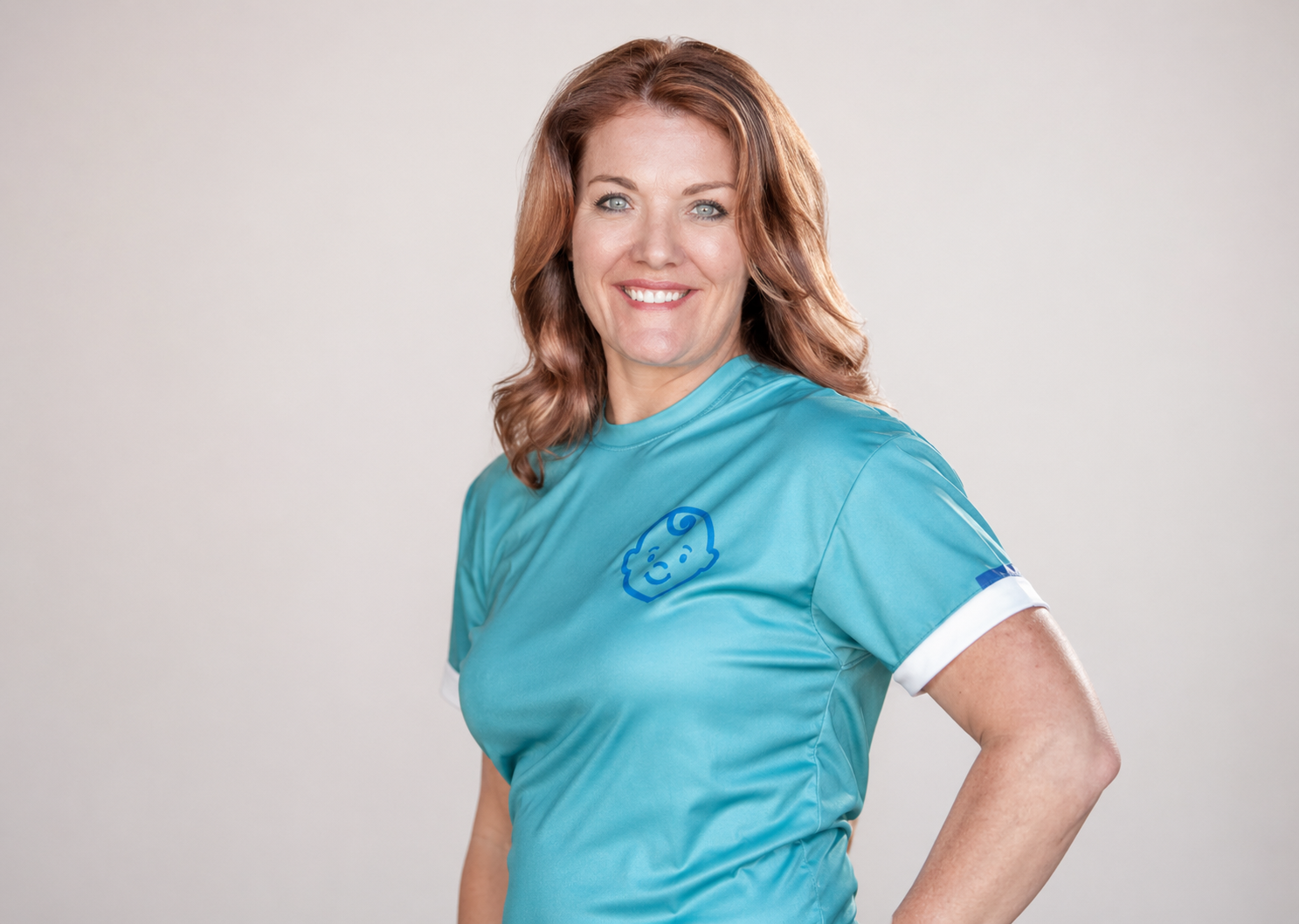
Beth Benike did not build Busy Baby by chasing a hot trend or trying to force her way into a crowded market. She built it the way a lot of the most durable brands get built: by noticing a real problem, feeling that problem firsthand, and refusing to ignore it.
That is what makes her story worth paying attention to. Busy Baby was not created from a polished pitch deck or a boardroom brainstorm. It started with the kind of everyday parenting frustration that most people would shrug off and accept. Beth looked at that same frustration and saw an opportunity to make life easier for parents.
Her path into entrepreneurship also gave the brand a different kind of backbone. Before she became the founder of Busy Baby, Beth served in the U.S. Army. That military background shaped the way she approached pressure, uncertainty, and hard decisions. Later, when she entered the baby products space, that same grit helped her push through the steep learning curve that comes with building a consumer brand from scratch.
Busy Baby became more than one useful product. It grew into a recognizable baby brand built around practical design, patent protection, product expansion, and a clear understanding of what parents actually need during messy, busy, exhausting daily routines.
Beth Benike’s Path From Army Service to Entrepreneurship
Beth Benike’s story stands out because her business did not come from a typical startup background. She was not coming out of a venture-backed incubator, and she was not trying to build a brand around hype. Her foundation was discipline, service, and persistence.
As an Army veteran, Beth brought a mindset to entrepreneurship that many founders spend years trying to develop. Military life teaches structure, adaptability, and the ability to keep moving even when things feel uncertain. Those traits matter in business, especially when you are creating a physical product, learning manufacturing, protecting intellectual property, and trying to convince the market to trust something new.
Her transition into business was also personal. After becoming a mother, Beth found herself living the same realities as the customers she would eventually serve. That mattered. She was not designing for a demographic she barely understood. She was building from lived experience.
That parent perspective helped give Busy Baby its voice from the very beginning. The brand was never just about selling baby gear. It was about making mealtimes, travel, and everyday routines feel a little less chaotic for caregivers.
The Real Parenting Problem That Sparked Busy Baby
Every strong product story begins with a problem that feels obvious once somebody finally solves it. For Beth, that moment came during a lunch outing with friends and their babies.
Like so many parents, they spent a big part of that time picking up toys, utensils, and baby items that kept hitting the floor. It was repetitive, annoying, and honestly pretty normal. Most parents just deal with it. Beth did not.
She looked for a product that could help keep baby essentials within reach while also giving a child a clean place to eat. She did not find a solution that handled both needs in a simple way. That gap in the market became the opening for Busy Baby.
What happened next says a lot about how founder-led brands take shape. Beth did not wait for the perfect business plan. She started working on a homemade prototype. That simple response to a very real parenting headache became the starting point for the Busy Baby Mat.
The idea was easy to understand, which is part of why it worked. Parents do not need a long explanation for a product that helps keep things off the floor and within reach. The value is immediate.
How the Busy Baby Mat Turned One Smart Idea Into a Real Product
The original Busy Baby Mat gave the brand its identity. It combined a silicone placemat with tether points designed to keep toys, utensils, and teethers attached and accessible. That combination made it different from the average baby feeding accessory.
It was not just another placemat. It was a problem-solving system.
That matters in consumer products because parents are not usually looking for more stuff. They are looking for less stress. The best baby brands understand that their product is really a shortcut to convenience, calm, safety, or routine. Busy Baby found its lane by focusing on one of the most common daily frustrations parents deal with.
Turning that idea into a product people would actually buy was a different challenge altogether. Beth had to move from concept to manufacturing, from prototype to protected invention, and from personal solution to market-ready brand. That leap is where many good ideas stall out. In Busy Baby’s case, it became the point where the company started to take shape.
The product’s early appeal came from how practical it felt. It was easy to demonstrate, easy to understand, and rooted in a real-life use case. That made it easier for Busy Baby to connect with parents who wanted products that were useful before they were trendy.
Why Parent First Product Design Became Busy Baby’s Competitive Edge
A lot of baby products get marketed with big promises, soft colors, and polished packaging. But once parents use them in real life, some of them do not hold up. Beth Benike took a different route with Busy Baby.
The brand’s design philosophy was clearly shaped by actual parenting routines. Parent first product design means the product has to work in the middle of real messes, distractions, travel, meal prep, and everyday exhaustion. It needs to solve something specific. It needs to feel intuitive. It needs to earn its place.
That is one reason Busy Baby built such a clear identity. The brand was not trying to be everything at once. It was focused on practical innovation.
That approach also gave Busy Baby a stronger emotional connection with customers. Parents can tell when a product was designed by someone who truly gets the problem. There is a difference between designing around a trend and designing around lived frustration. Beth’s background as a parent gave the brand authenticity that is hard to fake.
In a crowded baby products market, that kind of trust matters. When a brand consistently solves real problems, customers remember it.
Building a Brand Around Patents, Protection, and Practical Innovation
One of the smartest things Beth did was treat Busy Baby like a real long-term business, not just a one-product moment. Many founders come up with a good idea, get some traction, and stop there. Busy Baby kept building.
Patent protection became an important part of that strategy. Instead of leaving the original concept exposed, Beth worked to protect the innovation behind the product line. That move helped Busy Baby build credibility and defend what made it different.
That protection also signaled something important to the market. Busy Baby was not just selling a clever mom hack. It was building a defensible brand based on original design.
Over time, the company expanded beyond the first product and developed a broader lineup. That kind of growth is much easier when the foundation is clear. Beth understood the brand promise early on: create baby and toddler products that make daily life easier, keep essentials within reach, and reduce repeated frustrations for parents.
That consistency gave Busy Baby room to grow without losing its identity.
How Veteran Grit Helped Beth Benike Push Through the Hard Parts of Growth
People often talk about entrepreneurship as if it is mostly creativity and ambition. In reality, a big part of it is endurance.
That is where Beth’s veteran background becomes more than a nice detail in her bio. It helps explain how she handled the long stretches of uncertainty that come with building a product-based business. Manufacturing delays, inventory pressure, retail expansion, product testing, customer expectations, and operational setbacks all require steady nerves.
Veteran grit is not just about toughness. It is also about composure, discipline, and continuing to move even when the outcome is not guaranteed.
Beth’s story reflects that. She built Busy Baby in a category where trust matters, competition is intense, and product quality cannot be an afterthought. She kept going through the trial-and-error part of entrepreneurship that most people never see.
That kind of persistence often becomes a hidden advantage. Customers may first notice the product, but the resilience behind the company is usually what allows the brand to keep evolving.
Turning Busy Baby From One Product Into a Multi Product Brand
What started with one invention did not stay that way. Busy Baby grew from a single standout product into a wider brand with multiple offerings designed to work around the same core mission.
That expansion matters because it shows Beth was not only thinking like an inventor. She was thinking like a brand builder.
A business becomes much more durable when it can serve customers in more than one moment. Busy Baby moved beyond its original hero product into a broader range that included accessories and related feeding and toddler solutions. That gave parents more ways to stay within the brand once they trusted the first product.
Busy Baby also grew as a family-run company, with Beth’s brother Eric playing a role in the business. That added another layer to the story. It was not just a founder success narrative. It was also a story about building something bigger than one person.
The expansion of the product line made the business more credible, more visible, and more scalable.
The Role of Shark Tank, Retail Visibility, and National Growth
Busy Baby’s rise also gained momentum through public visibility. Beth appeared on Shark Tank, which introduced the brand to a wider audience and gave it a level of recognition that many young consumer brands struggle for years to earn.
What makes that chapter more interesting is that Beth did not simply treat the appearance as a finish line. She kept building after the exposure. That is an important part of the story because visibility creates opportunity, but it does not replace execution.
As the brand grew, Busy Baby expanded into major retail channels, including Walmart and Target. That step mattered because it showed the company had moved beyond early startup status. Retail placement signals that a product has broader demand, stronger operational capability, and a level of market trust that national chains are willing to back.
For parents discovering the brand in stores or online, that visibility made Busy Baby feel more established. For Beth, it marked a shift from invention to scaled distribution.
It also proved that a product born from a small, everyday parenting annoyance could become something far bigger when paired with persistence and smart execution.
Why Beth Benike’s Story Connects With Parents and Entrepreneurs
Beth Benike’s success with Busy Baby resonates because it feels real. The brand did not come out of nowhere, and it was not built on vague inspiration. It came from a very specific pain point, a very practical solution, and a founder willing to do the hard work required to bring that solution to market.
Parents connect with the story because the product makes immediate sense. Entrepreneurs connect with it because the path was not easy or glamorous. It involved learning, risk, patience, protection, expansion, and staying committed to the bigger vision.
There is also something powerful about the way Beth built the company around empathy. Busy Baby was shaped by what parents actually deal with, not what branding trends say they should want. That kind of clarity can take a business a long way.
Her story also stands at the intersection of several strong themes: veteran entrepreneurship, women-led business growth, product innovation, family business building, and customer-driven design. That gives the story lasting relevance beyond the baby products category.
Busy Baby worked because Beth Benike did not separate the product from the people who would use it. She built with the parent in mind from the start, and that decision gave the brand its strongest advantage.