AI agents are moving from impressive demos into real business workflows. They answer customer questions, search company knowledge bases, draft documents, handle support tasks, analyze data, and connect with tools that people use every day. That shift has created a new problem for engineering teams. Building an AI agent is no longer the hardest part. The harder question is whether that agent can be tested, monitored, improved, and trusted once real users begin depending on it.
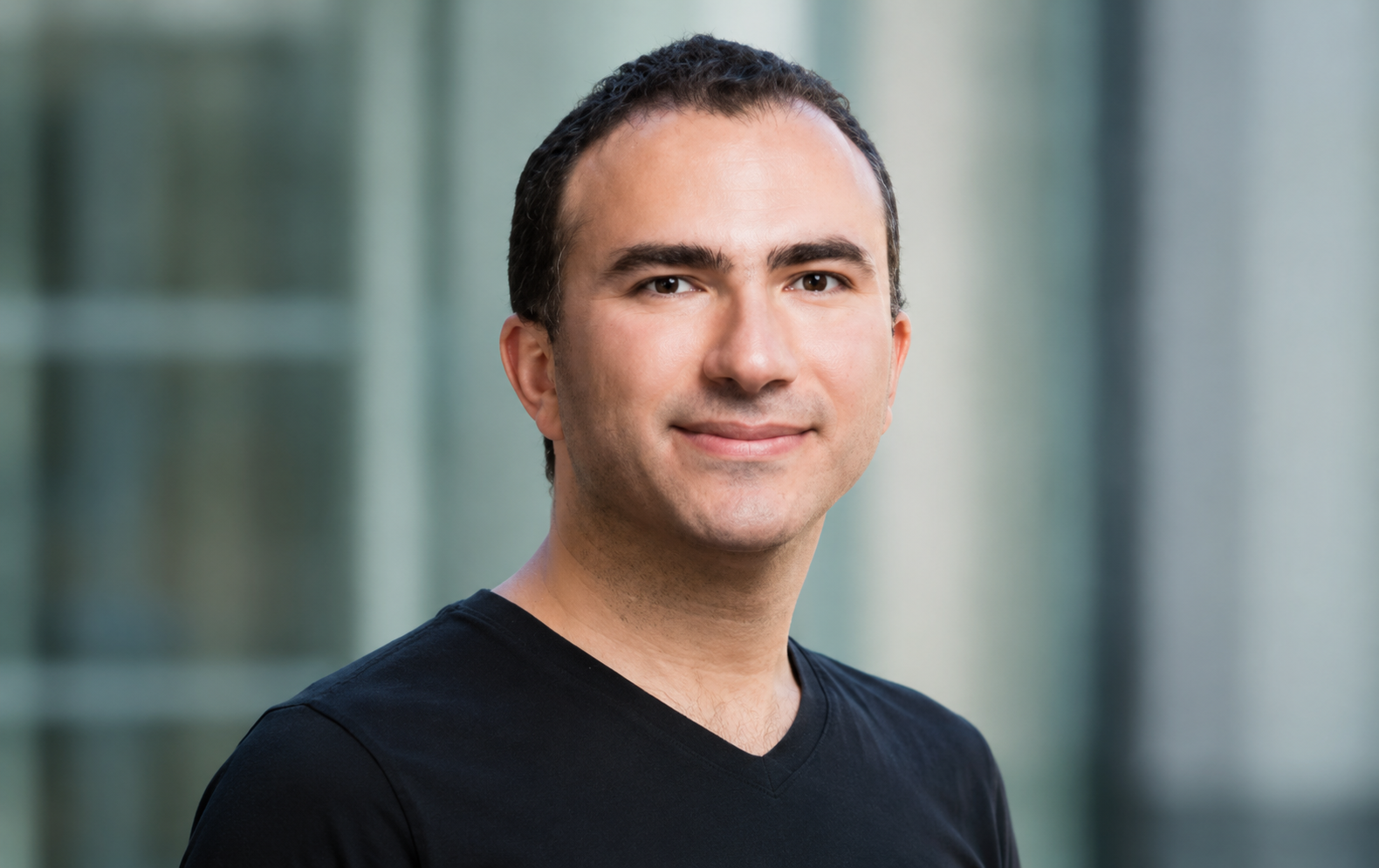
This is where Mohak Sharma and HoneyHive enter the picture. As Co-Founder and CEO of HoneyHive, Mohak Sharma is working on one of the most important layers in the AI stack, the layer that helps teams understand how their AI agents behave after they are built. HoneyHive is focused on AI evaluation and observability, giving teams a way to trace agent behavior, test outputs, monitor live performance, catch regressions, and keep improving AI products after launch.
The timing matters. Companies are no longer asking only whether they can add AI to their products. They are asking whether the AI they ship will work reliably across thousands or millions of real interactions. Mohak Sharma is building HoneyHive around that exact challenge.
Who is Mohak Sharma
Mohak Sharma is best known as the Co-Founder and CEO of HoneyHive, a company building infrastructure for AI agents and LLM applications. His work sits at the intersection of AI product development, software reliability, and enterprise AI adoption.
Instead of focusing only on model performance in a lab setting, Mohak Sharma is focused on what happens when AI systems are placed in front of real users. That is where many AI projects begin to struggle. A chatbot may perform well in a controlled test. A research assistant may give strong answers during a demo. An AI agent may complete a simple workflow during a sales call. But production environments are messy. Users ask unpredictable questions. APIs fail. Retrieval systems bring back weak context. Model outputs change. Prompts behave differently across edge cases.
That messy reality is the problem HoneyHive is trying to solve. Under Mohak Sharma’s leadership, the company is building tools that help teams move beyond guesswork and build a clearer workflow for testing, monitoring, and improving AI systems.
What HoneyHive does
HoneyHive is an AI observability and evaluation platform for teams building AI agents and LLM-powered applications. In plain terms, it helps teams see what their AI systems are doing, measure whether those systems are performing well, and identify what needs to be fixed.
A traditional software team might rely on logs, metrics, tests, and monitoring tools to understand whether an application is healthy. AI agents need something similar, but more specialized. Their behavior is not always predictable, and their failures are not always obvious. An AI agent might use the wrong tool, retrieve the wrong document, misunderstand a user request, hallucinate a detail, produce an unsafe answer, or complete a task in a way that technically works but still creates a poor user experience.
HoneyHive gives teams ways to work through those problems with features such as traces, evaluations, monitoring, alerts, prompt management, datasets, experiments, and human review workflows. It is designed to support the full AI development lifecycle, from early experiments to production deployment and continuous improvement.
For teams building serious AI products, that kind of workflow can become the difference between a promising prototype and a system that can actually be trusted in the real world.
Why AI agents are difficult to test
AI agents are not like ordinary software features. A normal software function usually produces the same output when given the same input. AI systems are more flexible, but that flexibility also makes them harder to control.
A single AI agent may rely on a prompt, a large language model, a vector database, a retrieval pipeline, external tools, API calls, memory, user feedback, and business rules. When something goes wrong, the problem may not be in just one place. It could be a weak prompt, missing context, a bad retrieval result, a model limitation, a tool error, or a chain of small issues that only becomes visible at the end of the workflow.
This is why manual testing is not enough. A team can test a few examples and still miss the situations that real users will create. An agent might look polished during internal review, then fail when users ask questions in unexpected ways. It might perform well in English but poorly with mixed language input. It might answer simple questions correctly but fail when a workflow requires multiple steps.
Mohak Sharma is building HoneyHive for that reality. The platform is not just about checking whether an answer is good once. It is about helping teams create repeatable evaluation systems that can catch problems early, track changes over time, and turn production failures into future test cases.
How Mohak Sharma is making AI evaluation more practical
AI evaluation can sound technical, but at its core it asks a simple question. Is this AI system doing the job it is supposed to do?
The answer is not always simple. Different teams care about different things. A customer support agent may need to be accurate, polite, fast, and aligned with company policy. A financial research assistant may need strong source grounding and careful handling of sensitive information. A coding agent may need to complete tasks without breaking existing functionality. A healthcare or legal workflow may need even stricter review and auditability.
HoneyHive helps teams define those expectations more clearly. Its evaluation workflows can support automated checks, LLM-based evaluators, custom code evaluators, human review, dataset management, and regression testing. This allows teams to measure performance against criteria that match their own product and industry.
That is important because AI quality cannot be reduced to one number. A response might be fluent but inaccurate. It might be safe but unhelpful. It might be technically correct but too slow. It might work for one user group and fail for another. Good evaluation needs to look at the full picture.
By turning evaluation into a practical workflow, Mohak Sharma is helping teams treat AI quality as something that can be measured and improved, not just judged by instinct.
Why observability matters for AI agents
Observability is about understanding what is happening inside a system. For AI agents, that means seeing the steps behind the final answer.
When an agent gives a poor response, the final output is only part of the story. A team also needs to know what prompt was used, which model was called, what context was retrieved, which tool was selected, what data came back, how long each step took, how much it cost, and where the reasoning path started to drift.
HoneyHive focuses heavily on traces because traces help teams see the full path of an AI interaction. Instead of looking only at the answer, teams can inspect the workflow behind it. This makes debugging faster and more grounded.
For example, if a support agent gives the wrong refund policy, the team can trace whether the agent retrieved an outdated policy document, misread the correct document, ignored a system instruction, or used the wrong tool. Each of those causes requires a different fix. Without observability, teams may keep changing prompts without knowing whether the prompt was really the issue.
This is one reason HoneyHive matters. It helps teams move from guessing to diagnosing.
Helping teams monitor AI agents in production
Production is where AI systems reveal their real behavior. Internal tests are useful, but they cannot fully predict how users will interact with an agent once it is live.
A production AI agent needs ongoing monitoring for quality, cost, latency, safety, user feedback, tool failures, drift, and regressions. If a model update changes behavior, teams need to know. If a prompt change improves one metric but hurts another, teams need to see it. If users begin flagging responses as unhelpful, the team needs a way to connect that feedback to the actual traces and outputs.
HoneyHive is built to support this kind of monitoring. Its platform gives teams a way to watch AI applications after launch, set alerts, analyze live traces, capture user feedback, and curate weak examples into better evaluation datasets.
This creates a feedback loop. A failure in production does not just become a complaint or a support ticket. It can become a test case that helps prevent the same problem from happening again.
That loop is central to the way Mohak Sharma talks about reliable AI development. The goal is not only to launch AI products faster. The goal is to keep improving them as real-world data comes in.
Building trust through better AI workflows
Trust in AI agents is not built through marketing language. It is built through evidence. Teams trust an AI system more when they can see how it behaves, test it against meaningful scenarios, monitor it in production, and prove that changes are making it better.
This is where HoneyHive becomes more than a technical tool. It supports a working process for AI teams. Engineers can debug issues. Product managers can understand quality trends. Domain experts can review outputs. Compliance teams can look for traceability. Leadership can see whether AI systems are becoming more reliable over time.
That matters because AI agents often touch workflows that affect customers, employees, and business decisions. A small failure can create confusion. A repeated failure can damage trust. A hidden failure can become expensive before anyone notices.
By giving teams better visibility and evaluation, Mohak Sharma is helping companies build AI agents with a stronger foundation. The promise is not that AI will be perfect. The promise is that teams will have the tools to understand failures, learn from them, and improve faster.
HoneyHive’s funding and growing momentum
HoneyHive reached an important milestone when it announced $7.4 million in total Seed and Pre-Seed funding. The funding included a $5.5 million Seed round led by Insight Partners and a $1.9 million Pre-Seed round led by Zero Prime Ventures. The company also announced that its platform was generally available.
That funding is meaningful because it shows how important AI observability and evaluation have become. As companies invest more in AI agents, they also need infrastructure that helps those agents perform reliably. Investors are paying attention to the tools that sit behind enterprise AI adoption, not just the apps people see on the surface.
For Mohak Sharma, this momentum places HoneyHive in a growing category of AI infrastructure companies. The market is moving from experimentation to deployment. Teams that once built simple AI demos now need production-grade systems. That creates demand for platforms that can help them test, monitor, and improve those systems at scale.
Why HoneyHive matters for engineering teams
Engineering teams are under pressure to ship AI features quickly, but speed alone is not enough. If an AI agent gives weak answers, breaks workflows, or behaves unpredictably, the product suffers.
HoneyHive gives engineers a more structured way to work. They can inspect traces, compare experiments, run evaluations, monitor regressions, and connect production failures back to development. This helps teams make decisions based on data rather than opinion.
It also helps reduce the common problem of prompt guessing. Many AI teams respond to failures by adjusting prompts again and again. Sometimes that works. Often, it only hides the deeper issue. With better observability, teams can see whether the problem came from the prompt, model, retrieval system, tool call, or user input.
That kind of clarity saves time. It also helps teams build better systems because each fix is connected to the actual cause of the failure.
Why HoneyHive matters for product teams
Product teams also benefit from AI evaluation and observability. They need to know whether an AI feature is creating a better user experience, not just whether it works in a technical sense.
A product manager may want to understand which user journeys lead to low-quality outputs, where users abandon an AI workflow, which responses get negative feedback, and whether a new prompt improves task completion. Without the right tooling, those questions are hard to answer.
HoneyHive helps bring product quality into the AI development process. It gives teams a way to define success, review outputs, analyze patterns, and keep improving based on real usage.
This is especially useful because AI products are rarely finished at launch. They evolve as users interact with them. A good AI product team needs a system for learning from those interactions.
Mohak Sharma’s role in the AI infrastructure shift
The rise of AI agents has created a new kind of software stack. Models are important, but they are only one part of the system. Teams also need orchestration, retrieval, memory, tool use, evaluation, monitoring, security, deployment, and feedback loops.
Mohak Sharma is building HoneyHive in the part of the stack that helps teams understand and improve agent behavior. That makes his work relevant to a larger shift in AI. The industry is moving away from simple AI experiments and toward AI systems that need to operate inside real companies.
In that environment, reliability becomes a serious business issue. Companies want AI agents that can support customers, employees, analysts, developers, and internal operations. But they also need confidence that those agents are measurable, traceable, and improvable.
HoneyHive is trying to become that trust layer for AI teams. It gives organizations a way to bring more discipline to AI development without slowing down experimentation. That balance is important. Teams still need to move fast, but they also need to know what is working and what is breaking.
What makes Mohak Sharma’s HoneyHive story important
The story of Mohak Sharma and HoneyHive is not just a founder profile. It reflects a broader change in how companies think about AI.
In the first wave of generative AI adoption, the focus was often on what models could do. Teams built prototypes, demos, copilots, chatbots, and internal tools. Many of them looked impressive. But as those tools moved closer to production, companies began seeing the real challenge. AI systems needed testing, monitoring, evaluation, debugging, and constant improvement.
That is the problem HoneyHive is built around. Mohak Sharma is helping define a more mature way to build AI products, one where teams do not simply launch an agent and hope it works. They observe it. They evaluate it. They learn from production. They turn failures into tests. They keep refining the system.
For companies trying to make AI useful at scale, that approach matters. It brings AI development closer to the reliability standards that serious software teams already expect, while still respecting the unique behavior of AI agents.