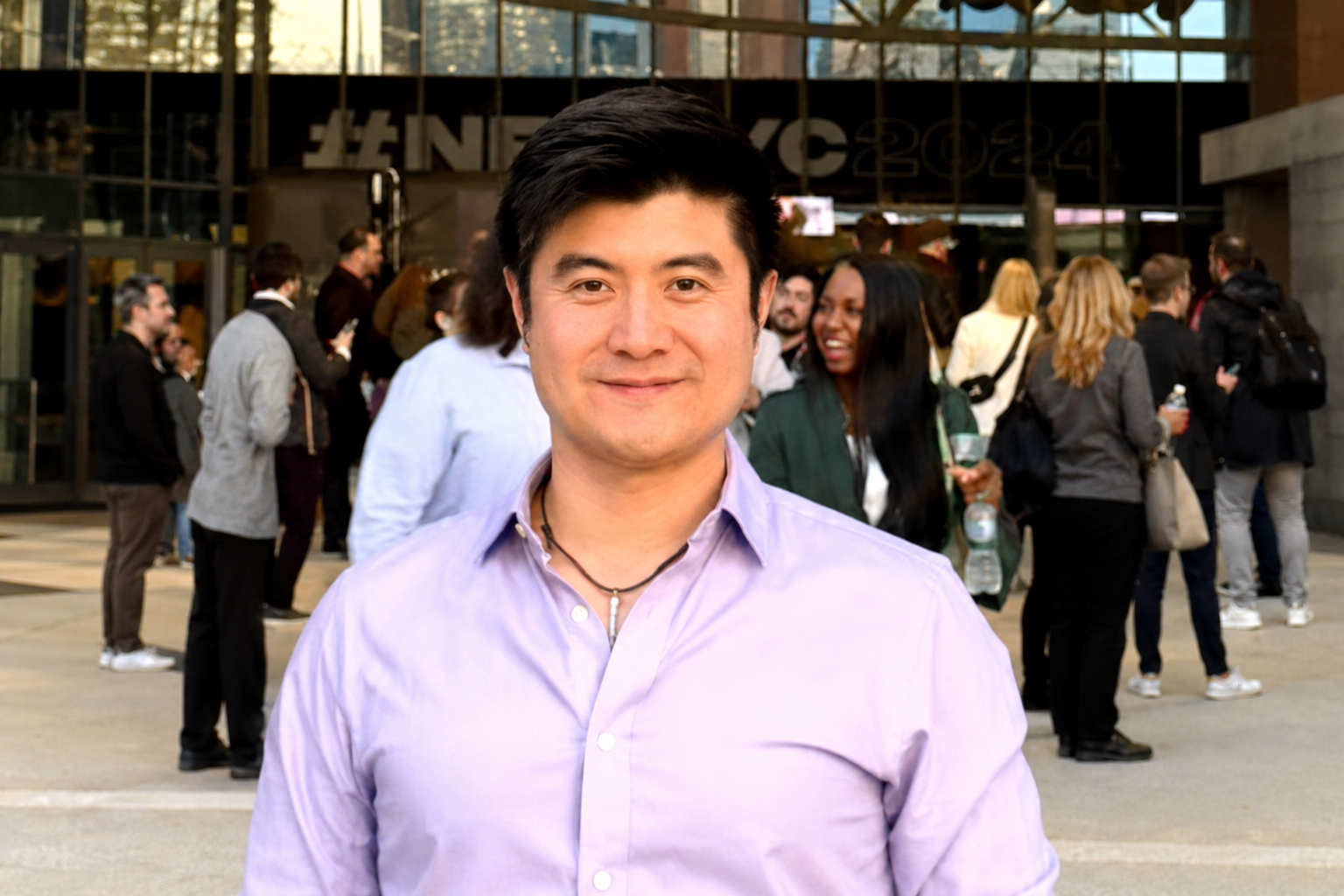
B2B sales has always rewarded persistence, timing, and strong communication. But in the day-to-day reality of a sales team, a lot of time disappears before a real customer conversation ever happens. Reps research accounts, look for decision makers, check whether a company is a good fit, write personalized messages, update systems, and prepare for calls. The work matters, but it often pulls sellers away from the part of the job that actually moves deals forward.
That is the problem Jeff Chen is trying to solve with Redcar. Instead of treating AI as a flashy add-on for sales teams, Redcar is being built around a more practical idea. AI sales reps should help humans do the work they already need to do, only faster, with better context, and with less manual effort.
The story is not just about another AI startup entering a crowded market. It is about a repeat founder using his experience with AI products, startup growth, and automation to rethink how B2B teams handle sales development. For companies that depend on outbound sales, pipeline generation, and customer conversations, that makes Redcar an interesting company to watch.
Who is Jeff Chen
Jeff Chen is the co-founder and CEO of Redcar, but his background gives the company’s story more weight than a typical early-stage startup profile. He has been described publicly as a repeat founder with experience building AI and automation products, including past work connected to voice assistant technology and startup exits involving companies such as Google and Zynga.
That kind of background matters because sales AI is not only a language problem. It is not enough for a tool to write a decent email or summarize a company page. A useful AI sales rep needs to understand workflow, context, timing, qualification, and the messy way real teams operate across CRMs, spreadsheets, enrichment tools, inboxes, and calendars.
Chen’s founder journey also gives Redcar a practical edge. Founders often experience sales pain directly. They know what it feels like to chase early customers, personalize outreach manually, and balance product work with the pressure to build pipeline. Redcar appears to come from that kind of lived problem, not from a vague belief that every business task should be automated.
Why Jeff Chen’s experience matters for Redcar
The best AI companies usually start with a narrow pain point and build from there. For Jeff Chen, the pain point is clear. Sales teams want more qualified conversations, but they spend too much time preparing for those conversations. Many reps are not slowed down by a lack of motivation. They are slowed down by scattered information, repetitive research, and the pressure to personalize every touch without enough time.
That is where Redcar’s approach becomes relevant. The company is not trying to make sales feel less human. It is trying to remove the repetitive layers around selling so human reps can focus on judgment, trust, negotiation, and relationship-building.
This distinction is important. A lot of sales automation tools promise speed, but speed without context can create generic outreach. Generic outreach damages trust and wastes time. Redcar’s pitch is stronger because it focuses on helping teams scale the work of top reps, not simply sending more messages.
What Redcar is building
Redcar is building AI sales agents for B2B teams. Its flagship product, F1 Agent, has been presented as an AI-powered sales agent that supports work such as account research, lead qualification, and personalized outbound messaging.
In plain terms, Redcar wants to help sales teams answer questions that usually take time to investigate manually. Is this company a good fit? Who should we contact? What is happening at this account that makes outreach relevant right now? What message would feel specific instead of copied and pasted? Which leads deserve a rep’s attention first?
That is the kind of work that happens before a discovery call, before a demo, and before a deal moves through the pipeline. It is also the work that many sales development reps and founders spend hours doing every week.
The goal is not just automation for the sake of automation. The goal is to make AI useful inside the real rhythm of B2B sales.
How F1 Agent fits into a sales team
An AI sales rep becomes valuable when it supports the steps that usually slow a team down. For many B2B companies, that begins with research. A rep may need to understand a company’s industry, size, hiring activity, tech stack, recent news, funding status, customer base, and possible pain points before writing a single message.
F1 Agent is designed around that kind of workflow. It can help identify useful account information, qualify leads, and create personalized outreach based on what it finds. For a sales team, that can mean less time moving between tabs and more time reviewing strong opportunities.
A practical AI sales rep can support work such as:
- Finding target accounts that match the ideal customer profile
- Gathering context about a company before outreach
- Spotting possible buying signals
- Helping qualify whether a lead is worth pursuing
- Supporting personalized messaging for outbound campaigns
- Giving human reps a clearer starting point for conversations
This is why Redcar’s story fits the current AI agent moment. The most useful AI tools are not the ones that simply generate text. They are the ones that complete meaningful parts of a workflow.
The sales problem Jeff Chen is trying to solve
Sales teams are often measured by outcomes, but their calendars are filled with preparation work. Reps may spend a large share of their day researching accounts, checking data, updating records, writing first-touch emails, following up, and trying to understand which prospects actually matter.
The result is a strange mismatch. Companies hire salespeople to sell, but then those salespeople spend much of their time doing work around selling.
Jeff Chen and Redcar are aiming at that mismatch. If AI can reduce the time spent on repetitive research and qualification, salespeople can spend more time on calls, deal strategy, customer needs, objections, and closing.
This is especially important in B2B sales because buyers are harder to reach than ever. Decision makers receive endless cold emails and generic pitches. A sales team that wants to stand out needs sharper context, better timing, and stronger relevance. That is difficult to do manually at scale.
Why traditional sales tools often fall short
Sales teams already use plenty of software. They have CRMs, enrichment tools, sequencing platforms, dialers, data providers, analytics dashboards, and workflow systems. These tools are useful, but many of them still depend on humans to connect the dots.
A CRM can store contact and account data, but it does not always tell a rep which lead is worth contacting today. An enrichment tool can provide company information, but it may not explain why that company should care. A sequencing tool can send emails, but it cannot always decide what makes an email relevant.
That gap is where AI agents are starting to matter. A good AI sales agent can sit closer to the work itself. It can research, interpret, prioritize, and prepare. It can help turn scattered information into action.
Redcar’s opportunity is to make that process feel natural for sales teams. The company has to do more than produce clever outputs. It needs to fit into how revenue teams already work.
How Redcar makes AI sales reps useful for B2B teams
The phrase AI sales rep can sound futuristic, but the real value is practical. A useful AI sales rep should reduce low-value effort, improve consistency, and help teams spend more time with the right prospects.
For B2B teams, usefulness comes down to context. A startup selling to HR teams will have a very different sales motion from a company selling enterprise security software. A team targeting small businesses will need a different approach from a team selling into large accounts. Even within one company, the ideal customer profile can change by segment, region, industry, and product line.
That is why Redcar’s focus on workflow matters. The company’s AI agents are positioned around sales work that depends on company-specific logic. The more an AI agent understands a team’s process, data, and customer profile, the more useful it can become.
Instead of forcing every team into the same generic automation pattern, Redcar is trying to support the way teams already sell.
The role of AgentExpress
Behind Redcar’s AI sales agent story is AgentExpress, the platform layer connected to its agent workflows. AgentExpress is described as the system that supports Redcar’s ability to automate research, qualification, and messaging across different data sources.
This platform layer is important because AI agents need more than a prompt box. They need access to information, rules, workflow logic, and feedback loops. A sales agent that cannot use the right data will struggle to qualify leads accurately. A sales agent that cannot adapt to a team’s process will feel like a toy instead of a teammate.
For Redcar, AgentExpress helps support the idea that AI sales reps should be configurable, flexible, and grounded in the actual needs of revenue teams. That is a harder problem than writing a single sales email, but it is also where the business value is much stronger.
Redcar’s funding and investor confidence
Redcar announced $5.3 million in seed and pre-seed funding, with its seed round led by Khosla Ventures and its pre-seed led by humbition. For an early-stage company, that kind of backing is meaningful because it shows investor confidence in both the team and the market.
It also says something about the direction of AI in business. Investors are not only looking for broad AI chat tools anymore. They are paying attention to AI products that can own specific workflows and create measurable outcomes. Sales is a strong category for this because the value is easy to understand. If an AI agent helps a team find better leads, prepare faster, and book more qualified meetings, the impact can be tied directly to revenue.
The funding also gives Redcar room to grow its product, improve its agent workflows, and support more customers as AI sales tools move from early experimentation into regular team operations.
Why Redcar’s story matters in the AI agent era
The AI market has moved through several waves. First came broad excitement around generative AI. Then came a rush of tools that could draft text, summarize documents, and answer questions. Now the conversation is shifting toward AI agents that can complete real work.
Redcar fits into that shift. Its story is not only about using AI to create content. It is about using AI to take on parts of a business process that are repetitive, research-heavy, and time-sensitive.
That matters because B2B teams do not adopt software just because it sounds impressive. They adopt it when it saves time, improves performance, or helps them win more business. AI agents have to prove they can do that reliably.
For sales teams, the promise is clear. AI can help reps prepare faster. It can reduce manual research. It can surface useful account intelligence. It can support better outreach. But the human side of sales still matters. Buyers still want trust, relevance, and thoughtful conversations.
The strongest AI sales tools will not remove that human element. They will make it easier for reps to show up prepared.
The best AI sales tools will help humans sell better
One of the most important parts of Redcar’s positioning is the idea that AI should make salespeople more effective, not invisible. In complex B2B sales, human judgment still matters. Reps need to understand buyer hesitation, read signals during conversations, build confidence, and navigate internal decision-making.
AI is better suited for the heavy preparation layer around that work. It can help with data gathering, lead scoring, research summaries, personalization, and follow-up preparation. When used well, it can give reps more time to do the parts of the job that require emotional intelligence and business judgment.
That is why Jeff Chen’s approach with Redcar feels timely. The winning sales teams of the next few years may not be the ones that replace people with AI. They may be the ones that give their people better AI support.
How Jeff Chen’s founder mindset shapes Redcar
Founder-led products often have a different texture. They are shaped by pain that someone has actually felt. Redcar’s mission appears connected to the frustration of doing sales manually while trying to build a company. That experience can make a product sharper because the problem is not abstract.
A founder selling an early product has to find the right customers, explain the value clearly, and learn from every conversation. That process is valuable, but it can also be slow and repetitive. When a founder has gone through that cycle multiple times, the need for better sales support becomes obvious.
That is part of what makes Jeff Chen an interesting figure in the AI sales space. He is not only building around a market trend. He is building around a repeated business problem that many founders, SDRs, account executives, and revenue leaders recognize immediately.
From AI assistant experience to AI sales agents
Chen’s earlier experience with assistant-style technology connects naturally to Redcar’s current direction. Building an assistant is not just about answering questions. It is about understanding a request, using context, taking action, and returning something useful.
Sales agents need the same qualities, but inside a more demanding business environment. They need to understand who the customer is, what the company sells, what the sales motion looks like, and what makes a prospect worth pursuing.
That is why Redcar’s AI sales rep idea is more complex than simple automation. It sits at the intersection of AI, data, sales operations, and workflow design.
Redcar’s broader direction in revenue automation
Redcar’s public presence also shows a broader interest in practical AI for revenue work. Alongside the B2B sales agent story, the company’s current positioning highlights AI voice and automation use cases such as answering calls, booking jobs, scoring calls, and helping businesses capture revenue opportunities around the clock.
That broader direction still fits the same core idea. Businesses lose money when important customer moments are missed, delayed, or handled poorly. Whether the task is qualifying a B2B lead or answering a service call, the underlying problem is similar. Teams need faster response, better context, and more consistent execution.
For Redcar, this could make the company more than a narrow outbound sales tool. It points toward a larger vision of AI agents that support revenue teams wherever manual work slows down customer conversion.
What Jeff Chen and Redcar show about useful AI in sales
The most interesting part of Jeff Chen’s work with Redcar is not just that the company is building AI sales reps. It is that Redcar is focused on making those agents useful in the real world of B2B sales.
That means solving for messy workflows, not clean demos. It means helping teams research, qualify, personalize, and prioritize. It means giving salespeople better preparation instead of simply pushing them to send more messages.
In a market filled with AI promises, Redcar’s success will depend on whether its agents can keep producing real value for the teams that use them. If the company can help reps spend less time on repetitive work and more time with qualified buyers, it will be solving one of the most practical problems in modern B2B sales.
For Jeff Chen, that is the bigger founder story. He is building Redcar around a simple but powerful idea. AI sales reps become valuable when they help real sales teams do better work, not when they try to replace the human parts of selling.