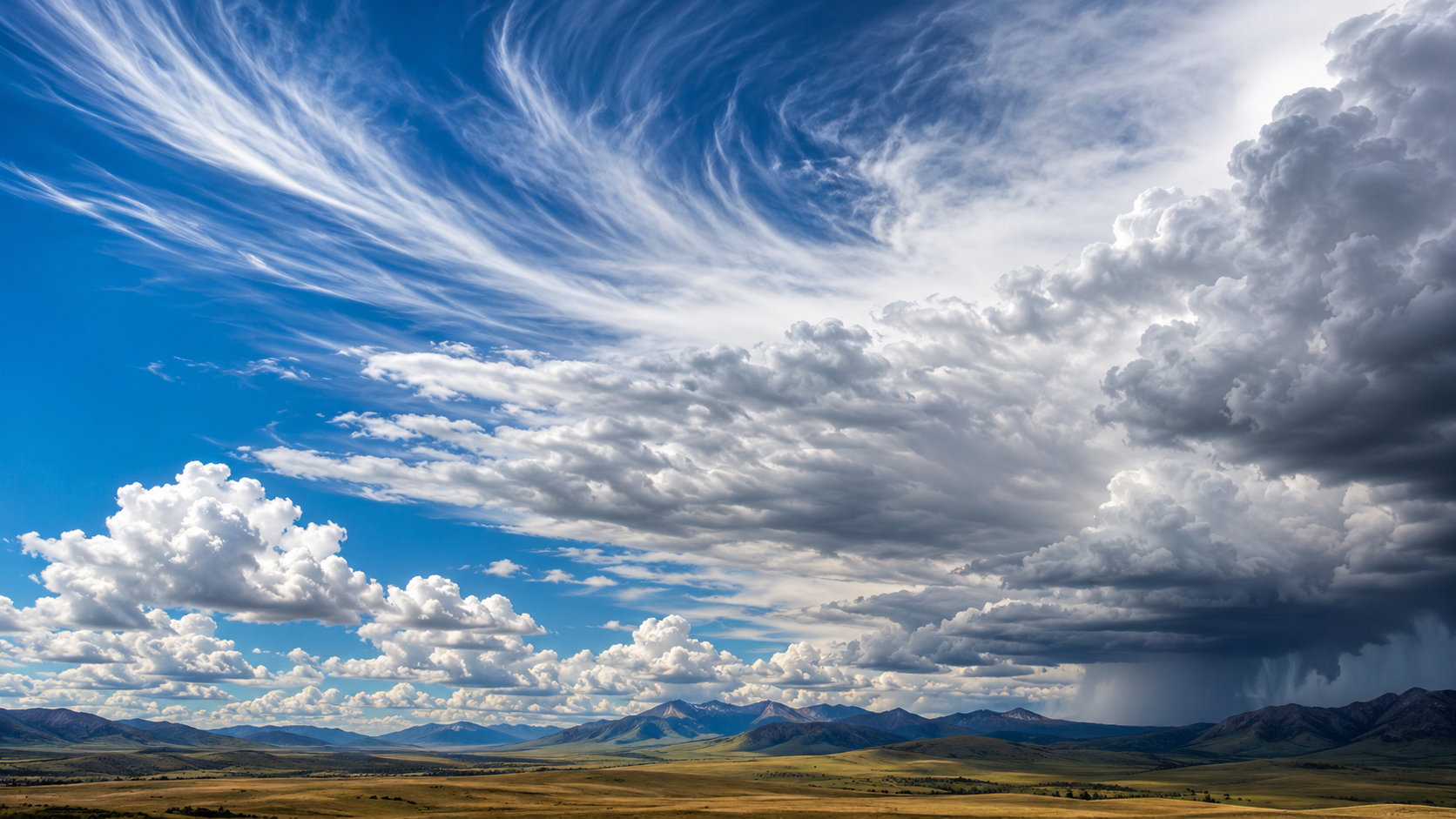
Isolated t-storms means a few thunderstorms will form far apart from each other, hitting only about 10–20% of the forecast area. Most places stay dry. A few spots get a short, often heavy storm. “T-storm” is simply short for thunderstorm, the abbreviation weather apps and TV graphics use when space is tight.
The most common misreading is that “isolated” means weak. It doesn’t. The word tells you how many places get a storm. It tells you nothing about how strong that storm is. An isolated storm can still bring dangerous lightning, a downpour, hail or damaging gusts to whoever ends up under it.
What isolated storms mean in a forecast
Two different numbers get mixed up in forecasts. Once you separate them, the wording makes sense.
Coverage vs. chance of rain
- Coverage is the share of the forecast area expected to get storms. “Isolated” and “scattered” are coverage words.
- Probability of precipitation (PoP) is the chance that one specific spot, such as your backyard, gets measurable rain (at least 0.01 inch) during the forecast period.
The National Weather Service ties the two together. When forecasters expect storms to be spotty across an area, the chance at any single spot is low too. That’s why “isolated t-storms” usually shows up next to a 10% or 20% chance. Both numbers describe the same day: a few storms around, and most likely not at your location.
Why sources give different percentages
Search this topic and you’ll find “10%,” “10–20%,” “20% or less” and “under 30%.” None of them is wrong. They come from different conventions:
- The NWS pairs “isolated” with the lowest PoP tier, generally 10–20% (its glossary sometimes lists 10%).
- Local TV meteorologists often round it to “20% or less” so it’s easy to say on air.
- Weather apps generate text automatically and may label anything below 30% as isolated.
In practice, read isolated as “low, roughly one in five or less.” Whether the cutoff is 10% or 20% won’t change your plans. Watching the radar will.
Isolated vs scattered vs numerous: quick-reference table
| Forecast term | Approx. area covered | Typical PoP wording | What it means for you |
|---|---|---|---|
| Isolated | 10–20% | “Slight chance” | Keep your plans. Check radar before heading out and know where you’d take shelter. |
| Scattered | 30–50% | “Chance” | Real odds you’ll get hit. Keep an eye on radar and have a backup plan for outdoor events. |
| Numerous | 60–70% | “Likely” | Expect storms. Move outdoor plans to a different time or indoors. |
| Widespread | 80% or more | “Definite” / “occasional” | Almost everyone gets wet. Plan around it. |
The cutoffs shift a few points between agencies and stations, but the order never changes. Isolated is always the least coverage.
Key facts and context
Why isolated storms form
Most isolated storms are “pop-up” or air-mass storms. Sunshine heats the ground, warm humid air rises, and here and there a column of air climbs high enough to build a thunderstorm. Nothing large-scale, like a cold front, is organizing them into a line. That’s why they show up randomly, usually in the afternoon and early evening, and fade after sunset.
Isolated does not mean weak
A single storm cell is what it is, whether it has neighbors or not. An isolated storm can produce:
- Lightning that can strike 10 miles or more from the rain shaft, so you can be in danger under a clear sky
- Torrential rain, because slow-moving pop-up storms can drop 1–3 inches on one neighborhood in an hour, enough to flood streets
- Hail and downbursts. A storm is classed as severe when it produces hail an inch or larger or wind gusts of 58 mph or more, and isolated storms do sometimes reach that level.
The NWS issues severe thunderstorm warnings for individual storms, and plenty of those warnings go out on days forecast as “isolated.”
They’re short, but they’re hard to predict
Forecasters can tell you a day will have isolated storms. They usually can’t tell you hours ahead which block will get one. That uncertainty is exactly what the low percentage reflects. Expect to check the radar that day.
Examples: how to use the forecast in real life
Decoding sample forecast lines
- “Isolated t-storms, high 91, 20% chance”: a hot day with a few afternoon storms in the region. About four in five locations stay dry. Go ahead with your plans and keep your phone handy.
- “Isolated t-storms after 2 p.m.”: the morning is the safe window. Schedule outdoor work, mowing or a run before lunch.
- “Isolated strong storms possible”: coverage is still low, but forecasters think any storm that forms could bring gusty wind or hail. Take warnings seriously.
Planning outdoor activities
- Beach or pool day: go, but look at radar every hour or so after noon and know where your car or a building is.
- Ball game or outdoor event: organizers should name a lightning-safety person and a shelter location in advance. For holiday cookouts and fireworks, check the forecast again the morning of. Our Fourth of July deals and what’s open guide can help if you need an indoor backup.
- Boating: this is the riskiest case, because on open water you’re the tallest object and shelter can be 20 minutes away. Head in as soon as you see towering clouds building nearby.
- Hiking or park visits: start early and finish before the afternoon storms build. That matters for open trails and meadows like those at the Virginia B. Fairbanks Art & Nature Park.
When to check radar and when to go inside
Check radar before you leave and again whenever clouds start stacking up vertically. If you can hear thunder, you’re close enough to be struck. Go indoors or into a hard-topped vehicle, and wait 30 minutes after the last thunder before going back out.
Common questions about isolated storms meaning
What does T-storm mean?
T-storm is shorthand for thunderstorm, meaning any storm that produces lightning and thunder. You’ll see it in apps, TV graphics and NWS-style text forecasts.
Does “isolated storms” mean it will rain on me?
Probably not, but it might. With 10–20% coverage, most people stay dry. If a storm forms over you, though, you get the full storm, not a lighter version.
Isolated t-storms meaning in Hindi and Urdu
Hindi: इक्का-दुक्का स्थानों पर गरज के साथ बारिश (ikka-dukka sthanon par garaj ke saath baarish), meaning thunderstorms at only a few scattered places. India’s weather department uses this same “isolated places” wording in its bulletins.
Urdu: اکا دکا مقامات پر گرج چمک کے ساتھ بارش (ikka dukka maqamaat par garaj chamak ke saath baarish), meaning thunder and lightning with rain at a few places. In both languages the meaning is the same: a few spots get storms and most don’t.
What does an isolated storm mean for my commute or flight?
Driving: allow for a brief, blinding downpour and possible street flooding. Never drive through water covering the road. Flying: one storm near an airport can trigger ground stops, especially at busy hubs in summer afternoons. Morning flights are less likely to be delayed by storms.
Florida relevance: isolated storms in the Sunshine State
Florida is where this forecast term gets used most from June through September. Many summer afternoons look the same: sea breezes push inland from the Atlantic and the Gulf, run into each other over the peninsula, and force the air upward. Storms can start almost every day, often between 2 p.m. and 7 p.m.
Why a “low” chance can still mean a soaking
These storms barely move. One neighborhood in Orlando or Tampa can get two inches of rain while a spot three miles away stays dry. The regional forecast honestly says “isolated,” and your street floods anyway. If you live in a low-lying area, take even a 20% day seriously.
Lightning is the real risk
Florida has some of the highest lightning rates in the country and has long led the nation in lightning deaths. Many victims were at the beach, on the water or doing yard work, often just before or just after the rain. Follow the rule: when thunder roars, go indoors. Under a tree or a beach umbrella doesn’t count as shelter.
Weather in other parts of the country works differently. Our explainer on snow squall warnings in Wyoming and Colorado covers a hazard that’s also short, localized and easy to underestimate.
FAQs
What does isolated t-storms mean in a weather forecast?
It means a few thunderstorms will develop far apart, affecting roughly 10–20% of the forecast area. Most locations stay dry, but anyone under one of the storms gets the full storm.
What is the difference between isolated and scattered thunderstorms?
The difference is coverage. Isolated storms affect about 10–20% of an area, and scattered storms affect about 30–50%. Neither term describes how strong the storms will be.
What percentage is isolated thunderstorms?
Generally 10–20%. The National Weather Service pairs ‘isolated’ with its lowest chance-of-rain tier. Some TV stations say 20% or less, and some apps use anything under 30%.
Can isolated thunderstorms be severe?
Yes. Isolated describes how many places get storms, not how intense they are. An isolated storm can produce dangerous lightning, flash flooding, hail an inch or larger, or gusts of 58 mph or more, which meets the severe threshold.
Is it safe to go outside with isolated thunderstorms in the forecast?
Usually, yes, as long as you watch the radar and know where to shelter. If you hear thunder, go indoors or into a hard-topped vehicle, and wait 30 minutes after the last thunder before going back out.
What does a 20% chance of isolated storms mean?
It means there’s about a one-in-five chance that your specific location gets measurable rain, because only a small part of the area is expected to see storms.