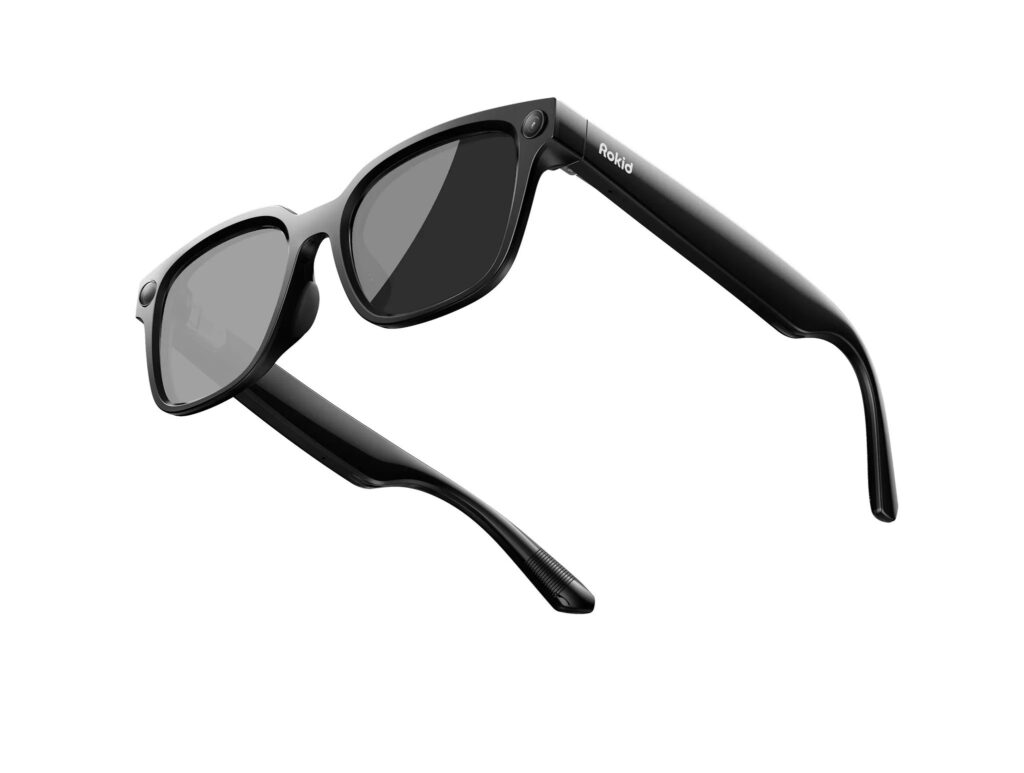
Rokid is making a clear statement in the smart wearable space with the global launch of its AI Glasses Style, priced at $299. The company positions these glasses as a more accessible alternative to Meta’s Ray-Ban smart glasses, but with a noticeably different philosophy. Rather than leaning into augmented reality visuals, Rokid has chosen to remove screens entirely and focus on voice-driven AI interactions.
The AI Glasses Style are fully screenless and weigh just 38.5 grams, making them light enough for extended daily use without feeling intrusive. Instead of overlays or visual notifications, the glasses rely on audio feedback, voice commands, and a built-in camera. Rokid has equipped the device with a 12MP Sony sensor capable of recording 4K video in clips of up to ten minutes, keeping content capture practical without turning the glasses into a constant recording tool.
Battery performance is another area where Rokid aims to stand out. The company claims up to 12 hours of typical use, supported by a dual-chip architecture. One processor handles low-power voice activation and listening tasks, while the second manages heavier AI workloads. This separation helps conserve energy during everyday interactions while still allowing access to more demanding features when needed.
How Rokid’s approach differs from Meta’s smart glasses
The most noticeable difference between Rokid and Meta comes down to how each brand defines the role of smart glasses. Meta’s Ray-Ban models are largely built around capturing photos and videos for social sharing. Rokid, on the other hand, treats its glasses as a voice-first AI assistant that happens to be wearable.
With a simple “Hey Rokid” wake phrase, users can activate real-time translation across dozens of languages, transcribe meetings, generate summaries, identify objects, and receive navigation prompts. Audio responses are delivered through open-ear speakers, allowing information to be heard clearly without isolating the wearer from their surroundings or requiring constant phone checks.
Rokid is also emphasizing flexibility by supporting multiple AI models rather than locking users into a single ecosystem. The glasses can integrate with assistants such as ChatGPT and DeepSeek, along with services like Google Maps and Microsoft’s translation tools. This open approach contrasts with Meta’s more closed environment, where features are closely tied to its own platforms and services.
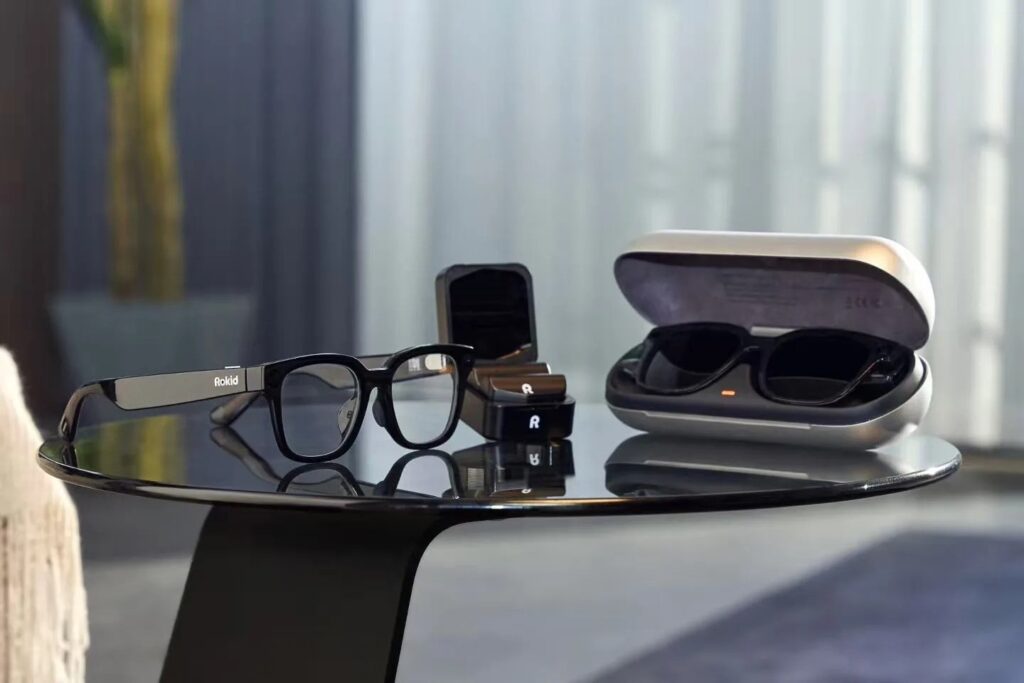
Another area where Rokid is trying to differentiate itself is optical customization. The company says it offers what it calls a precision lens service, designed to make the AI Glasses Style prescription-first. Buyers can upload prescriptions from anywhere in the world, supporting lenses up to approximately ±15.00D, with optional photochromic upgrades available as well.
Taken together, the lighter build, lower price point, and focus on practical AI assistance position Rokid’s AI Glasses Style as an entry point for users curious about smart wearables but hesitant to invest in more expensive, content-centric alternatives like Meta’s Ray-Ban lineup.