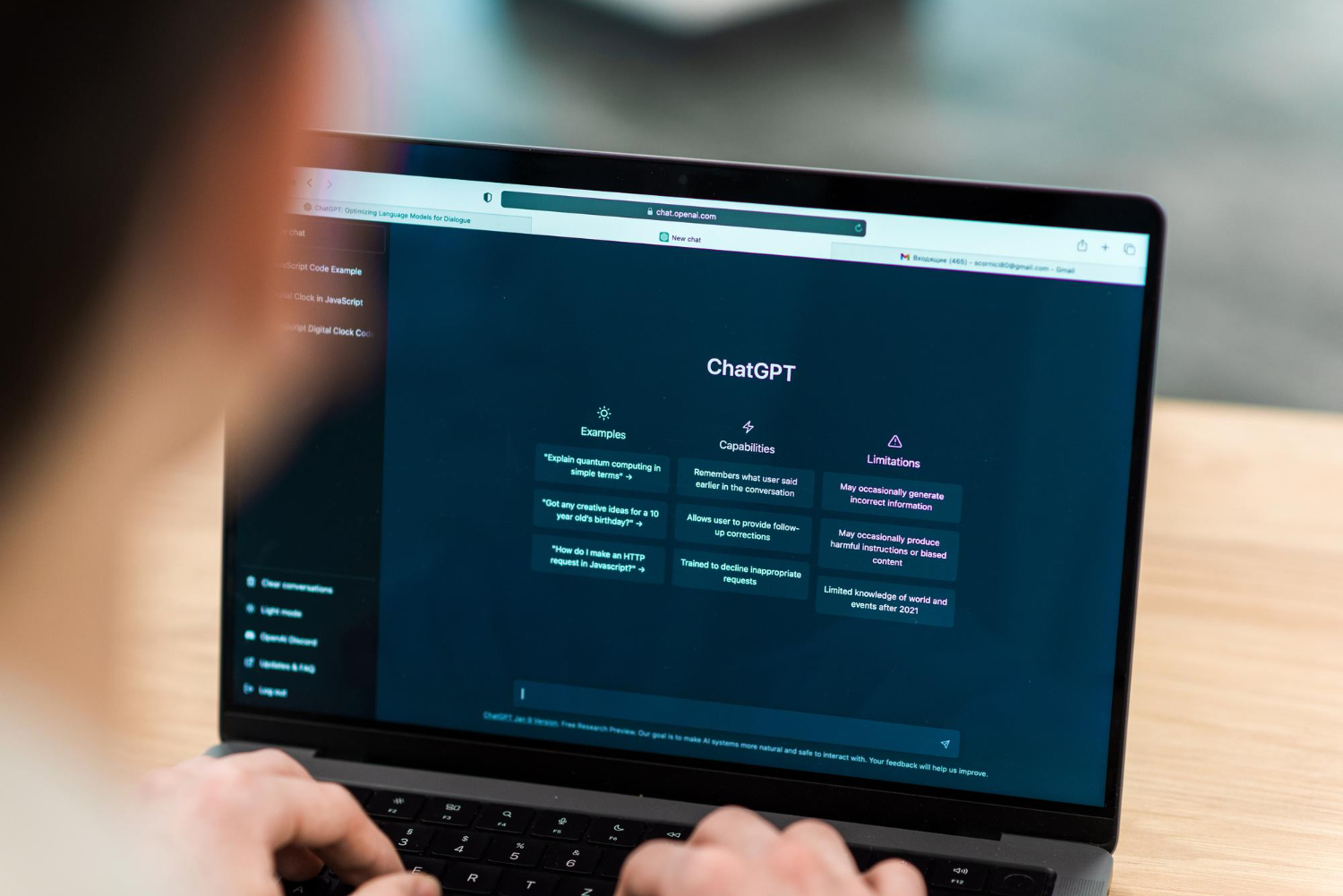
Artificial intelligence continues to sit at the center of workplace anxiety, hiring decisions, and long term career planning. While broad cost cutting is still a major reason behind recent layoffs, a growing number of executives now say employees and job seekers need to explain how their roles stand apart in a world where AI tools are becoming standard.
For many positions, the bar is shifting. It is no longer just about whether someone can do the work, but whether they can deliver value that goes beyond what automated systems can produce on their own. That idea is increasingly shaping how companies think about hiring in 2026.
“In many roles, the baseline is changing,” said Daniela Rus, director of the MIT Computer Science and Artificial Intelligence Laboratory. “The real question is whether someone can add unique value beyond what AI can handle independently, and beyond what humans can do without technology.”
Even as economists and researchers debate how deeply artificial intelligence is reshaping the labor market, one thing is becoming clear. Candidates who want to stay competitive need a clear answer when asked how they work with AI rather than around it.
Productivity gains tied to artificial intelligence are beginning to show up in real business conversations, even if the data remains incomplete. Minneapolis Federal Reserve President Neel Kashkari has noted that many large companies are slowing hiring as they see measurable efficiency improvements from AI tools. In an interview on CNBC’s “Squawk Box,” Kashkari said that while layoffs remain limited, there are growing signs that businesses are seeing real productivity benefits from AI adoption.
He added that companies which were skeptical just a couple of years ago are now actively using AI in daily operations. That shift is not limited to a handful of experimental teams but is spreading across entire organizations.
Some companies argue that AI is changing the type of worker they hire rather than reducing headcount altogether. AMD CEO Lisa Su said during an interview from the CES conference in Las Vegas that the company is still expanding, but its hiring priorities look different.
“We are hiring a lot of people, but we are hiring different people,” Su said. “We are looking for people who are AI forward.”
That mindset has echoed across multiple industries. Over the past year, executives at companies like Shopify, Accenture, and Fiverr have spoken openly about reskilling expectations, sometimes alongside workforce reductions. In each case, leaders have emphasized that familiarity with AI tools is becoming a core requirement rather than an optional skill.
Fiverr CEO Micha Kaufman has been especially direct about the direction of work. When he encouraged teams to deepen their AI capabilities, he said it was not symbolic. According to Kaufman, AI is reshaping nearly every sector, and preparing workers early is a responsibility, not a threat.
The messaging from companies often focuses on AI handling repetitive or computation heavy tasks, allowing humans to spend more time on judgment, creativity, empathy, and context. Rus describes this as a move away from replacement and toward augmentation, with technology operating quietly in the background.
Still, skepticism remains warranted. Rus has warned that transitions framed as efficiency improvements must also account for trust and transparency. Workers need reassurance that AI is not simply a justification for cutting costs. There is also a risk that, instead of amplifying human strengths, poorly implemented AI could gradually weaken them.
Kaufman acknowledges that no level of transparency completely removes anxiety. Many employees worry that learning to use AI means training the very systems that might one day replace them. But he argues the opposite is happening.
“People who learn how to guide AI, interpret its outputs, and improve results are not training replacements,” Kaufman said. “They are shaping the next generation of work.”
Fiverr sits on the front lines of this transition. As a platform connecting businesses with freelance talent, it sees firsthand how quickly AI adoption is spreading. According to the company’s 2024 Freelance Economic Impact Report, about 40 percent of freelancers were already using AI tools. On average, those tools saved more than eight hours per week.
The company’s research found that early adopters are often delivering higher quality work and earning more as a result. Kaufman said the data shows that freelancers who integrate AI effectively are not being pushed out. Instead, they are becoming more competitive.
Broader academic research offers cautious optimism. A recent study from The Budget Lab at Yale examined labor market changes since the release of ChatGPT in late 2022. The researchers concluded that the overall job market has not yet experienced major disruption and that demand for knowledge based labor remains intact.
They also pointed out that transformative technologies historically reshape workplaces over decades, not months. The introduction of computers into offices followed a similar pattern, with gradual shifts rather than immediate upheaval.
Even if AI ultimately has a larger impact, the researchers said widespread effects are likely to take time to materialize.
Industry forecasts paint a more complex picture. A recent McKinsey report suggested that artificial intelligence could theoretically automate more than half of current U.S. work hours. However, the authors stressed that automation does not automatically translate into job losses.
Some roles may shrink, others may expand, and entirely new positions may emerge. Much of the future workforce is expected to revolve around collaboration between people and intelligent machines. McKinsey estimates that around 70 percent of skills valued in today’s job market apply to both automatable and non automatable tasks, meaning the skills themselves remain relevant even as their applications change.
Companies that move too aggressively toward AI driven workforce reductions may also be forced to adjust. MIT professor Armando Solar Lezama pointed to fintech firm Klarna as an example. After cutting roughly 40 percent of its workforce following an AI first strategy, the company later rehired many customer service employees due to declining service quality.
Solar Lezama said similar experiments may backfire elsewhere, though not all will fail. Some organizations will successfully reduce staff through automation, while others will discover limits they did not anticipate.
For workers concerned about being replaced by systems they help train, Solar Lezama offered a different perspective. Organizations are structured around human failure in ways that do not translate cleanly to AI systems. Humans make mistakes, and companies are built to manage those errors. AI systems fail differently, and replacing people without adjusting processes can introduce new risks.
“It takes time for organizations to figure that out,” he said.
As artificial intelligence continues to evolve, the question facing job candidates becomes clearer. Employers are no longer just asking what you do. They are asking how you work with AI, what judgment you bring to its outputs, and what value you provide that technology alone cannot.