The GPU market tends to move in predictable cycles. Nvidia continues to dominate the high end, AMD competes where it can, and most of the attention goes to flagship cards that only a fraction of gamers actually buy. For everyone else, the choice usually comes down to the same two brands, even as prices climb and competition tightens.
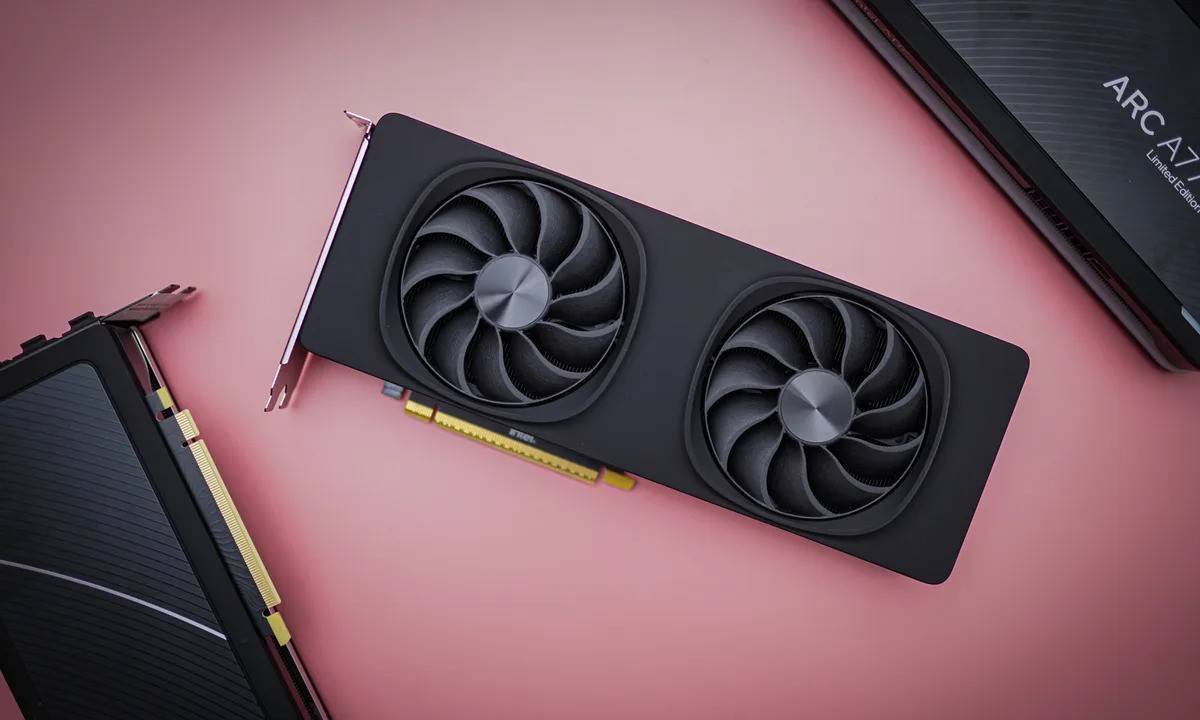
That’s why the graphics card I’m most interested in going into 2026 isn’t coming from either of those companies. Instead, it’s an unconfirmed but increasingly talked-about option from Intel. The Arc B770, often referred to in leaks as Big Battlemage, could quietly reshape the midrange GPU market if it lands the way current signs suggest.
Intel’s discrete GPU journey hasn’t been easy. Its first Arc lineup arrived with plenty of ambition but was held back by unstable drivers, inconsistent performance, and awkward positioning. Rather than walking away, Intel stayed in the fight. Over time, the company refined the fundamentals through ongoing driver updates and better optimization for the Arc A-series, also known as Alchemist. That groundwork mattered.
With the newer Battlemage-based B-series, Intel shifted its priorities. Instead of chasing headline-grabbing performance numbers, it focused on delivering practical gaming performance at prices that actually make sense. Cards like the B580 and B570 did not top benchmark charts, but they earned attention for their value, steady driver improvements, and ability to undercut Nvidia and AMD where buyers feel it most.
That progress is what makes the Arc B770 stand out. It suggests Intel is moving beyond experimentation and toward a serious midrange contender. Rather than aiming for ultra-high-end dominance, the B770 appears designed for the part of the market where most gamers actually spend their money.
Why the Arc B770 feels different
At the center of the Arc B770 is Intel’s larger BMG-G31 Battlemage chip. This silicon has already surfaced in developer tools and system profiling software, which strongly indicates active testing rather than early-stage planning. Coverage from Phoronix has shown references to this chip appearing in Intel’s own software ecosystem, adding credibility to the leaks.
Compared to previous Arc designs, BMG-G31 is expected to be significantly more capable. Reports suggest the B770 could feature up to 32 Xe2 cores, representing a notable jump in compute resources. Combined with architectural improvements introduced with Battlemage, that should translate into stronger raster performance, improved ray tracing, and fewer of the limitations that affected earlier Arc GPUs.
Memory is another area where the B770 could finally feel competitive. Current information points toward 16GB of GDDR6 VRAM, potentially paired with a wider memory bus than Intel has used before. In an era where modern games and creative workloads are increasingly memory-hungry, that extra VRAM could make a real difference. Many midrange GPUs today still struggle with memory constraints, and avoiding that pitfall would immediately give the B770 an advantage.
Power consumption is expected to rise as well. Some leaks suggest the Arc B770 could land in the 300W range. While that might sound high, it signals a shift in strategy. Intel appears more willing to prioritize sustained performance and higher clocks rather than aggressively limiting power. For a GPU targeting smooth 1440p gaming, that tradeoff could be worth it.
There are also subtle hints from Intel itself. Earlier this year, Intel’s gaming-focused social media account briefly acknowledged the Arc B770 in response to a fan question. The mention was quickly removed, but it confirmed that the product name exists internally and isn’t just a rumor invented by leakers.
A GPU designed for how people actually play
What makes the Arc B770 compelling is not the idea that it will dethrone Nvidia or AMD at the very top. Instead, Intel appears to be targeting the 1440p gaming segment, which remains the sweet spot for a large portion of PC gamers. This is where visual quality, performance, and hardware cost tend to balance out, and where competition has become increasingly narrow.
If the B770 can deliver consistent frame rates at 1440p, handle ray tracing without major compromises, and offer enough VRAM to avoid stuttering in newer titles, it could finally give buyers a meaningful third option. That kind of choice has been missing from the GPU market for a long time.
Intel also has room to differentiate beyond raw frame rates. Battlemage is expected to bring improvements to media engines, AI acceleration, and upscaling technologies. Intel has already shown a willingness to iterate quickly on software, and stronger hardware would allow those gains to have a much bigger impact in real-world use.
Why this matters beyond a single graphics card
The Arc B770 represents more than just one potential product. It’s a test of whether Intel can become a long-term competitor in the discrete GPU space. A credible third player can influence pricing, push better value propositions, and prevent the stagnation that often creeps in when only two companies dominate a market.
Even if the B770 doesn’t lead benchmark charts, its presence alone could pressure rivals to rethink how they price and position midrange GPUs. That kind of competition benefits everyone.
Intel’s broader position gives it some unique advantages as well. Unlike its competitors, Intel designs CPUs, integrated graphics, and discrete GPUs under one roof. Over time, that could enable tighter integration between components, smarter workload sharing, and features that feel more cohesive across an entire system rather than isolated parts.
The challenges that still remain
None of this guarantees success. Intel still needs to prove that its drivers are stable at launch, that performance is consistent across modern game engines, and that pricing aligns with expectations. A powerful GPU that launches with instability or unrealistic pricing won’t win over skeptical buyers, especially those who remember the rough early days of Arc.
Timing will also be critical. The GPU landscape in 2026 will be crowded, and Intel will need to choose its launch window carefully. Arriving too late or too close to competing refreshes could limit the B770’s impact, regardless of its technical merits.