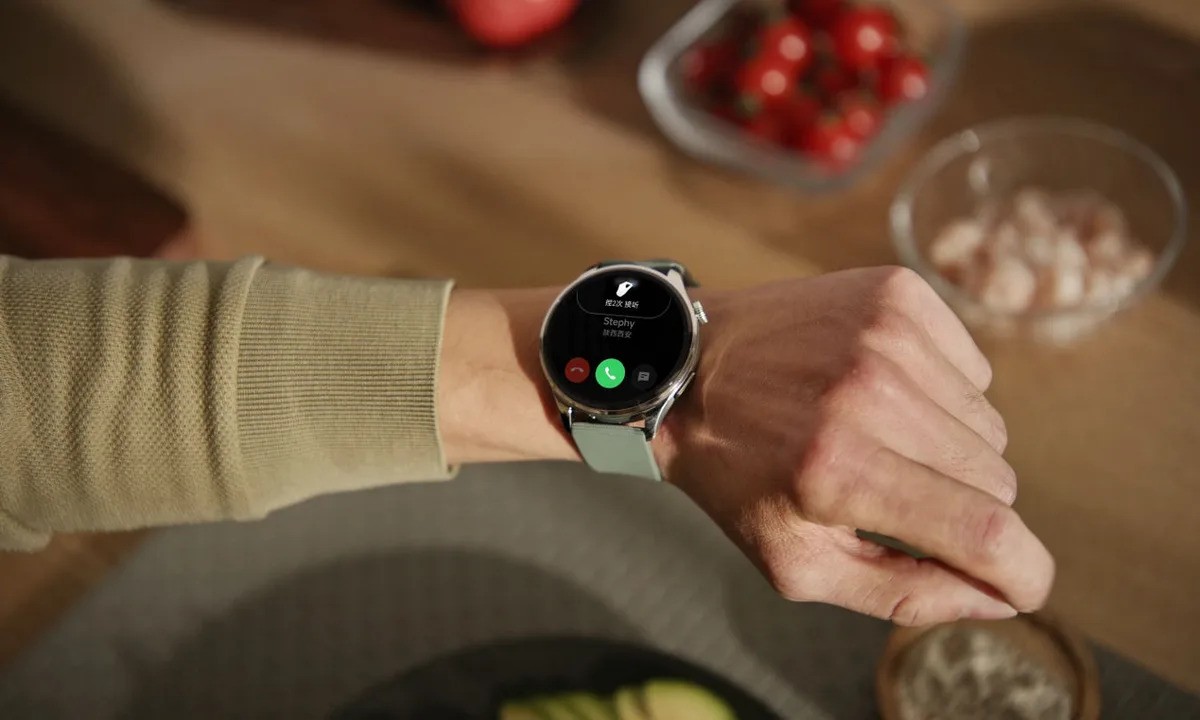
Xiaomi is experimenting with a new way to interact with wearables, and it goes beyond taps, swipes, or motion tricks. The newly revealed Xiaomi Watch 5 introduces muscle-based gesture control powered by EMG technology, giving users a way to handle calls and basic functions using subtle movements in their wrist.
Instead of relying on accelerometers or exaggerated hand motions, the Watch 5 uses an electromyography sensor to read electrical signals from wrist muscles. Xiaomi says this approach allows the watch to recognize intentional gestures even when the arm stays relatively still, making one-handed control faster and more precise in everyday situations.
According to the company, users can clench their fist to answer an incoming call or lightly rub their fingers together to manage music playback. The idea is to make interactions feel instant when the other hand is occupied, without needing to touch the screen or perform obvious movements in public.
Xiaomi believes EMG input offers an advantage over traditional motion-based gestures, which can struggle when the watch shifts on the wrist or when the wearer is walking, exercising, or lifting objects. By reading muscle signals directly, the Watch 5 aims to reduce accidental inputs and improve consistency across different activities and wrist positions.
The watch is already available in China, and Xiaomi has confirmed plans to introduce it globally during MWC 2026 in Barcelona. If the technology performs reliably outside controlled demos, it could mark a meaningful shift in how smartwatches handle quick interactions.
Gesture control without exaggerated movement
Xiaomi’s approach focuses on subtlety rather than theatrics. The gestures are designed to be small enough to use naturally, even in crowded or professional settings. This makes it different from many gesture systems that require noticeable arm movement to work properly.
Gesture reliability has long been a challenge for wearables, especially during workouts or daily movement. While EMG could improve accuracy, its real-world performance will depend on calibration across different wrist sizes and how well the system adapts to motion over time.
Apple has explored similar ideas with features like Double Tap on the Apple Watch, but Xiaomi appears to be pushing deeper into muscle-driven input rather than limited gesture shortcuts.
Large display and premium build
The Xiaomi Watch 5 comes in a 47mm case with a circular 1.54-inch AMOLED display capable of reaching up to 1500 nits of brightness. The casing uses stainless steel, paired with sapphire glass on both the front and back, giving it a durable and premium feel. The watch also carries a 5 ATM water resistance rating.
Despite housing a sizable 930 mAh battery, the Watch 5 weighs in at 56 grams. Xiaomi has not abandoned physical controls either, as the watch still includes a digital crown and a secondary button for traditional navigation when gesture input is not preferred.
Health features and battery performance
On the health side, Xiaomi combines EMG sensing with ECG monitoring for on-demand heart rhythm checks and atrial fibrillation detection. The Watch 5 also tracks heart rate, blood oxygen levels, and sleep patterns. While it does not include a body temperature sensor, it supports more than 150 workout modes along with animated training guidance and full-color offline maps.
Battery life is rated at up to six days with standard usage, with an extended power-saving mode offering up to 18 days. In China, pricing starts at CNY 1999, which converts to roughly $285. Global pricing has not been confirmed, but Xiaomi is expected to keep it competitive when the watch launches internationally.
Whether muscle-based gesture control can stay reliable during real-world movement will likely be the deciding factor once the Watch 5 reaches a wider audience.