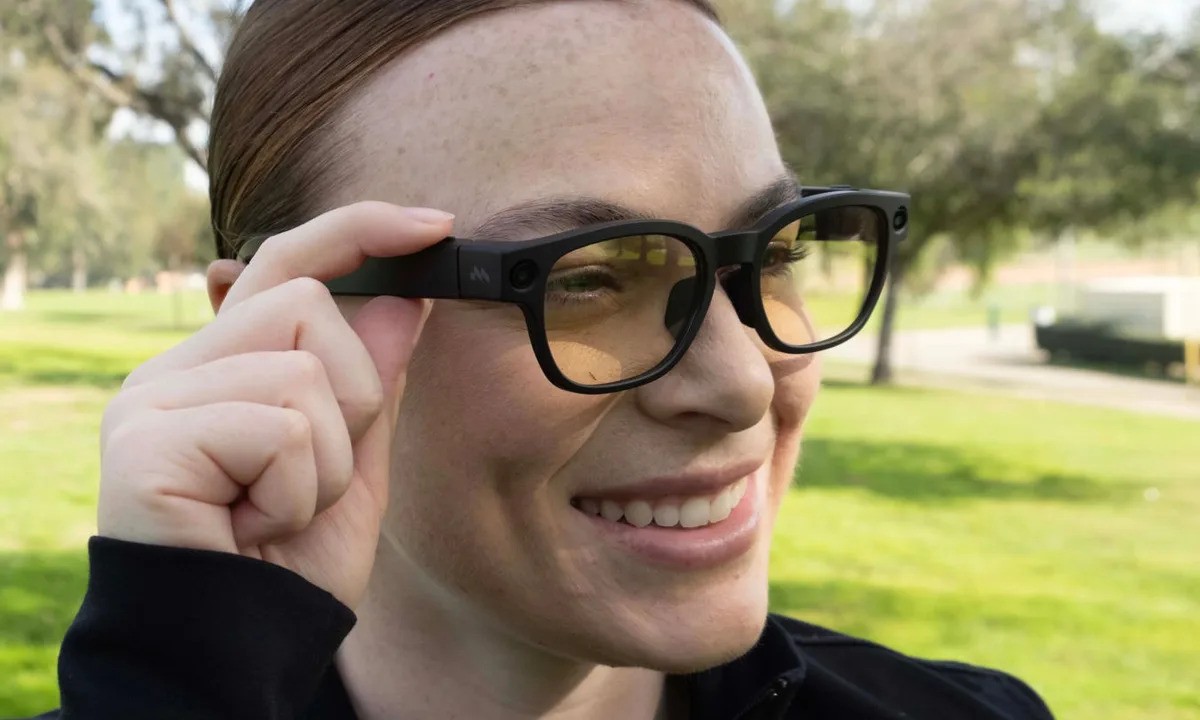
Mentra Live is positioning itself as a serious alternative for people who like the idea of smart glasses but do not want to be locked into a closed ecosystem. Instead of limiting users to a fixed set of features, the glasses run on MentraOS, an open-source operating system built with a public SDK that allows developers to create and distribute their own apps.
This approach is a direct contrast to products like the Ray-Ban Meta smart glasses, which operate inside a tightly controlled software environment. Mentra’s pitch is simple: openness first, apps from day one, and long-term flexibility instead of feature lock-in.
Mentra Live is the company’s first smart glasses product, and from the start, the focus is less about flashy hardware claims and more about building a platform. The glasses include a 12MP HD camera, support stabilized livestreaming across major social platforms, built-in AI features, and standard functions like calls and music playback.
The initial sales window is limited. Batch one is capped at 1,000 units, priced at $299, with shipping expected around February 15. According to Mentra, a second batch is planned for later in Q1, though availability will remain limited.
Apps come first, not as an afterthought
Mentra’s ecosystem revolves around its MiniApp Store. The company describes it as the only dedicated app marketplace designed specifically for smart glasses. Developers have reportedly been working on MiniApps since early 2025, well before the hardware launch.
Users manage these MiniApps through Mentra’s companion app on iOS and Android. The glasses support iOS 15.1 and newer, along with Android 12 and above. The experience is meant to feel familiar, similar to installing apps on a smartphone, except everything runs through eyewear instead of a handheld device.
Early MiniApps already show how experimental the platform is. Examples include AI-powered note taking, utility tools like Poker Probability and Chess Cheater, and an app called Merge Proactive AI. While the lineup is unconventional, that experimentation is part of the appeal of an open platform. Developers are free to build without waiting for corporate approval cycles.
Mentra also links openness to user trust. CEO Cayden Pierce has emphasized that users should have control over which apps they install and how their data is handled, rather than relying on decisions made by large technology companies. That said, the announcement does not yet go deep into specific privacy controls or permissions, leaving some open questions for early adopters.
What you give up in exchange for openness
From a hardware perspective, Mentra Live fits squarely into the category of camera-equipped smart glasses. The frame weighs 43 grams and houses a 12MP camera with a 119-degree field of view. It includes three microphones and stereo speakers for audio capture and playback.
Battery life is one of Mentra’s strongest claims. The company states the glasses can last more than 12 hours on a single charge. The carrying case includes a 2,200mAh battery that can add over 50 additional hours. There is also an Infinity Cable accessory that allows the glasses to draw power directly from a phone or external battery pack.
Internally, the system uses a MediaTek chipset paired with a low-power microcontroller to balance performance and efficiency. On paper, the specifications are solid and competitive within the smart glasses category.
However, when compared to more established products like Meta’s Ray-Ban collaboration, there are still unknowns. Mentra has not shared sample footage, detailed image processing information, or clear regional availability plans. Without hands-on testing, it is difficult to assess how polished the real-world experience will be beyond the spec sheet.
For broader context on how camera glasses are viewed in public and the trade-offs involved, this breakdown of wearing a camera on your face provides useful background.
What to keep an eye on next
The long-term success of Mentra Live depends almost entirely on software quality and developer momentum. An open system only works if MiniApps continue to improve, remain compatible, and actually solve everyday problems for users.
If the ecosystem stays active, Mentra Live could feel more adaptable over time than closed alternatives. New features would not need to wait for official firmware updates, and users could customize their experience far beyond what is typically allowed.
Anyone interested should wait for hands-on reviews that evaluate camera quality, livestream stability, comfort during extended wear, and real battery performance. Those details will matter more than specs once the glasses are in daily use.
For readers who are comparing options right now, this curated list of the best smart glasses available today can help frame where Mentra Live fits into the broader market.