Modern businesses are no longer tied to one city, one bank, or one currency. A founder in Dubai can hire a developer in Argentina, pay a designer in the Philippines, invoice a client in Europe, and hold working capital in dollars. The work has become global, but the banking experience often still feels local, slow, and full of friction.
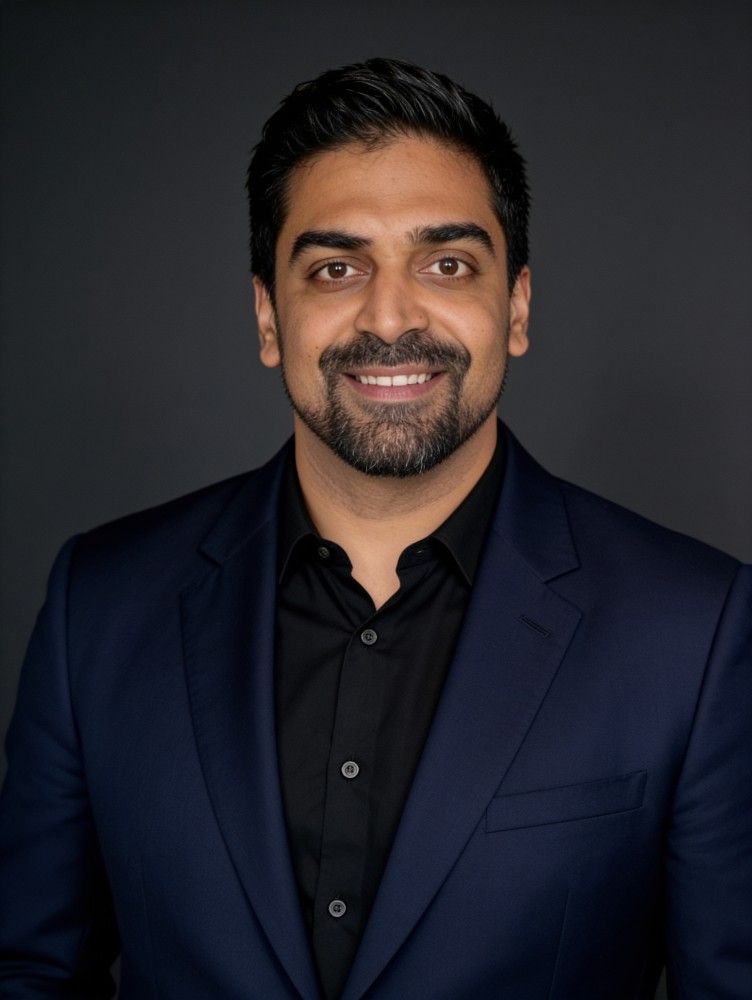
That gap is where Hussein Ahmed is building Limited.
Ahmed is known in fintech for founding Oxygen Banking, a digital banking platform that helped bring neobank-style experiences to modern users. With Limited, he is moving into a different but connected problem. Instead of only improving the front end of banking, Limited is trying to rethink how borderless businesses hold, move, and spend money through stablecoin-native infrastructure.
The idea is not simply to build another crypto wallet. It is to create a financial layer where stablecoins, self-custody, bank accounts, premium cards, and cross-border payouts can work together in a way that feels practical for real businesses.
Who is Hussein Ahmed
Hussein Ahmed is the founder and CEO of Limited, a fintech company focused on stablecoin-powered global banking. His name carries weight because he is not approaching the space as a first-time fintech builder. Before Limited, Ahmed founded Oxygen Banking, a neobank built for independent professionals, freelancers, and modern consumers who wanted a cleaner digital banking experience.
That background matters. Neobanks helped change what people expected from financial products. They made bank accounts easier to open, debit cards more attractive, mobile apps more useful, and everyday banking less painful. But many of them still depended on the same traditional financial rails underneath.
With Limited, Ahmed appears to be working on the next layer of that problem. The question is no longer only how banking should look on a phone. The bigger question is how money should move for businesses that operate across borders.
His work sits at the intersection of three fast-moving areas:
- Digital banking
- Stablecoin payments
- Global business finance
That mix gives Limited a clear position in the market. It is built for users who want the usability of modern fintech, the reach of global payment networks, and the control that comes from self-custody.
What Limited is building
Limited is a stablecoin-native banking platform designed for businesses and users who need global financial access without being trapped inside slow legacy systems. Public company information describes Limited as a self-custody stablecoin banking platform offering premium global financial services.
The platform brings together several financial tools that usually live in separate places. These include US and EU bank accounts, premium Visa cards, cross-border payouts, local payment options, support for major stablecoins, and self-custody infrastructure.
For a business owner, the value is not only that stablecoins are involved. The value comes from making stablecoins usable inside ordinary financial workflows.
A company does not want to manage five disconnected tools just to pay vendors, receive funds, move dollars, and spend through cards. Limited is trying to reduce that complexity by giving businesses a more connected financial layer.
The platform’s core promise can be understood in a simple way. It wants to let global businesses hold value in stablecoins, maintain control through self-custody, and still access the familiar financial tools they need to operate day to day.
Why borderless businesses need a new banking layer
A borderless business is any company that operates beyond one domestic market. That could be a startup with remote employees, a consulting firm serving international clients, a crypto-native company managing digital assets, or an online business paying suppliers across several countries.
For these companies, banking is not a background task. It affects cash flow, hiring, vendor relationships, customer payments, and financial planning.
Traditional banking often creates problems for these businesses:
- International wires can be slow and expensive
- Account access can depend heavily on location
- Currency conversion can reduce margins
- Cross-border payouts can take days
- Some markets have limited access to dollar-based financial services
- Crypto wallets and bank accounts often do not connect smoothly
Stablecoins offer one possible answer because they can move value quickly across borders and can be tied to a stable asset such as the US dollar. But stablecoins alone are not enough for most businesses. A company still needs accounts, cards, compliance, reporting, payouts, and a clear user experience.
This is the space Limited is trying to occupy. It is not selling stablecoins as a speculative asset. It is positioning them as financial infrastructure for real business use.
How Limited connects traditional finance with digital assets
One of the most interesting parts of Limited is that it does not present itself as only a crypto product. It also does not look like a standard neobank. Instead, it sits between the two.
Traditional finance gives businesses familiar tools such as accounts, cards, statements, payment networks, and regulated access points. Digital assets bring faster settlement, programmable money, global reach, and self-custody.
Limited is trying to combine these strengths into one platform.
That matters because many businesses do not want to choose between the old financial system and the new one. They want the reliability of bank accounts and card networks, but they also want the speed and flexibility of stablecoin rails.
For example, a business might want to receive funds through traditional channels, hold working capital in stablecoins, pay contractors in different countries, and use cards for normal expenses. If each step requires a separate provider, the financial stack becomes messy.
Limited’s approach is to make stablecoins part of a broader banking experience rather than a separate technical layer that only crypto-native teams understand.
The self-custody model behind Limited
Self-custody is one of the most important ideas behind Limited.
In simple terms, self-custody means users keep control of their own assets instead of relying entirely on a bank, exchange, or third-party custodian to hold funds for them. In crypto and stablecoin markets, that control can be especially important because users want to reduce counterparty risk and avoid being fully dependent on centralized platforms.
For many people, though, self-custody has always come with a tradeoff. It gives more control, but it can also feel technical, risky, or confusing. Managing wallets, keys, chains, and transfers can be intimidating for users who simply want banking tools that work.
Limited is trying to solve that tradeoff. The platform’s promise is not just self-custody for people who already understand crypto. It is self-custody wrapped inside a more practical business banking experience.
That could become a major advantage if the company can make control feel simple. Business users do not want complexity for its own sake. They want confidence, speed, security, and access.
If Limited can make self-custody feel as natural as using a modern banking app, it could help bring stablecoin finance to a much wider audience.
Why stablecoins are becoming useful for real businesses
Stablecoins have moved beyond the early crypto trading use case. More companies now see them as a tool for payments, treasury, remittances, and dollar access.
For global businesses, stablecoins can be useful because they allow value to move across borders without relying on the full chain of correspondent banks that often slows down international payments. They can also help users in markets where local currency volatility makes dollar access important.
This does not mean stablecoins replace every banking function. Businesses still need compliance, customer support, on and off ramps, accounting workflows, and spending tools. But stablecoins can improve the movement layer of finance.
That is why Limited’s strategy is timely. It is building during a period when stablecoins are being taken more seriously as payment infrastructure, not just as crypto market tools.
For borderless companies, the appeal is clear. Faster movement of funds can improve cash flow. Lower friction can make international hiring easier. Multi-currency access can reduce operational headaches. Self-custody can give teams more direct control over their financial assets.
Limited’s funding and market momentum
Limited announced a $7 million seed round led by North Island Ventures, with participation from Third Prime, Arche Capital, Collab+Currency, and SevenX Ventures. The round brought the company’s total funding to $10 million since its founding in 2024.
This funding is important because it shows that investors see stablecoin banking as more than a narrow crypto trend. They are backing a company that is trying to turn stablecoins into usable financial infrastructure for businesses.
The investor mix also says something about Limited’s positioning. Backers from both fintech and crypto backgrounds suggest that the opportunity sits between traditional financial services and digital asset infrastructure.
For Ahmed, the funding gives Limited more room to expand its platform, reach high-demand markets, and build the kind of trust that financial products need. In fintech, capital alone is never enough. The harder work is building a product that users trust with their money.
Still, the seed round gives Limited momentum at a time when demand for borderless payment tools is growing.
Why emerging markets matter to Limited’s growth
Limited has pointed to growth opportunities in regions such as Latin America, Southeast Asia, and the Middle East. These markets are especially relevant because many businesses and individuals there deal with cross-border payments, currency challenges, and limited access to global banking products.
In some emerging markets, access to dollar-based accounts can be difficult. International transfers can be expensive. Local currencies may be unstable. Remote workers and digital businesses may earn money from clients abroad but struggle to manage payments efficiently.
Stablecoin banking can speak directly to these problems.
A platform like Limited can be especially useful for:
- Remote-first companies paying global teams
- Exporters and online businesses serving international customers
- Crypto-native companies needing business banking tools
- Freelancers and contractors working across borders
- Founders who need dollar access and faster settlement
- Companies operating in regions with high payment friction
This is where Ahmed’s vision becomes more than a fintech product story. It becomes a story about financial access. If Limited can make global money movement simpler, it could help businesses operate beyond the limits of their local banking systems.
The role of cards, accounts, and payouts
Stablecoins may be the foundation, but the practical value of Limited comes from the tools built around them.
Businesses still need bank accounts. They still need cards. They still need ways to pay people through local methods. They still need to move between digital assets and traditional payment systems.
Limited offers US and EU bank account access, premium card programs, and cross-border payout capabilities. It also supports many local payment methods and currencies, which is important for companies that operate across regions.
This is where Limited’s model becomes more useful than a simple wallet. A wallet can hold stablecoins. A business banking layer has to help users actually operate.
A founder might need to receive funds, hold them in stablecoins, pay a contractor in local currency, and use a card for business expenses. The more these actions can happen inside one trusted platform, the stronger the product becomes.
That is the real test for Limited. Can it make stablecoin infrastructure feel like normal business finance?
How Limited differs from earlier neobanks
Neobanks changed the way people interacted with financial services. They improved the app experience, made onboarding faster, and brought a more modern feel to cards and accounts. But many neobanks still relied on traditional banking rails for the deeper movement of money.
Limited is different because it starts with a stablecoin-native foundation.
That shift matters. The goal is not only to make banking look better. The goal is to make money movement faster, more global, and more flexible.
Ahmed’s experience with Oxygen gives him a useful advantage here. He understands the importance of user experience in financial products. In fintech, good infrastructure is not enough if the product feels hard to use. At the same time, a beautiful app is not enough if the underlying rails do not solve a real problem.
Limited brings those lessons together. It needs to feel simple enough for business users, but powerful enough to support stablecoins, self-custody, cards, accounts, and global payouts.
That balance is difficult, but it is also what makes the company interesting.
The challenges Limited will need to solve
The opportunity around Limited is large, but the company is building in a category with real challenges.
The first challenge is regulation. Stablecoins, digital assets, banking access, and cross-border payments all sit inside complex regulatory environments. A platform like Limited has to build trust while operating across different markets and compliance expectations.
The second challenge is education. Many business users have heard of stablecoins, but they may not fully understand self-custody, blockchain networks, on-chain payments, or digital asset security. Limited has to make those ideas approachable without oversimplifying the risks.
The third challenge is trust. Any company handling money needs credibility. Users need to know that the platform is secure, reliable, and built for long-term use.
The fourth challenge is competition. Limited is not the only company looking at stablecoin payments, digital asset banking, or global payouts. It faces pressure from fintech startups, crypto wallets, payment processors, neobanks, and larger financial institutions.
These challenges do not weaken the story. They make the story more realistic. Building a stablecoin banking layer is not easy. The companies that succeed will need strong execution, clear compliance, simple design, and real user demand.
Why Hussein Ahmed’s fintech journey matters
Hussein Ahmed represents a new type of fintech founder. He has already worked on digital banking through Oxygen, and now he is applying those lessons to a more global financial problem through Limited.
His journey shows how fintech is evolving. The first wave of modern digital banking focused on better apps, faster onboarding, and more user-friendly accounts. The next wave is starting to focus on infrastructure. It asks how money can move faster, how users can keep more control, and how businesses can operate across borders without being slowed down by old systems.
Limited’s mission fits that shift. It is not only about giving users a card or an account. It is about building a stablecoin banking layer for businesses that already live in a borderless economy.
If Ahmed and his team can make stablecoin banking feel safe, simple, and useful, Limited could become part of a larger change in global finance. The strongest version of the company is not just a crypto product. It is a business banking platform built for the way modern companies already work.