The internet has entered a strange new phase. A fake executive profile can look real. A cloned login page can appear in minutes. A phishing campaign can spread across email, social platforms, messaging apps, ads, and lookalike domains before a security team has time to connect the dots.
That is the problem Alex Dhillon is trying to solve with Outtake.
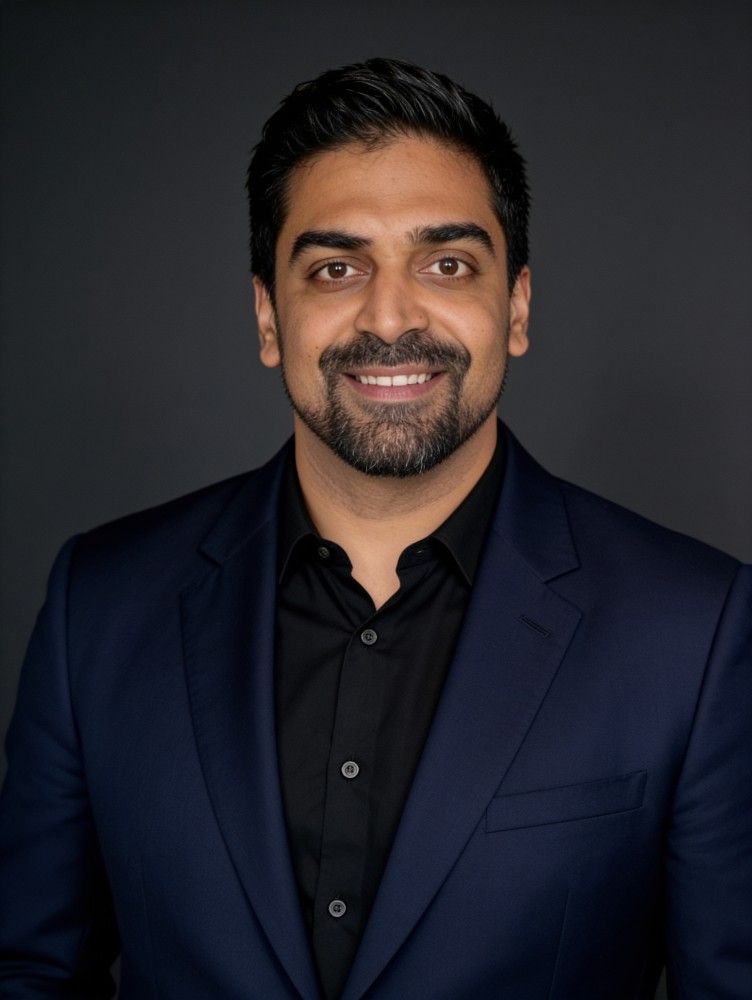
As the founder and CEO of Outtake, Alex Dhillon is building a company focused on one of the fastest growing challenges in cybersecurity, digital trust. His work sits at the intersection of AI cybersecurity, identity protection, fraud prevention, and online reputation. Instead of treating fake accounts, spoofed websites, and phishing pages as separate problems, Outtake looks at them as connected parts of the same attack campaign.
In the age of AI, that approach matters. Attackers no longer need huge teams or long preparation cycles to create convincing scams. With the right tools, they can produce fake content, generate social engineering messages, build cloned sites, and launch identity based attacks at scale. Outtake is designed to help companies detect those threats earlier, investigate them faster, and disrupt them before they cause wider damage.
Who is Alex Dhillon
Alex Dhillon, also known as Alex Arjun Dhillon, is the co-founder and CEO of Outtake, a digital trust and cybersecurity company built for the AI native web. His background helps explain why he is focused on this problem.
Before building Outtake, Dhillon worked in technical roles that exposed him to complex software systems, real customer problems, and high pressure security environments. He is known as a former forward deployed engineer at Palantir, a role that often involves working closely with customers, understanding their workflows, and turning difficult operational needs into practical technology.
That kind of experience fits naturally with what Outtake is trying to do. Digital trust is not only a technical issue. It also touches how companies protect their customers, executives, employees, brand identity, and public reputation across the open internet.
This is where Alex Dhillon’s story becomes more than a founder profile. His work reflects a larger shift in cybersecurity. The old idea of protecting only internal systems is no longer enough. Companies now have to defend the many places where their identity appears online, including websites, social media pages, app stores, search results, advertisements, domains, email, and messaging platforms.
Why digital trust has become a major problem in the AI era
For years, online scams depended on effort. Attackers had to manually create fake pages, write convincing messages, build profiles, and manage campaigns. AI has changed that balance.
Today, generative AI can help bad actors create more polished phishing content, build fake identities, clone websites, produce synthetic media, and test different versions of a scam faster than before. That does not mean every attack is advanced, but it does mean the cost of deception has dropped.
For companies, this creates a serious trust problem. A customer may not know whether a website is real. An employee may not know if a message from a supposed executive is genuine. A buyer may click on a fake ad that looks like it came from a trusted brand. A security team may find one suspicious domain, only to later discover it was part of a much larger campaign.
This is why digital trust has become a major cybersecurity category. It is about protecting the public-facing identity of a company and making sure people can trust what they see online.
The challenge is that these threats do not stay in one place. An attacker can use a lookalike domain, a fake social media account, a cloned login page, a malicious ad, and a messaging app campaign all at the same time. If a company uses separate tools for each channel, the full picture can be hard to see.
Outtake is built around that gap.
What Outtake is building
Outtake describes itself as a digital trust platform that helps organizations detect, investigate, and disrupt identity based threats across the AI native web.
In simple terms, the company helps security teams find and respond to online threats that abuse a brand, person, or organization’s identity. These threats can include AI driven impersonation, phishing, fake accounts, spoofed domains, cloned websites, fraudulent ads, malicious browser extensions, executive impersonation, and other forms of online identity abuse.
What makes the company’s approach interesting is how it frames the problem. Outtake does not treat every fake profile or phishing page as a one-off incident. It tries to connect related signals and reveal the larger campaign behind them.
That matters because attackers rarely operate through a single asset. A fake account may point to a spoofed website. A cloned login page may be supported by several domains. A fraudulent ad may be connected to a wider network of social profiles, payment pages, and fake support channels.
By connecting these pieces, Outtake gives security teams a better chance to understand what is really happening. Instead of only removing one fake page, they can work toward dismantling the broader operation behind it.
How Alex Dhillon is using AI agents to fight AI driven threats
The core idea behind Outtake is simple but timely. If attackers are using AI to move faster, defenders need better AI powered tools to keep up.
Alex Dhillon and his team are building Outtake around agentic AI, which means using AI agents to help with tasks such as searching, triaging, investigating, classifying, and supporting remediation. These agents are not meant to replace security teams. They are meant to reduce manual work and help teams move faster across large, messy online environments.
A traditional security workflow might require analysts to inspect one alert, check one domain, review one account, and manually follow each connection. That process can be slow, especially when attackers are creating new assets at scale.
With AI agents, Outtake aims to speed up that work. An agent can help trace signals across different surfaces, connect related activity, prioritize credible threats, and support takedown or remediation workflows. The goal is to give security teams more context in less time.
This is important because speed often decides the impact of an online attack. A fake login page that stays live for days can capture credentials. A fake executive account can mislead customers or employees. A spoofed support channel can damage trust before the brand even knows it exists.
By using AI defensively, Outtake is trying to help companies respond at the pace of the modern internet.
Outtake Recon Agent and the push toward earlier threat detection
One of the clearest examples of Outtake’s direction is Recon Agent, an autonomous investigation tool built with Anthropic technology.
Recon Agent is designed to trace a threat signal back to the wider infrastructure behind it. Instead of stopping at one suspicious account or domain, it can help map related domains, accounts, staged assets, and campaign patterns tied to a threat operator.
That is a major shift in how digital trust threats are handled. Many teams discover attacks only after users are targeted. By then, the attacker has already built the infrastructure, created the fake identities, and started outreach.
Outtake wants to move detection earlier in the timeline. If a security team can identify suspicious infrastructure before the campaign reaches victims, it has a better chance of stopping the damage before it spreads.
This is why Recon Agent fits closely with Alex Dhillon’s larger vision for Outtake. The company is not just building tools for takedowns. It is building technology that helps understand how online threat networks form, grow, and operate.
The Digital Trust Kill Chain and how Outtake frames modern attacks
Outtake has also introduced the idea of the Digital Trust Kill Chain, a framework for understanding how AI powered attackers move from preparation to impact.
The framework looks at the stages behind modern identity based attacks. These can start with reconnaissance, where attackers gather public information from sources like social platforms, websites, leaked data, and open web signals. From there, they may set up infrastructure such as lookalike domains, fake accounts, bot networks, cloned pages, and fraudulent apps.
Once the setup is ready, attackers can exploit trust. They may impersonate a brand, spoof an executive, launch phishing messages, create fake webinars, or target users through direct messages and email. If the campaign works, it can lead to credential capture, account takeover, financial fraud, ransomware, or other forms of harm.
The value of this framework is that it helps security teams think earlier and more broadly. Instead of reacting only when a user reports a phishing message, companies can look for signs that an attack is being prepared.
That is the difference between reacting to damage and disrupting the operation behind it.
Outtake’s funding and market momentum
Outtake’s rise has also attracted serious investor attention. In January 2026, the company announced a $40 million Series B led by ICONIQ, with participation from CRV, S32, and several well known technology and security leaders.
The funding gave Outtake more room to expand its product, engineering, and go-to-market work. It also showed that investors see digital trust as a growing category, not just a narrow brand protection problem.
That momentum makes sense. As AI lowers the cost of online deception, more companies are facing threats that touch security, fraud, reputation, legal teams, customer support, and executive protection at the same time. A fake domain is not only a technical problem. A cloned website is not only a brand issue. A phishing campaign is not only an email problem.
These risks overlap. That is why a unified digital trust platform has become more relevant.
For Alex Dhillon, the funding is not just a milestone. It supports the broader mission of helping enterprises protect trust across the AI native web.
What makes Alex Dhillon’s approach different
The strongest part of Alex Dhillon’s approach is that he is building around a real and expanding problem, not just chasing a trend.
Many companies talk about AI. Outtake is using AI in a specific security context where scale, speed, and pattern recognition matter. The company’s work is focused on helping security teams see the connections between scattered threats and act before those threats become bigger incidents.
Another important part of the approach is the idea that public digital surfaces are now part of the security perimeter. A company’s website, social profiles, brand ads, executive identities, mobile app listings, support pages, and online mentions can all be used by attackers. Protecting those surfaces requires more than internal monitoring.
Outtake also appears to be built with security workflows in mind. Detection alone is not enough. Teams need investigation, prioritization, evidence, attribution, and remediation support. They need to know which threats are credible, how those threats connect, and what action should come next.
That practical focus is what gives Alex Dhillon’s work its relevance. The mission is not simply to find fake pages. It is to help companies defend trust where customers and employees actually experience it.
Why Outtake matters for companies and security teams
The business impact of Outtake is easy to understand. Companies spend years building trust, and online impersonation can damage that trust quickly.
A customer who falls for a fake login page may blame the brand. An employee who responds to a spoofed executive message may expose sensitive information. A fake support profile can trick users into sharing account details. A cloned website can steal credentials, process fraudulent payments, or distribute malware.
For security teams, the problem is not only the number of threats. It is the spread of those threats across many channels. One campaign may touch domains, email, social media, messaging apps, search ads, and app stores. Without a connected view, teams may waste time removing isolated pieces while the larger operation continues.
Outtake helps by giving teams better visibility into external identity threats. It supports faster investigations, stronger prioritization, and coordinated response. That can reduce customer harm, protect brand reputation, and give security teams a clearer view of the threat landscape around their organization.
In a world where trust can be copied, spoofed, and manipulated, that kind of visibility is becoming essential.
How Alex Dhillon’s work fits into the future of cybersecurity
The future of cybersecurity will not only be about firewalls, endpoints, cloud systems, and internal access. Those areas will still matter, but companies also need to protect how they appear to the outside world.
That is where Alex Dhillon and Outtake fit into the next chapter of security.
AI native threats are likely to become more common, more convincing, and more automated. Attackers will be able to test messages faster, create fake assets faster, and shift infrastructure faster. Security teams will need tools that can investigate across the open web, connect weak signals, and respond before attacks fully mature.
Outtake is positioning itself for that reality. Its focus on digital trust, agentic AI, identity based threats, and threat remediation gives it a clear role in the changing security market.
For readers following Alex Dhillon, the story is not only about a founder building a fast growing cybersecurity company. It is about a broader shift in how online trust needs to be protected. In the AI era, companies cannot assume people will know what is real. They have to actively defend the signals, identities, and digital surfaces that make trust possible.
That is the space Alex Dhillon is building in, and it is why Outtake has become a company to watch.