Meta Title: How Charlie Wu Is Using Computer Vision to Replace Guesswork in Fruit Farming
Meta Description: Learn how Charlie Wu and Orchard Robotics are using computer vision, AI-powered farm cameras, and crop data to help fruit growers make smarter decisions with less guesswork.
Fruit farming has always been a business of timing, judgment, and experience. A grower can walk rows, inspect fruit by hand, study weather patterns, and lean on years of instinct. But even the most experienced farmer still faces one stubborn problem: it is nearly impossible to know exactly what is happening across every tree, vine, and plant at the same time.
That gap is where Charlie Wu saw an opportunity.
Through Orchard Robotics, Wu is building technology that helps fruit growers understand their crops with far more precision than traditional field checks allow. The company uses computer vision, machine learning, and AI-powered cameras mounted on tractors, ATVs, and other farm vehicles to capture detailed crop data as growers move through their fields.
Instead of relying only on small manual samples, farms can collect visual information across entire blocks and rows. That data can then help growers estimate yield, understand fruit size, track color, monitor crop health, and make better decisions around pruning, thinning, spraying, labor, harvesting, storage, and sales.
In simple terms, Charlie Wu is helping fruit farms move from educated guesses to clearer crop intelligence.
Why Fruit Farming Still Depends on Too Much Guesswork
Fruit farming looks simple from the outside. Trees grow fruit, growers pick it, and the supply chain moves it to stores. In reality, the work is far more complicated.
A large orchard or vineyard can cover hundreds or thousands of acres. Every block may behave differently. Some trees may carry too much fruit. Others may be underperforming. A row that looks healthy from a distance may have uneven fruit size, disease pressure, color variation, or a crop load that is very different from the next row over.
For many growers, the old way of understanding this variation has been manual sampling. A farm team may inspect a small number of trees or vines, count some fruit, measure a limited sample, and use those numbers to estimate what is happening across the wider farm.
That method can work to a point, but it has limits. A small sample cannot always represent the full complexity of a living field. If the sample is off, the decisions built around it can also be off.
This matters because crop data affects nearly every major farm decision. If a grower does not know how much fruit is coming, it becomes harder to plan labor. If they do not know where fruit size is lagging, it becomes harder to adjust thinning or nutrition. If they do not know which blocks are ready first, harvest timing becomes less precise. If they cannot forecast quality and volume with confidence, sales and supply chain planning become more difficult.
Guesswork in fruit farming is not just an inconvenience. It can affect margins, labor costs, input use, crop quality, and the amount of fruit that reaches the market.
Who Charlie Wu Is
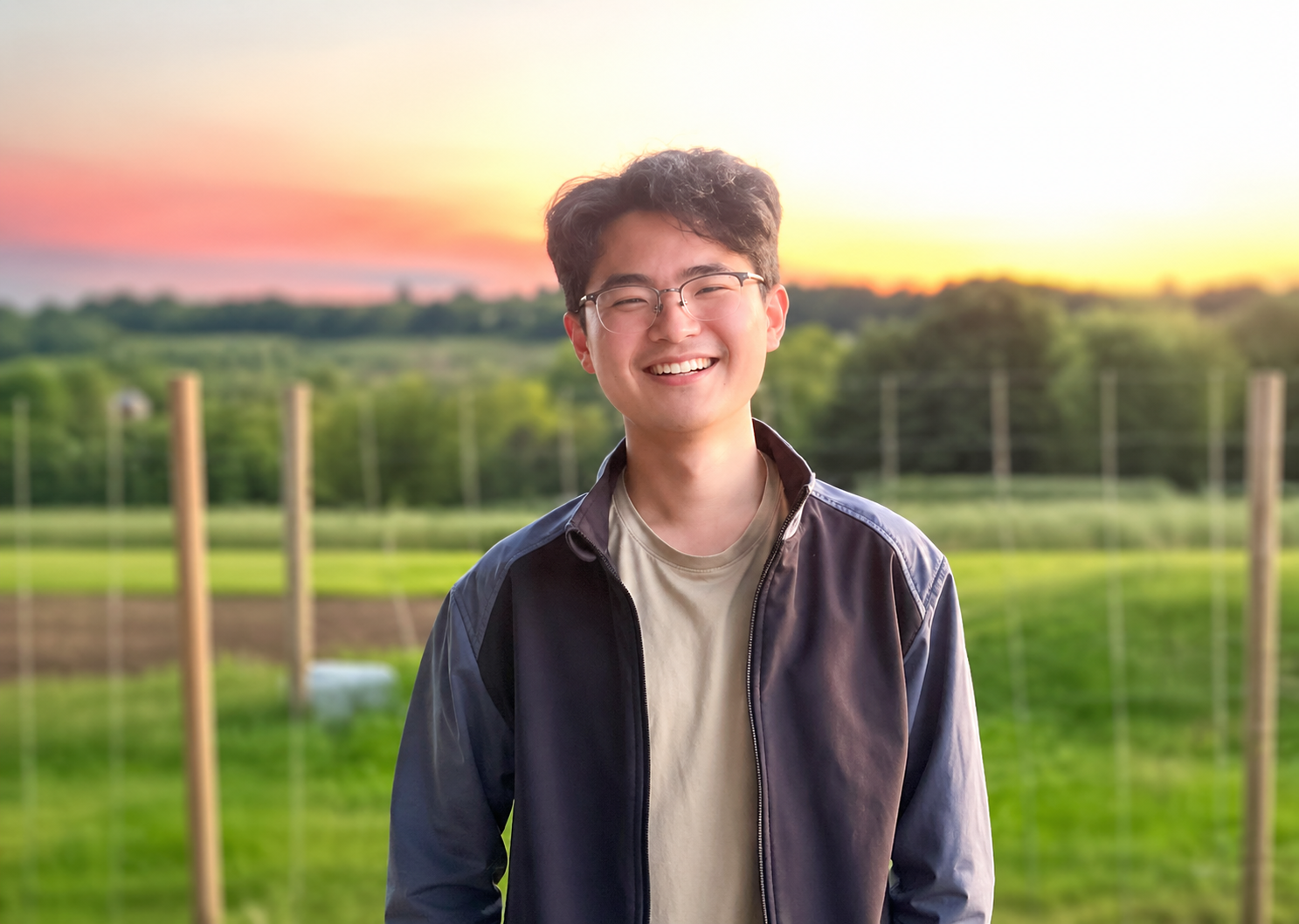
Charlie Wu, also known as Charles Wu, is the founder and CEO of Orchard Robotics. His story stands out because he did not come into agriculture only through a traditional farming path. He studied computer science at Cornell University, and his work connects software, AI, robotics, and the real-world needs of specialty crop growers.
Wu has spoken about realizing that large farms still lacked the kind of data visibility that many other industries take for granted. In sectors like logistics, finance, advertising, and manufacturing, leaders often make decisions from live dashboards and detailed records. But on many farms, a grower may still be making major decisions from limited manual observations.
That contrast became central to Orchard Robotics.
Rather than building technology for technology’s sake, Wu focused on a practical question: what if farms could collect useful crop data during the normal course of fieldwork?
That idea matters because farmers do not need another complicated tool that slows them down. They need systems that fit into their existing operations. Orchard Robotics is built around that idea. Its cameras can be mounted to farm vehicles growers already use, turning routine drives through the field into data collection runs.
What Orchard Robotics Does
Orchard Robotics describes itself as an AI farming company. Its larger mission is to help make farming more profitable, efficient, and sustainable by building the data foundation needed for better decision-making and future automation.
The company’s technology is centered around the FruitScope platform, including FruitScope Vision, FruitScope Vault, and FruitScope OS.
FruitScope Vision is the camera system. It can be attached to tractors, ATVs, or other farm vehicles, then used to capture high-resolution crop images while the vehicle moves through the rows. Instead of asking growers to stop and inspect every tree by hand, the system gathers visual data at scale.
FruitScope Vault acts as the farm data system of record. It is designed to store valuable crop information across blocks, ranches, seasons, trees, vines, and plants. This is important because farm data becomes more useful when it is not trapped in one season or one spreadsheet. Over time, growers can compare patterns, understand performance, and improve future planning.
FruitScope OS is the software layer where data becomes easier to use. It gives growers a place to view crop information, interpret what is happening in the field, and connect that information to farm decisions.
The real value is not just in taking pictures. The value comes from turning those images into useful crop intelligence.
How Computer Vision Changes the Way Growers See Their Fields
Computer vision gives machines the ability to interpret visual information. In fruit farming, that can mean identifying fruit, measuring size, detecting color, estimating crop load, mapping tree-level variation, and tracking changes over time.
For growers, this can create a much clearer view of the field.
Instead of asking, “What do we think is happening in this block?” a grower can start asking, “What does the data show is happening across every row?”
That difference can change the way decisions are made.
A grower may be able to see which trees are carrying more fruit than expected. They may identify areas where fruit size is behind target. They may notice color development earlier. They may spot blocks that need attention before the problem becomes more expensive. They may also get a better sense of harvest timing, expected yield, and quality distribution.
This does not replace the knowledge of growers. It supports it. Farming still depends on human experience, weather judgment, market awareness, and local knowledge. But with better data, those decisions become less dependent on incomplete sampling.
That is why Orchard Robotics is not just a robotics story. It is a farm intelligence story.
Replacing Manual Sampling With Crop-Level Visibility
One of the biggest problems in specialty crop farming is that small samples can lead to big assumptions.
A team may inspect a limited number of trees and use that information to estimate an entire orchard. But two nearby blocks can behave differently. Even trees in the same row can produce different results. Weather, soil, irrigation, pruning history, disease pressure, and tree age can all affect the final crop.
When data is thin, a grower has to fill in the blanks.
Orchard Robotics helps reduce those blanks by collecting information at a much wider scale. As a vehicle moves through the orchard or vineyard, the camera system captures detailed visual data. AI models can then analyze that data to understand fruit count, fruit size, fruit color, growth rate, and crop health.
This gives growers a broader, more accurate picture of what is growing before harvest. That matters because many of the most important decisions need to happen before the fruit is picked.
If a farm waits until harvest to discover a yield or quality issue, the options are limited. But if the problem is visible earlier, growers may have more room to respond.
Smarter Yield Forecasting Before Harvest
Yield forecasting is one of the clearest use cases for Orchard Robotics.
Fruit growers need to know how much crop they are likely to produce. That number affects labor planning, packaging, storage, sales commitments, transportation, and cash flow. If the estimate is too high, a grower may overpromise supply or hire more labor than needed. If the estimate is too low, they may miss sales opportunities or fail to prepare enough resources for harvest.
Computer vision can improve this process by giving growers more complete crop data. Instead of relying only on a handful of manual counts, farms can use AI-powered crop monitoring to build a stronger estimate across the field.
For apple farms, grape farms, blueberry farms, cherry farms, almond farms, pistachio farms, citrus farms, and strawberry operations, this kind of visibility can make planning more reliable.
It also helps growers understand variation. A total yield number is useful, but knowing where that yield is coming from can be even more valuable. If one block is ahead and another is behind, the farm can plan around that reality.
Better Decisions Around Pruning Thinning and Spraying
A farm is not one uniform unit. Every block has its own needs.
That is why precision crop management is so important. If a grower treats every tree or vine the same way, they may waste labor, water, fertilizer, crop protection products, or time. Some areas may need more attention. Others may need less.
With better crop visibility, growers can make more targeted decisions.
Pruning can be guided by a clearer understanding of tree performance. Thinning can be adjusted based on crop load. Spraying decisions can be informed by what is actually happening in the field. Irrigation and nutrition strategies can become more connected to plant-level data.
This is where Orchard Robotics’ work connects directly to farm economics. The goal is not simply to collect impressive images. The goal is to help growers save money, improve quality, reduce waste, and make the farm more efficient.
When data shows which trees, vines, or plants need attention, farm teams can act with more confidence.
Labor Planning With More Confidence
Labor is one of the biggest challenges in agriculture. Harvest work is time-sensitive, physically demanding, and often difficult to staff. A grower needs the right number of workers at the right time in the right place.
Poor crop visibility makes that harder.
If a farm underestimates how much fruit is ready, it may not have enough people to pick it on time. If it overestimates the crop, it may spend more on labor than necessary. If it cannot see which blocks are maturing first, crews may not be deployed efficiently.
AI-powered farm data can help with this. By giving growers a better view of crop load, size, color, and readiness, Orchard Robotics can support more accurate labor planning. That does not remove the uncertainty of farming, but it gives managers better information before they commit resources.
For large specialty crop farms, even small improvements in labor allocation can have a meaningful financial impact.
Building the Data Layer for the Farm of the Future
Charlie Wu’s work with Orchard Robotics also points toward a bigger shift in agriculture.
The farm of the future will likely include more automation, but automation cannot work well without data. A machine cannot make smart decisions about a field it does not understand. An AI system cannot recommend the right action if it does not know what is growing, where it is growing, and how that crop is changing over time.
That is why Orchard Robotics starts with data.
The company’s approach creates a foundation for future farm automation by building a clearer digital record of the crop. Over time, that record can support better recommendations, more automated workflows, and more connected farm management.
This is also where Canary, Orchard’s coming AI decision-making layer, fits into the broader vision. The idea is that once farms have enough high-quality data, AI can help guide decisions across pruning, spraying, irrigation, hiring, harvest, marketing, selling, and distribution.
That is a much larger ambition than simple crop scouting. It suggests a future where AI does not just observe the farm, but helps coordinate farm operations.
Charlie Wu’s Achievement With Orchard Robotics
The success of Charlie Wu and Orchard Robotics is not only about building a camera. It is about identifying a major blind spot in one of the world’s most important industries and creating a tool that fits the way farmers actually work.
Orchard Robotics has attracted investor attention, including backing connected to firms such as General Catalyst, Quiet Capital, Shine Capital, Contrary, Mythos, Valyrian, and Ravelin. The company has also been associated with the Thiel Fellowship, which supports young founders building ambitious companies.
That investor interest reflects a bigger belief: agriculture needs better data, and specialty crop farms are ready for tools that make decision-making more precise.
But the more important measure is whether the technology solves a real problem for growers. Orchard’s focus on existing farm vehicles, practical field use, and crop-level visibility gives the company a grounded position in agtech. It is not asking farmers to completely reinvent their operations overnight. It is helping them get more value from the fieldwork they already do.
That practical approach is a major reason Wu’s work stands out.
Why Orchard Robotics Stands Out in Agtech
Agtech is full of bold promises. Some companies talk about full automation, robotic harvesters, autonomous equipment, or AI systems that can manage entire farms. Those ideas may become more common over time, but many growers still need tools that solve today’s problems first.
Orchard Robotics stands out because it begins with visibility.
Before a farm can automate decisions, it has to understand the field. Before it can optimize labor, inputs, harvest, or sales, it needs reliable crop data. Before it can reduce waste, it needs to know where inefficiencies are happening.
By focusing on computer vision and farm data, Orchard Robotics gives growers a practical entry point into AI-powered farming. A camera mounted on a tractor may not sound as dramatic as a fully autonomous robot, but it can be extremely valuable if it helps a grower make better decisions across thousands of trees or vines.
The company also stands out because its technology connects hardware, software, and decision-making. FruitScope Vision gathers the data. FruitScope Vault stores it. FruitScope OS helps growers use it. Canary points toward a future where AI can recommend and automate more decisions.
That full-stack approach gives Orchard Robotics room to grow beyond crop measurement into broader farm management.
What This Means for Fruit Growers
For fruit growers, the promise of Orchard Robotics is straightforward: know more about the crop before it is too late to act.
That kind of knowledge can affect almost every part of the season. During early growth, it can help growers understand crop potential. During thinning and pruning, it can guide more precise management. Before harvest, it can improve yield estimates and labor plans. After harvest, it can support better analysis for the next season.
It also gives growers a stronger record of what happened across the farm. Instead of relying only on memory, handwritten notes, or scattered spreadsheets, a farm can build a deeper crop history over time.
This matters because modern farming is under pressure from many sides. Labor shortages, input costs, climate variability, market demands, and supply chain pressure all make decision-making harder. Better data will not solve every challenge, but it can give growers a stronger foundation.
And that is the real value of Charlie Wu’s work. He is not trying to remove the farmer from farming. He is giving farmers a sharper view of the crop so they can manage with more confidence.
Why Charlie Wu’s Work Matters for the Future of Farming
The story of Charlie Wu and Orchard Robotics is really about a larger change in agriculture. Farms are becoming more data-driven, but the best technology will be the kind that respects how farming actually works.
Fruit growers do not need vague dashboards or flashy AI language. They need answers to practical questions. How much fruit is growing? Where is it growing well? Which blocks need attention? How many workers will be needed? When should harvest begin? What can be sold with confidence?
Orchard Robotics is helping answer those questions through computer vision and crop intelligence.
By turning everyday farm vehicles into data collectors, Wu is making AI more accessible to growers. By building software around that data, Orchard Robotics is making the information easier to use. And by focusing on fruit farms first, the company is solving a specific, high-value problem before expanding toward a broader vision of AI-powered farm management.
That is why Charlie Wu’s work deserves attention. He is helping replace guesswork with visibility, and in farming, visibility can change everything.