Drug discovery has a strange imbalance. Scientists can now use advanced software and AI models to imagine new molecules at a speed that once felt impossible, but actually making those molecules in the lab is still slow, expensive, and full of friction. A promising compound may look perfect on a screen, but until it can be synthesized, purified, and tested, it remains only an idea.
That gap between digital design and physical chemistry is where Daniil Boiko has focused much of his work. Through Onepot AI, he is helping build a new kind of chemistry platform that brings together artificial intelligence, robotic experimentation, and automated small-molecule synthesis. The goal is not just to suggest better molecules. It is to help researchers make them faster, test them sooner, and move through the drug discovery cycle with less delay.
For pharma, biotech, and chemical research teams, that matters because the slowest step is often not coming up with a molecule. It is getting that molecule made.
Who is Daniil Boiko
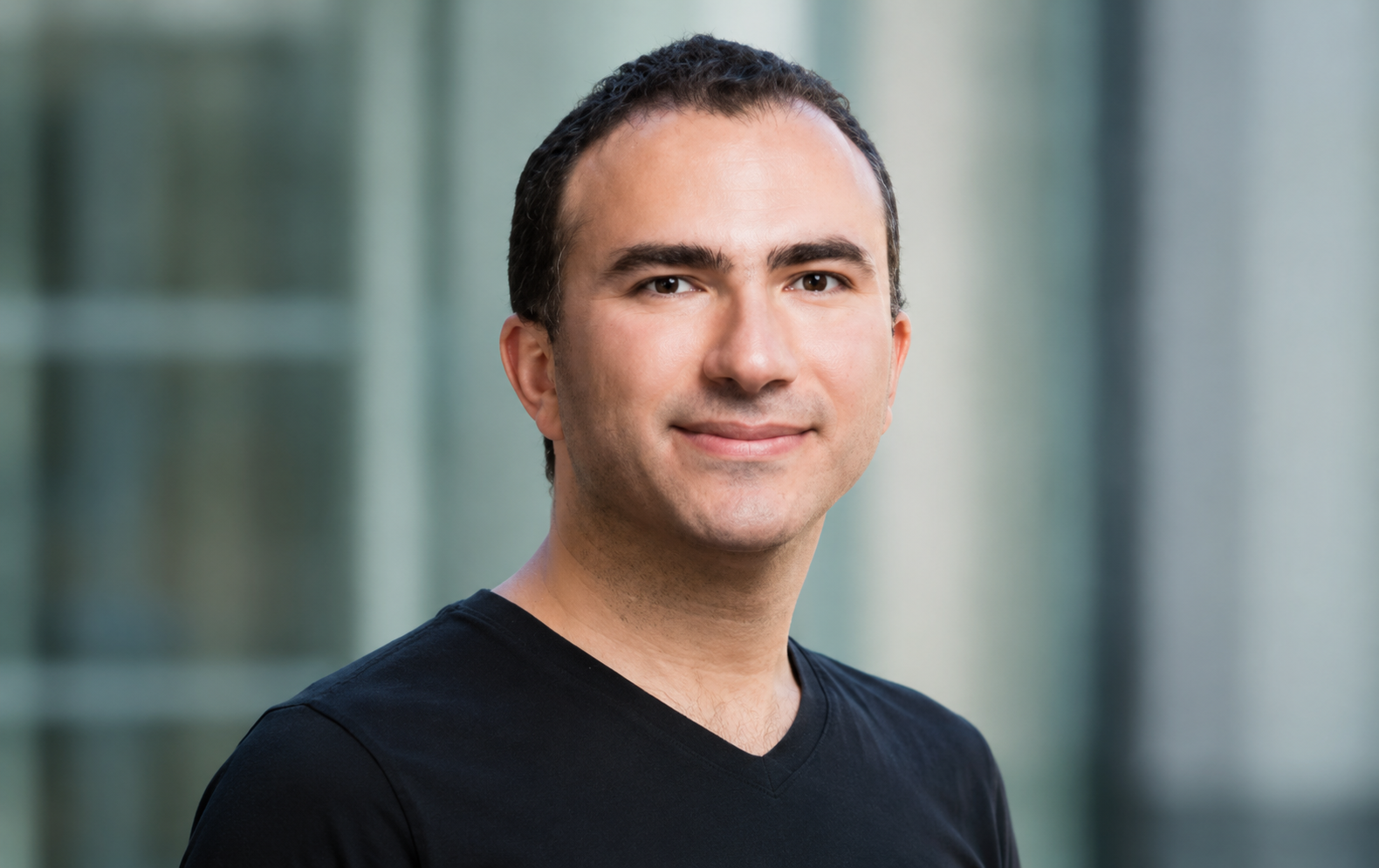
Daniil Boiko is a chemist and scientist-founder working at the edge of organic chemistry, machine learning, and lab automation. His background connects hands-on chemical research with newer AI systems that can plan, reason, and interact with laboratory tools.
Before building Onepot AI, Boiko worked on research areas such as molecular representation learning, graph neural networks, catalyst discovery, and large language models for scientific automation. That mix is important because automated chemistry is not only a software problem. It needs real chemistry judgment, reliable reaction data, physical lab execution, and systems that can learn from experimental results.
Boiko’s work stands out because it does not treat AI as a shortcut around chemistry. Instead, it uses AI to support the parts of chemistry that are repetitive, slow, data-heavy, or difficult to scale. That is a much more practical vision for scientific automation.
Why molecule synthesis is such a hard problem
In drug discovery, researchers often talk about the design make test analyze cycle. A team designs a compound, makes it in the lab, tests it for biological activity or other properties, then analyzes the results and decides what to make next.
AI has already improved the design side of that loop. Models can search chemical space, suggest molecules, predict properties, and help prioritize compounds. But the “make” step is still a bottleneck.
Small molecules are especially difficult because they are not all built through one simple recipe. Each target molecule may need a different synthetic route, different building blocks, different reaction conditions, and different purification steps. Even experienced chemists often need to troubleshoot reactions, adjust procedures, and decide whether a route is realistic.
This is one reason promising molecules can get ignored. A compound may be scientifically interesting, but if it looks too difficult, too slow, or too expensive to synthesize, teams may move on to something easier. That means chemistry is not limited only by imagination. It is also limited by access to molecules that can actually be made.
What Onepot AI is building
Onepot AI is working on AI-enabled small-molecule synthesis. Its broader mission is to make chemical synthesis faster, more reliable, and more scalable for drug discovery and chemical research.
Instead of focusing only on molecule prediction, Onepot is building infrastructure around the full synthesis workflow. That includes reaction planning, automated liquid handling, robotic experimentation, workup, purification, analysis, and data feedback. In simple terms, the company wants to connect the digital chemistry world with the physical lab.
This is an important distinction. Many AI drug discovery tools help researchers decide what molecules might be worth exploring. Onepot is trying to help researchers move from “this molecule looks interesting” to “this molecule can be made, tested, and learned from.”
That makes the platform useful not only for computational teams but also for medicinal chemists, biotech companies, pharma researchers, and materials science teams that need real compounds rather than theoretical candidates.
How Daniil Boiko connects AI with real lab execution
The strongest part of Boiko’s approach is the connection between AI and actual chemical work. In many fields, AI can deliver value through digital outputs alone. Chemistry is different. A molecule has to become physical before it can prove its value.
Onepot’s direction is built around that reality. AI can help choose reactions, assess feasibility, prioritize compounds, and plan routes. Robotics can then help run experiments with greater speed and consistency. Analytical tools can confirm whether the target molecule was made, how pure it is, and whether the process is reliable enough to repeat.
The long-term value comes from the loop between these steps. When automated systems generate experimental data, that data can be used to improve future predictions and decisions. Successful reactions matter, but failed reactions are also valuable because they teach the system what does not work.
This is where closed-loop experimentation becomes powerful. The system does not simply run a fixed recipe. It can use results to guide the next round of experiments. Over time, that kind of workflow could make synthesis smarter, faster, and less dependent on manual trial and error.
The role of Coscientist in Daniil Boiko’s journey
One of the major research milestones connected to Daniil Boiko is Coscientist, an AI system designed to help with autonomous scientific experimentation. Coscientist showed that large language models could be used for more than writing or answering questions. They could help plan experiments, interact with tools, read documentation, write code, and work with robotic lab systems.
For chemistry, that was a meaningful step. It suggested that AI agents could become active participants in scientific workflows, not only passive assistants. They could help connect information, planning, and lab execution in a more automated way.
That research helps explain the path toward Onepot AI. Coscientist showed what was possible in an academic research setting. Onepot is aimed at turning similar ideas into practical infrastructure for chemical synthesis and drug discovery teams.
The shift from research prototype to company is important. In the lab, a successful demonstration proves that a concept can work. In the real world, the challenge is making that concept useful, repeatable, scalable, and reliable enough for scientists who need results under time pressure.
Onepot CORE and scalable chemical space
A major part of Onepot’s work is onepot CORE, an enumerated chemical space created to support faster small-molecule discovery. The idea behind an enumerated chemical space is to define a very large set of molecules that can be made from available building blocks and known reactions.
That matters because chemical space is enormous. There are far more possible molecules than any lab can explore directly. The useful question is not just “what could exist?” but “what can we realistically make and test?”
onepot CORE is designed around that practical question. It includes billions of molecules and connects them to an automated synthesis platform. Onepot also uses an AI chemist called Phil to help design, execute, and analyze experiments.
The value is not only the size of the molecule library. A huge database is helpful, but it becomes much more useful when it is tied to synthesis feasibility, route selection, automated execution, and real experimental validation. For drug discovery teams, that can make chemical space feel less abstract and more actionable.
Why this matters for drug discovery teams
Drug discovery depends on speed, but it also depends on quality. Testing more compounds only helps if the compounds are relevant, reliable, and available quickly enough to guide the next decision.
Automated synthesis can help teams move faster through the design make test analyze cycle. Instead of waiting weeks for custom molecules or avoiding certain compounds because they seem difficult, researchers could gain access to a wider set of synthesizable molecules.
This can change how medicinal chemists work. If synthesis becomes easier and more predictable, teams can explore bolder ideas, compare more variants, and learn from richer experimental data. It may also reduce the amount of time chemists spend on repetitive setup and troubleshooting, giving them more room to focus on strategy and scientific judgment.
Another benefit is consistency. Manual chemistry depends heavily on individual technique, local lab conditions, and undocumented experience. Automated systems can help create more standardized workflows and cleaner data. That data is especially valuable for training future AI models because the system can learn from structured experimental outcomes rather than scattered notes.
Why Onepot AI is more than another AI drug discovery tool
The AI drug discovery space is crowded. Many companies are using machine learning to identify targets, predict binding, design molecules, or rank candidates. Those tools can be useful, but they often stop before the hardest physical step.
Onepot AI is different because it is focused on making chemistry happen. Its work sits closer to the lab bench, where digital ideas become compounds. That makes the company part of a broader shift toward AI-powered scientific infrastructure.
This is why Daniil Boiko’s background matters. He is not approaching chemistry automation only as a machine learning engineer or only as an organic chemist. His work combines both sides. That gives Onepot a more grounded path because synthesis automation needs models that understand chemistry and systems that can survive real lab complexity.
The company’s approach also reflects a bigger truth about AI in science. The next wave of progress will not come only from better predictions. It will come from systems that can design, make, test, analyze, and improve through real-world feedback.
How automated synthesis could change chemical research
If platforms like Onepot AI keep improving, they could change the rhythm of chemical research. Today, synthesis can slow down a project so much that teams narrow their choices early. In a more automated future, researchers may be able to explore more ideas without being blocked as often by practical synthesis limits.
This could help small biotech teams that do not have large internal chemistry operations. It could also support pharma groups that want faster access to compounds during early discovery. In materials science, similar workflows could help researchers test new molecular structures for performance, stability, or other useful properties.
The broader impact is about access. When synthesis becomes easier to run, scale, and repeat, more teams can work with molecules that would otherwise stay out of reach. That could make research more creative and more data-rich.
Still, automated chemistry is not simple. It has to handle messy reactions, imperfect data, supplier constraints, purification challenges, and the unpredictable nature of organic synthesis. That is exactly why the field needs people who understand both chemical reality and AI systems.
Daniil Boiko’s place in the next wave of scientific automation
Daniil Boiko represents a new kind of scientist-founder. His work is not just about using AI to write faster reports or generate molecule ideas. It is about building systems that can participate in the physical process of science.
Through Onepot AI, Boiko is working on one of the most important bottlenecks in drug and chemical research: the ability to make molecules quickly and reliably. That may not sound as flashy as discovering a single breakthrough drug, but it could support many discoveries by making the research process itself faster and more scalable.
The real achievement is the direction of the work. Boiko is helping move chemistry from a world where automation is limited and fragmented toward a future where AI, robotics, and experimental data work together. For drug discovery, that could mean faster cycles, more testable compounds, and a wider range of molecular ideas reaching the lab.
In a field where physical proof matters, that is what makes his work with Onepot AI worth watching.