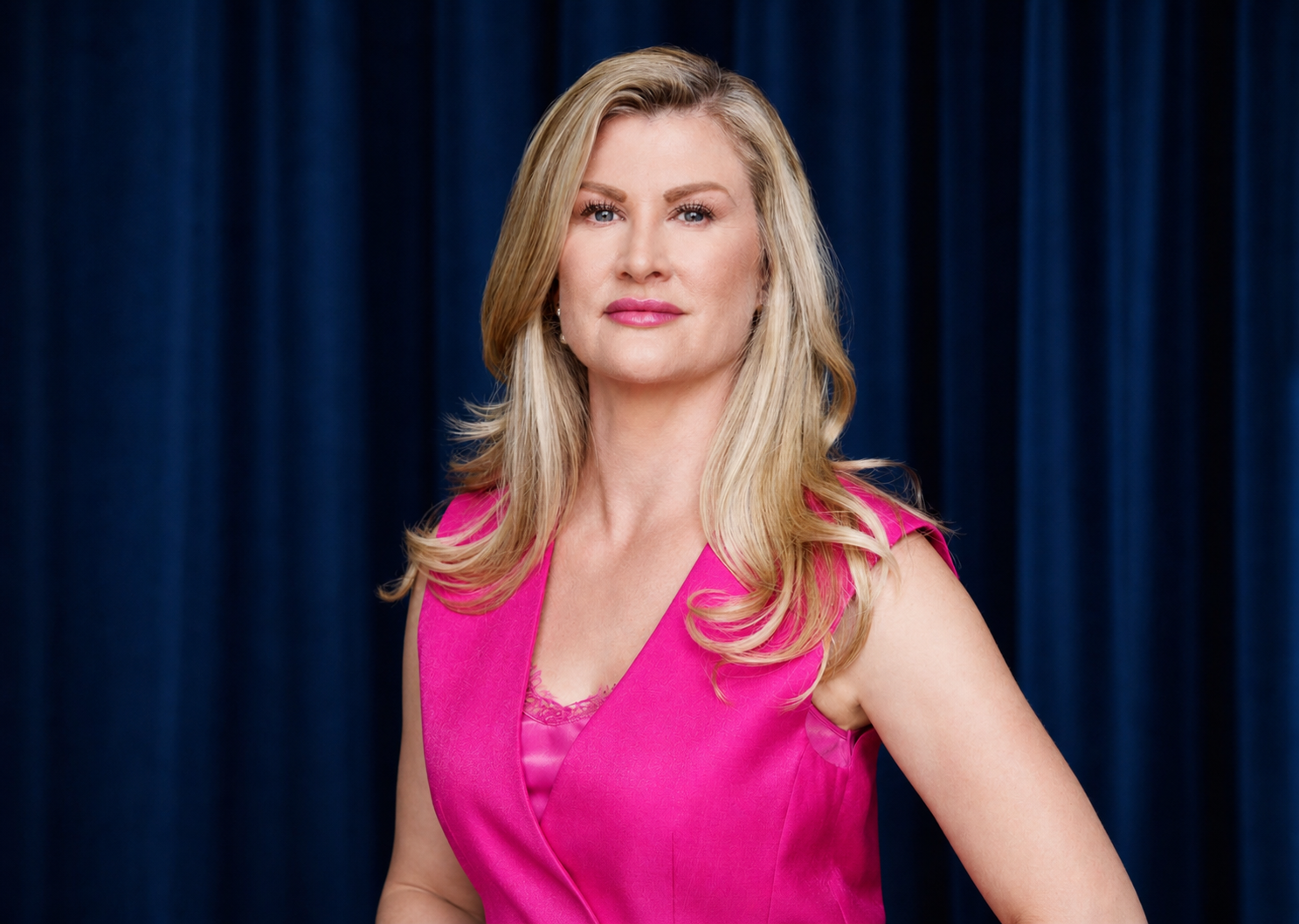
Cybersecurity is moving into a new era, and Galina Antova is building right at the center of it. After helping shape the industrial cybersecurity market through Claroty, she is now focused on Kai, a company built around a clear idea: security teams need more than another dashboard, another alert feed, or another tool that adds work to an already overloaded team.
With Kai, Galina Antova is taking on one of the biggest questions in modern cyber defense. How can companies protect themselves when attacks are becoming faster, more automated, and harder to manage with human-speed workflows alone? The answer Kai is pursuing sits in agentic AI, where intelligent systems can reason through security data, understand context, prioritize risk, and support action across the enterprise.
This makes the story of Galina Antova more than a founder profile. It is also a look at how cybersecurity is changing. Her work connects two important shifts: the rise of AI-powered attacks and the growing need for security platforms that can help defenders move with more speed and clarity.
Who is Galina Antova
Galina Antova is a cybersecurity entrepreneur known for building companies in some of the most complex parts of enterprise security. Before launching Kai, she co-founded Claroty, a cybersecurity company focused on protecting industrial networks, operational technology, and cyber-physical systems.
Her background gives her a practical understanding of what large organizations actually face. She has worked across enterprise technology, industrial security, and critical infrastructure. Earlier in her career, she held roles at IBM and later led Industrial Security Services at Siemens, where she worked with security challenges tied to industrial customers and high-stakes operational environments.
That experience matters because cybersecurity is not only about software. In sectors like energy, manufacturing, transportation, utilities, and pharmaceuticals, a cyber incident can affect business continuity, safety, production, and public trust. Galina Antova built her career around these difficult environments, where security has to work in the real world, not just in theory.
How Galina Antova built her name in industrial cybersecurity
The industrial cybersecurity market has always been harder than traditional IT security. In a normal office environment, a security team may be able to patch software, restart systems, or isolate devices without huge operational consequences. In a factory, power plant, hospital network, or transportation system, those decisions can be much more complicated.
This is where Galina Antova made her name. Her work at Siemens exposed her to the reality of protecting industrial environments, where operational uptime is critical and legacy systems often sit beside modern digital infrastructure. Those problems helped shape the need for better visibility and stronger defense across operational technology.
When she later co-founded Claroty, the market was still learning how serious OT security would become. Many organizations had spent years protecting traditional IT networks while industrial systems remained harder to see, harder to monitor, and harder to secure. Claroty helped push that conversation forward by focusing on industrial networks and critical infrastructure.
That chapter is important because it shows a pattern in Galina Antova’s career. She does not simply follow obvious markets. She tends to work on security problems before they become mainstream boardroom priorities.
The Claroty chapter and why it matters
Claroty became an important name in industrial cybersecurity because it addressed a real blind spot. Companies were connecting more industrial assets to digital systems, but many security teams did not have enough visibility into what was happening across their OT environments. That created risk at the exact moment when attackers were becoming more interested in critical infrastructure and cyber-physical systems.
As a co-founder of Claroty, Galina Antova helped build in a category where trust is difficult to earn. Industrial companies do not buy security tools casually. They need platforms that understand operational environments, integrate with existing systems, and support teams that cannot afford unnecessary disruption.
That experience now gives her an edge with Kai. The security market has changed, but the core challenge is familiar. Enterprises are still dealing with complexity. They are still trying to connect teams, data, workflows, and decisions. They are still trying to move faster without creating more noise.
The difference is that the next challenge is not only about visibility. It is about action at machine speed.
Why Galina Antova started Kai
Kai is built around the idea that cybersecurity needs a new operating model. For years, companies have responded to growing threats by buying more tools. That has created large security stacks filled with dashboards, alerts, ticket queues, logs, and point solutions. Instead of making teams faster, this often makes the work more fragmented.
Security analysts spend too much time switching between systems, validating alerts, pulling context from different platforms, and deciding what deserves attention. This is already difficult in normal conditions. It becomes even harder when attackers use automation and AI to move faster.
That is the gap Kai wants to close. The company is focused on agentic AI cybersecurity, which means using autonomous AI agents to support security work across areas such as threat intelligence, exposure management, detection, response, and remediation.
For Galina Antova, the mission appears to be bigger than adding AI features to an existing workflow. Kai is trying to rebuild security workflows around intelligent agents that can continuously assess information, reason through risk, and help teams act with better timing.
What agentic AI means in cybersecurity
Agentic AI is different from basic automation. Traditional automation usually follows fixed rules. If this happens, do that. It can be useful, but it often struggles when situations are messy, unclear, or constantly changing.
Agentic AI is designed to work with more context. In cybersecurity, that could mean reading signals from different tools, connecting those signals to business risk, deciding what matters most, and recommending or taking the next step under the right controls.
For a security team, this could help with tasks such as:
- Understanding threat intelligence faster
- Prioritizing vulnerabilities based on real exposure
- Connecting alerts across cloud, endpoint, identity, and network systems
- Supporting incident response workflows
- Suggesting remediation steps
- Reducing repetitive analyst work
- Helping teams move from investigation to action more quickly
The value is not that AI replaces human expertise. The value is that AI can take on the heavy, repetitive, time-sensitive parts of the workflow so human experts can focus on judgment, strategy, and accountability.
That balance is important. In cybersecurity, speed matters, but trust matters too. A useful AI security platform has to be fast enough to keep up with threats and careful enough to support high-confidence decisions.
How Kai is trying to solve the tool overload problem
One of the strongest parts of the Kai story is its focus on tool overload. Security teams are not short on software. In many cases, they are buried under it.
A large enterprise may use separate tools for vulnerability management, endpoint detection, identity security, cloud security, threat intelligence, SIEM, SOAR, asset inventory, and incident response. Each tool may be useful on its own, but the full picture often remains scattered.
This creates a daily problem for security teams. They have data, but not always clear context. They have alerts, but not always priority. They have workflows, but not always speed. They have automation, but not always intelligence.
Kai is trying to address this by building an agentic AI platform that can work across security functions rather than sit inside one narrow category. The goal is to reduce the gap between knowing something is wrong and doing something useful about it.
That matters because modern security is not only about detection. Detection without action still leaves teams exposed. A faster future depends on systems that can understand the situation, explain the risk, and support the next move.
Why Kai’s focus on IT and OT security is important
A major reason Galina Antova is a strong fit for this problem is her background across IT and OT security. Many companies still struggle to connect those two worlds.
IT security focuses on business systems, cloud platforms, networks, applications, data, identity, and endpoints. OT security focuses on industrial systems, production assets, control systems, sensors, equipment, and operational environments. Both matter, but they have different cultures, priorities, and risk models.
For years, those worlds were often separated. That separation is no longer realistic. Industrial companies are becoming more connected, and attackers know that the line between IT and OT can be a path into high-value environments.
Kai appears to be building for this connected reality. If a security platform can understand both enterprise IT and operational environments, it can help teams see risk in a more complete way. That is especially important for critical infrastructure, where a cyberattack can move beyond data theft and affect physical operations.
This is where Galina Antova’s experience becomes more than a biography detail. Her work in industrial security gives Kai a foundation in some of the hardest cybersecurity environments to protect.
The $125 million launch and what it says about investor confidence
Kai emerged from stealth in March 2026 with $125 million in combined seed and Series A funding. For a young cybersecurity company, that is a major launch. It signals strong investor belief in the team, the market, and the need for agentic AI in cyber defense.
The funding was led by Evolution Equity Partners, with participation from N47 and other investors. The company is expected to use the capital to scale product development, expand AI research, grow its team, and support go-to-market efforts.
Large funding does not guarantee success, but it does show that investors see a serious opportunity. Cybersecurity has become one of the most active areas for AI adoption because the pressure is obvious. Attacks are getting faster. Security teams are stretched. Enterprises need tools that can help them respond with more intelligence and less delay.
For Galina Antova, the funding also reflects trust in her track record. Building Claroty gave her credibility in a difficult market. With Kai, she is applying that founder experience to one of the biggest shifts in security today.
Galina Antova’s leadership advantage
The strongest founder stories usually have a clear connection between past experience and current mission. Galina Antova has that connection.
She is not entering cybersecurity from the outside. She has spent years working with large organizations, industrial systems, and high-risk environments. She understands how hard it is to sell security into enterprises, how much trust buyers need, and how careful companies must be when security touches critical operations.
That experience is especially useful for an AI cybersecurity company. Enterprises are interested in AI, but they are also cautious. They need to know that AI systems can be controlled, audited, integrated, and trusted. A founder with deep security experience can speak to those concerns more credibly than someone treating AI as a quick market trend.
Galina Antova’s advantage is that she has already built in a world where complexity is normal. With Kai, she is bringing that same mindset into the machine-speed era.
How Kai fits into the future of AI-powered cyber defense
Cybersecurity is becoming an AI race. Attackers can use AI to write better phishing messages, automate reconnaissance, identify weak points, generate malware variants, and move faster across systems. Defenders cannot rely only on manual workflows when the threat environment is speeding up.
That does not mean human security teams become less important. It means they need better support. The future of cyber defense will likely depend on a mix of human judgment and AI-driven execution. Analysts will still make important decisions, but agentic systems can help them process more data, connect more signals, and respond with less delay.
This is the market Kai is entering. Its platform is being positioned around autonomous security work, machine-speed defense, and unified workflows. Those ideas match the direction many enterprises are already moving toward. They want fewer silos, faster response, stronger context, and security systems that can adapt as threats change.
For Galina Antova, this is another category-building challenge. With Claroty, she helped bring attention to cyber-physical and industrial security. With Kai, she is working on the next layer: how AI agents can help security teams act faster across the full enterprise.
What makes Galina Antova’s Kai story worth watching
The story of Galina Antova and Kai is worth watching because it sits at the meeting point of experience and timing. She has already helped build a major cybersecurity company in a difficult category. Now she is building again, but in a market being reshaped by AI, automation, and the need for faster defense.
Kai is not just another cybersecurity startup trying to ride the AI wave. Its pitch is tied to a real operational problem: security work has become too fragmented for the speed of modern threats. If agentic AI can help teams reason, prioritize, and act across security workflows, it could change how enterprises think about cyber defense.
That is what makes Galina Antova’s next chapter important. Her success has come from understanding where security is heading before the market fully catches up. With Kai, she is betting that the next big shift will be from human-limited workflows to AI-supported defense that can operate with more speed, context, and confidence.