AI is moving fast, but the hardware behind it is under pressure. Every chatbot response, image generation, recommendation, translation, search answer, and real-time AI task needs inference. That means the model has already been trained, and now it has to deliver an answer quickly and reliably. As more people and companies use AI every day, inference is becoming one of the biggest workloads inside modern data centers.
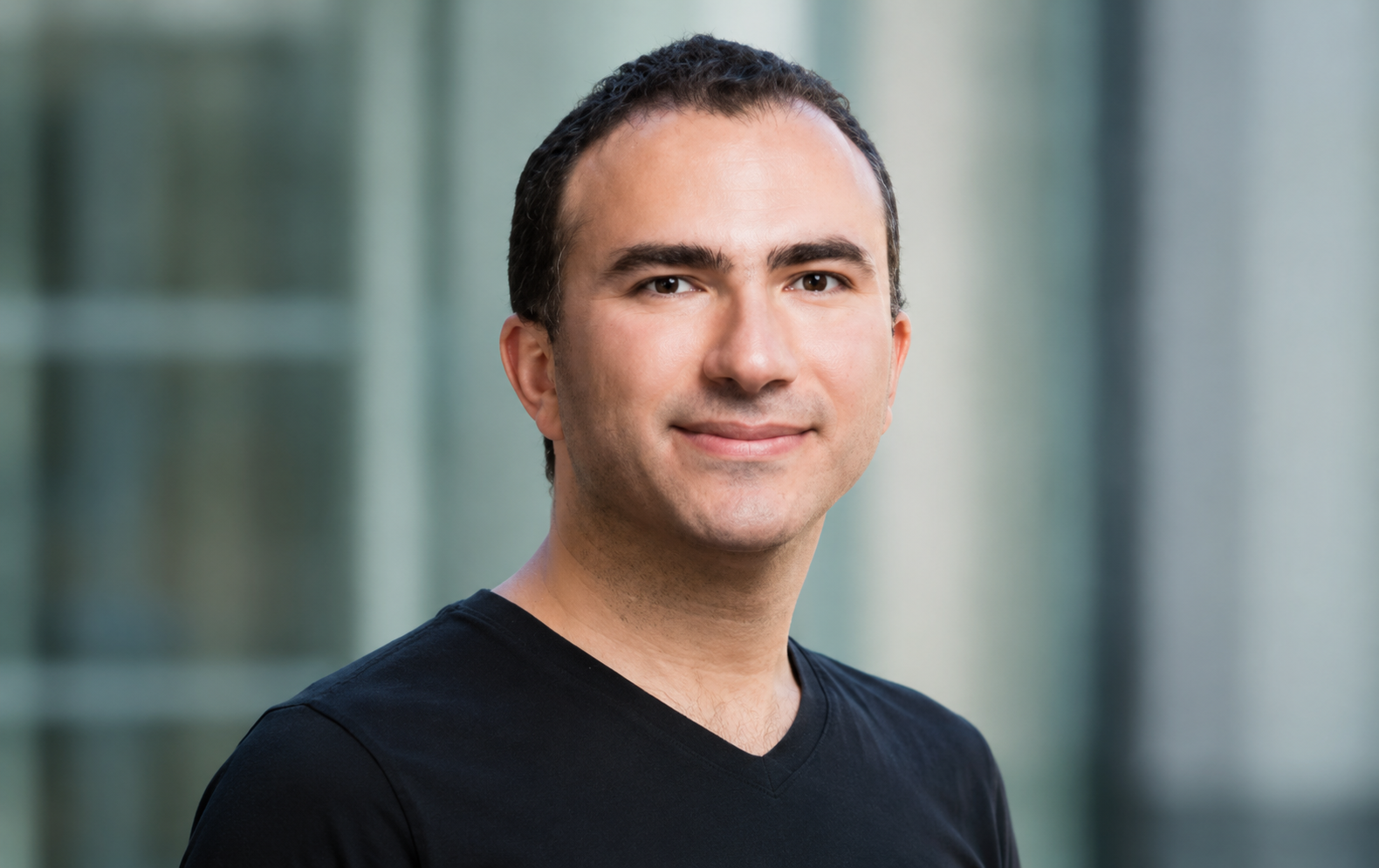
This is where Patrick Bowen and Neurophos enter the picture. Bowen is the CEO and co-founder of Neurophos, an Austin-based semiconductor company working on a different kind of AI chip. Instead of depending only on traditional electronic processing, Neurophos is developing photonic AI chips that use light to help AI systems run faster and more efficiently.
The idea sounds futuristic, but it is built around a very practical problem. AI companies need more compute, but they also need to control power use, heat, cost, and physical infrastructure. GPUs have carried the AI boom so far, but the industry is now looking for new hardware paths that can keep up with the next stage of demand. Patrick Bowen is positioning Neurophos as one of the companies trying to build that next path.
Who is Patrick Bowen
Patrick Bowen is best known as the CEO and co-founder of Neurophos. His work sits at the meeting point of photonic computing, metamaterials, AI inference, and semiconductor design. That mix matters because the next wave of AI hardware may not be solved by software improvements alone. It may also require a new way to move and process information at the chip level.
Bowen’s path is tied to advanced research in metamaterials, which are engineered materials designed to control waves, including light, in unusual ways. In the Neurophos story, that research background is important because the company’s approach depends on making optical components small enough and practical enough for real AI chips.
As a founder, Bowen is not only talking about a scientific breakthrough. He is trying to turn deep research into hardware that can be used by customers, tested inside data-center environments, and eventually produced at scale. That is a difficult jump. Many promising technologies look impressive in the lab, but far fewer become products that fit into the reality of modern AI infrastructure.
What Neurophos is building
Neurophos is building photonic AI inference chips. The company describes its core hardware as an optical processing unit, often shortened to OPU. The goal is to create a chip architecture that can handle major AI inference workloads with much higher speed and energy efficiency than traditional approaches.
In simple terms, Neurophos is trying to use light as a computing advantage. Traditional chips move and process information with electrons. Photonic chips use optical signals, which can move information very quickly and support high-bandwidth operations. For AI, this matters because many workloads depend on huge amounts of matrix math. If a chip can handle that work faster and with less energy, it can become valuable for the data centers running large AI systems.
Neurophos is not just building a single experimental chip. The company is working toward datacenter-ready OPU modules, a broader photonic compute system, and software support that could help customers use the hardware in practical AI workflows. That makes the company part of the wider race to build better AI accelerators for the infrastructure behind large language models, generative AI tools, and real-time intelligent systems.
Why AI inference needs a new kind of chip
Training AI models gets a lot of attention, but inference is where AI becomes a daily product. When someone asks an AI assistant a question, uses an AI search tool, runs a customer support bot, analyzes a document, or generates an image, inference is happening behind the scenes.
The challenge is scale. A single inference request may not sound like much, but billions of requests create a massive compute load. As AI models become more common in business software, phones, search engines, healthcare tools, financial platforms, creative apps, and enterprise workflows, inference demand keeps growing.
This creates a tough problem for data centers. They need faster chips, but they also have to deal with power limits, cooling, rack space, and cost. Current GPUs are extremely powerful, but they are also power-hungry. At a certain point, simply adding more GPUs becomes expensive and difficult.
That is why companies like Neurophos are looking at a deeper shift. The question is not only how to make existing chips a little better. The question is whether AI inference can be handled through a different physical approach that improves speed and power efficiency at the same time.
How light can make AI inference faster
The promise of photonic computing comes from the way light behaves. Optical signals can move quickly, carry a lot of information, and operate with less resistance than electrical signals in certain settings. For AI chips, this could help with speed, bandwidth, and parallel processing.
AI inference often depends on repeated mathematical operations across large matrices. These operations can become bottlenecks when models are large and requests are frequent. Neurophos is targeting that problem with an optical architecture designed to process AI workloads at high speed.
Instead of treating light as just a communication tool, Neurophos is using it as part of the compute process. That is the bigger idea behind the company’s optical processing units. If the architecture works at scale, it could let AI systems move through inference workloads faster while using less energy per operation.
This is why Patrick Bowen’s work has gained attention. He is not only building another AI chip company in a crowded market. He is betting that light-based hardware can change the way AI infrastructure scales.
Why metamaterials matter in the Neurophos story
One of the most important parts of Neurophos’ technology is its use of metamaterials. These engineered materials can manipulate light in ways that standard materials cannot. For photonic computing, that control is valuable because it can help shrink optical elements and make them more suitable for chip-scale systems.
Historically, one of the challenges with optical computing has been size. Optical components can be fast and efficient, but they can also be too large for dense chip designs. Neurophos is trying to overcome that problem by using tiny optical modulators based on metamaterial ideas.
That miniaturization is central to the company’s pitch. If optical components can be made small enough, dense enough, and compatible with semiconductor manufacturing, photonic AI chips become more realistic. It turns optical computing from a lab concept into something that could fit inside the hardware roadmap of AI data centers.
For readers who are not technical, the simplest way to understand this is that Neurophos is trying to make light-based computing compact. The company wants the speed advantages of optics without the size problems that have held back older optical systems.
How Patrick Bowen is positioning Neurophos in the AI chip race
The AI chip market is already crowded with major players and ambitious startups. NVIDIA dominates much of the current AI accelerator conversation, while companies such as AMD, Google, Amazon, and other semiconductor firms are investing heavily in custom AI hardware.
Patrick Bowen is positioning Neurophos differently. The company is not simply trying to build a slightly cheaper or slightly faster version of a standard GPU. It is working on a new hardware category built around optical processing units and photonic AI inference.
That distinction matters. If AI inference is limited by power, heat, and scaling, then a different physical architecture could become attractive. Neurophos is aiming at the part of the market where traditional silicon-based systems may struggle to keep up with demand.
This does not mean replacing every GPU overnight. AI infrastructure changes slowly because data centers need reliability, software support, supply chains, and proven performance. But Bowen’s strategy appears to be built around a clear belief: future AI workloads will need more than incremental improvements. They will need a serious shift in how compute is delivered.
Why the 110 million dollar Series A matters
Neurophos gained major attention when it raised $110 million in Series A funding. For a deep-tech semiconductor company, that kind of round matters because building chips is expensive. It takes time, specialized talent, manufacturing partnerships, testing, software, and long product cycles.
The funding also brought credibility because of the investor group around the round. Backers included Gates Frontier, M12, Carbon Direct Capital, Aramco Ventures, Bosch Ventures, Tectonic Ventures, Space Capital, and others. These are not casual investors chasing a small software trend. They are groups with interest in compute, energy, industrial technology, AI infrastructure, and deep technology.
For Patrick Bowen, the round gives Neurophos more room to move from breakthrough claims toward product execution. The company can expand its team, develop its integrated photonic compute system, work on datacenter-ready modules, and prepare hardware for early customer evaluation.
In semiconductor startups, funding alone does not prove success. But it does show that experienced investors see enough technical and market potential to support a difficult build. That is especially important in a category like photonic AI chips, where the upside can be large but the engineering challenges are also serious.
From Duke research to AI infrastructure
Neurophos has roots connected to Duke University research and the commercialization of metamaterials. That background gives the company a strong scientific foundation, but Patrick Bowen’s challenge is bigger than proving the science.
The real test is commercial translation. Can the company take advanced photonics research and turn it into reliable AI hardware? Can it build chips that perform well outside a controlled lab setting? Can it make the software stack usable for customers? Can it fit into the way data centers buy, deploy, and manage AI accelerators?
Those questions are what make the Neurophos story interesting. This is not just about a founder with a technical idea. It is about a founder trying to bridge research, chip design, AI demand, and the physical limits of modern data centers.
Bowen’s role is important because deep-tech companies need more than invention. They need leadership that can connect scientists, engineers, investors, customers, and manufacturing partners around a long-term product vision. That is the kind of work Neurophos will need as it moves from early momentum into real adoption.
What makes Neurophos important for AI data centers
AI data centers are becoming one of the most important parts of the global technology economy. They power chatbots, coding tools, image generators, enterprise AI platforms, search systems, robotics software, and many other applications. But they also require huge amounts of power.
That power problem is now a business problem. If compute demand grows faster than energy availability, data-center expansion becomes harder. If cooling costs rise, margins get squeezed. If companies cannot get enough chips or electricity, AI products become slower and more expensive to scale.
Neurophos is targeting this pressure point. Its photonic AI chips are designed to deliver high performance while reducing energy demands. If the company can deliver on that promise, its hardware could become attractive to AI infrastructure buyers looking for better performance per watt.
This is also why Neurophos fits into the larger conversation around sustainable AI. The future of AI is not only about smarter models. It is also about whether the industry can run those models without endlessly expanding power consumption. Optical processors could become one piece of that answer.
The challenge of moving from breakthrough to adoption
Patrick Bowen and Neurophos have a strong story, but the road ahead is not simple. Semiconductor companies face long timelines, high costs, and demanding customers. AI hardware buyers will want proof that the technology works not only in theory, but in real workloads.
The company will need to show performance, reliability, manufacturability, software compatibility, and economic value. It will also need to prove that customers can use its hardware without completely rebuilding their AI infrastructure from scratch.
This is where many deep-tech companies face their hardest stage. A breakthrough gets attention. Funding creates momentum. But adoption depends on execution.
For Neurophos, early customer evaluation will be an important step. If potential customers can test OPU modules and see real benefits in AI inference workloads, the company’s position could become much stronger. If the hardware proves difficult to integrate or scale, the path may take longer.
Patrick Bowen’s success will depend on turning the physics of photonic computing into a practical product story. That means making Neurophos not only impressive to researchers and investors, but useful to the companies building the next generation of AI data centers.
Why Patrick Bowen’s work stands out
What makes Patrick Bowen’s work stand out is the scale of the problem he is trying to solve. AI inference is not a small niche. It is becoming one of the central workloads of the digital economy. Every improvement in speed, efficiency, and cost can matter when multiplied across millions or billions of AI requests.
Neurophos is interesting because it is attacking that problem at the hardware physics level. Instead of asking only how to optimize software, the company is asking how to build a new kind of processor for the AI era.
Bowen’s story also reflects a larger shift in technology. For years, much of the AI conversation focused on models, data, and applications. Now the infrastructure behind AI is becoming just as important. Chips, energy, cooling, interconnects, and data-center design are shaping what AI companies can actually deliver.
By building Neurophos around photonic AI inference, Patrick Bowen is working in one of the most important layers of that stack. His achievement is not only founding a semiconductor startup. It is pushing a serious alternative into the conversation at a time when AI infrastructure needs new answers.