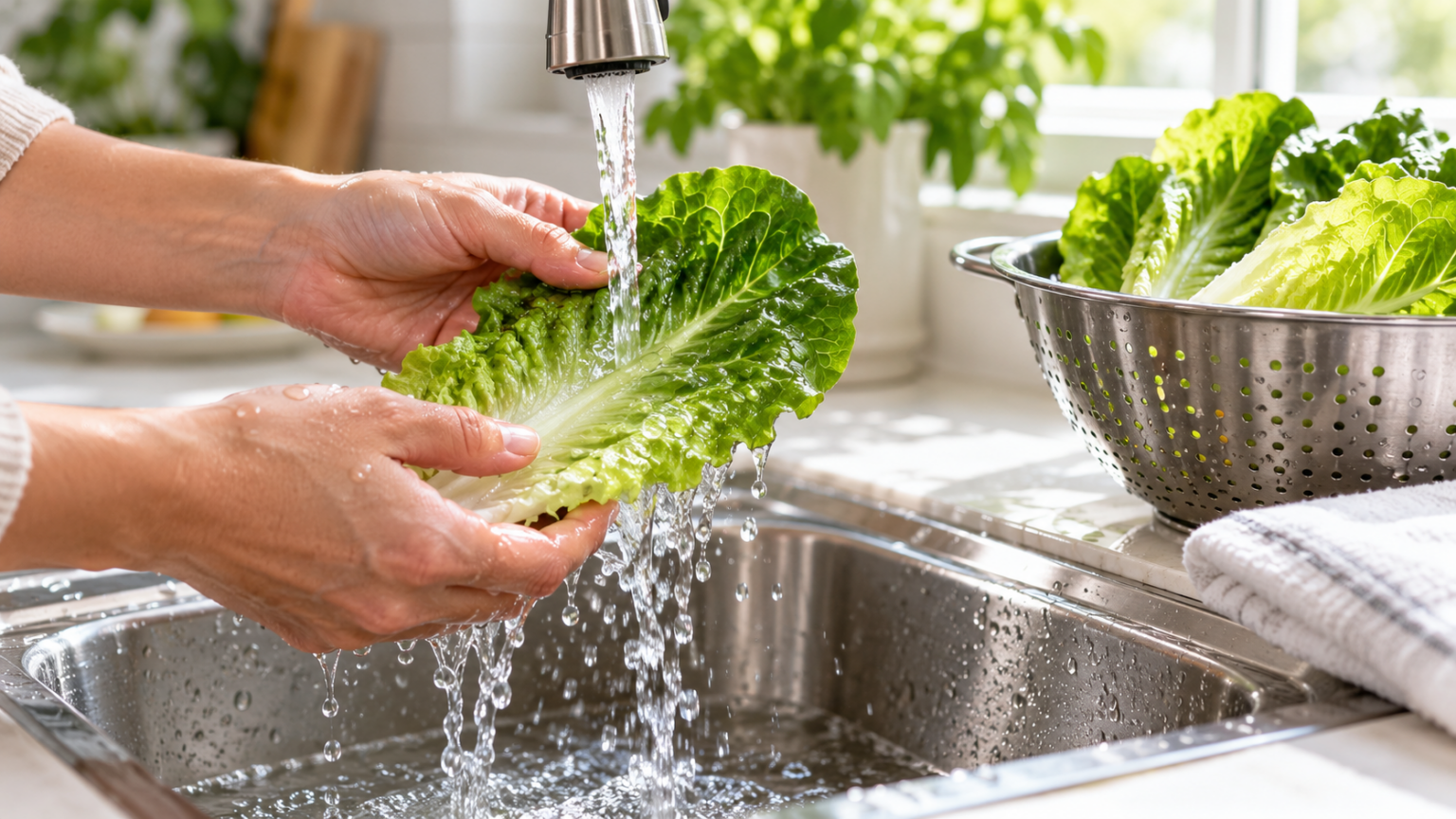
Rinse the leaves under cool running water for about 30 to 60 seconds, rubbing each one gently with your fingers. Pull off and toss the torn or bruised outer leaves first, then dry everything well before you eat or store it. That’s the whole job — no soap, no bleach, no commercial produce wash. The FDA is explicit on this: plain running water does the work, and detergents or produce washes can leave residues the agency hasn’t deemed safe to eat.
That’s the quick answer. Below we get specific, because a head of iceberg, a romaine heart, a bag marked “ready to eat,” and a muddy handful from your own garden each need a slightly different approach. We’ll also be straight with you about something most how-to pages skip: during an active outbreak, washing reduces risk but doesn’t erase it.
What you need to wash lettuce properly
The best thing to wash lettuce in is a colander or a salad spinner under the tap. Here’s the short list:
- Cool, clean tap water — cold or room temperature, not warm (warm water wilts leaves and can draw bacteria in through cut edges).
- A colander or salad spinner to rinse and drain.
- Paper towels or a clean kitchen towel for drying.
- A large bowl (optional) for soaking garden-grown or very sandy lettuce.
What not to use matters just as much. Skip dish soap — your liver doesn’t need the surfactant residue, and the FDA specifically advises against it. Skip bleach. Skip the bottled “veggie wash” sprays; independent testing has repeatedly found they’re no more effective than water, and you’re paying $4 to $6 for the privilege. Vinegar is the one gray area, and we’ll cover it below.
Step-by-step process by lettuce type
This is the gap in almost every ranking page: they pick one format and stop. Find your lettuce below.
Whole head lettuce (iceberg or butter)
- Remove the core: hold the head core-down and rap it firmly on the counter, then twist the core out. For butter lettuce, just cut it out with a paring knife.
- Peel off and discard the outer two or three leaves — they take the most handling and field exposure.
- Separate the remaining leaves and rinse each one under cool running water, rubbing gently to lift grit from the ribs.
- Drain in a colander, then dry.
How to clean romaine lettuce
Romaine traps sand and soil deep in its tightly stacked ribs, so loose leaves won’t rinse clean. To wash a romaine lettuce properly:
- Trim about half an inch off the base and twist or snap the leaves away from the stem one at a time.
- Discard the bruised outer leaves.
- Hold each leaf under running water and run your thumb up the center rib, where grit hides.
- If it’s still sandy, submerge the leaves in a bowl of cold water, swish for 20 seconds, lift them out (don’t pour — that dumps the sediment back over them), and give a final rinse.
Bagged and “pre-washed” lettuce
Bags labeled “washed,” “triple-washed,” or “ready to eat” are legally safe to eat straight from the bag — the processor has already washed them in a chlorinated bath you can’t replicate at home. In normal conditions, re-rinsing does little and can actually introduce contamination from your sink.
The nuance competitors bury: during a produce-safety alert, that calculus changes. Giving the leaves a quick rinse is reasonable, but understand what it buys you. A parasite like Cyclospora — the cause of the 2026 outbreak public-health officials have tracked — clings to leaf surfaces and resists chlorine, so no home rinse reliably removes it. When a specific lot is under recall, the only safe move is to throw it out, not wash it. Check the recall notice for the brand and lot code.
Garden-grown lettuce
Home-harvested lettuce carries more soil and the occasional insect, so give it the longest cycle:
- Separate the leaves and drop them into a large bowl or clean sink basin filled with cold water.
- Swish and let them soak two to three minutes so soil sinks.
- Lift the leaves straight up and out, leaving the grit behind. Change the water and repeat if the first bath is muddy.
- Finish with a rinse under running water, then dry.
Drying (don’t skip it)
Wet leaves spoil fast and turn slimy in the crisper. Spin them in a salad spinner, or lay them on a towel and blot. Dry lettuce stored in a container with a paper towel can last five to seven days — roughly double the life of leaves you put away damp.
Costs and timing
Washing lettuce is one of the cheapest food-safety habits you have.
| Method | Cost | Time per head |
|---|---|---|
| Running-water rinse | $0 | 1–2 minutes |
| Salad spinner (one-time buy) | $15–$35 | Adds ~30 seconds, saves drying |
| Soak method for garden lettuce | $0 | +3–5 minutes |
| Vinegar soak (optional) | ~$1 per batch | +5 minutes |
A salad spinner is the only purchase worth considering, and a $15 model works as well as a $40 one. It pays for itself in reduced waste within a month or two if you buy leafy greens weekly.
On the vinegar question people keep asking: a brief soak in a mix of roughly three parts water to one part white vinegar can cut surface bacteria modestly, but the FDA does not endorse it for routine use, it can leave a faint tang, and it won’t touch an outbreak pathogen. Plain running water remains the recommended standard.
Common mistakes to avoid
- Soaking in a still, filled sink. A sink basin isn’t sanitary, and standing water lets dislodged grit and microbes resettle. Use running water, or lift leaves out of a soak rather than draining through them.
- Skipping the outer leaves. They see the most field handling and bruising — removing them is free risk reduction.
- Reaching for soap or bleach. Both leave residues; neither is safe to ingest.
- Refrigerating wet leaves. The fastest route to a slimy bag of greens in three days.
- Assuming bagged “pre-washed” greens never need a thought during an alert. Normally fine; during a recall, check the lot and discard if it matches.
- Cross-contamination. Never prep lettuce on a board or with a knife you just used for raw meat without washing them first. This is the same discipline that matters with safely boiling a chicken breast or tracking how long deli meat stays good in the fridge.
A quick Florida note
Florida’s warm, humid kitchens work against you here — bacteria multiply faster and wet greens slime over sooner than they would up north. Dry your lettuce thoroughly and get it into a cold crisper quickly. And because much of the nation’s winter lettuce is grown in or shipped through the Southeast, Floridians often see produce recalls land close to home; it’s worth following food-safety notices in our Health section, the same way you’d track a mac & cheese recall.
Wash well, dry well, and when an official recall names your lettuce, don’t wash it — bin it.
FAQs
How do I clean romaine lettuce specifically?
Trim the base, snap the leaves off one at a time, and rinse each under cool running water while running your thumb up the center rib where grit collects. If it’s still sandy, swish the leaves in a bowl of cold water, lift them out, and give a final rinse. Discard the bruised outer leaves first.
Can I wash lettuce with vinegar or dish soap?
Never use dish soap — the FDA advises against it because residues aren’t safe to eat. A short water-and-vinegar soak (about 3:1) can modestly reduce surface bacteria, but it isn’t FDA-endorsed for routine use and won’t remove outbreak pathogens. Cool running water is the recommended standard.
Do I need to wash lettuce that’s labeled ‘washed’ or ‘ready-to-eat’?
Normally no — triple-washed bagged lettuce is processed in a chlorinated bath you can’t match at home, and re-rinsing can add contamination from your sink. The exception is an active recall or outbreak: check the brand and lot code, and if it’s affected, throw it out rather than trying to wash it clean.
How do I wash lettuce from my garden?
Separate the leaves, soak them in a bowl of cold water for two to three minutes so soil settles, then lift the leaves straight out (don’t pour them through the dirty water). Change the water and repeat if it’s muddy, then finish with a rinse under running water and dry thoroughly.
How long does washed lettuce last in the fridge?
Thoroughly dried lettuce stored in a container with a paper towel lasts about five to seven days. Leaves put away damp turn slimy in as little as two to three days, so drying is the single biggest factor in shelf life.
Does washing lettuce remove pesticides?
Rinsing under running water removes much of the surface pesticide residue along with dirt, which is the main reason to wash. It won’t remove everything, and no home method removes systemic residues absorbed into the plant — but a 30-to-60-second rinse meaningfully reduces what’s on the surface.