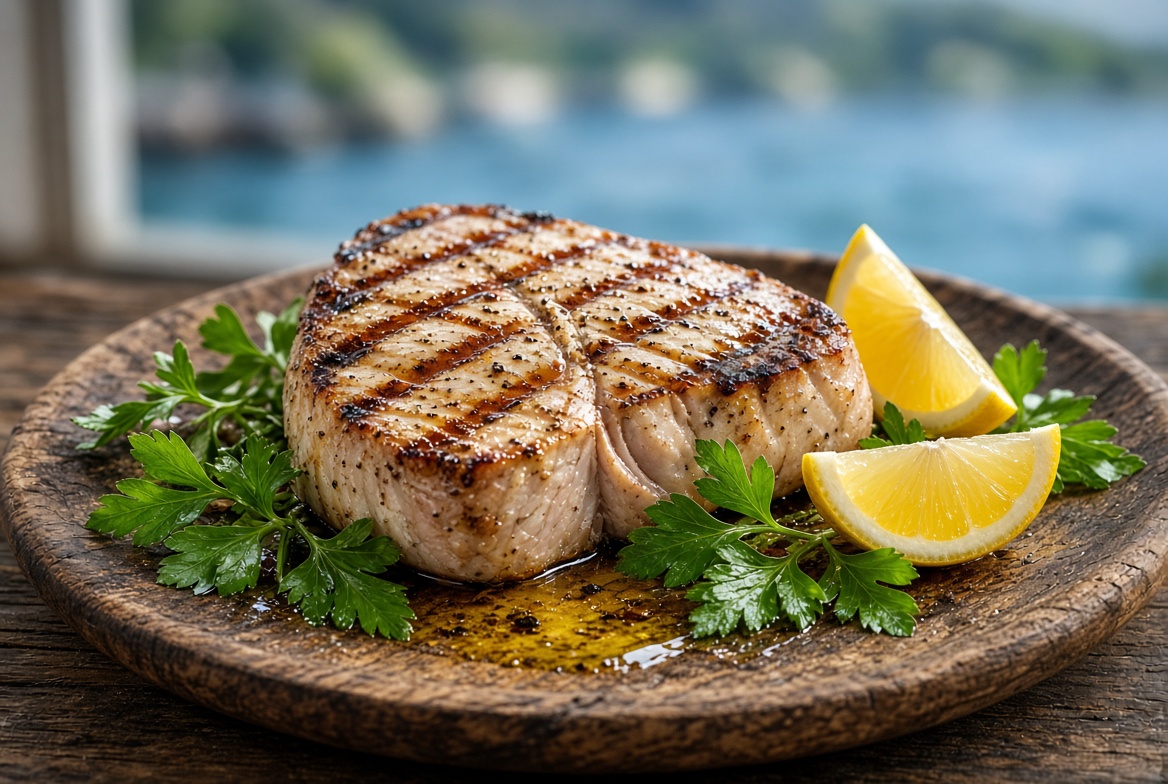
MKT on a menu means “market price.” The restaurant hasn’t printed a fixed price because what it pays for that item, usually seafood or premium steak, changes from day to day or week to week. So you have to ask your server for today’s price before you order. MKT means the same thing as MP, and asking about it is normal. Servers expect the question.
That covers the definition. The rest of this guide covers what MKT dishes usually cost, a simple way to ask, and what to do if the check is much higher than you expected.
What MKT Means on a Menu
- MKT = market price. MP means the same thing. Some menus spell out “Market” or “Market Price.”
- The price floats because the restaurant’s wholesale cost floats.
- It isn’t automatically expensive, but MKT items are usually among the priciest on the menu.
- Ask before you order. Get the price, the portion size and whether the price is per pound or per plate.
What Market Price Really Means on a Restaurant Menu
Most menu prices are set a few times a year. MKT items are the exceptions, ingredients whose wholesale cost moves too fast for a printed menu to keep up with. A seafood buyer can see a fish’s dock price jump 20% to 30% in a week after a stretch of bad weather keeps boats in port. Prime and dry-aged beef also follow commodity cycles, and beef prices have been near record highs for the past two years.
The restaurant has two options. It can print a price high enough to cover the worst week, or it can write MKT and charge based on what it actually paid. MKT also saves reprinting menus every time a supplier’s invoice changes.
MKT can work in your favor. When the catch is strong or a supplier has extra product, the market price can come in lower than a padded fixed price would be. The catch is that you can’t see the price, and that’s how diners end up surprised.
The viral steak example
MKT became a national search term in July 2025, when two sisters posted a TikTok about a dinner where two 12-ounce New York strip steaks listed only as “MKT” cost $52 each. They had expected something like $20 to $30. The restaurant didn’t do anything unusual. The diners just didn’t ask, and that’s the whole lesson.
Which Dishes Usually Carry MKT, and What They Typically Cost
These ranges are rough estimates for U.S. sit-down restaurants. Prices vary widely by city, season and how upscale the place is. Use them to budget, not to argue with your server.
| Item | How it’s usually priced | Typical range (estimate) |
|---|---|---|
| Whole Maine lobster | Per lobster, by weight | $45–$90 for 1.25–2 lb |
| Stone crab claws | Per pound, by size (medium to colossal) | $40–$60/lb medium; $90–$150+/lb jumbo and colossal |
| Oysters | Per piece, half dozen or dozen | $3–$5 each; $30–$55 per dozen |
| Fresh catch / fish of the day | Per plate | $30–$48 |
| Whole fried or grilled fish | Per fish or per pound | $35–$75 |
| Prime or dry-aged steak | Per cut, often by ounce | $55–$150+ |
| King crab legs | Per pound | $70–$130/lb |
Watch out for per-pound pricing. A whole fish quoted at “$32 a pound” sounds fine until the one they bring out weighs 2.3 pounds.
How to Ask About MKT Without Awkwardness
Asking is not rude or cheap, and it’s not unusual. Good servers expect it and some will tell you before you ask. Here’s what you can say:
- Basic: “What’s the market price on the strip tonight?”
- Portion check: “How big is that portion? Is it priced per plate or per pound?”
- For whole fish or lobster: “About how much does the one you’d bring me weigh, so roughly what will it come to?”
- For the table: “Could you run through the market prices on the specials before we order?”
Three habits help even more:
- Ask before you order, not after the plate arrives. A price you hear before ordering is the one you can hold the restaurant to.
- Check the online menu or call ahead. Many restaurants post their current market prices online or on a QR menu.
- Repeat the number back. Saying “So $58 for the 16-ounce, great” fixes the quote in everyone’s mind.
MKT vs. MP vs. AQ and Other Menu Abbreviations
| Code | Stands for | What to do |
|---|---|---|
| MKT | Market price | Ask the price and portion |
| MP | Market price | Same as MKT |
| AQ | As quoted (by your server) | Ask. The price is whatever they tell you that day |
| Market fish | Today’s catch, chosen by supply | Ask the species, preparation and price |
| V | Vegetarian | May still contain dairy or eggs |
| VE / VG | Vegan | No animal products |
| VV | Varies (often vegan or “vegan version available”) | Check the menu’s key |
| GF | Gluten-free | Ask about cross-contact if you have celiac disease |
If you see “MK” on a menu, it’s almost always a shortened MKT or a typo. Outside of menus, MKT can be a restaurant name, a store chain or a stock ticker, but on a food menu it means market price. Restaurant codes work a lot like texting shorthand: short, assumed to be obvious, and confusing if you don’t know them. We’ve covered that in what DW means in texting and what TFW stands for.
Can a Restaurant Charge Whatever It Wants for MKT?
Restaurants are generally free to set their own prices. U.S. consumer-protection laws, including Florida’s Deceptive and Unfair Trade Practices Act, are aimed at misleading practices, not high prices. In practice:
- You’re entitled to a straight answer when you ask. A server who won’t give you a price, or quotes one number and charges another, is a problem.
- The quoted price should be the billed price. If the bill is higher, calmly ask for a manager, explain what you were told and ask for the difference to be taken off. Most restaurants will do it.
- Keep records. Photograph the menu and the receipt. If a manager won’t help and the gap is large, you can dispute the charge with your card issuer or file a complaint with your state’s consumer-protection office.
This is general information, not legal advice. Rules on price disclosure vary by state and city.
Florida Note: Market Price at Seafood Restaurants
In Florida, MKT shows up most often on seafood, and seasons have a big effect on price.
- Stone crab: Season runs Oct. 15 to May 1. Prices are usually highest at the start and swing with the harvest. A weak year can push jumbo and colossal claws past $100 a pound at well-known Miami spots.
- Spiny (Florida) lobster: Commercial season runs Aug. 6 to March 31, and it’s often sold as MKT tails.
- Grouper and snapper: Federal and state harvest limits and closures affect supply, which is why “fresh grouper” is so often listed as MKT. If the price seems low, ask what species it is.
In tourist areas, ask for the weight and the per-pound price, and compare with a casual local fish house nearby. The same claws often cost noticeably less a few miles off the beach. You’ll find more dining guides in our Food & Lifestyle section, and if you’re holding restaurant gift cards, see whether you can use them on DoorDash.
Bottom Line
MKT means market price. It’s an honest pricing method for ingredients whose cost moves, but it puts the job of asking on you. Ask for the price and the portion before you order, repeat the number back, and you won’t end up with a $52-steak story of your own.
FAQs
What does MKT mean on a steak menu?
It means market price. The steak, usually a prime, dry-aged or specialty cut, is priced based on the restaurant’s current beef cost. Ask for the price and the weight in ounces before you order. MKT steaks commonly run $55 to $150 or more.
Is MKT the same as MP on a menu?
Yes. MKT and MP both mean market price. AQ, or ‘as quoted,’ works almost the same way: the price is whatever your server tells you that day.
Is it rude to ask the price of a market price item?
No. Servers expect the question, and restaurants list MKT knowing you’ll ask. A simple ‘What’s the market price on that tonight?’ is completely normal, even at high-end restaurants.
What does market fish mean on a menu?
Market fish is the restaurant’s fish of the day, chosen based on what’s fresh and available from its suppliers. Ask which species it is, how it’s prepared and what it costs, because both the fish and the price can change daily.
Can a restaurant charge you more than the server quoted?
It shouldn’t. If your bill is higher than the price you were told, calmly ask a manager to fix it. Keep a photo of the receipt, and if it isn’t resolved you can dispute the charge with your card issuer or contact your state consumer-protection office.
Does market price mean it’s more expensive?
Not always. Market price follows the restaurant’s actual cost, so it can drop when supply is strong. MKT items do tend to be premium dishes like lobster, stone crab and prime steak, though, so they’re usually among the priciest on the menu.