Fresh shark that has been handled properly tastes mild, slightly sweet and meaty. It has a firm, dense texture closer to swordfish or a pork chop than to flaky white fish. Shark that wasn’t bled and iced quickly after the catch is a different story. It can pick up a sharp ammonia smell and taste, and that’s where its reputation for tasting “like pee” comes from. For most people, how the fish was handled matters more than the species.
What Does Shark Meat Taste Like?
In short:
- Flavor: mild and clean, a little sweet, with less “fishy” taste than salmon or mackerel.
- Texture: firm, lean and steak-like. It holds together on a grill and doesn’t flake apart.
- Closest comparisons: swordfish first, then mahi-mahi, alligator and chicken thigh.
- The catch: any shark that was badly handled tastes of ammonia, and no seasoning fully hides it.
So does shark taste like fish? Yes, but only mildly. People who say it “tastes like chicken” are mostly describing the texture and the lean, neutral flavor.
What It Means: Why Shark Can Taste Like Ammonia
Shark biology explains why it tastes different from other fish. Bony fish like snapper and grouper control their salt balance mostly through their gills and kidneys. Sharks and rays do it another way. They hold large amounts of urea and a compound called TMAO (trimethylamine N-oxide) in their blood and tissues, which keeps their bodies balanced with seawater.
When the shark is alive, that urea isn’t a problem. Once it dies, bacteria and enzymes start breaking the urea down into ammonia, and the TMAO turns into the compounds behind a “fishy” smell. Warmer temperatures and longer waits speed this up. A shark left on a hot deck for an hour can be badly off by the time it reaches the cooler.
Why does shark taste like pee? (The myth vs. the reality)
Some websites say sharks “urinate through their skin” and that this is what flavors the meat. That isn’t accurate. The off-taste comes from urea that was already in the tissue turning into ammonia after death. In practice the result is the same: good handling prevents it, and bad handling causes it.
Experienced anglers and fishmongers do this to keep shark tasting clean:
- Bleed it right away. Cut the tail or gills just after the catch so blood carrying urea drains out.
- Ice it hard. Get the fish on ice or into a slurry within minutes, not hours.
- Trim the dark meat. Remove the dark red bloodline strip. It holds the strongest flavor.
- Soak before cooking. Soak the steaks for 2 to 4 hours, refrigerated, in milk, buttermilk or lightly salted water. A splash of lemon juice also helps.
When buying shark, smell it before anything else. Fresh shark smells like clean ocean. If it smells even faintly of ammonia or cleaning products, don’t buy it. Soaking can soften a mild off-note, but it won’t save meat that has gone bad.
Key Facts and Context: Flavor and Texture by Species
Species matters too. Here’s how the sharks people most often eat compare:
| Species | Flavor | Texture | Notes |
|---|---|---|---|
| Shortfin mako | Mild, slightly sweet; often called the best-tasting shark | Very firm, swordfish-like | Atlantic retention is currently prohibited in U.S. waters; mako sold in the U.S. is usually Pacific or imported |
| Thresher | Clean, mild, a little richer than mako | Firm, tight grain | Prized on the U.S. West Coast |
| Blacktip | Mild, neutral | Firm but slightly softer than mako | One of the most common sharks kept in Florida and the Gulf |
| Bonnethead | Delicate, mild | Tender, smaller fillets | A small hammerhead relative that tests among the lowest for mercury |
| Spiny dogfish | Mild, slightly sweet | Flaky for a shark | Sold in UK fish-and-chip shops as “rock salmon” or “huss” |
| Bull shark | Stronger, gamier | Coarser, denser | Spends time in brackish water; often higher in mercury; less prized |
Does shark taste like swordfish, tuna or chicken?
- Swordfish: the best match. Both are dense and mild, but shark is a bit leaner and can dry out sooner.
- Tuna: similar in firmness, but shark is paler and much milder, without tuna’s rich, red-meat flavor. Shark also shouldn’t be served rare.
- Chicken: similar in feel, since both are lean and pull apart in strands. The flavor is still clearly seafood.
- Alligator: Floridians who have eaten both often say they’re surprisingly alike. Both are mild, a little chewy, and take seasoning well.
Examples and Use Cases: How Shark Is Eaten
Shark steaks: grilled, blackened or fried
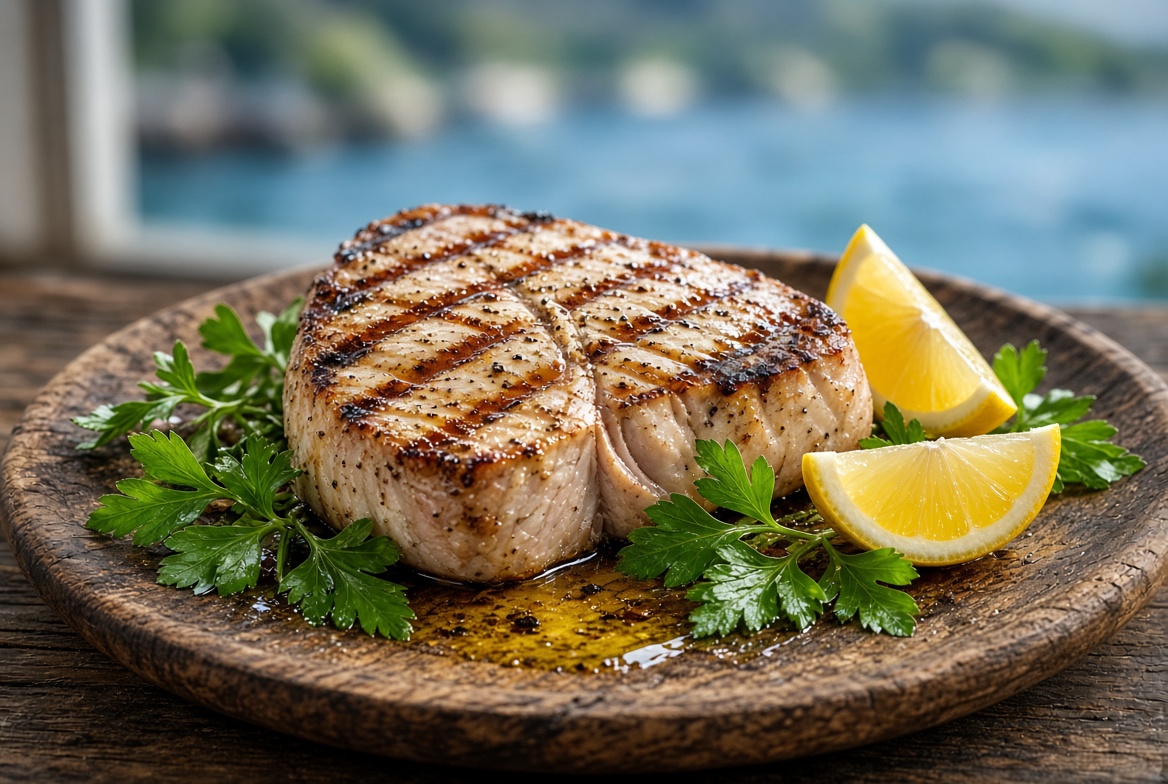
Most Americans who try shark eat it as a steak 1 to 1.5 inches thick. Because it’s firm, it stays together on the grill and on kebab skewers, which is why it works well in tacos and blackened dishes. Grill it over medium-high heat for about 4 to 5 minutes per side, until the center is opaque and reaches 145°F. Shark has little fat, so take it off the heat as soon as it’s done. Overcooked shark is dry and rubbery.
Strong flavors work well with it. Try citrus marinades, Cajun blackening spice, jerk seasoning, or a sweet-and-sour glaze. A marinade with lemon or lime juice also helps neutralize any leftover ammonia.
What does fermented shark (hákarl) taste like in Iceland?
Hákarl is the main exception to “shark is mild.” It’s Iceland’s traditional fermented Greenland shark. Fresh Greenland shark is toxic because it carries so much TMAO and urea. To make it safe, it’s pressed and fermented for 6 to 12 weeks, then hung to dry for several months.
The result smells strongly of ammonia, a lot like a cleaning product, and tastes pungent, cheesy and fishy. The texture ranges from chewy to rubbery. Many visitors say it’s one of the hardest foods they’ve ever tried. Locals traditionally eat small cubes chased with a shot of Brennivín, a caraway schnapps. So when someone asks why fermented shark tastes like ammonia, it’s because ammonia is a deliberate part of the process.
What does shark fin soup taste like?
The fin itself has almost no flavor. It’s prized for texture: thin, gelatinous cartilage threads that are a little chewy and slippery, somewhat like glass noodles. All the flavor in shark fin soup comes from the broth, usually rich chicken or ham stock.
Fin soup also carries serious ethical and legal problems. Finning (cutting off the fins and throwing the shark back) has pushed down shark populations worldwide. The federal Shark Fin Sales Elimination Act, signed in December 2022, bans buying and selling shark fins in the U.S. Many restaurants now serve imitation fin soup made with gelatin or mung bean threads, which has a similar texture.
What people on Reddit say about eating shark
Fishing and cooking forums tend to agree on a few points. People who caught, bled and iced their own blacktip or mako usually call it “the best fish nobody eats” and compare it to swordfish. Bad experiences nearly always trace back to grocery-store shark of unknown age, or to a fish that sat in the sun before it was cleaned. Many posters also say the milk soak makes a noticeable difference.
Common Questions About Eating Shark
Is shark meat safe to eat?
For most adults, eating it occasionally is fine. Mercury is the real issue. Sharks are long-lived predators, so mercury builds up in their meat. The FDA and EPA list shark among the “choices to avoid” for people who are pregnant or breastfeeding, those who may become pregnant, and young children. It’s on the same list as swordfish, king mackerel and bigeye tuna. Other adults should keep it to an occasional meal. Smaller species like bonnethead and dogfish generally contain less mercury than big bull or mako sharks.
Store shark the way you would any fresh seafood. Keep it cold, cook it within a day or two, and follow the same fridge habits we cover in how long deli meat lasts in the fridge.
How do you get the ammonia taste out of shark?
Soak the meat in milk or buttermilk for 2 to 4 hours in the refrigerator, then rinse and pat it dry. Lemon juice or a vinegar-based marinade also works. These fixes only help with a mild off-note. If the meat smells strongly of ammonia, throw it out.
Florida Relevance: Catching and Eating Shark in the Sunshine State
Florida is one of the few places in the U.S. where you’ll see shark on a menu now and then, usually blackened shark bites or shark tacos at Gulf Coast and Keys seafood shacks. Most of what’s landed and eaten locally is blacktip, plus some Atlantic sharpnose and bonnethead.
If you plan to keep your own catch, check the current Florida Fish and Wildlife Conservation Commission (FWC) rules first. Key points as of this writing:
- Anglers 16 and older fishing for sharks from shore need a free shore-based shark fishing permit, which requires completing a short online course.
- Many species are prohibited, including great, scalloped and smooth hammerheads, tiger, lemon, nurse, sandbar, dusky and great white sharks. Release them immediately, and don’t take them fully out of the water.
- The recreational bag limit is low: generally one shark per person per day, with a vessel cap. Size limits vary by species.
- Sharks must be landed whole, with fins naturally attached.
Rules change, and federal rules apply beyond state waters, so confirm everything on the FWC website before you go out.
If you’d rather order seafood than catch it, see our guide to Wicker Park Seafood & Sushi Bar at O’Hare. If the “tastes like chicken” comparison has you leaning toward poultry tonight, our chart on how long to boil a chicken breast has the timing.
FAQs
What does shark meat taste like?
Fresh, properly handled shark meat is mild, lean and slightly sweet, with a firm, steak-like texture. Swordfish is the closest comparison. Badly handled shark can taste of ammonia.
Does shark taste like chicken or fish?
It tastes like a mild fish, but its lean, dense texture is similar to chicken. That’s why some people make the comparison. Most cooks say it tastes most like swordfish.
Why does shark taste like ammonia or pee?
Sharks carry urea in their tissues to balance their salt levels. After death, that urea breaks down into ammonia, especially if the shark isn’t bled and iced quickly. It has nothing to do with sharks urinating through their skin.
How do you get the ammonia taste out of shark meat?
Bleed and ice the shark right after the catch and trim off the dark red meat. Before cooking, soak the steaks in milk, buttermilk or lemon-water in the fridge for 2 to 4 hours. Discard any meat that smells strongly of ammonia.
What does fermented shark (hákarl) taste like?
Iceland’s hákarl smells strongly of ammonia and tastes pungent, cheesy and fishy, with a chewy texture. It’s an acquired taste, traditionally eaten in small cubes with Brennivín schnapps.
Is shark meat safe to eat?
Most adults can eat it occasionally, but shark is high in mercury. The FDA advises people who are pregnant or breastfeeding, those who may become pregnant, and young children to avoid it.