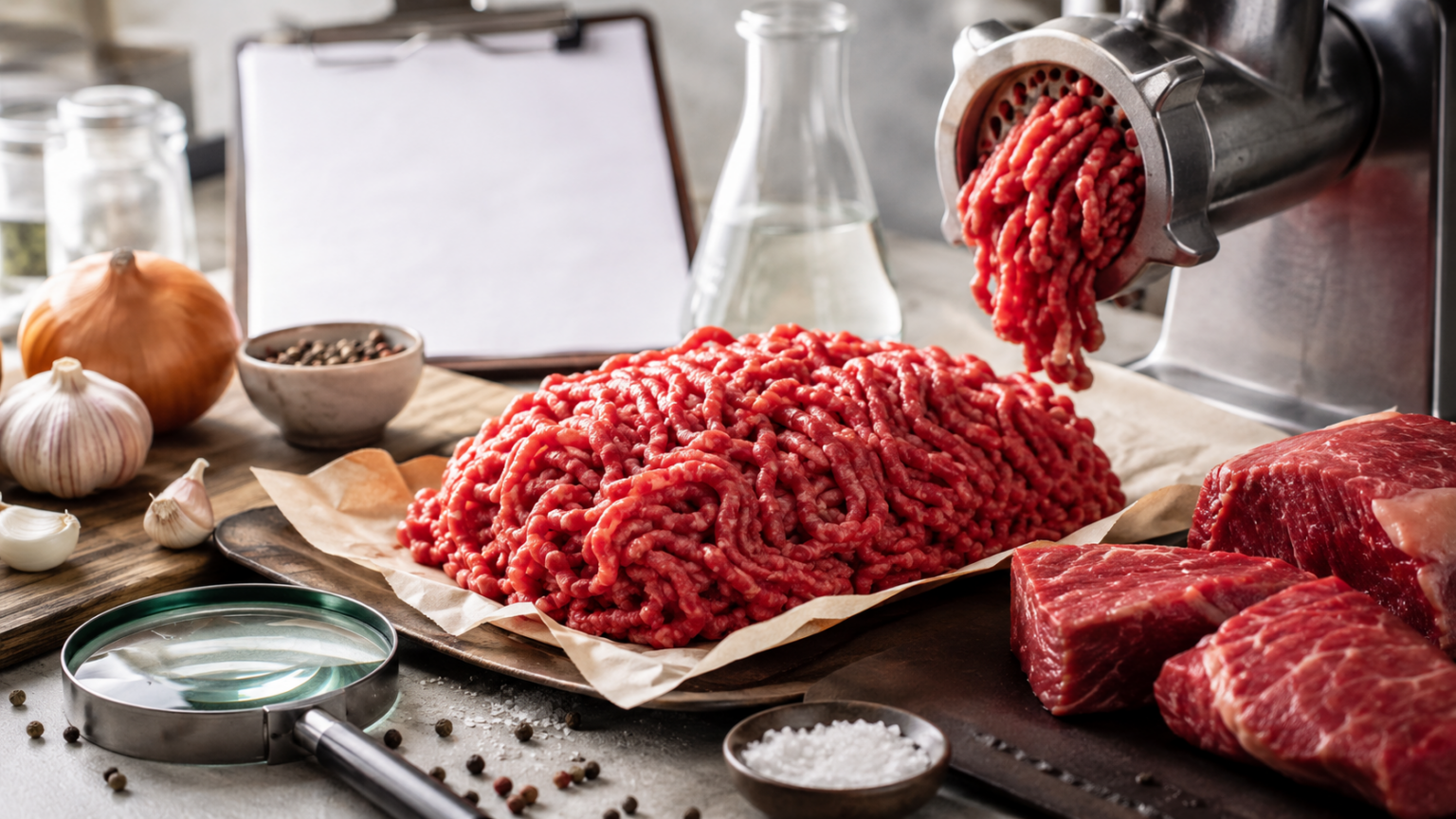
Plain ground beef is minimally processed, not “processed meat” in the way health researchers use that term. Grinding is a mechanical step — muscle cut into smaller pieces — not the salting, curing, or smoking that defines processed meats like bacon or hot dogs. Under the World Health Organization’s cancer-research framework, plain ground beef is still classified as red meat, not processed meat.
The caveat matters, though: that answer flips the moment something gets added. Salt, phosphates, nitrites, or fillers move a product from “just beef” toward processed territory. So the honest response to is ground beef processed food is: it depends on what’s on the label.
What it means: red meat vs. processed meat vs. minimally processed
Two different systems are getting tangled together, and that’s why you’ll find contradictory answers online. They measure different things.
The WHO/IARC system (built for cancer risk)
In 2015, the International Agency for Research on Cancer — the WHO’s cancer arm — sorted meat into two buckets. Red meat is unprocessed mammalian muscle: beef, pork, lamb. IARC’s definition explicitly includes minced or ground meat. Processed meat is meat “transformed through salting, curing, fermentation, smoking, or other processes to enhance flavour or improve preservation.” That’s bacon, ham, sausage, hot dogs, deli slices, and jerky.
By this definition, your standard tray of ground chuck is red meat. It was never salted or cured — it was cut and ground.
The NOVA system (built for processing level)
Nutrition researchers use a separate framework called NOVA, which ranks foods by how much industrial processing they’ve had. It has four groups:
- Group 1 — unprocessed or minimally processed: fresh, chilled, or frozen meat, including ground beef with nothing added.
- Group 2 — culinary ingredients: salt, oil, sugar.
- Group 3 — processed foods: Group 1 foods with Group 2 ingredients added for preservation, like salted or cured meats.
- Group 4 — ultra-processed: industrial formulations with additives, fillers, and preservatives — think many frozen breaded patties or heavily seasoned meat products.
Plain ground beef lands in NOVA Group 1. So whether you ask is ground meat processed using the WHO or the NOVA lens, you get the same core answer: minimally processed, not the risky kind.
Key facts and context
Why bacon and hot dogs are treated differently
IARC classifies processed meat as a Group 1 carcinogen — the same evidence category as tobacco smoke, which sounds alarming but describes strength of evidence, not equal danger. Red meat sits in Group 2A, “probably carcinogenic.” The distinction rests largely on the compounds created by curing and high-heat preservation, including nitrosamines. Plain ground beef doesn’t carry the processed-meat classification because it hasn’t been through those steps.
That’s also why is hamburger meat processed gets a different answer than is a hot dog processed, even though both are ground. The hot dog is emulsified, salted, cured, and preserved. The hamburger patty you form from plain ground beef is not.
The “pink slime” question people actually worry about
This is the part most articles skip, and it’s the single biggest reason shoppers distrust store-bought ground beef. Lean finely textured beef (LFTB) — nicknamed “pink slime” — is beef trimmings that are warmed, spun to separate lean meat from fat, and treated with a puff of ammonium hydroxide or citric acid to reduce bacteria like E. coli. It’s then blended into some ground beef.
Is that “processed”? It’s a legitimate gray area. The USDA considers LFTB safe and beef, not an additive, so products containing it aren’t required to say “contains LFTB” on the label. If you want to avoid it, look for ground beef labeled “100% ground beef,” “ground chuck/round/sirloin,” or from a butcher who grinds whole cuts. Those single-source grinds don’t contain LFTB.
Food safety still applies
Grinding mixes surface bacteria throughout the meat, which is why USDA FSIS says to cook ground beef to an internal temperature of 160°F (71°C) — hotter than the 145°F recommended for a whole steak. “Minimally processed” doesn’t mean “eat it rare.”
Examples: where common products actually fall
Here’s how everyday beef products sort out. The pattern is simple — the more that’s added, the further right it moves.
| Product | Classification | Why |
|---|---|---|
| Plain 80/20 ground beef | Unprocessed (red meat) | Only ingredient: beef |
| Ground beef with LFTB blend | Gray area | Ammonia/citric-acid-treated trimmings, but still labeled beef |
| Seasoned taco or meatloaf mix | Leaning processed | Added salt, spices, sometimes phosphates or fillers |
| Frozen pre-formed seasoned patties | Often processed / ultra-processed | Binders, salt, preservatives |
| Corned beef, jerky, sausage | Processed meat | Salted, cured, or fermented |
The 10-second label test
Turn the package over and read the ingredients:
- Just “beef”? It’s unprocessed red meat.
- See salt, sodium phosphate, nitrites/nitrates, or fillers? It’s crossing into processed.
- A long list of additives, binders, and flavorings? You’re into ultra-processed.
That single test answers is ground beef a processed food for the specific package in your hand — which is more useful than any blanket yes or no. If you care about how added sugars and additives sneak into “healthy” groceries, our look at what the healthiest soda actually is uses the same read-the-label approach.
Florida relevance
Florida is a bigger beef state than most people expect — it consistently ranks among the top dozen states for beef cow inventory, with large cow-calf operations across the central and southern counties. Most of that cattle is shipped out to be finished and processed elsewhere, so the ground beef in a Florida grocery case is typically national supply. The label test above applies the same way in Tampa as it does anywhere else. For everyday nutrition decisions, pairing lean protein choices with movement matters more than the ground-vs-processed debate — see our goal-based guide to how many miles you should walk a day for more on that side of the equation. You’ll find more evidence-based explainers like this in our Health section.
The bottom line
Plain ground beef is minimally processed red meat, not “processed meat” in the health-risk sense — that label belongs to bacon, hot dogs, deli meat, and jerky. The answer only changes when something gets added, and the ingredients list tells you instantly. Read it, and you’ll never have to guess whether your ground beef is processed again.
FAQs
Is hamburger meat processed?
Plain hamburger meat is not processed meat — it’s minimally processed red meat that’s simply been ground. It only becomes processed if salt, preservatives, binders, or seasonings are added, as with frozen pre-formed seasoned patties.
Is ground beef considered processed meat?
No. Under the WHO/IARC framework, plain ground beef is classified as red meat, not processed meat. Processed meat refers to meat transformed by salting, curing, smoking, or fermentation, like bacon, ham, and hot dogs.
Is ground beef a processed food?
Plain ground beef falls into NOVA Group 1 (minimally processed), so it’s not a processed food. Grinding is a mechanical step. Seasoned mixes or additive-laden patties move into processed or ultra-processed territory.
Is ground beef treated with ammonia?
Some ground beef contains lean finely textured beef (‘pink slime’), which is treated with ammonium hydroxide to reduce bacteria. It isn’t required on the label. Choosing ‘ground chuck,’ ‘ground sirloin,’ or butcher-ground beef avoids it.
Is ground meat processed or unprocessed according to WHO?
The IARC/WHO explicitly counts minced or ground meat as unprocessed red meat, not processed meat. Red meat is rated Group 2A (probably carcinogenic), while processed meat is Group 1.
Why is ground beef sometimes called processed?
Because ‘processing’ can mean any mechanical change, some sources loosely label grinding as processing. But in health research the term specifically means preservation methods like curing and salting, which plain ground beef hasn’t undergone.