Short version: potato salad is healthy-ish, not a health food. The potato itself is genuinely good for you — it delivers fiber, potassium, vitamin C, and a type of blood-sugar-friendly starch when it’s cooked and cooled. The problem is almost never the potato. It’s the dressing. A traditional mayonnaise-based potato salad runs roughly 350 to 500-plus calories and 20 to 30 grams of fat per cup, which is why registered dietitians treat the classic deli version as an occasional side rather than an everyday staple.
The good news is that this is one of the easiest dishes to fix. Swap the base, pick the right potato, and mind your portion, and you can cut the calories nearly in half without losing much of what people actually love about it.
What “healthy” really means for potato salad
To answer whether potato salad is good for you, split the dish into its two parts and judge them separately.
The potato: better than its reputation
A medium potato is about 160 calories, has more potassium than a banana, and — skin on — contributes 3 to 4 grams of fiber. According to the USDA’s FoodData Central, potatoes also supply vitamin C and vitamin B6. Left plain, they’re a whole food, not junk.
There’s also a lesser-known trick. When you cook potatoes and then chill them, some of their starch converts to resistant starch, which your body digests more slowly. As Healthline notes in its review of potatoes and blood sugar, cooling can meaningfully lower a potato’s glycemic response compared with eating it hot. In practical terms, potato salad — cooked, cooled, then served cold — is one of the gentler ways to eat a potato where blood sugar is concerned.
The dressing: where it goes wrong
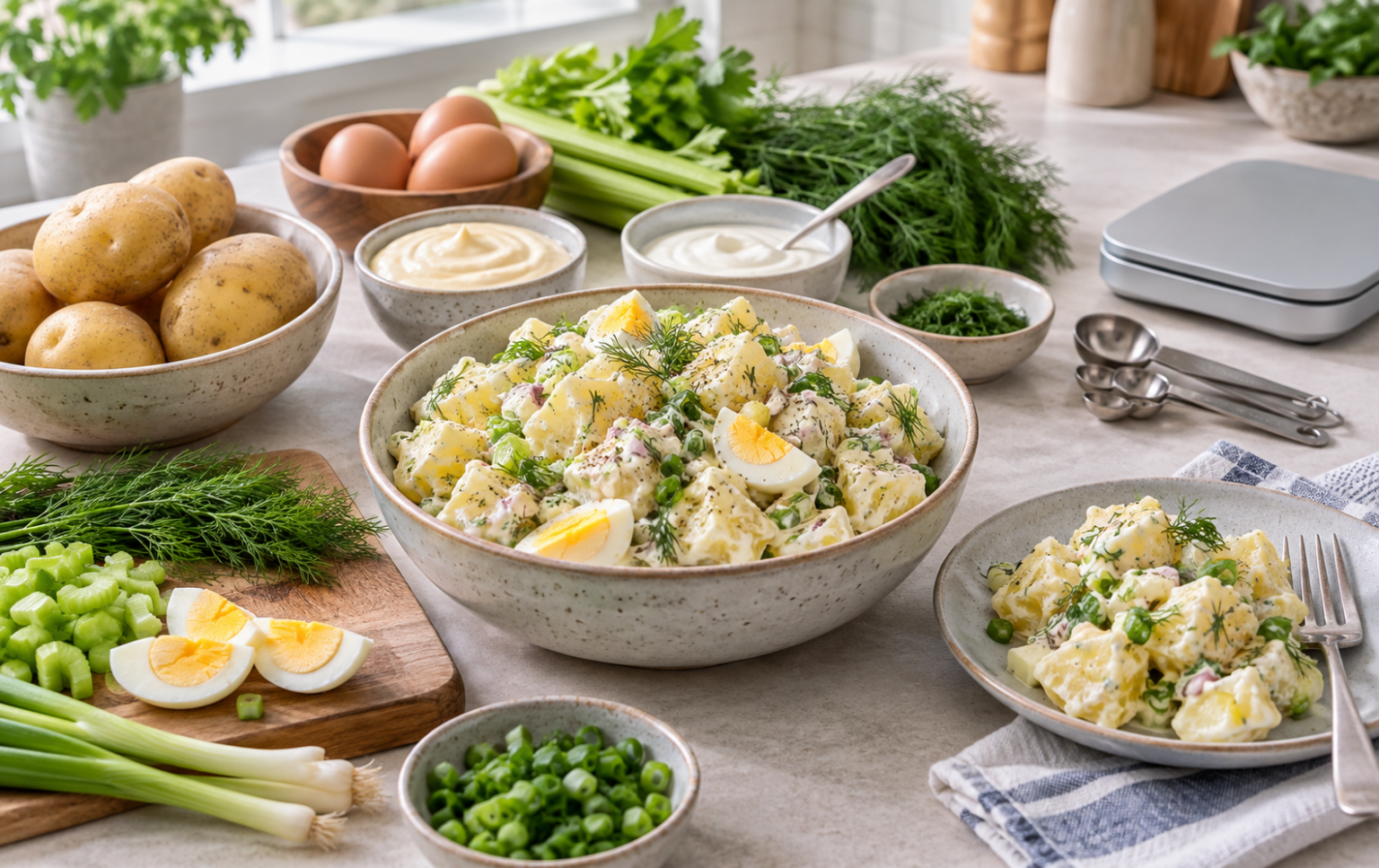
Mayonnaise is mostly oil, so a generous scoop is where the saturated fat, calories, and often a lot of sodium enter the picture. Store-bought and deli versions frequently add sugar too. Mix-ins swing both ways: eggs add protein, and celery, radish, onion, and bell pepper add fiber and crunch for almost no calories. Bacon and extra salt push it back in the wrong direction.
Key facts and context: calories, fat, and carbs
Here’s the comparison the recipe blogs bury under their ingredient lists — traditional versus lightened-up, in one place. Figures are approximate per 1-cup serving and drawn from USDA FoodData Central values and standard recipe nutrition panels.
| Version (1 cup) | Calories | Fat | Carbs | Protein |
|---|---|---|---|---|
| Traditional mayo-based | ~350–500 | ~20–30 g | ~26–30 g | ~3–7 g |
| Greek yogurt-based | ~230–280 | ~8–12 g | ~28 g | ~9–12 g |
| Olive oil & vinegar (German-style) | ~200–260 | ~9–13 g | ~30 g | ~4 g |
Two things stand out. First, the carbohydrate count barely changes — the potato is the potato no matter what you dress it in. What moves is fat and calories, and that’s driven almost entirely by the base. Second, a Greek-yogurt version can roughly double the protein, which helps with fullness. Watch sodium too: a single cup of deli-case potato salad can carry 500 to 900 mg, a meaningful chunk of the day’s limit before you’ve touched anything else.
How to make potato salad healthier
You don’t need a special recipe. Five adjustments do most of the work:
- Swap the base. Replace half or all of the mayo with plain Greek yogurt, or go mayo-free with a mustard, olive oil, and vinegar dressing. Both cut saturated fat; yogurt also adds protein.
- Pick the right potato. Red or new potatoes with the skin left on give you more fiber and a lower glycemic hit than peeled russets.
- Cook, then cool. Boiling the potatoes ahead and refrigerating them before you dress the salad builds resistant starch — genuinely useful if you’re watching blood sugar.
- Bulk it up with vegetables. Celery, radish, red onion, and bell pepper add volume, crunch, and antioxidants for almost no calories, so a satisfying portion costs you less.
- Treat it as a side. Half a cup to a cup alongside a lean protein is a reasonable portion. The whole picnic bowl is not.
If you like this kind of food-label myth-busting, our explainer on whether ground beef counts as “processed” takes the same look-at-the-numbers approach to another cookout staple.
Diet-specific verdicts
Is potato salad healthy for weight loss?
It can fit. The dish isn’t inherently “fattening” — no single food is — but the traditional version is calorie-dense, so a big helping adds up fast. Lighten the dressing, keep the portion to about a cup, and pair it with grilled protein and vegetables, and potato salad works inside a calorie-controlled plate. The satiety from a yogurt base and added veg helps you stop at one serving.
Is potato salad healthy for diabetics?
Cooked-and-cooled potato salad has a more moderate glycemic impact than a hot baked potato, and pairing it with protein and fiber slows the rise further. Skip sugary dressings, keep the portion modest, and favor the vinegar or yogurt base. This isn’t medical advice — if you manage type 2 diabetes, run portion sizes past your doctor or a registered dietitian, because individual responses vary.
Is potato salad good for cholesterol?
The potato and vegetables are cholesterol-friendly. The saturated fat in heavy mayo and bacon is the concern for anyone watching cholesterol, so the olive-oil or yogurt versions are the better call here.
Is potato salad safe during pregnancy?
This one is about food safety, not nutrition. Commercial mayonnaise is made with pasteurized eggs and is fine; homemade dressings with raw egg are the thing to avoid during pregnancy. The bigger risk is a mayo- and egg-based salad sitting out too long at a picnic — see the temperature rule below. When in doubt, ask your OB or midwife.
Florida relevance: watch the picnic clock
Potato salad is a fixture at Florida cookouts and BBQ joints year-round, and our climate raises one practical issue the recipe blogs skip: heat. The USDA’s rule is that perishable foods shouldn’t sit out longer than two hours — and only one hour once it’s above 90°F, which is most of a Florida summer afternoon. An egg-and-mayo salad baking on a patio table is a classic setup for foodborne illness. Keep the bowl on ice, or plate it and put the rest back in the fridge. That one habit does more for your health than any dressing swap.
For more everyday health answers in the same vein, see our look at how many calories hot yoga actually burns.
FAQs
Is potato salad good for you?
It can be. The potato brings fiber, potassium, and vitamin C, and eggs add protein. The calorie and saturated-fat load comes from mayonnaise, so a lightened, well-portioned version is a reasonable side dish while the heavy deli version is best as an occasional treat.
Is potato salad fattening?
No single food is fattening on its own — total calories and portion size are what matter. Traditional potato salad is calorie-dense at roughly 350–500 calories per cup, so large helpings add up. A Greek-yogurt or oil-and-vinegar version at around 230 calories fits far more easily into a calorie-controlled diet.
How many calories are in potato salad?
A traditional mayo-based cup runs about 350 to 500-plus calories with 20 to 30 grams of fat. A Greek-yogurt version drops to roughly 230–280 calories, and a German-style olive oil and vinegar version lands near 200–260.
Is potato salad healthy for diabetics?
Cooked-and-cooled potatoes have a lower glycemic impact than hot ones, so cold potato salad is a gentler option. Keep the portion modest, avoid sugary dressings, and pair it with protein. If you have type 2 diabetes, confirm portions with your doctor or a dietitian.
Coleslaw vs. potato salad — which is healthier?
Coleslaw is usually lower in calories and carbs since cabbage is lighter than potato, but creamy mayo-heavy slaw can rival potato salad on fat. A vinegar-based slaw beats a mayo potato salad; a yogurt-based potato salad beats a creamy slaw. The dressing decides it either way.
How can I make potato salad healthier?
Swap mayo for plain Greek yogurt or a mustard-vinegar dressing, use skin-on red or new potatoes, cook and cool them ahead to build resistant starch, add vegetables like celery and radish for volume, and keep the portion to about a cup.