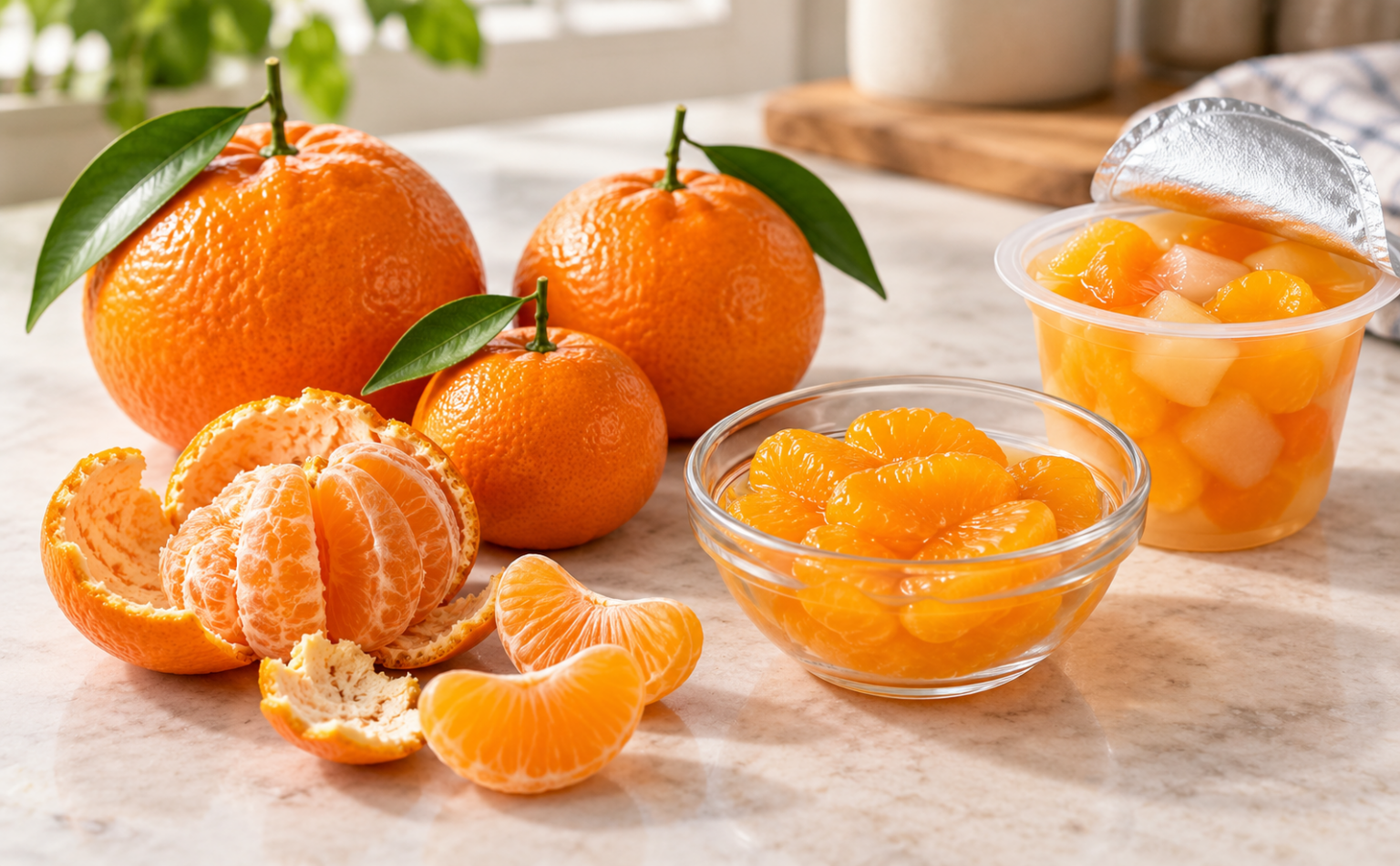
A medium fresh mandarin (about 2½ inches across, 88 g) has about 47 calories, according to USDA FoodData Central. A small one has about 40 and a large one about 64. A clementine, which is the fruit usually sold as Cuties or Halos, has about 35. Canned mandarin segments come in at about 92 calories per cup when packed in juice and about 154 per cup in light syrup.
The fruit itself doesn’t change much. The spread comes from size and packing liquid. Below we cover each form and explain why the calorie sites you’ve seen don’t agree.
How many calories are in a mandarin?
- Small mandarin (2¼ in, 76 g): about 40 calories
- Medium mandarin (2½ in, 88 g): about 47 calories
- Large mandarin (2¾ in, 120 g): about 64 calories
- Clementine or Cutie/Halo-size fruit (74 g): about 35 calories
- 1 cup fresh segments (195 g): about 103 calories
- 1 cup canned, juice-packed: about 92 calories
- 1 cup canned, light syrup: about 154 calories
If you just want one number, use about 45 calories per mandarin. It’s close enough for the average grocery-store fruit.
What it means: mandarin vs. clementine vs. tangerine vs. Cutie
These names get mixed up, and that’s part of the reason calorie counts look inconsistent.
- Mandarin is the broad group (Citrus reticulata) of small, loose-skinned, easy-to-peel citrus.
- Tangerine is a common US name for some mandarins. USDA files its main entry as “Tangerines (mandarin oranges), raw,” so the two are treated as one food.
- Clementine is a seedless or nearly seedless mandarin type. It’s usually a bit smaller and a little lower in calories per 100 g (47 vs. 53).
- Cuties and Halos are brand names. Depending on the time of year, the bag holds clementines early in the season and other mandarin varieties later, so a Cutie typically has about 35–45 calories depending on size.
Why calorie sites disagree
We’ve seen figures for “one mandarin” anywhere from 35 to 90. Four things explain nearly all of that:
- Size. A large mandarin weighs about 60% more than a small one, and its calories rise in step.
- Variety. Clementine data (47 cal/100 g) and general tangerine data (53 cal/100 g) are separate entries, and some sites use one while others use the other.
- Per-100 g vs. per-fruit. Some pages list 53 calories with no unit. That number is per 100 g, which is bigger than most single mandarins.
- Fresh vs. canned. The widely copied “92 calories per cup” figure is for juice-packed canned segments, not fresh ones. The “154 per cup” figure is for light syrup.
Mandarin calories by size and form
All figures are approximate and come from USDA FoodData Central (SR Legacy). Fruit-cup rows are estimates calculated from USDA per-100 g values. Brand labels will differ a little.
| Form / serving | Calories | Carbs (g) | Sugar (g) | Fiber (g) | Vitamin C (mg) |
|---|---|---|---|---|---|
| Small mandarin, 76 g | 40 | 10 | 8 | 1.4 | 20 |
| Medium mandarin, 88 g | 47 | 12 | 9 | 1.6 | 24 |
| Large mandarin, 120 g | 64 | 16 | 13 | 2.2 | 32 |
| Clementine / Cutie-size, 74 g | 35 | 9 | 7 | 1.3 | 36 |
| 1 cup fresh segments, 195 g | 103 | 26 | 21 | 3.5 | 52 |
| 1 cup canned, juice pack | 92 | 24 | 22 | 1.7 | 85 |
| 1 cup canned, light syrup | 154 | 41 | 39 | 1.8 | 50 |
| 4-oz fruit cup in juice (est.) | ~40–50 | ~11 | ~10 | ~0.8 | varies |
| 4-oz fruit cup in light syrup (est.) | ~70 | ~18 | ~17 | ~0.8 | varies |
Clementines contain more vitamin C per fruit than standard tangerines even though they’re smaller. That reflects how USDA’s samples differ by variety. Vitamin C in canned fruit also varies, since some processors add ascorbic acid.
Key facts and context: sugar, fiber and vitamin C
Natural sugar vs. added sugar
The 8–9 g of sugar in a whole mandarin is naturally occurring and comes with water and fiber. Federal dietary guidance treats it differently from added sugar. In syrup-packed cups, a large share of the sugar is added. The Dietary Guidelines for Americans recommend keeping added sugars below 10% of daily calories, which is about 50 g on a 2,000-calorie diet. A cup of light-syrup mandarins can use a noticeable part of that.
Fiber
A medium mandarin has about 1.6 g of fiber. That’s modest, but whole segments keep it, while juice keeps very little. Canned segments have less fiber than fresh, mostly because the membranes are removed during processing.
Vitamin C
The NIH Office of Dietary Supplements lists the adult recommended intake as 75 mg a day for women and 90 mg for men. Two clementines provide about 72 mg. That’s a useful contribution from food, but it isn’t a reason to treat mandarins as a remedy for anything.
Examples and use cases
Snack math: two Cuties vs. a granola bar
Two Cutie-size mandarins total about 70–90 calories, 2–3 g of fiber and no added sugar. A typical chewy granola bar has about 100–190 calories, and several grams of that is often added sugar. If you’re counting calories, the fruit gives you more volume for less. If you need staying power, add a protein, such as a cheese stick or a handful of nuts.
Lunchbox fruit cups
Check the label for three words: “in 100% juice” or “in water” rather than “in light syrup” or “heavy syrup.” On a 4-oz cup, the swap usually saves about 20–30 calories and most of the added sugar. Draining the liquid saves more. The same label-reading habit applies to side dishes, as we cover in Is Pasta Salad Healthy? An Honest Verdict, With the Numbers.
“Mandarin” at Panda Express is a different question
If you searched for the calories in Panda Express Mandarin Teriyaki sauce, that’s a sauce, not the fruit, and its calories come mostly from sugar and soy-based ingredients. Panda changes recipes and portion sizes, so get the current figure from the Panda Express nutrition page rather than a third-party database.
Prep tip
You peel mandarins, but rinse them before you do. Your hands carry whatever is on the skin to the segments. Our FDA-backed produce washing guide covers the method, and the same rules apply to citrus.
Common questions about mandarin calories
Mandarin vs. orange calories
A medium navel orange (about 140 g) has roughly 70 calories, about 1.5 times a medium mandarin. Per 100 g they’re close: about 49 for navel oranges vs. 53 for mandarins. The difference per fruit is mostly size.
Are canned mandarins as healthy as fresh?
Juice-packed canned mandarins are a reasonable stand-in. They’re close in calories, convenient and shelf-stable. You lose some fiber, and syrup-packed versions add sugar. Fresh is better when you can get it, and juice-packed is a fine backup.
Are Cuties healthier than regular oranges?
Not meaningfully. They’re smaller, so each one has fewer calories and slightly less fiber. Ounce for ounce, the nutrition is similar. Choose the one you’ll actually eat.
Florida relevance
Florida is best known for juice oranges, but the state also grows mandarin-type fruit for the fresh market. That includes Sugar Belle, a variety released by the University of Florida’s IFAS, as well as Honey tangerines and other hybrids, mostly from late fall through early spring. Most Cuties and Halos in national stores come from California. If you want local fruit, look for Florida tangerines at farmers markets and roadside stands in season. UF/IFAS Citrus Extension publishes variety and season information. The calorie figures above apply whether the fruit came from Florida or California.
Sources and further reading
- USDA FoodData Central: entries for tangerines (mandarin oranges) raw, clementines raw, and canned tangerines in juice and light syrup
- USDA MyPlate: Fruits
- NIH Office of Dietary Supplements: Vitamin C
- Dietary Guidelines for Americans
For more nutrition explainers, see our Health section. If you compare snack and drink calories, our Monster Energy vs. Red Bull breakdown uses the same can-for-can approach.
This article is for general information and isn’t medical advice. If you have diabetes, kidney disease or a prescribed diet, ask your clinician or a registered dietitian how fruit fits your plan.
FAQs
How many calories are in one small mandarin orange?
A small mandarin, about 2¼ inches across and 76 g, has about 40 calories, according to USDA FoodData Central. A medium one has about 47 and a large one about 64.
How many calories are in a Cutie (Halo) mandarin?
About 35–45 calories. Cuties and Halos are brand names for clementines and other small mandarins. USDA lists an average clementine (74 g) at about 35 calories, and larger fruit later in the season runs a little higher.
How many calories are in a cup of canned mandarin oranges?
About 92 calories per cup if packed in juice and about 154 per cup in light syrup, per USDA data. Most of the difference is added sugar from the syrup, so choose juice- or water-packed cans and drain them.
How much sugar is in a mandarin orange?
A medium mandarin has about 9 g of naturally occurring sugar along with about 1.6 g of fiber. Whole fresh fruit contains no added sugar. Syrup-packed canned mandarins and fruit cups do.
Are mandarin oranges good for weight loss?
They’re a low-calorie, high-water snack that can help you feel full for about 35–65 calories each. No single food causes weight loss, though. What matters is your total diet and activity over time.
How many mandarins can you eat in a day?
USDA MyPlate recommends about 1½ to 2 cups of fruit a day for most adults, and roughly two to three mandarins count as about a cup. Eating several is fine for most healthy people. If you have diabetes or follow a special diet, ask your clinician.