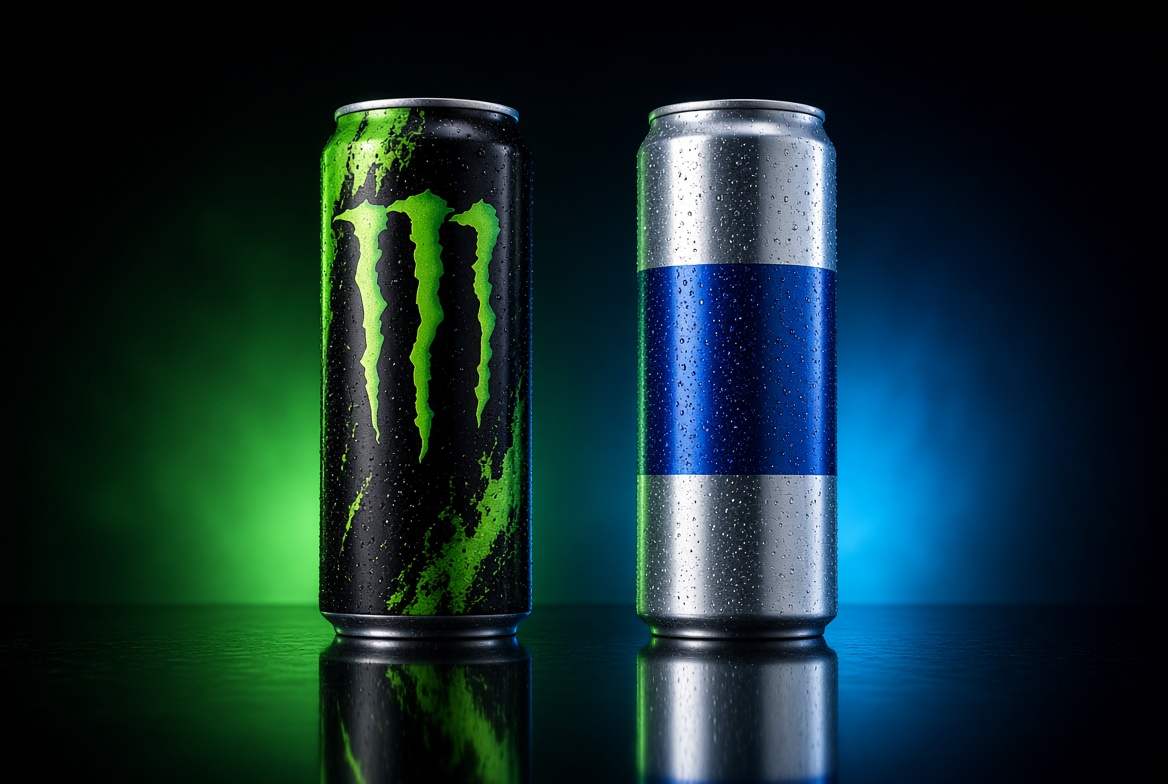
A standard 16 oz can of Monster Energy has about 160 mg of caffeine. A standard 8.4 oz can of Red Bull has 80 mg. So Monster has twice the caffeine per can. Ounce for ounce, though, they’re nearly identical: Red Bull has about 9.5 mg per fluid ounce and Monster has about 10 mg. The ‘winner’ comes down almost entirely to can size.
These figures come from the manufacturers’ published labels. Formulas and can sizes change, so check the can you’re actually holding.
Monster Energy vs Red Bull Caffeine
- Per can (standard sizes): Monster 160 mg vs. Red Bull 80 mg. Monster wins.
- Per fluid ounce: Monster about 10 mg vs. Red Bull about 9.5 mg. That’s essentially a tie.
- Same-size cans: A 16 oz Red Bull has about 151 mg, roughly 9 mg less than a 16 oz Monster.
- Daily context: The FDA says most healthy adults can have up to 400 mg of caffeine a day. That works out to about five 8.4 oz Red Bulls or two and a half Monsters.
Per Can vs. Per Ounce
Most of the conflicting numbers online come from mixing these two measurements. One site compares a whole Monster can to a whole Red Bull can, and another compares 8 oz of each. Both are correct, but they answer different questions.
Per can matters if you drink the whole can, which most people do. On that measure, a standard Monster delivers twice the caffeine of a standard Red Bull, because it’s almost twice the size.
Per ounce tells you how concentrated each drink is. On that measure, the two brands are within about half a milligram of each other. Neither one is a ‘stronger formula’ in any meaningful way.
More caffeine doesn’t always mean more energy
The lift you feel from an energy drink isn’t only caffeine. The regular versions of both drinks are loaded with sugar, which gives you a quick spike in blood glucose and often a slump afterward. Both also contain taurine and B vitamins. The labels make a lot of these, but caffeine and sugar do most of what you actually notice.
Individual response also varies a lot. Body size, how much caffeine you normally drink, sleep, medications and genetics all affect how strongly caffeine hits you and how long it lasts. Two people can drink the same can and have very different afternoons.
Caffeine in Red Bull vs Monster, Side by Side
This table puts the common sizes and variants on equal footing. The per-ounce figures are rounded.
| Drink | Can size | Caffeine per can | Caffeine per fl oz | Sugar per can |
|---|---|---|---|---|
| Red Bull Energy Drink | 8.4 oz | 80 mg | ~9.5 mg | 27 g |
| Red Bull Energy Drink | 12 oz | 114 mg | ~9.5 mg | 38 g |
| Red Bull Energy Drink | 16 oz | 151 mg | ~9.5 mg | 51 g |
| Red Bull Energy Drink | 20 oz | 189 mg | ~9.5 mg | 63 g |
| Red Bull Sugarfree | 8.4 oz | 80 mg | ~9.5 mg | 0 g |
| Monster Energy (original) | 16 oz | 160 mg | ~10 mg | 54 g |
| Monster Zero Ultra | 16 oz | ~140–150 mg* | ~9–9.4 mg | 0 g |
| Brewed coffee (for comparison) | 8 oz | ~80–100 mg | ~10–12 mg | 0 g |
*Monster Ultra caffeine figures differ between label versions and flavors. Check the panel on your can.
A few things stand out:
- Sugar-free doesn’t mean less caffeine. Red Bull Sugarfree has the same 80 mg as the original. Monster Zero Ultra is only slightly lower than regular Monster.
- The sugar gap is huge. A regular 16 oz Monster has 54 g of sugar. That’s more than the American Heart Association’s suggested daily limit for added sugar for men (36 g) or women (25 g), all in one can.
- Coffee is in the same range. According to the FDA, an 8 oz cup of brewed coffee typically has 80 to 100 mg. A small Red Bull is roughly equal to one cup of coffee. A Monster is closer to two.
The 400 mg guideline
The FDA says 400 mg a day, about four or five cups of coffee, is an amount not generally associated with negative effects in healthy adults. That’s a general guideline, not a target, and it doesn’t apply to everyone. The FDA also notes that toxic effects such as seizures have been seen with rapid intake of around 1,200 mg, which is most likely to happen with concentrated powders or by stacking several drinks quickly.
Mayo Clinic lists common signs of too much caffeine: headache, insomnia, nervousness, irritability, frequent urination, a fast heartbeat and muscle tremors.
How Many Cans Fit Under 400 mg?
Here’s how the numbers look in a real day, assuming a healthy adult with no other caffeine sources:
- Red Bull 8.4 oz (80 mg): 5 cans = 400 mg
- Red Bull 12 oz (114 mg): 3 cans = 342 mg. A fourth puts you over.
- Monster 16 oz (160 mg): 2 cans = 320 mg. A third puts you at 480 mg.
- Monster Zero Ultra (~140–150 mg): 2 cans ≈ 280–300 mg
Few people drink only energy drinks, so here are some more realistic scenarios:
- Morning coffee plus an afternoon Monster: Two 8 oz cups of coffee (about 190 mg) plus one Monster (160 mg) comes to around 350 mg. You’re under the line, but with little room for a soda or tea at dinner.
- A pre-workout Red Bull: One 8.4 oz can 30 to 60 minutes before training gives you 80 mg, a modest dose. If your pre-workout powder also contains caffeine, add that in. Many have 150 to 300 mg per scoop.
- A late-shift Monster: Caffeine’s half-life is commonly around five hours, so a 160 mg can at 4 p.m. can still leave about 80 mg in your system at 9 p.m. If you sleep badly, timing matters as much as the total.
Who should be more cautious
The 400 mg figure is for healthy adults. Other groups should take more care:
- Children and teens: The American Academy of Pediatrics says energy drinks are not appropriate for children and adolescents.
- Pregnant or breastfeeding people: The American College of Obstetricians and Gynecologists advises keeping caffeine under 200 mg a day during pregnancy. That’s a little over one Monster.
- People with heart conditions, high blood pressure or anxiety disorders, or who take medications that interact with caffeine: Ask your doctor or pharmacist what amount is right for you.
None of this means one can will hurt you. It means the right limit depends on the person, and a clinician who knows your history is the right one to set it.
Is Red Bull or Monster Stronger?
Which gives more energy, Red Bull or Monster?
Can for can, Monster does, because it has twice the caffeine and twice the sugar of a standard Red Bull. If you drink equal volumes, the effect is nearly the same. Pick based on how much caffeine you want, not the brand.
Is Monster or Red Bull worse for you?
Neither is meaningfully worse ounce for ounce. The bigger factors are how many cans you drink and whether you pick the full-sugar or sugar-free version. A regular Monster’s 54 g of sugar is the most notable difference. If sugar is the concern, the same thinking applies to other ‘healthy-sounding’ foods. Our breakdown of whether pasta salad is healthy and our guide to calories in apple cider drinks show how quickly sugar and calories add up.
Monster Energy vs Red Bull taste
That’s subjective, but Red Bull is generally sharper and more tart. Original Monster is sweeter and more citrusy. Taste affects how fast people drink, and a 16 oz can you finish in 10 minutes hits harder than one you sip over an hour.
Heat, Hydration and Energy Drinks
In Florida, energy drinks often get grabbed on job sites, at the beach or on long drives through summer heat. Keep two points in mind.
Caffeine isn’t a substitute for water. Moderate caffeine isn’t considered strongly dehydrating for regular drinkers, but an energy drink doesn’t replace the fluid and electrolytes you lose working outside on a 95-degree afternoon. If you work outdoors, drink water steadily and treat an energy drink as an extra, not your hydration. A racing heart from caffeine can also make early signs of heat illness harder to notice. Check local conditions on hot days, as we covered in our South Florida July 4 weather recap.
If someone has had too much, call Poison Control at 1-800-222-1222. It’s free, confidential and staffed 24/7, and in Florida it routes to the state’s poison information centers. For chest pain, fainting, seizures or trouble breathing, call 911.
For more evidence-based explainers, visit our Health section.
FAQs
What has more caffeine, Red Bull or Monster?
Per can, Monster. A standard 16 oz Monster Energy has about 160 mg of caffeine and a standard 8.4 oz Red Bull has 80 mg. Per fluid ounce they’re nearly equal: about 10 mg for Monster and 9.5 mg for Red Bull.
Does Monster or Red Bull have more caffeine if the cans are the same size?
Monster still has slightly more. A 16 oz Red Bull has about 151 mg and a 16 oz Monster has about 160 mg. That’s a difference of roughly 9 mg, which most people won’t notice.
How much caffeine is in a Red Bull?
Red Bull has about 9.5 mg of caffeine per fluid ounce. That’s 80 mg in an 8.4 oz can, 114 mg in a 12 oz can, 151 mg in a 16 oz can and 189 mg in a 20 oz can. Red Bull Sugarfree has the same 80 mg per 8.4 oz.
Does Monster Zero Ultra have less caffeine than regular Monster?
Slightly. Monster Zero Ultra has roughly 140 to 150 mg per 16 oz can, depending on the label version, compared with about 160 mg in original Monster. The bigger difference is sugar: Zero Ultra has none, while original Monster has 54 g.
How many energy drinks is too many in a day?
The FDA says up to 400 mg of caffeine a day is generally not associated with negative effects in healthy adults. That’s about five 8.4 oz Red Bulls or two and a half 16 oz Monsters, counting no other caffeine. Teens, pregnant people and anyone with heart conditions or on certain medications should aim lower and check with a doctor.
Is Red Bull better than Monster for energy?
Neither formula is stronger per ounce. A standard Monster gives you more caffeine and sugar simply because the can is twice as big. Choose based on how much caffeine you actually want.