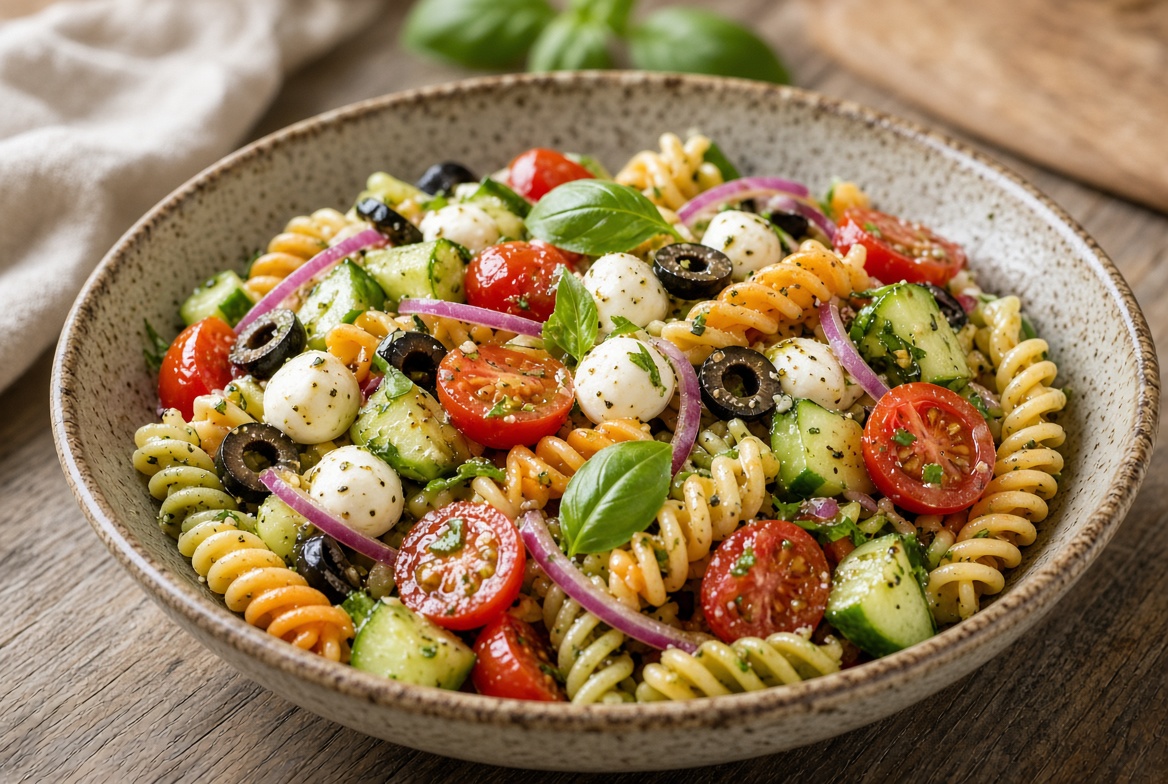
Is pasta salad healthy? It can be, but four things decide it: the pasta, the dressing, the add-ins and the portion. A cup of whole-grain pasta tossed with vegetables, beans and an olive-oil vinaigrette is a balanced side with fiber and protein. A cup of the classic deli version, made with mayo, salami and cheese, can carry close to 400 calories and about half a day’s sodium before the main course arrives. So if you’re asking whether pasta salad is good for you, the honest answer is that the recipe matters more than the name.
What makes pasta salad healthy or unhealthy
These are the four levers, in rough order of impact:
- Dressing. This is where most of the calories, saturated fat and sodium come from. One tablespoon of mayonnaise has about 94 calories and 10 grams of fat. Bottled Italian dressing is lighter on calories, but many brands have 250–500 mg of sodium per 2-tablespoon serving.
- Add-ins. Salami, pepperoni, cheese cubes and olives add flavor quickly, and they add sodium and saturated fat just as quickly. Vegetables, beans, chicken and tuna push the dish the other way.
- Pasta type. According to USDA FoodData Central, a cup of cooked whole-wheat spaghetti has about 6 grams of fiber, compared with roughly 2.5 grams for refined pasta. Legume pastas made from chickpeas or lentils add more protein still.
- Portion. A half-cup side and a heaping plate are different foods, nutritionally speaking. Most deli containers hold 3–4 servings, not one.
Key facts: pasta salad nutrition by type
Few pages compare versions side by side, so we did. The figures below are estimates for a 1-cup serving. We calculated them from USDA FoodData Central ingredient values for common home builds. Your recipe and your brands will shift the numbers, but the gaps between versions hold up.
| Version (1 cup) | Calories | Sat. fat | Sodium | Fiber | Protein |
|---|---|---|---|---|---|
| Classic mayo macaroni salad (white pasta, 2 Tbsp mayo, celery, onion) | ~360 | 3–4 g | 450–600 mg | ~2 g | ~6 g |
| Deli Italian (bottled Italian, salami, provolone, olives) | ~370 | 5–6 g | 900–1,100 mg | ~2 g | ~11 g |
| Pesto pasta salad (white pasta, tomatoes, mozzarella pearls) | ~340 | ~4 g | 300–400 mg | ~3 g | ~10 g |
| Whole-wheat veggie vinaigrette (half pasta, half vegetables, chickpeas, a little feta) | ~280 | ~2.5 g | ~300 mg | 7–8 g | ~11 g |
For context, the FDA’s Daily Value is 2,300 mg of sodium and 20 grams of saturated fat. A single cup of the deli Italian version uses up around 40–45% of the day’s sodium. The American Heart Association’s ideal target for most adults is lower still, at 1,500 mg.
Store-bought vs. homemade: how to read the label
Store-bought pasta salad usually runs saltier than homemade, because salt and acid help it hold up in the case. Check three things on the label:
- Serving size. It’s often listed as ½ cup or ⅔ cup. If you’ll eat a full cup, double the numbers.
- Servings per container. A 16-ounce tub is usually about 3–4 servings.
- % Daily Value for sodium. The FDA’s rule of thumb: 5% DV or less is low, and 20% DV or more is high.
Deli counter salads often have no label at all. If you can’t check, treat a mayo- or salami-heavy salad as a high-sodium choice and keep the scoop small.
Is pasta salad healthy for weight loss, diabetes and heart health?
Is pasta salad healthy for weight loss?
It can fit. What matters is calorie density, meaning how many calories you get per bite. A salad that is half vegetables has about two-thirds the calories of an all-pasta version at the same volume. Adding 15–20 grams of protein, from chicken, tuna, white beans or edamame, makes it filling enough to work as lunch. Creamy dressings are what usually knock pasta salad off a weight-loss plan, not the pasta.
Is pasta salad healthy for diabetics?
Pasta is a carbohydrate food, so the amount on your plate matters most. The CDC’s Diabetes Plate Method is a practical guide. Fill half the plate with non-starchy vegetables, a quarter with lean protein, and a quarter with carbohydrate foods such as pasta. In practice, that means a modest scoop of a vegetable-heavy, protein-added pasta salad rather than a big helping as the main event. Whole-grain and legume pastas add fiber, which can slow how quickly carbohydrates are absorbed. Everyone’s blood sugar response is different, so ask your clinician or a registered dietitian how pasta fits your plan.
Heart health and blood pressure
Here the problem is sodium and saturated fat, not carbohydrates. To lighten the load, cut processed meats, use half the cheese, rinse canned beans and olives, and dress the salad with olive oil and vinegar instead of a bottled dressing.
Is cold pasta healthier than hot pasta?
Cooking and then chilling pasta turns some of its starch into resistant starch, which digests more like fiber. Small studies have found a modestly lower blood sugar response to cooled pasta. However, those studies involved few participants and measured short-term effects. The difference is real but small, and it doesn’t turn a large portion into a small one. Treat it as a minor bonus, not a strategy.
Examples: pasta salad vs. other sides
Here’s how a 1-cup scoop compares with other cookout and lunch sides. The figures are approximate, based on USDA data and typical restaurant nutrition listings.
- Medium fast-food fries: about 320–370 calories, 15–17 g fat and 2–3 g fiber. Calorie for calorie, this is close to mayo pasta salad. A veggie vinaigrette pasta salad has fewer calories and more fiber and protein.
- Mayo potato salad: about 350 calories, similar to macaroni salad. Both depend almost entirely on how much mayo goes in.
- Creamy coleslaw: about 150–250 calories, with fewer carbohydrates but often more sugar than you’d expect.
- Green salad with vinaigrette: about 80–150 calories. It’s still the lightest option, but it won’t keep you full on its own.
Macaroni salad is basically a mayo pasta salad made with elbows, so it lands at the less healthy end of the range. Tuna pasta salad adds about 20 grams of protein per 3 ounces of tuna. If you bind it with half Greek yogurt and half mayo, it’s one of the better lunch options. For a lunch that holds up, use chicken. Our guide to how long to boil a chicken breast covers the timing. Pack the dressing separately and toss it in at noon.
How to make pasta salad healthy: a simple build formula
This formula makes one generous serving of about 1½ cups:
- ½ cup cooked pasta. Choose whole-wheat or legume pasta. Short shapes such as fusilli or farfalle hold dressing, so you can use less of it.
- ¾ cup or more of vegetables. Try cherry tomatoes, cucumber, bell pepper, broccoli, spinach or red onion. If you’re using greens, follow our guide to how to wash lettuce first.
- 3 ounces of protein. Grilled chicken, tuna, chickpeas, white beans, edamame or a chopped hard-boiled egg all work.
- 1 tablespoon of dressing. A good base is 3 parts olive oil to 1 part acid, such as red wine vinegar or lemon juice, plus mustard and herbs.
- One salty accent. Pick one of these: a tablespoon of feta, a few olives, or a little Parmesan.
Best healthy pasta salad dressing swaps
- Creamy without the mayo: plain Greek yogurt thinned with lemon juice, plus dill and garlic.
- Half and half: half mayo and half Greek yogurt. This keeps the classic taste and cuts the dressing’s fat by roughly half.
- Light pesto: thin store-bought pesto with lemon juice and a splash of pasta water so it goes further.
- Bottled Italian: fine if you choose a lower-sodium brand and measure it instead of pouring.
Limit these: salami, pepperoni, large amounts of cheese cubes, bacon and sweet bottled dressings. If you add deli meat, check our guide to how long deli meat is good for in the fridge. Once it’s mixed into a salad, it’s only as fresh as its oldest ingredient.
Florida relevance: keeping pasta salad safe in the heat
In Florida, the bigger risk with pasta salad is often how it’s held, not what’s in it. The USDA’s rule is to refrigerate perishable food within 2 hours, or within 1 hour when it’s above 90°F. From May through September, the 1-hour limit applies at most beach days, boat outings and backyard cookouts.
- Keep the salad at 40°F or colder. Pack it in a cooler with ice packs on top as well as underneath, and keep the cooler in the shade.
- At potlucks, set the bowl inside a larger bowl of ice and serve small batches.
- Throw out any salad that has sat out past the time limit. Chilling it again doesn’t make it safe.
- Stored properly, pasta salad keeps 3–5 days in the fridge, according to FoodSafety.gov.
Related reading
For more evidence-based food and wellness explainers, visit our Health section.
FAQs
Is pasta salad good for you?
It can be. A pasta salad made with whole-grain or legume pasta, plenty of vegetables, a lean protein and an olive-oil vinaigrette provides fiber, protein and healthy fats. Versions heavy on mayo, salami and cheese are much higher in sodium and saturated fat, so the recipe matters more than the dish’s name.
Is pasta salad healthier than fries?
A vegetable-heavy vinaigrette pasta salad usually is. It has fewer calories, plus more fiber and protein, than a medium order of fast-food fries (about 320–370 calories). A mayo-based macaroni salad has about the same calories as fries, so that comparison is roughly a tie.
Is macaroni salad healthy?
Classic macaroni salad is one of the less healthy versions. It’s mostly refined pasta and mayonnaise, at roughly 350 calories per cup with little fiber. To lighten it, swap half the mayo for plain Greek yogurt, use more crunchy vegetables, and keep portions to about half a cup.
What is the healthiest dressing for pasta salad?
A homemade olive oil and vinegar or lemon vinaigrette is generally the best choice. It gives you unsaturated fat, and you control the salt. If you want something creamy, plain Greek yogurt with lemon and herbs is a good lower-calorie alternative to mayonnaise.
How long can pasta salad sit out?
No more than 2 hours at room temperature, or 1 hour if it’s above 90°F, according to USDA guidance. Throw out pasta salad that has been left out longer than that, even if it looks and smells fine.
How long does pasta salad last in the fridge?
FoodSafety.gov says pasta salad keeps about 3 to 5 days when refrigerated at 40°F or below in a covered container. If it has meat, seafood or egg in it, aim for the shorter end of that range.