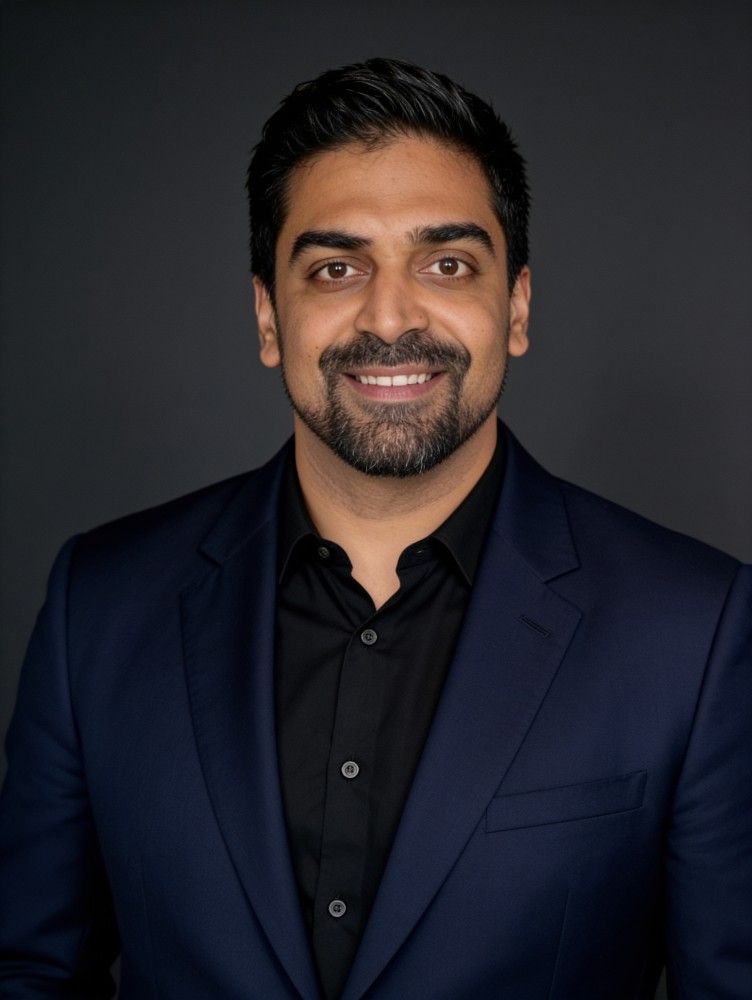
Cameron Badger is building PraxisPro around a problem he understood long before he became a founder. In life sciences, commercial teams often sit on a huge amount of useful information, but much of it stays trapped in scattered systems, field notes, training gaps, manager conversations, and disconnected sales workflows. That means leaders may not always see what is really happening in the field, and representatives may not always get the coaching or intelligence they need at the right moment.
PraxisPro was created to change that. The company focuses on commercial intelligence in life sciences, using AI to help pharmaceutical and medical teams turn real field activity into clearer insights, stronger coaching, and better execution. Instead of building a broad AI tool for every industry, Cameron Badger has taken a more focused path. PraxisPro is designed for a regulated, high-stakes market where accuracy, trust, and workflow fit matter just as much as automation.
That is what makes the story interesting. Cameron is not simply chasing the AI trend. He is using his own background in pharmaceutical sales, sales training, and commercial leadership to build a platform for the people who deal with these problems every day.
Who is Cameron Badger
Cameron Badger, also known professionally as Cam Badger, is the Founder and CEO of PraxisPro. His career before PraxisPro was rooted in the pharmaceutical world, where he worked across sales, training, and leadership roles. That experience matters because commercial intelligence in life sciences is not a simple software problem. It is tied to how field teams engage healthcare professionals, how managers coach representatives, how brand teams understand market signals, and how organizations stay aligned in a regulated environment.
Cameron’s founder story stands out because he came from inside the industry. He saw the daily friction that can slow down commercial teams, from inconsistent coaching to fragmented training and poor visibility into field activity. For many sales representatives, valuable lessons are learned through practice, manager feedback, customer conversations, and trial and error. The challenge is that most organizations do not have a clean way to capture that learning and turn it into repeatable intelligence.
His time in the Pepperdine Executive MBA program also helped shape the business side of the vision. Moving from commercial roles into company-building required more than spotting a problem. It meant learning how to turn that problem into a scalable product, a clear market position, and a platform that could serve enterprise life-sciences teams.
The field problem that led to PraxisPro
The life-sciences industry depends heavily on field execution. Sales representatives, medical teams, commercial leaders, and brand managers all need accurate information to make better decisions. Yet in many organizations, the data that could support those decisions is messy, incomplete, or spread across too many places.
A representative may hear something important from a healthcare professional. A manager may notice a coaching gap during a field ride. A brand team may need to understand why a message is not landing in a certain market. A commercial leader may want to know which skills separate top performers from the rest of the team. In theory, all of this can become commercial intelligence. In reality, much of it can disappear into CRM notes, call summaries, private conversations, or disconnected reporting tools.
That is the problem PraxisPro is trying to solve. The company’s mission centers on healing the fractured state of life-sciences commercial data by surfacing undocumented and previously inaccessible datasets. In plain language, PraxisPro wants to help companies make sense of the information their teams already generate but often struggle to use.
This is especially important in life sciences because the industry is not like ordinary B2B sales. Teams work in a regulated environment. Messaging has to be compliant. Training has to be accurate. Customer conversations often involve complex therapeutic areas, medical context, and changing market dynamics. A generic AI assistant may not be enough. Life-sciences teams need tools that understand their workflows, their risks, and their need for trusted intelligence.
How Cameron Badger turned field experience into a scalable platform
Cameron Badger’s path to PraxisPro began with lived experience. He did not have to imagine the pain points of pharmaceutical teams from the outside. He had worked close to them. He understood what it feels like when training is not personalized enough, when coaching depends too much on individual manager bandwidth, and when field knowledge does not flow cleanly back into strategy.
That background gave PraxisPro a strong founder-market fit. Cameron could look at the commercial side of life sciences and see more than a market opportunity. He could see the human workflow behind the problem. Representatives want to prepare better for conversations. Managers want to coach more effectively. Commercial leaders want better visibility. Brand teams want sharper feedback from the field. Compliance teams want stronger guardrails. Medical and commercial functions need alignment without creating extra noise.
PraxisPro connects these needs through an AI-powered platform focused on commercial intelligence, sales readiness, and field force effectiveness. The idea is not just to give teams another dashboard. It is to help them move from scattered activity to useful insight.
This is where Cameron’s experience becomes central to the company’s direction. PraxisPro is not built around abstract AI language. It is built around real commercial problems: how teams prepare, how they practice, how they learn, how leaders identify gaps, and how organizations turn field behavior into better decisions.
What PraxisPro does for life-sciences companies
PraxisPro sits at the intersection of AI, commercial intelligence, sales enablement, and life-sciences data workflows. Its platform is designed to support teams that need more than static training modules or disconnected reporting tools.
One of the most important parts of the platform is sales enablement. In life sciences, representatives need to understand products, disease states, treatment pathways, customer needs, competitive context, and approved messaging. That is a lot to carry into every conversation. PraxisPro helps teams practice and prepare in a more active way, using AI to support role-play, coaching, and readiness.
The platform also supports commercial intelligence. This means helping organizations understand what is happening across the field and turning those signals into something leaders can use. Instead of relying only on backward-looking reports, companies can begin to capture patterns around skills, engagement, market feedback, and execution gaps.
PraxisPro also works in the area of Learning Experience Platforms, often called LXP tools. For life-sciences teams, learning cannot be treated as a one-time event. Reps need ongoing practice, managers need coaching visibility, and organizations need to connect learning with performance. PraxisPro’s use of AI agents and small language models gives the company a way to make learning more connected to the real work of the field.
Another key area is field force effectiveness. This is where commercial teams look at how representatives spend time, how they engage customers, how they improve skills, and how their work supports broader business goals. PraxisPro aims to make that process smarter by giving teams intelligence that is easier to act on.
Why commercial intelligence matters in life sciences
Commercial intelligence matters because life-sciences companies operate in a difficult environment. Healthcare professional access has become more limited in many markets. Sales teams face higher expectations. Medical information is complex. Training costs can rise quickly. Compliance risk is always present. At the same time, companies need to understand what is actually happening across the field if they want to improve performance.
Good commercial intelligence can help answer practical questions. Are reps prepared for the conversations they are having? Which messages are working? Where do managers need to coach more? What objections are coming up in the field? Which disease-state topics create the most confusion? What signals are being missed because they are buried in notes or informal feedback?
For life-sciences leaders, these questions are not small. Better intelligence can influence training, brand strategy, resource allocation, coaching priorities, and customer engagement. It can also help reduce the gap between what headquarters believes is happening and what field teams experience every day.
This is one reason PraxisPro’s work is timely. Many companies are interested in AI, but the real value comes from applying AI to specific problems with real workflow fit. In life sciences, that means helping teams create safer, clearer, and more useful intelligence from their commercial activity.
How PraxisPro uses purpose-built AI
One of PraxisPro’s strongest angles is its focus on purpose-built AI for life sciences. Cameron Badger and his team are not positioning the company as a generic chatbot layer. PraxisPro is working with AI models and agents designed around the needs of therapeutic areas, disease states, training workflows, and commercial teams.
A key part of this approach is the use of Small Language Models, also known as SLMs. While large language models are built for broad general use, small language models can be shaped around more specific tasks, narrower domains, and controlled knowledge areas. In life sciences, that can be valuable because teams need AI that understands context while staying aligned with approved information and regulated workflows.
PraxisPro also uses AI agents to support workflows that would otherwise require more manual effort. These agents can help with preparation, learning, coaching, insight capture, and workflow support. The goal is not to replace human judgment. It is to reduce the operational burden around commercial execution and give teams better information when they need it.
This kind of AI has to be handled carefully. In life sciences, a wrong answer is not just inconvenient. It can create compliance concerns, confuse teams, or damage trust. That is why a purpose-built, governed approach matters. PraxisPro’s value comes from its ability to combine AI capability with the realities of a regulated industry.
The role of PraxisPro in sales coaching and rep readiness
Sales coaching is one of the clearest areas where PraxisPro can make an impact. In many organizations, coaching quality depends heavily on manager time, manager skill, team size, and how consistently feedback is captured. Some reps may get strong support. Others may not get enough. Even when coaching happens, the insights may not always roll up into a broader view of team capability.
PraxisPro helps address this by making coaching more structured and measurable. AI-supported role-play can help representatives practice important conversations before they happen. Managers can get better visibility into skill gaps. Teams can identify where more training is needed. Representatives can prepare for healthcare professional engagement with more confidence.
This matters because life-sciences sales is not just about memorizing product details. Reps need to listen well, ask better questions, handle objections, understand disease-state context, stay compliant, and adapt to different customer needs. A static training deck cannot fully prepare someone for that. Practice, feedback, and repetition matter.
By building tools around readiness and coaching, Cameron Badger is giving PraxisPro a practical role in daily commercial work. The platform is not only about high-level analytics. It is also about helping the person in the field walk into a conversation better prepared.
The $6 million seed round and what it signals
PraxisPro reached a major milestone when it closed an oversubscribed $6 million seed round led by AlleyCorp. The round also included investors such as Flybridge, South Loop Ventures, Zeal Capital Partners, True Ventures, Techstars, Alumni Ventures, and Daring Ventures.
For Cameron Badger and the PraxisPro team, this funding is more than a financial headline. It signals that investors see a real opportunity in industry-specific AI for life sciences. The broader AI market is crowded, but companies that solve narrow, high-value problems in regulated industries can stand out.
The funding also gives PraxisPro more room to build. The company can continue improving its platform, expanding its small language model capabilities, developing its AI agents, supporting more therapeutic areas, and growing the team needed to serve enterprise customers.
The investor interest also reflects a larger shift in the market. Enterprises are moving beyond general AI curiosity and looking for tools that can deliver measurable outcomes. In life sciences, that means platforms that can support training, commercial execution, coaching, data intelligence, and compliance-aware workflows.
Why Cameron Badger’s founder background matters
Founder background matters because some industries are hard to understand from the outside. Life sciences has its own language, structure, pressure points, and rules. A founder who has worked inside pharmaceutical sales can bring a different level of product instinct to the problem.
Cameron Badger understands the field reality. He knows that reps do not want more tools that slow them down. Managers do not want another dashboard that creates extra admin work. Commercial leaders do not want vague AI promises. Compliance teams do not want uncontrolled outputs. Everyone wants tools that fit the way the industry actually works.
That perspective helps PraxisPro focus on practical outcomes. The platform is not just about making AI available to life-sciences teams. It is about making AI useful, trusted, and relevant to the way those teams operate.
This is also why Cameron’s story is a strong success and achievement angle. He took the problems he saw in his own career and turned them into a company with a clear mission, a defined market, investor support, and a product direction shaped by real industry needs.
How PraxisPro could change life-sciences commercialization
PraxisPro could influence life-sciences commercialization by helping teams treat field activity as a source of intelligence, not just a record of completed work. That shift can be powerful.
When field insights are captured and structured properly, leaders can see patterns faster. Training teams can respond to real skill gaps. Managers can coach with better context. Brand teams can understand market feedback more clearly. Medical and commercial teams can align around stronger information. Compliance teams can have more confidence in the systems supporting field behavior.
This does not mean AI will make the industry simple. Life sciences will always involve regulation, complexity, and human judgment. But better tools can reduce some of the friction that slows teams down. If PraxisPro can help companies move from scattered data to clearer intelligence, it can play a meaningful role in how commercial teams operate.
The larger opportunity is not only about sales performance. It is also about improving how life-sciences organizations learn from the field and act on that learning. Better commercial intelligence can support better execution, and better execution can help companies get the right information to the right people more effectively.
Challenges PraxisPro will need to navigate
PraxisPro is working in a market with strong potential, but it also faces serious challenges. The first is trust. Life-sciences companies will not adopt AI tools deeply unless they trust the quality, governance, and reliability of the system. PraxisPro will need to keep proving that its platform can operate safely inside regulated workflows.
Another challenge is integration. Large pharmaceutical and medical organizations already use many tools across CRM, learning management, analytics, compliance, and content systems. A new platform has to fit into that environment without creating more fragmentation.
PraxisPro will also need to show measurable impact. Commercial leaders will want to know whether the platform improves readiness, coaching consistency, field insight, engagement quality, or sales execution. Strong storytelling can open doors, but long-term growth will depend on clear results.
There is also the challenge of scale. Life-sciences companies work across different therapeutic areas, markets, customer types, and compliance requirements. Building AI that remains useful across those contexts takes focus and discipline.
Still, these challenges are also part of what makes PraxisPro’s position meaningful. If the company can solve them, it will not just be another AI startup. It will become part of the commercial infrastructure that life-sciences teams rely on.
Why Cameron Badger’s PraxisPro story stands out
Cameron Badger’s work with PraxisPro stands out because it connects personal industry experience with a clear market need. He saw the broken parts of life-sciences commercial execution from the inside and built a company around making those workflows smarter.
PraxisPro is focused on a problem that many life-sciences organizations understand well: commercial data is often fragmented, training is hard to scale, coaching can be inconsistent, and field insights are too valuable to remain buried. By using AI, small language models, agents, and industry-specific intelligence, the company is trying to turn that scattered information into a stronger operating layer for commercial teams.For readers searching for Cameron Badger or PraxisPro, the bigger story is not just that a founder raised funding or built an AI company. It is that Cameron is building from lived experience in pharmaceutical sales and training, and PraxisPro is using that experience to tackle one of the most important challenges in life-sciences commercialization.