An in-depth look at how decompression therapy can prove a vital aid to those suffering from joint-related pain points.
As a human being, you rely on your body for many things. From physical exertion to simple movement, your body is the biological extension of your mind, following neural impulses sent from the brain. This is why it can be so frustrating when your body falls short of the expectations your brain sets for it. One of the most common ways this can happen is through joint pain.
Joint pain can affect everyday activities, including walking, climbing stairs, exercising, and standing for extended periods. Joint discomfort can have several causes, ranging from cartilage changes, injuries, inflammation, and osteoarthritis.
Fortunately, there are potential medical solutions, such as decompression therapy. Decompression therapy, provided by professional healthcare specialists such as Roach Spine & Disc Center, is a nonsurgical approach used to address pressure around the knee joint.
Understanding Joint Pain and Its Common Causes
Numerous factors can contribute to joint discomfort.
- Cartilage deterioration associated with osteoarthritis.
- Previous knee injuries and repetitive stress.
- Inflammation and stiffness around the joint.
- Changes in joint mobility and range of motion.
- How knee discomfort can interfere with ordinary activities.
The result of any one of these contributors, much less multiple of them, can be flat-out debilitating joint pain. For example, such issues can cause knee stiffness, which can make common movements (such as getting out of a chair or climbing stairs) particularly painful. Beyond the in-the-moment discomfort, this can also contribute to greater long-term issues, as continuing to push your knee in these ways can cause further damage.
What Is Decompression Therapy for Joint Pain?
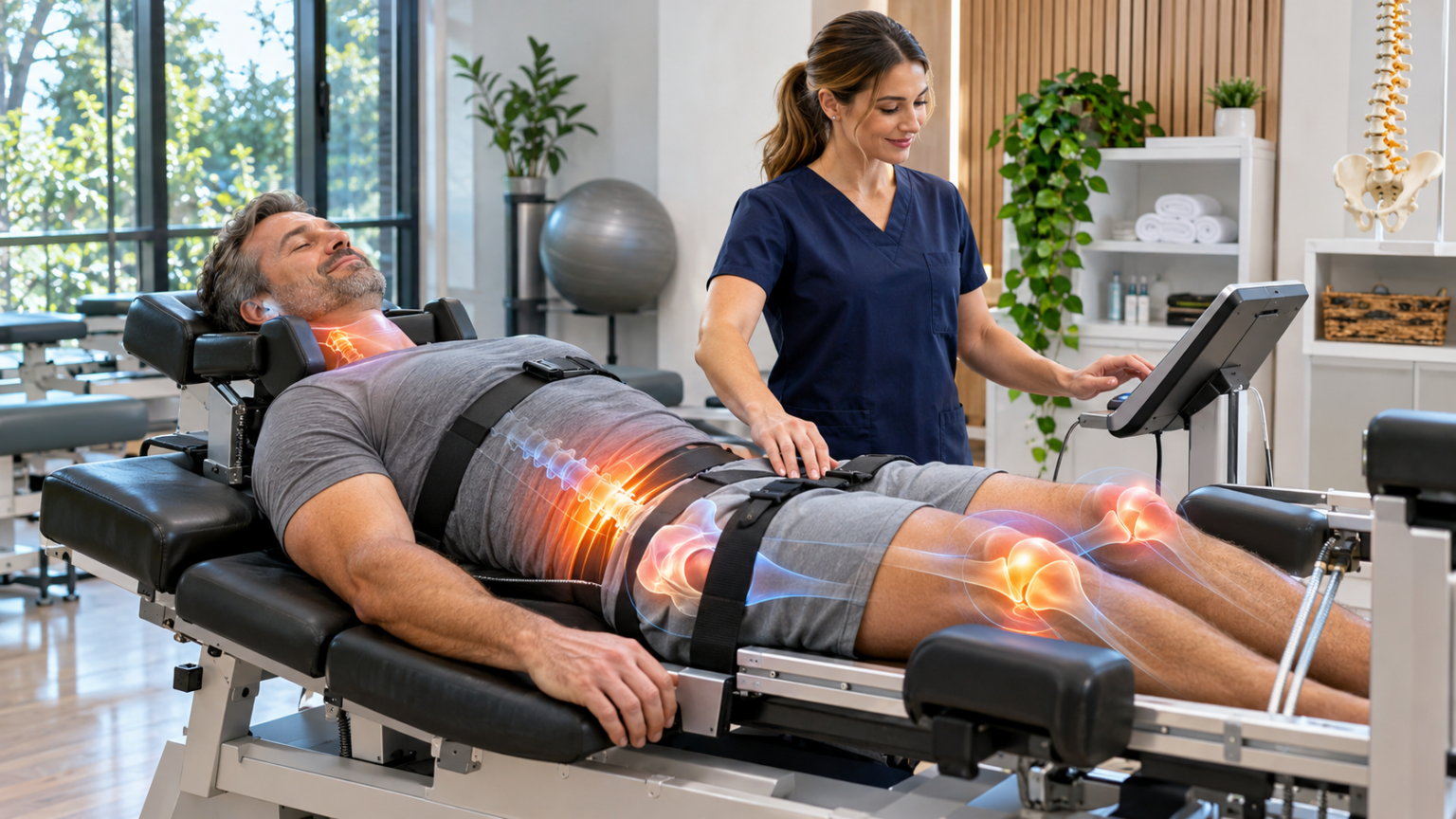
Decompression therapy uses tools that stem from other fields of medicine. Traditionally, decompression therapy uses many of the same methods as mechanical traction, which is a non-invasive physical therapy and chiropractic treatment that uses specialized motor-driven devices to apply a controlled pulling force.
Specialists can use many of the same tools and techniques but apply them to the knee. This allows knee decompression equipment to apply controlled stretching to the joint. The purpose of such treatment is to reduce mechanical pressure around the knee. For as similar as some of these techniques are to those used for spinal decompression, it’s critical to note just how different these treatments ultimately are. The spine and the knee are very different in construction and function, so their corresponding decompression treatments must differ substantially as well.
As such, knee decompression is a specific treatment approach and should not be confused with a universal solution for every type of joint pain.
How Knee Decompression Therapy Works
Applying Controlled Mechanical Traction
Specialized equipment gently extends the knee, with pressure and positioning often adjusted session by session.
Addressing Joint Pressure
Through these techniques, professionals can temporarily reduce compressive forces within the joint.
Supporting Joint Mobility
Maintaining comfortable movement is critical for people experiencing knee stiffness. When you’re experiencing knee-related joint pain, every movement of the leg can begin to feel painful. Knee decompression therapy can help ease these issues and fit neatly into a broader joint-care plan.
Exercise has been shown to help reduce osteoarthritis-related joint pain and stiffness while supporting flexibility and muscle strength.
Potential Benefits of Decompression Therapy for Knee Pain
There are many potential benefits of such treatment, including that knee decompression therapy is a noninvasive approach to knee care. This means that it is one of the few professional medical options for people suffering from such pain that does not involve surgical intervention of any kind.
Furthermore, there are many options for managing knee discomfort. The ultimate goal of knee decompression therapy is to improve comfortable movement, and in many cases, it has accomplished that. Individual responses, of course, may vary, and evidence for mechanical knee decompression should not be overstated.
Who Should Consider Knee Decompression Therapy?
Individuals who may want to explore the treatment with a qualified healthcare professional include:
- People experiencing persistent knee discomfort.
- Individuals with knee osteoarthritis.
- People with a history of knee injuries.
- Individuals experiencing stiffness or restricted movement.
- People exploring nonsurgical approaches to knee care.
Suitability depends on the underlying condition, medical history, and professional evaluation.
Exploring Joint Pain Treatment Options in Altamonte Springs
Knee decompression therapy is available in Altamonte Springs, Florida. People exploring this treatment can learn about the procedure, the evaluation process, and whether it may be right for them.
If you are suffering from extensive joint pain, you don’t have to grin and bear it. There are viable, professional medical options, including knee decompression therapy. These options can ease your pain and restore your quality of life in surprising ways.
FAQs
What is the difference between knee decompression and spinal decompression?
Knee decompression focuses on the knee joint, while spinal decompression targets structures in the spine.
Can decompression therapy help with knee osteoarthritis?
The treatment is intended to address mechanical pressure, but suitability and outcomes vary by individual.
Is knee decompression therapy noninvasive?
The treatment uses mechanical equipment rather than surgical intervention.
How long does a knee decompression session take?
Sessions generally last about 20 minutes. However, depending on the provider, treatment duration may vary.
Who should evaluate whether knee decompression is appropriate?
A qualified healthcare professional. An individualized assessment by a qualified healthcare professional is important before beginning treatment.